The Chinese Showcase journal Chinese symbols
What Is a Money Toad?
The money toad, or Jin Chan, is a three-legged symbol of prosperity in Chinese culture. Explore Liu Hai’s legend, the moon toad in Chinese art, and feng shui placement.
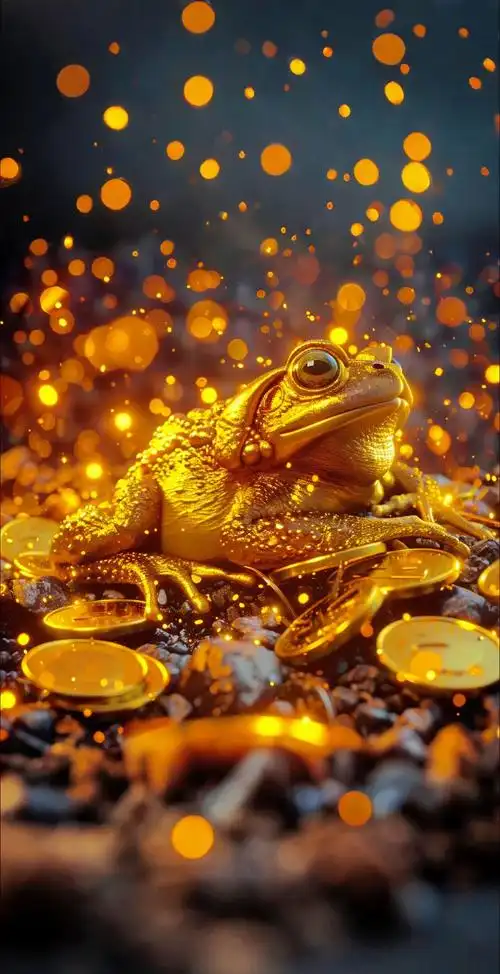
A money toad is a mythical three-legged toad that symbolizes prosperity in Chinese culture. It is called Jin Chan, meaning “golden toad” in Mandarin, and is also known as the money frog or wealth-beckoning toad. The best-known image shows it crouching with a coin in its mouth. Its link to money comes into focus in the legend of Liu Hai, a Daoist immortal who lures a toad with a string of coins.
Look at what surrounds the toad in a Chinese artwork. A cash coin suggests a wish for wealth. A crescent moon or a jade rabbit points to an older story about the heavens. On a scholar’s desk, a three-legged toad could even carry a wish to pass the imperial examinations.
Money Toad Meaning at a Glance
| Jin Chan | The Mandarin name means “golden toad.” |
|---|---|
| Three-legged toad | A mythological animal that appears in both lunar imagery and the Liu Hai legend. |
| Toad with a coin | A wish for prosperity and good fortune in business. |
| Toad with a moon or rabbit | A reference to the moon palace and its legendary inhabitants. |
Who Is the Golden Toad in Chinese Mythology?
The golden toad is the three-legged companion of Liu Hai, also known as Liu Haichan. In one version of their story, the toad carries him wherever he wishes to go. When it slips into a well, Liu Hai lowers a string of coins and draws it back out. [1] [2]

In another version, Liu Hai befriends or subdues a toad that can produce coins and uses the money to help people in need. A related telling makes the toad a once-greedy relative whom Liu Hai rescues with a coin as bait. The same string of cash can stand for temptation in one telling and generosity in another. In the version about helping the poor, the good fortune is shared. [1] [3]
By the late Ming and early Qing periods, the scene had found its way onto blue-and-white porcelain. It also appeared in New Year prints, where familiar images carried wishes for the year ahead. The lifted string of coins gives even a small design enough movement to suggest the whole story. [1]
The Toad in the Moon
The moon toad appears centuries earlier than the surviving Ming and Qing depictions of Liu Hai. On the Western Han silk banner excavated from Mawangdui Tomb 1 in Changsha, the upper part represents the heavens. The sun is marked by a dark bird, while the crescent moon contains a toad. The Han text Huainanzi also places a toad in the moon. [4]
On a Tang bronze mirror in Beijing’s Palace Museum, the toad leaps near a pool while the jade rabbit pounds medicine and Chang’e floats beside a cassia tree. The scene brings the inhabitants of the moon palace together on the back of an object someone could hold in a hand. [5]
The phrase chan gong zhe gui, “to pluck a cassia branch in the moon palace,” became a metaphor for passing the imperial examinations. A fourteenth-century copper-alloy water dropper in the shape of a three-legged toad shows how this association could reach a scholar’s desk. It dispensed small amounts of water for grinding ink. The Metropolitan Museum of Art connects the vessel with wishes for both prosperity and examination success. [6] [7]
How Artists Depicted the Money Toad
The three legs identify a creature of legend, while the coin gives the familiar money toad its particular meaning. With Liu Hai in the scene, the coin often hangs above the creature on a string. In a standalone figurine, a single square-holed cash coin may sit between the toad’s lips. When you can see the direction of its eyes, you can often see which detail mattered most to the artist. [1] [2]
In a Qing imperial display from Beijing’s Palace Museum, Liu Hai lifts a chain of coral carved to resemble coins. The toad crouches on a rocky base made from malachite and raises its head toward the dangling chain. A Qing jade pendant from the National Palace Museum in Taipei tells the story on a smaller scale. The artist worked green spots already present in the jade into Liu Hai’s hair and the toad’s eyes. [8] [9]

Where Should a Money Frog Be Placed in Feng Shui?
In contemporary feng shui practice, a money frog is often displayed on a shop counter or on a shelf near an entrance. One popular custom places a coin-holding toad facing into the room as a gesture of welcoming prosperity. A shop opening is a natural occasion for the motif because the display expresses a wish for a business to thrive. Placement customs vary by household and practitioner. [1]
The money toad shares that vocabulary of good fortune with square-holed cash coins, the abacus and Pixiu. Our guide to Chinese good luck symbols for money explains how these motifs express different wishes for prosperity.
The Chinese Showcase Edit
Jewelry Inspired by Chinese Wealth Symbols
Explore coin, abacus and Pixiu designs from Chinese Showcase, each with its own connection to prosperity.


Frequently Asked Questions
What does Jin Chan mean in Chinese?
Jin Chan means “golden toad” in Mandarin. Jin means gold, and chan here means toad. In English, the figure is commonly called the money toad or money frog.
Is Jin Chan a toad or a frog?
Jin Chan is a mythical toad. “Money frog” is a common English name for the same three-legged figure, particularly in feng shui.
What is the Chinese toad with a coin in its mouth called?
It is called Jin Chan, the money toad. The coin represents wealth and recalls the legend in which Liu Hai uses a string of cash to lure the toad.
Where should a money frog be placed?
A shop counter or a raised shelf near the entrance is a common spot. In one contemporary feng shui custom, a money frog holding a coin faces into the room to symbolize prosperity coming in.
A Wish for Prosperity
In the story of Liu Hai, a string of coins makes the toad lift its head. On a shop counter, a single coin is enough to recall that scene and express a wish for the business to thrive.
References
- National Palace Museum, Taipei. Liu Haichan, hanging scroll traditionally attributed to Wu Wei. The catalogue discusses the legend, its variants and the spread of the motif in porcelain and New Year prints.
- The Metropolitan Museum of Art. Medallion for Sleeve Band (one of a pair), Qing dynasty, object 30.75.658. Liu Hai stands on the toad and holds a string of coins.
- National Palace Museum, Taipei. Palace Museum Journal, issue 493, April 2024, pp. 61–62, and Liu Hai Playing with a Golden Toad, Qing dynasty Shiwan ware, object 016947.
- Hunan Museum and The Forbidden City journal. Mawangdui Tomb 1 T-shaped silk painting, Western Han. See also Dong Jin’s 2017 discussion of the moon toad and the Han text Huainanzi.
- The Palace Museum, Beijing. Lobed bronze mirror with Chang’e and the Jade Rabbit, Tang dynasty. The mirror’s scene includes the moon toad and cassia tree.
- The Metropolitan Museum of Art. Water Dropper in the Shape of a Three-Legged Toad, fourteenth century, object L.2025.30.3.
- Revised Mandarin Chinese Dictionary. Entry for chan gong zhe gui, the expression for passing the imperial examinations.
- The Palace Museum, Beijing. Amber, Wax and Glass Display of Liu Hai Playing with a Toad, mid-Qing dynasty, object 00126735.
- National Palace Museum, Taipei. Jade Pendant with Liu Hai Playing with a Toad, Qing dynasty, object 008378.
Stories, symbols and everyday objects
Our journal explores Chinese culture and design. Traditions and interpretations vary by region and source. For a purchase, use the specifications on the individual product page.
About Chinese ShowcaseQuestions or corrections? Contact us ↗