The Chinese Showcase journal Chinese symbols
What Is a Magpie in Chinese Culture?
Discover what the magpie symbolizes in Chinese culture, from good news and magpies on plum branches to joyful reunions and the Qixi Magpie Bridge.
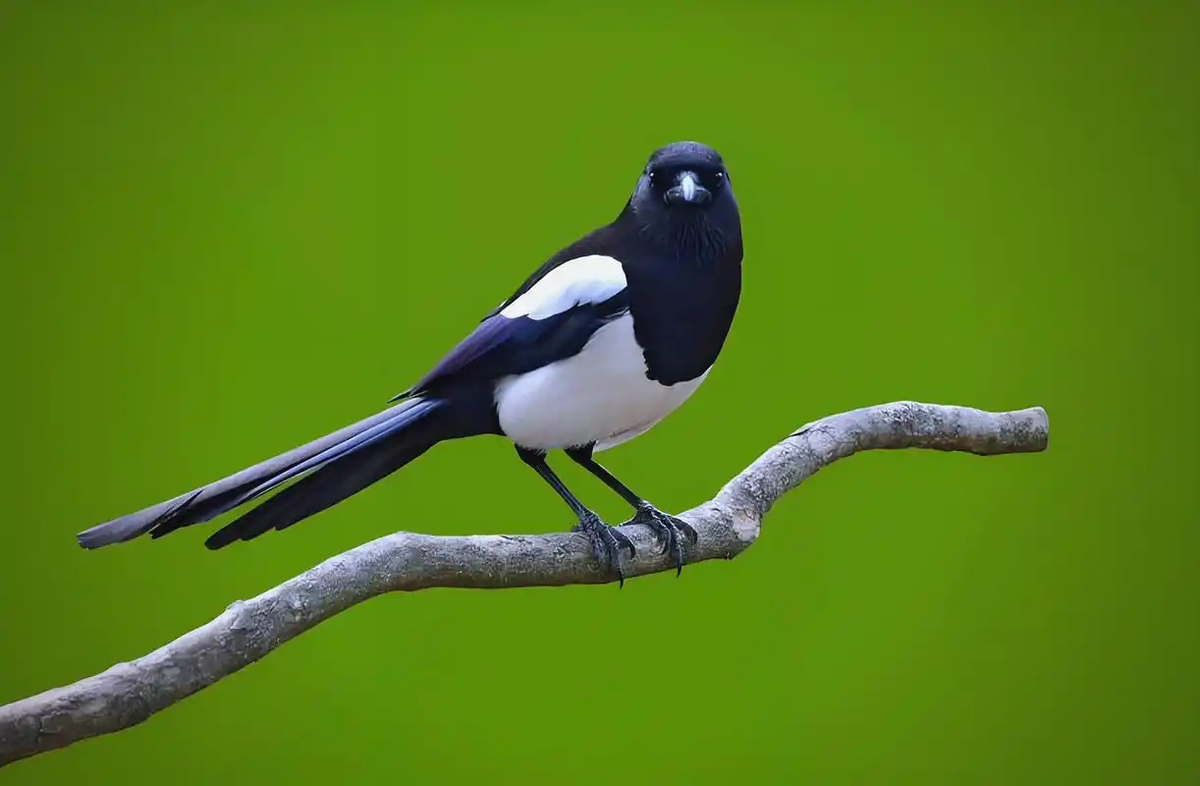
In Chinese culture, the magpie is a messenger of good news and a symbol of joyful reunion. A magpie on a plum branch evokes the saying “joy rises to the eyebrows.” In the legend behind the Qixi Festival, a flock of magpies forms a bridge so the Cowherd and the Weaver Girl can meet.
Imagine hearing a few sharp calls from a courtyard. By the time you look up, a black-and-white bird has already landed on the branch. A person waiting for news might take that sound as a cheerful sign. The same bird, drawn beside a plum flower or alongside another magpie, gives artists a way to show the kind of happiness people are waiting for.
Magpie Meaning at a Glance
| A calling magpie | A wish for welcome news or a happy event |
|---|---|
| A magpie on a plum branch | Joy rising to the eyebrows, expressed through a pun |
| Two magpies facing each other | The pleasure of meeting or sharing good fortune |
| A flock at the Qixi Magpie Bridge | Reunion after a long separation |
Why Is the Magpie a Messenger of Good News?
In Mandarin, the magpie is called xǐquè. The first syllable, xǐ, means joy. An entry in Anecdotes of the Kaiyuan and Tianbao Eras records that hearing a magpie at home was taken as a favorable sign. A safe arrival, a letter, or the unexpected visit of an old friend could all give that sign a personal meaning. [1]
The Tang-era collection Records of Court and Country tells of Li Jingyi, who used to feed the magpies in his courtyard. After he was wrongly imprisoned, a magpie came near the prison and called to him. A pardon followed. In the story, a bird he knew from ordinary life becomes the first messenger he hears at a moment of uncertainty. [2]

A painting can recall that familiar call with very little detail. A raised head and a slightly open beak may be enough. The person looking at the picture supplies the sound and imagines the news that might follow.
What Does a Magpie on a Plum Branch Mean?
The saying xǐ shàng méi shāo describes joy showing in the eyebrows. A magpie gives the artist the sound xǐ, and the word for plum has the same pronunciation as the word for eyebrow, méi. Put the bird at the tip of a plum branch and the picture becomes a visual pun. A viewer sees a bird and flowers and can read them as a wish that happiness will show on someone’s face. [3]
A design for a yellow-ground bowl in Beijing’s Palace Museum shows three magpies among spreading plum branches. The branches carry the eye around the composition. In a silver-and-copper hairpin catalogued by the National Palace Museum in Taipei, the same combination fits into the narrow surface of a piece of jewelry. On a bowl the motif has room to spread. On a hairpin, the essential details are small enough to reward a closer look. [4]
The pairing also suits the turn of the season. Plum blossoms are admired for opening in the cold, when the branches can still look bare. With the magpie perched above them, a sprig of early blossom can suggest both the return of spring and a welcome change in someone’s fortunes.
What Do Two Magpies Symbolize?
Two magpies facing one another can form the traditional motif xǐ xiāng féng, or “joyful encounter.” The Palace Museum describes facing magpies as one way to depict it. Their position matters. Each bird turns toward the other, and the space between them becomes the center of the picture. That simple arrangement can evoke the pleasure of seeing someone again. [5]

In the Northern Song painting Two Magpies by Cui Bai, one mountain magpie takes wing while the other calls from above a hare. The hare looks back. The painting’s Chinese title, Shuang Xi Tu, suggests double joy, while the scene invites you to notice the moment the animals become aware of one another. The birds’ direction, the hare’s glance, and the space between them do much of the storytelling. [6]
Why Do Magpies Form a Bridge at Qixi?
In the legend told at Qixi, the Cowherd and the Weaver Girl are separated by the Milky Way. On the seventh night of the seventh lunar month, magpies gather to form a bridge across the river of stars. The birds that announce good news in one story make the good news possible in this one. The couple can finally walk toward one another. [7]

In his Song dynasty lyric “Immortals at the Magpie Bridge,” Qin Guan dwells on how quickly the meeting passes and how hard it is to look back at the bridge on the way home. The bridge carries both feelings. It brings the lovers together and gives them a route back to their separate shores. The story makes a short reunion feel all the more precious. [8]
Qixi also has a tradition of qiqiao, or asking for skill. In some places girls threaded needles by moonlight in the hope of becoming as skillful as the Weaver Girl. While the legend gave the night a story of reunion, the custom gave people a way to express their hopes for their own work and lives. [9]
What Does Magpie Jewelry Mean as a Gift?
A single bird on a branch can be a wish for good news when someone is waiting to hear about an exam, a move, or a new job. A pair can mark a reunion or a friendship that has survived distance. A magpie among plum blossoms can carry the simple pleasure of wishing someone a joyful beginning.
Look at how the bird is drawn. A bird perched beside a flower can make a small earring feel like a scene. An engraved branch can carry the story around a silver bracelet. A hairpin can tuck a magpie and blossoms into an updo. The details let the gift say something specific about the person or occasion it was chosen for.
The Chinese Showcase Edit
Magpie Jewelry from Chinese Showcase
Three ways to wear the magpie, from a plum-blossom bracelet to earrings that recall a bird among flowers.


More Magpie Jewelry


Frequently Asked Questions
What does a magpie symbolize in Chinese culture?
It is associated with good news, joy, and happy reunions. The setting helps tell you what kind of joy a particular image expresses.
Why are magpies shown with plum blossoms?
The words for plum and eyebrow sound alike in Mandarin. A magpie at the tip of a plum branch forms a picture pun for joy rising to the eyebrows.
What do two magpies facing each other mean?
They can form a joyful-encounter motif. The paired birds can express the pleasure of meeting again or sharing happiness.
What is the Magpie Bridge at Qixi?
It is the bridge that magpies form across the Milky Way in the story of the Cowherd and the Weaver Girl. The legend places their reunion on the seventh night of the seventh lunar month.
Sources and Objects Mentioned
- Anecdotes of the Kaiyuan and Tianbao Eras. Volume 4, “The Auspicious Magpie Brings Good News.” The entry describes the magpie’s call as a favorable sign.
- Records of Court and Country. The story of Li Jingyi, preserved in the imperial encyclopedia Gujin Hebi Shilei Beiyao, describes a magpie arriving before news of a pardon.
- Palace Museum, Beijing. Design for a Yellow-Ground Bowl with Plum Blossoms and Magpies. The museum’s catalogue explains the plum-branch pun.
- National Palace Museum, Taipei. Silver-and-Copper Alloy Flat Hairpin with a Joy on the Eyebrows Motif. The catalogue records magpies and flowering plum branches on the front.
- Palace Museum, Beijing. Joyful Encounter. The museum’s glossary gives facing magpies as one example of the motif.
- National Palace Museum, Taipei. Cui Bai, Two Magpies (Shuang Xi Tu), Northern Song. The collection entry describes the two birds and the hare.
- China Intangible Cultural Heritage Network. Talking About Qixi. The resource records the annual reunion and the legend of the magpies forming a bridge.
- Qin Guan. Immortals at the Magpie Bridge, the Song dynasty lyric that begins “Delicate clouds display their skill.”
- China Intangible Cultural Heritage Network. Qixi in Folk Customs, Opera, and New Year Prints. The resource describes practices associated with asking for skill.
Images. Editorial images were supplied for this article. Product photographs are from the Chinese Showcase listings.
Stories, symbols and everyday objects
Our journal explores Chinese culture and design. Traditions and interpretations vary by region and source. For a purchase, use the specifications on the individual product page.
About Chinese ShowcaseQuestions or corrections? Contact us ↗