The Chinese dragon, often called long or loong, is a mythical creature associated with strength, auspiciousness, imperial authority, and water and rain. Its image belongs to many traditions, and its meaning depends on where, when and how it appears.
What does the Chinese dragon mean?
A dragon can be an emblem of authority, a figure in a weather story, a ceremonial image or the centerpiece of a treasured ornament. These associations overlap, but they should not be reduced to one fixed definition. The same curling body can communicate different ideas on a court robe, a ceramic vessel, a festival dragon or a modern pendant.
Water & renewal
Chinese dragon traditions often connect the creature with rivers, clouds and life-giving rain. This relationship helps explain the flowing movement that gives many dragon designs their energy.
Authority & presence
Dragons became important emblems of imperial power. Court dress and decorative arts used dragon imagery within specific systems of rank, ceremony and display.
Auspicious intention
A dragon motif can express a wish for strength, good fortune or a promising future. In jewelry, the cultural association accompanies the personal meaning given to a piece.
Continuity & imagination
Artists adapt the dragon to changing materials and settings. A coiled relief, an embroidered body and a contemporary metal ornament each interpret the creature through a different visual language.
One creature, many historical forms
Dragonlike images occur in early Chinese art, but the meaning of the earliest examples is not always certain. Over time, artists developed many forms: compact creatures shaped to fit jade ornaments, sinuous bodies winding across bronzes, and expansive dragons moving through painted clouds.
Museum examples show how varied these images can be. A Ming cloisonné panel in the Metropolitan Museum of Art depicts two dragons pursuing a flaming pearl, while Chen Rong’s Eleven Dragons, discussed by the Smithsonian’s National Museum of Asian Art, places animated creatures amid water and clouds. These works invite close attention to movement and setting, rather than a search for one universal code.
Imperial use also calls for care. Five-clawed dragons appear on objects associated with courtly life, yet claw count alone cannot establish an object’s exact date, owner or authenticity. A modern dragon ornament should be appreciated as a contemporary design unless reliable provenance shows otherwise.
How to read a dragon design
Dragons and the pearl
One dragon, or a pair of dragons, may turn toward a round bead surrounded by flames or cloudlike forms. This arrangement creates a strong visual center. The pearl has attracted several interpretations, including preciousness, aspiration and auspicious power; a particular work’s context matters more than assigning it a single automatic meaning.
The decorative pearl is also distinct from the material used in a piece of jewelry. A carved silver bead, a pearl accent and a painted flaming orb can share a visual theme while being different things. For a closer look at the motif, read our guide to the flaming pearl in Chinese art.
Dragon and phoenix
When paired, the dragon and phoenix commonly express auspicious harmony, especially in wedding decoration and gifts. A matched composition can suggest union and complementarity. It is the relationship between the figures, the surrounding decoration and the occasion that makes the pairing meaningful.
Coiled chi-dragons
A compact, turning creature on jade, bronze or ornament may belong to the broad family of chi-dragon designs. Look for the relationship between head, limbs, body and returning tail. The way an animal fits a circle or border can be as significant to the design as the details of its head. Our coiled chi-dragon guide explores these patterns in greater depth.
From cultural symbol to personal piece
The dragon is also the fifth animal in the twelve-animal Chinese zodiac. A zodiac connection can make a dragon motif meaningful as a gift, but the Chinese calendar boundary should be checked for a person born early in a calendar year. There is no need to be born in a Dragon year to enjoy the design.
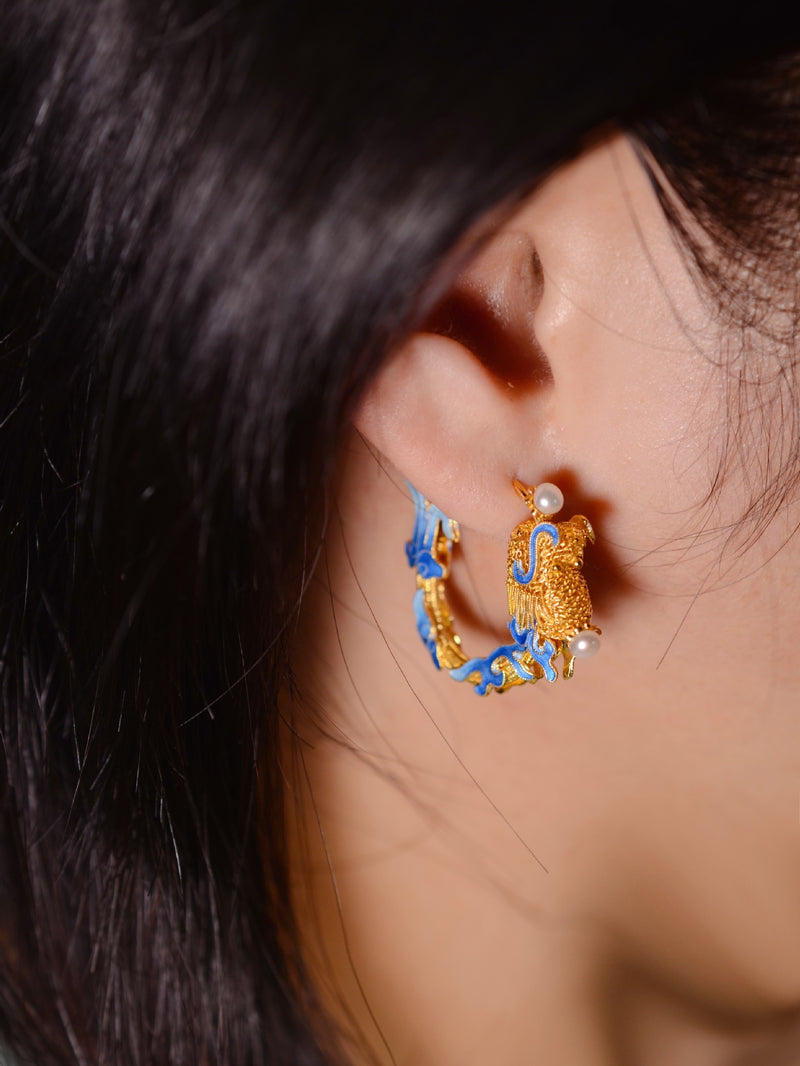
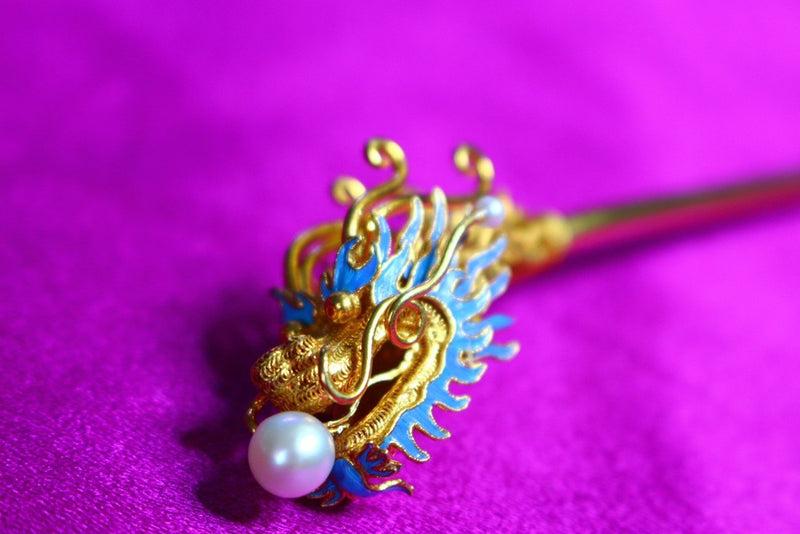
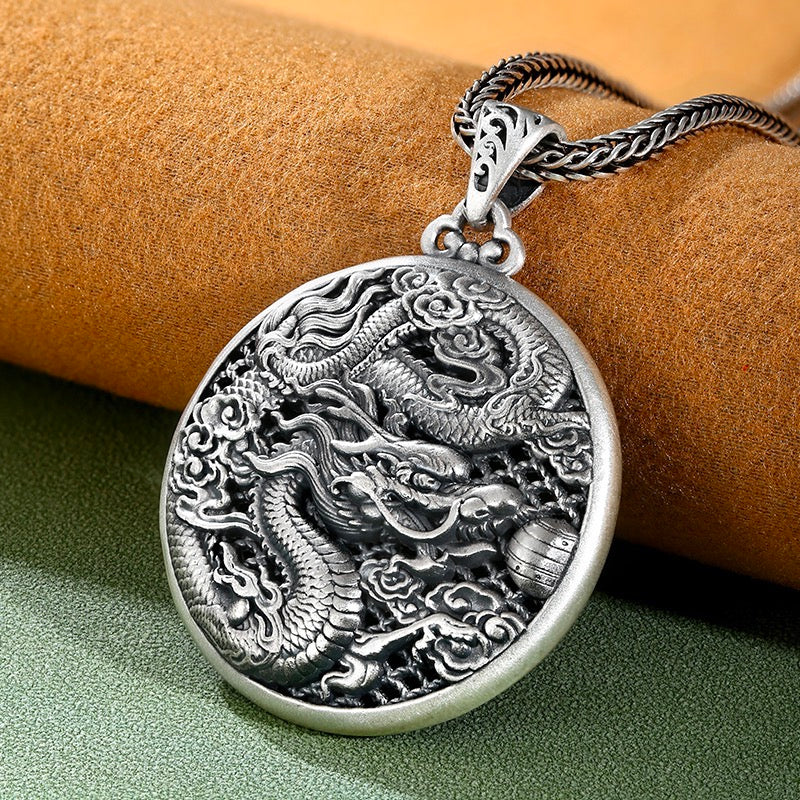
When choosing jewelry, start with what can be seen and verified: the motif, the stated materials, dimensions, fastening and intended way of wearing it. A raised dragon relief can bring sculptural depth to a pendant; a curved head can define a hair ornament; blue-and-gold details can give earrings a more colorful character.
A thoughtful gift can acknowledge a person’s interests, a shared cultural connection or a wish for a confident new beginning. Explain that intention in your own words. The ornament can hold a story without being presented as a guarantee of wealth, protection or any future outcome.
Questions about Chinese dragons
What does the Chinese dragon symbolize?
The Chinese dragon is associated with strength, authority, auspiciousness and the power of water and rain. Its meaning changes with the object, period and setting: an imperial robe, a festival dragon and a modern pendant do not tell exactly the same story.
Is a Chinese dragon the same as a Western dragon?
The English word dragon covers many traditions. Chinese long imagery is especially connected with water, clouds and auspicious power, while European dragon stories are diverse. A single comparison cannot explain every creature or every period.
What does a dragon chasing a pearl mean?
The pearl is a focal point in a widely used decorative composition. It can invite readings of preciousness, aspiration or auspicious power, but its meaning is debated and depends on context. It should not automatically be identified as a natural pearl, the sun or a promise of wealth.
What do a dragon and phoenix together represent?
The pairing commonly expresses an auspicious union and harmony, particularly in wedding-related decoration and gifts. The surrounding symbols, inscriptions and occasion help explain a particular design.
Can anyone wear Chinese dragon jewelry?
Dragon jewelry is worn today by people of different genders and backgrounds. Choose a piece for its design, cultural connection and comfortable fit. Personal or family customs may guide a choice, but this guide does not impose a universal zodiac or gender restriction.
How should dragon jewelry be cared for?
Follow the care instructions for the actual materials. Protect raised details and settings from knocks and snagging, and keep jewelry away from household chemicals. Silver, plated surfaces and pearl accents can need different care; the product page is the starting point.
Museum research notes
This overview draws on museum descriptions of specific works. Meanings vary across periods and objects; these examples provide historical context for the guide.
- National Museum of Asian Art, Smithsonian Institution: Eleven Dragons, educator resource on Chen Rong and dragon imagery.
- The Metropolitan Museum of Art: Panel with dragons amid clouds, late Ming cloisonné, accession 29.110.94.
- The Metropolitan Museum of Art: Vase with Dragon amid Clouds, early eighteenth century, accession 32.100.434.