The Chinese Showcase journal Chinese symbols
What Does the Azure Dragon Symbolize?
The Azure Dragon, or Qinglong, represents the east, spring, and growth. Explore its seven lunar mansions and how artists brought this celestial guardian into Chinese art.
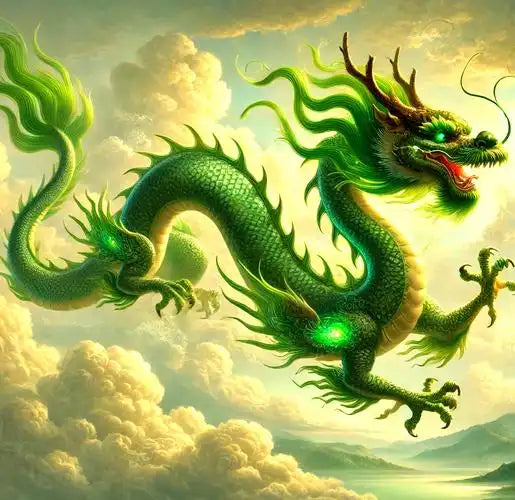
The Azure Dragon symbolizes the east, spring, growth, and guardianship in traditional Chinese culture. Called Qinglong in Chinese, it is one of the Four Symbols and is associated with Wood in the Five Phases. Its image brings together seven groups of stars, the return of spring, and the idea of protecting the eastern quarter. [2] [4] [5]
A dragon and a tiger flank the names of twenty-eight star groups on the lid of a lacquered chest from the tomb of Marquis Yi of Zeng. A large character for the Dipper anchors the design. The chest was made in the Warring States period. It gives us a way to see the Azure Dragon before turning to later stories about it. [1]
What Is the Azure Dragon in Chinese Culture?
The Azure Dragon is the dragon of the east in the Four Symbols, a scheme that divides the traditional star groups into four quarters. Its companions are the Vermilion Bird in the south, the White Tiger in the west, and Xuanwu, the Black Tortoise and Snake, in the north. Sima Qian’s Records of the Grand Historian calls the eastern figure Canglong and discusses the Room and Heart mansions within its domain. [2] [3]
The two names, Qinglong and Canglong, appear in different texts and contexts. “Azure Dragon” is a familiar English rendering, and “Blue-Green Dragon” also captures part of the traditional color range. In an artwork, its identity may come from its place among the Four Symbols or its relationship to the stars. On the ancient lacquer chest, the dragon appears in red lacquer alongside the star names. [1] [2]
The Seven Mansions of the Azure Dragon
In traditional Chinese astronomy, a mansion, or xiu, is a named division of the sky associated with a group of stars. The twenty-eight lunar mansions form four groups of seven. The eastern group gives the Azure Dragon its long body. [2] [4]
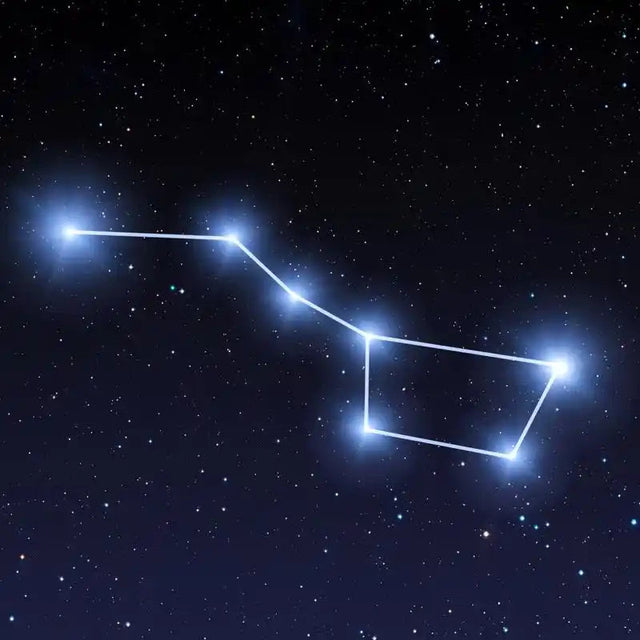
Jiao (Horn), Kang (Neck), Di (Root), Fang (Room), Xin (Heart), Wei (Tail), and Ji (Winnowing Basket).
Jiao marks the dragon’s horn, Xin suggests its heart, and Wei marks its tail. The sequence helps a viewer imagine a dragon stretching across the sky. Astronomers today identify Jiao’s best-known star, Jiao Xiu Yi, as Spica, the brightest star in Virgo. The traditional mansions and modern constellations use different names and groupings, so knowing both names gives you a useful point of reference. [4] [6]
Why Are Spring and Wood Associated with Qinglong?
The Huainanzi places the east, spring, Wood, and the Canglong in the same group of correspondences. In that system, spring is the time when things begin to grow. Wood suggests the way new shoots take root and branches spread. The east, where the sun rises, makes the same idea visible on the scale of a day. [5]
That association gives Qinglong a particular meaning in modern designs. A dragon twisting upward among clouds can suggest a beginning while it is still in motion, like the first green growth of the season. The wider Chinese dragon tradition connects dragons with water and life-giving rain. Qinglong brings those associations into a more specific seasonal setting through its link with spring and Wood.
What Does “The Dragon Raises Its Head” Mean?
The traditional saying refers to the second day of the second lunar month. One way to understand the image is to follow Jiao, the Horn mansion. As it rises in the east on a spring evening, it evokes a dragon lifting its head above the horizon, with the rest of its body imagined behind it. [4] [6]
The saying also makes sense at ground level. In farming communities, spring was the time to prepare the fields and hope for rain when it was needed. The movement of the dragon in the sky offers a memorable way of thinking about those changes on earth. This is one reason a story about the sky can also feel like a story about planting and growing.
How Did the Azure Dragon Become a Guardian of the East?
The Book of Rites describes an arrangement with the Azure Dragon on the left and the White Tiger on the right, with the Vermilion Bird in front and Xuanwu behind. Read from a south-facing position, left corresponds to east and right to west. The placement gives each of the four animals its own quarter. Qinglong’s protective meaning makes the most sense within this arrangement. [2] [7]
The same idea appears in art. A single curling dragon may be chosen for its movement or for a wish for strength. When a dragon appears alongside its three companions, the four figures together can evoke an ordered space, with a guardian for each direction. [2] [8]
How Can You Recognize the Azure Dragon in Chinese Art?
The lacquered chest from Marquis Yi’s tomb puts the dragon beside a complete set of mansion names. In this setting, the star names and the companion tiger help identify it. The Palace Museum in Beijing also holds a Han-dynasty roof-tile end decorated with an Azure Dragon. Its tail lifts and its legs push outward as the artist fits the creature into the circular tile face. [1] [8]

In a round design, follow the curve of the tail and look at where the dragon’s head turns. In a painting or an ornament, notice what surrounds the dragon. A tiger, a bird, or a tortoise and snake gives one kind of clue. Star names give another. Seen in context, a dragon can tell you which direction, season, or wish the artist had in mind.
Frequently Asked Questions About the Azure Dragon
What does the Azure Dragon symbolize?
In Chinese tradition, the Azure Dragon symbolizes the east, spring, and growth. As one of the Four Symbols, it also represents the guardian of the eastern quarter of the sky.
What is the Azure Dragon called in Chinese?
The usual name is Qinglong. Classical texts also call the eastern dragon Canglong, often translated as the Azure or Blue-Green Dragon. In this name, the Chinese color word qing has a traditional range that includes blue and green.
What element is the Azure Dragon associated with?
The Azure Dragon corresponds to Wood in the Chinese Five Phases. The Huainanzi groups Wood with the east and spring, which explains the Azure Dragon’s association with growth and renewal. [5]
What are the seven mansions of the Azure Dragon?
They are Jiao, Kang, Di, Fang, Xin, Wei, and Ji. Together these seven groups form the eastern quarter of the traditional twenty-eight lunar mansions. [4]
What powers is the Azure Dragon associated with?
The Azure Dragon’s main role in the Four Symbols is to represent and guard the east. Chinese dragon traditions also link dragons with water and rain, while Qinglong’s specific correspondence in the Five Phases is Wood.
What do Chinese dragons symbolize more broadly?
Depending on the context, Chinese dragons can represent rain, auspicious fortune, strength, or imperial authority. Qinglong has the more specific associations of the eastern sky, spring, and Wood.
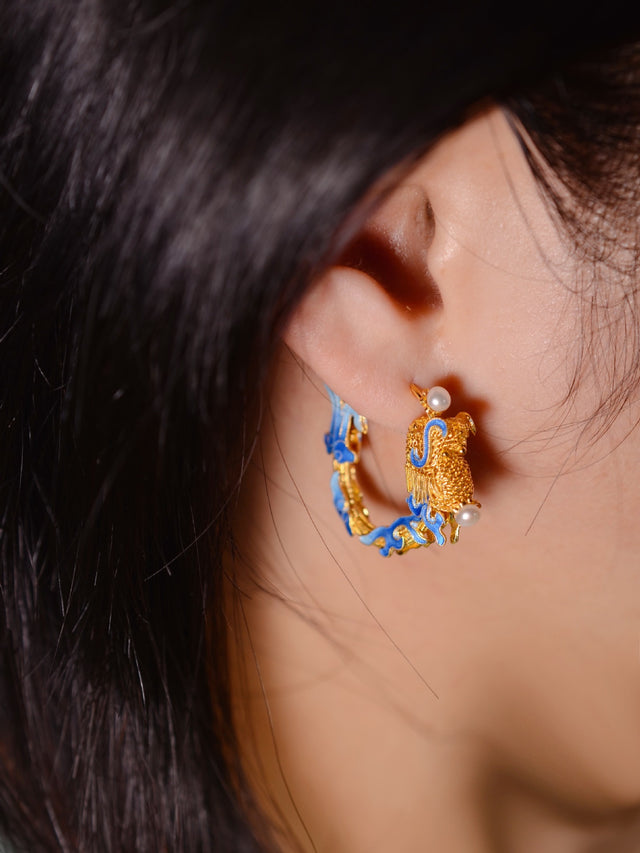
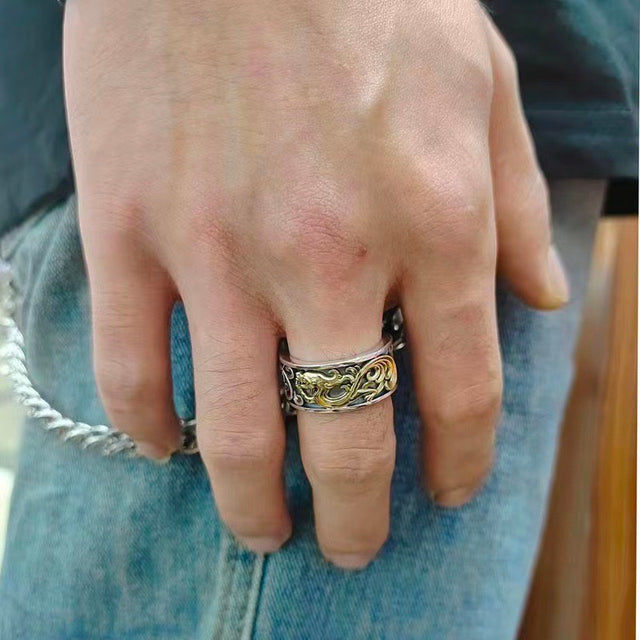
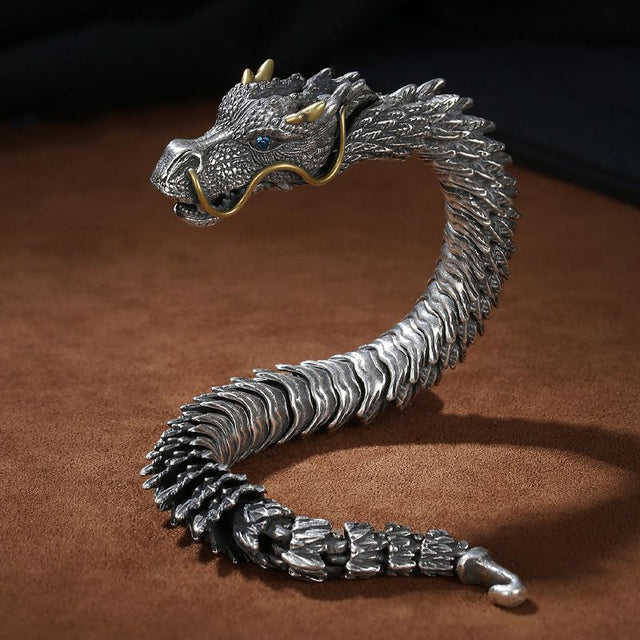
Chinese Dragon Jewelry

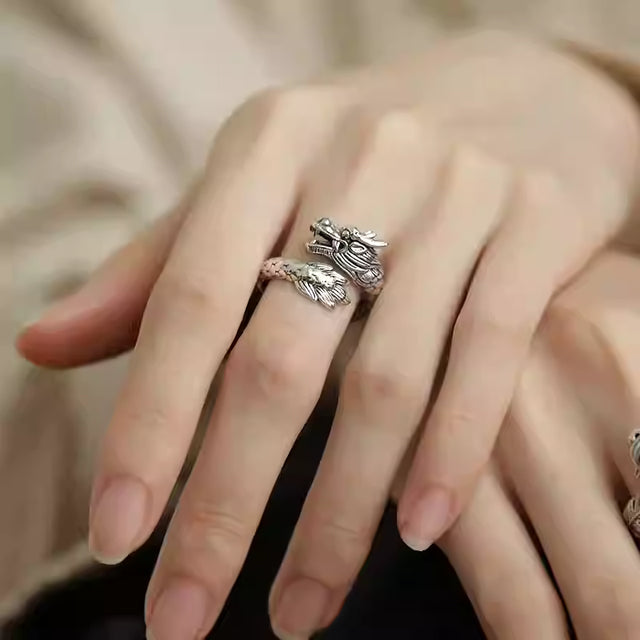
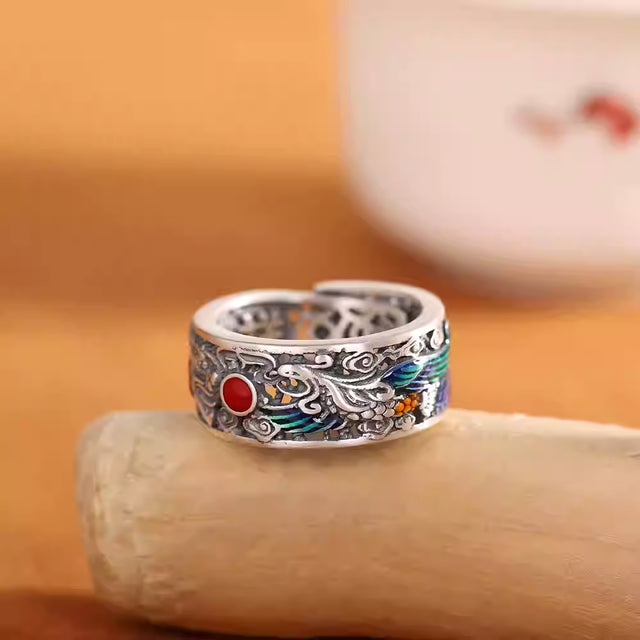
Azure Dragon Ring with Green Clouds
A raised Qinglong coils around a silver-tone band with green cloud details. Preorder in fixed sizes US 7 and US 9.
View product details
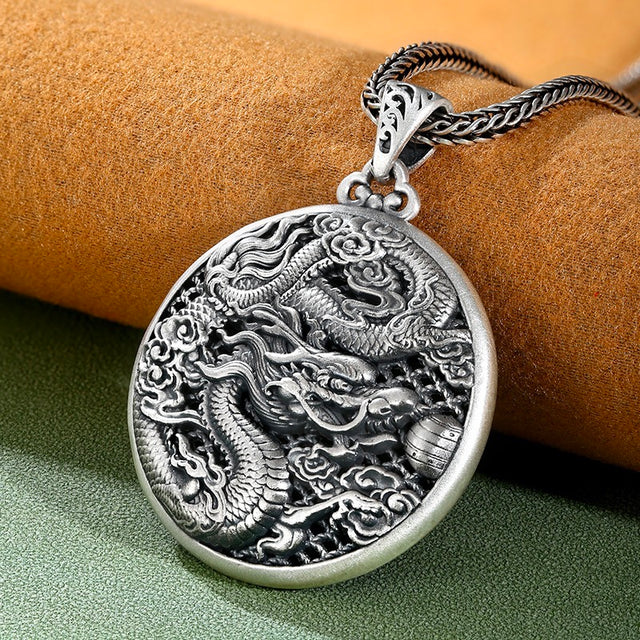
Eight Trigrams Dragon Pendant
A dragon in relief curves around the eight trigrams on a round 925 silver pendant.
View product details
Dragon and Gourd Beaded Bracelet
A round dragon motif and a small gourd detail sit among multicolored beads and gold-tone accents.
View product detailsRelated Reading
References
- Hubei Provincial Museum. Survey of lacquerware excavated from the tomb of Marquis Yi of Zeng, entry on the lacquered clothing chest with the Twenty-Eight Mansions.
- Palace Museum, Beijing. Collection glossary entry on the Four Symbols.
- Sima Qian. Records of the Grand Historian, chapter 27, “Treatise on the Celestial Offices.”
- Beijing Planetarium. “Young Dragon Seekers” exhibition activity, section on the eastern seven mansions of the Canglong.
- Huainanzi, “Treatise on the Patterns of Heaven,” passage on the Five Phases.
- Beijing Planetarium. “The Dragon Raises Its Head” stargazing program. Chinese Academy of Sciences, observations of Spica reported by Purple Mountain Observatory.
- Book of Rites, “Summary of the Rules of Propriety,” part 1.
- Palace Museum, Beijing. Azure Dragon Roof-Tile End, Han dynasty.
Stories, symbols and everyday objects
Our journal explores Chinese culture and design. Traditions and interpretations vary by region and source. For a purchase, use the specifications on the individual product page.
About Chinese ShowcaseQuestions or corrections? Contact us ↗