The Sui dynasty is best known for reuniting China in 589, creating an empire-wide Grand Canal network, strengthening centralized government, and laying the foundations of the Tang dynasty.
Although it ruled for only thirty-seven years, from 581 to 618, the Sui transformed political unity into roads, waterways, laws, capitals, tax systems, and religious institutions. Its achievements were enormous, but the labor and military costs of those ambitions also helped bring the dynasty down.
隋朝, Suí Cháo
581–618; southern reunification completed in 589
Unity, canals, centralized institutions, and a bridge to the Tang

Sui Dynasty Overview
| Founder | Emperor Wen, personal name Yang Jian |
|---|---|
| Major rulers | Emperor Wen and Emperor Yang; the final phase included short-lived child emperors amid rebellion |
| Capitals | Daxing near present-day Xi'an and the eastern capital Luoyang |
| Preceded by | Competing Northern and Southern dynasties; the Sui replaced Northern Zhou and conquered Chen |
| Followed by | Tang dynasty, beginning in 618 |
| Best-known project | The interconnected Grand Canal system |
| Religious landscape | Strong imperial patronage of Buddhism alongside Daoism and Confucian state traditions |
Yang Jian founded the Sui in 581 after taking the throne of Northern Zhou. In 589, Sui forces defeated the Chen dynasty in the south, ending a long age of political division. This reunification is the dynasty's essential starting point: the canal, legal, fiscal, and administrative programs all depended on the court's ability to govern north and south as one empire.
The Sui is sometimes compared with the earlier Qin dynasty. Both were short-lived unifiers whose centralized systems were inherited by a longer and more celebrated successor. The comparison is useful, but the Sui operated in a different religious, economic, and international world. It inherited institutions from northern regimes as well as traditions from the south and combined them on an imperial scale.
What Is the Sui Dynasty Known For?
The clearest answer can be organized around three accomplishments. First, the Sui restored political unity. Second, it connected important river systems and economic regions through the Grand Canal. Third, it consolidated a centralized administrative order involving law, land allocation, taxation, granaries, official recruitment, and planned capitals. These programs helped the Tang govern a large and connected empire after 618.
North and south were brought under one imperial government in 589.
Canals, roads, capitals, and granaries moved grain, troops, information, and taxes.
Law, bureaucracy, land policy, and examinations reduced fragmentation and strengthened the center.
Did the Sui invent anything?
Popular summaries sometimes ask what the Sui “invented,” but that wording can mislead. The dynasty is not chiefly remembered for a single object like paper or printing. Many canal sections, bureaucratic practices, land systems, and recruitment methods had earlier precedents. The Sui achievement was integration: it expanded, standardized, and coordinated inherited knowledge across a reunified empire.
The same caution applies to the imperial examination system. Earlier dynasties had tested or recommended candidates. Under the Sui, examinations gained new importance within central recruitment, including the development of categories later associated with the jinshi degree. The mature system familiar from later history evolved gradually under the Tang and especially the Song.
The Grand Canal: The Sui's Massive Construction Project
The Grand Canal is the construction project most closely associated with the Sui. Existing waterways in different regions were repaired, enlarged, and connected into an imperial communication network during the early seventh century. Its routes linked the Yellow River region and northern capitals with the Huai and Yangtze basins and the productive lands farther south.
The canal moved grain taxes to political and military centers, transported troops and strategic supplies, encouraged markets, and reduced the isolation of regional economies. UNESCO describes the Grand Canal as an outstanding work of hydraulic engineering and emphasizes that the Sui first conceived its components as a unified imperial communication system.
Calling it a Sui accomplishment does not mean every meter was newly dug by the Sui. Some sections had origins centuries earlier, and later dynasties repeatedly altered the route. What was distinctively Sui was the ambition to make separate waterways function as the logistical backbone of one empire.
The human cost
Large numbers of conscripted laborers worked on canals, roads, walls, palaces, and new capitals. Sources often give dramatic figures, but exact totals are difficult to verify. The broader conclusion is secure: repeated labor service and taxation placed severe burdens on households. The canal's long-term value therefore coexisted with immediate suffering.
Government, Law, Land, and Examinations
Emperor Wen's government sought a more uniform legal and administrative order. The court simplified laws, reorganized central offices, and limited the ability of hereditary local elites to control appointments. Officials were assigned away from their home areas and served limited terms in an effort to strengthen loyalty to the state.
The Sui extended the equal-field system, under which the state allocated land according to household and labor status, with much of it returning to the state when the holder died or aged out of service. Practice never perfectly matched policy, and powerful families retained advantages. Even so, household registration and land allocation supported taxation and labor obligations across the empire.
Granaries were another important part of statecraft. Government and community reserves could stabilize supplies during poor harvests and help provision capitals and armies. Together, fields, registers, taxes, canals, and granaries formed an interconnected administrative system rather than isolated reforms.
Civil service examinations
The Sui increased the role of examinations in choosing officials and weakened exclusive reliance on aristocratic recommendation. This did not create a modern meritocracy: education, status, gender, and connections still restricted access. Yet the principle that demonstrated learning could support appointment became one of imperial China's most influential institutions.
Buddhism, Daoism, and Confucian Government
Buddhism received especially visible imperial support under the Sui. Emperor Wen sponsored monasteries, relic distribution, scripture copying, and Buddhist imagery. After centuries of division, Buddhist ideas of universal moral order could help the court frame reunification as more than military conquest.
Sui Buddhist sculpture continued developments from the Northern Qi and other late sixth-century traditions, often emphasizing rounded volume, balanced posture, and richly modeled ornaments. Devotion to bodhisattvas such as Avalokiteshvara, known in China as Guanyin, became increasingly prominent around this period.
It is still too simple to call Buddhism the dynasty's only religion. Daoist institutions also received court attention, while Confucian texts, ritual, family ethics, and theories of rulership remained central to government. The Sui state drew from several traditions, supporting religion while using classical political ideals to administer the empire.
Cities, Economy, Foreign Relations, and Everyday Life
The Sui rebuilt Daxing and developed Luoyang as major capitals. Their planned avenues, wards, markets, palaces, and temples expressed centralized order. Luoyang's position near canal routes made it an important hinge between political authority and the grain supply.
Most people remained farmers subject to taxes and labor service. Markets and canal transport supported merchants, boat workers, craftspeople, and urban consumers, but imperial projects could disrupt local life. The dynasty's prosperity and its burden were two sides of the same mobilizing state.
The Sui also operated in a wider Asian world. Diplomacy, warfare, Buddhist travel, and trade connected China with the Korean peninsula, Inner Asia, Central Asia, Southeast Asia, and Japan. The Japanese missions known as kenzuishi sought knowledge of Sui institutions and culture, demonstrating the dynasty's regional prestige despite its short duration.
What Caused the Fall of the Sui Dynasty?
The Sui did not collapse because of a single mistake. Under Emperor Yang, the court pursued several expensive goals at once: canal construction, monumental capitals and palaces, frontier works, imperial tours, and repeated campaigns against Goguryeo. The Korean campaigns failed to achieve lasting success and consumed supplies and manpower.
Heavy taxes and labor service intensified discontent. Floods and local hardship weakened households, while soldiers deserted and rebellions spread. The state that had become powerful by mobilizing resources eventually demanded more than its political system could safely extract.
By the late 610s, regional commanders and rebel leaders controlled large areas. Emperor Yang was killed at Jiangdu in 618. Li Yuan, an experienced Sui official and aristocrat, established the Tang dynasty. Short-lived Sui claimants remained briefly, but effective imperial authority had passed to competing successor regimes.
What Came After the Sui Dynasty?
The Tang dynasty followed the Sui in 618 and ruled until 907. Tang rulers did not begin with an empty state. They inherited capitals, officials, laws, canal routes, grain transport, religious networks, and the political idea of a reunified empire. Tang governments revised these systems and gave many of them greater durability.
The Sui's greatest accomplishment can therefore be answered in two defensible ways. Reunification was the essential political achievement; without it, an empire-wide program was impossible. The Grand Canal was the most visible material achievement; it sustained economic and administrative connections for centuries. Together they explain the dynasty's legacy better than either alone.
The Sui should not be remembered merely as a failed prelude. Its collapse shows the limits of coercive mobilization, while its institutions show how a short dynasty can reshape history. Its most durable contribution was a framework: one empire, connected regions, centralized offices, planned capitals, and a government increasingly able to recruit talent beyond hereditary networks.
Cultural Motifs Connected to the Sui World
The following designs are presented through cultural ideas visible in the Sui period and later Chinese art. They are contemporary works, not Sui artifacts or replicas. The connection lies in the motif—Buddhist imagery, lotus symbolism, and the dragon as an emblem of authority.

Buddhist Image · Compassion and Awakening
A Sacred Visual Language Across a Reunified Empire
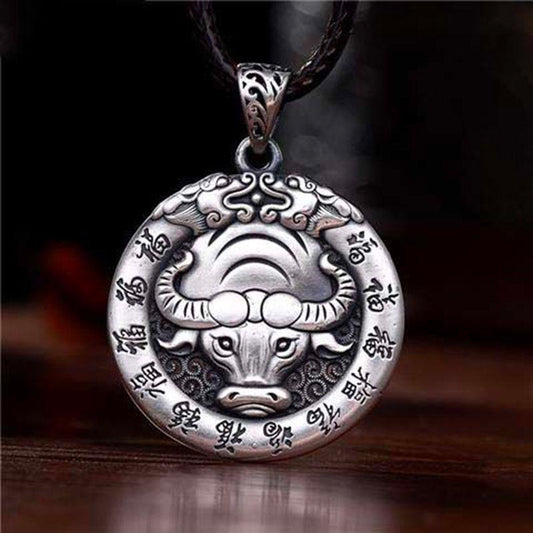
Imperial patronage helped Buddhist images circulate across regions during the Sui. The Buddha motif recalls the period's monasteries, sculpture, relic culture, and search for moral unity.
Featured design: Sakyamuni Buddha Pendant — Sterling Silver
$76.99 USD
Explore the Buddhist motif
Lotus · Purity Through Transformation
From Buddhist Symbol to Decorative Form
The lotus rises clean from muddy water and became a major Buddhist symbol of awakening. Lotus thrones and floral ornament appear throughout Buddhist art, including imagery associated with the Sui world.
Featured design: Hand Holding Lotus Chinese Style Earrings
$36.99 USD
Explore the lotus motif
Dragon · Authority and Auspicious Power
The Imagery of Imperial Order
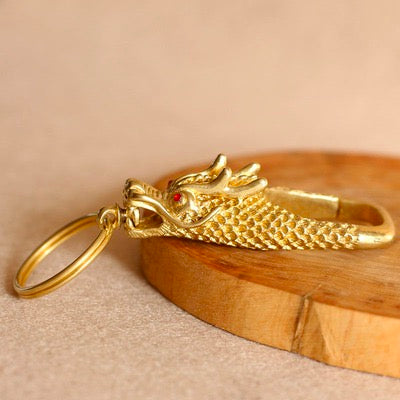
Across Chinese culture, dragons became associated with rain, cosmic vitality, and sovereign authority. The motif complements a history of the Sui state, whose rulers sought to present unity as both political and universal order.
Featured design: 3D Movable Chinese Dragon Zodiac Ornament — Brass
$36.99 USD
Explore the dragon motifFrequently Asked Questions
What did the Sui dynasty do?
The Sui reunited China in 589 after centuries of division, centralized government, expanded transport networks, promoted Buddhism, and created institutions that the Tang dynasty later developed.
What are three accomplishments of the Sui dynasty?
Its three best-known accomplishments are political reunification, the creation of an empire-wide Grand Canal network, and administrative reforms that strengthened centralized rule and examination-based recruitment.
What came after the Sui dynasty?
The Tang dynasty came after the Sui. It began in 618 and inherited many Sui institutions, transport systems, capitals, and administrative practices.
What massive construction project was completed during the Sui dynasty?
The best-known project was the Grand Canal network. The Sui connected and enlarged earlier waterways into an imperial system linking northern political centers with the grain-rich south.
What caused the fall of the Sui dynasty?
Heavy labor demands, taxes, costly building programs, repeated military campaigns against Goguryeo, floods and unrest weakened the state. Rebellions spread, and Emperor Yang was killed in 618.
What did the Sui dynasty accomplish?
Beyond reunification and canals, the Sui reformed law and taxation, extended the equal-field system, strengthened granaries and administration, rebuilt major capitals, and supported Buddhist institutions and art.
What did the Sui dynasty invent?
It is misleading to credit the Sui with one famous invention. Its importance lay more in reorganizing and scaling existing technologies and institutions, especially canal engineering, bureaucracy, land policy, and official examinations.
What was the greatest accomplishment of the Sui dynasty?
Most historians would choose either reunifying China or building the connected Grand Canal system. Reunification made other reforms possible, while the canal gave that unity lasting economic and logistical infrastructure.
What was the legacy of the Sui dynasty?
The Sui created the political and infrastructural foundation for the Tang. Its centralized institutions, canal system, capital planning, legal reforms, and religious culture outlived the dynasty itself.
What was the dominant religion during the Sui dynasty, and why was it important?
Buddhism received especially strong imperial patronage and helped rulers present reunification in universal moral terms. Daoism and Confucian state traditions also remained important, so Buddhism should not be described as the only religion.
References
- UNESCO World Heritage Centre. The Grand Canal. Accessed July 31, 2026.
- The Metropolitan Museum of Art, Department of Asian Art. Period of the Northern and Southern Dynasties (386–581). Heilbrunn Timeline of Art History.
- The Metropolitan Museum of Art. Bodhisattva, Probably Avalokiteshvara (Guanyin), China, Sui Dynasty. Collection record, accessed July 31, 2026.
- Asia for Educators, Columbia University. Sui Dynasty (581–618). Accessed July 31, 2026.
- Wright, Arthur F. The Sui Dynasty: The Unification of China, A.D. 581–617. 1978.
- Xiong, Victor Cunrui. Emperor Yang of the Sui Dynasty: His Life, Times, and Legacy. 2006.
- Book of Sui (Sui Shu), compiled under Wei Zheng and others, completed in the seventh century.