Zhuang culture is a living tradition shaped by rice landscapes, textiles, song, ritual, and community memory. The Zhuang are China’s largest officially recognized ethnic minority. Most Zhuang people live in Guangxi, while long-established communities can also be found in Wenshan in Yunnan, Lianshan in Guangdong, Congjiang in Guizhou, Jianghua in Hunan and other parts of southern China.
From rice-growing landscapes and village festivals to Zhuang brocade, embroidered balls, bronze drums, the tianqin lute and the Buluotuo oral tradition, Zhuang heritage combines deep local memory with contemporary creativity. Today, schools, museums, community workshops, cultural festivals and young designers are giving traditional knowledge new settings while communities continue to decide how it should be represented.

Zhuang People at a Glance
| Name | Zhuang people |
|---|---|
| Chinese name | 壮族 (Zhuàngzú) |
| 2020 population | 19,568,546 people |
| Main distribution | Guangxi, with communities in Yunnan, Guangdong, Guizhou, Hunan and elsewhere |
| Languages | Zhuang varieties, alongside Mandarin and other local languages |
| Writing | Regional historical Zhuang characters, modern Latin-based Zhuang writing and Chinese characters |
| Traditional livelihoods | Rice cultivation, mountain agriculture, forestry, handicrafts, trade and local services |
| Representative traditions | Zhuang brocade, March 3 song fairs, Buluotuo, bronze drums, tianqin, multipart songs, embroidered balls and five-colour sticky rice |
Who Are the Zhuang, and Where Do They Live?
Guangxi is the heartland of Zhuang settlement. Nanning, Chongzuo, Baise, Hechi, Liuzhou, Laibin and Guigang all connect Zhuang history with contemporary urban and rural life. In 2020, the Zhuang population recorded in China’s national census was 19,568,546.
Zhuang communities outside Guangxi have their own local histories. Wenshan in Yunnan, Lianshan in Guangdong, Congjiang in Guizhou and Jianghua in Hunan all show how language, family networks, migration and regional exchange shape cultural identity. It is more accurate to speak of a connected Zhuang cultural spectrum than of one uniform village style.
History and Regional Formation
Official histories often discuss the ancient Xi Ou and Luo Yue populations of the Lingnan region when describing the background of Zhuang history. Ancient population names do not map perfectly onto modern ethnic identities, so the most careful interpretation is that these early communities formed part of the historical environment from which later southern societies developed.
Since the Qin and Han periods, communities in the south have interacted through administration, migration, marriage, trade and language contact. Local songs, genealogies, inscriptions, roads and village stories preserve different parts of this long history. The modern standardized ethnonym “Zhuang” took shape through modern ethnic identification and public usage.
Zhuang Languages and Writing
Zhuang belongs to the Tai–Kadai language family and contains many regional varieties. Speech in eastern, southern and western Guangxi can differ from speech in Wenshan, Yunnan. Many Zhuang people are multilingual, using Mandarin, a Chinese local variety or a neighbouring minority language at school, at work or in public life.
Historically, some areas used locally created or adapted characters, often called ancient Zhuang characters, to record songs, ritual texts and community documents. These systems were not one single standardized script. During the twentieth century, a Latin-based standardized Zhuang writing system was developed for education and publishing, while Chinese characters remain important for communication across regions.
Rice-Growing Life, Villages and Raised-Floor Homes
Rice agriculture has shaped many Zhuang communities. River valleys support paddy fields, while hills support dryland crops, forestry, animal husbandry and gathering. Seasonal festivals often relate to sowing, harvest, rain, thanksgiving and family reunion.
In some areas, traditional raised-floor homes use timber frames, stone bases, wide eaves and open ventilation to respond to humid terrain. Contemporary housing is often built from brick and concrete, while older structures may become museums, guesthouses or community cultural spaces. Architectural features are shared across southern China, so a roof or timber frame alone cannot prove a building’s ethnic origin.
Clothing, Zhuang Brocade and Embroidery
Zhuang clothing changes by locality, age, marital status and occasion. Dark indigo or black textiles, embroidered collars, waist cloths, head coverings, silver ornaments and colourful bands are found in some communities, while festival and stage costumes may use additional sequins, appliqué and decorative borders.
Zhuang brocade is a weaving tradition built from warp-and-weft structures, colour planning and repeated motifs. Geometric forms, flowers, birds, animals and auspicious designs appear in different production areas, but their layouts and meanings are not identical everywhere. Brocade has been used for clothing, bedding, bags and ceremonial gifts and is now also adapted into scarves, wall hangings, accessories and home décor.

Song Fairs and Local Singing Traditions
Song fairs are important social spaces in many Zhuang areas. Singers use antiphonal verses, questions, stories and improvisation to talk about love, work, ethics, local history and everyday knowledge. A song fair may be a festival gathering, a village exchange or a stage adapted for contemporary audiences.
There is no single Zhuang melody. The three-part songs associated with Mashan use coordinated vocal lines; Napo folk songs have their own repertory and performance contexts; communities around the Hongshui and You rivers preserve other styles. These traditions belong to a broad Zhuang singing culture but should be identified by their locality and function.
March 3, Embroidered Balls and Five-Colour Sticky Rice
March 3 is one of Guangxi’s best-known cultural festivals. In many Zhuang communities, activities include song fairs, antiphonal singing, ancestor remembrance, visiting relatives, embroidered-ball exchanges, sports and shared meals. Five-colour sticky rice, coloured eggs and bamboo-pole dances may also appear.
March 3 is not exclusive to one ethnic group. Many communities in Guangxi participate in and interpret the festival in their own ways. Some places emphasize ritual and song, while others highlight youth gatherings, public performances and contemporary cultural tourism. An embroidered ball can be a craft object, a gift and a form of social exchange rather than merely a souvenir.

Bronze Drums, Tianqin and Dance
Bronze drums have a long history across Guangxi, Yunnan and neighbouring parts of southern China. In Zhuang communities they may accompany festivals, ceremonies, collective events and dance. Bronze-drum culture crosses regional and ethnic boundaries, so a responsible description names the place, collection or community connected with a particular drum.
The tianqin is a plucked instrument especially associated with parts of southwestern Guangxi. It can accompany singing, blessing, ritual and community performance. Its distribution is relatively local and should not be presented as an equally common instrument in every Zhuang area.
Buluotuo and Oral Tradition
Buluotuo is a major Zhuang oral tradition and sacred cultural figure, especially influential in communities around the Hongshui and You rivers. Narratives describe Buluotuo as a creator, ancestor or moral teacher and include stories about the origins of the world, social order, marriage, production and the relationship between people and nature.
Buluotuo knowledge is transmitted through speech, singing, ritual and festival practice. Versions and ceremonies vary by community. Buluotuo was included in China’s first national list of representative intangible cultural heritage projects in 2006. Listing does not turn a living tradition into one fixed text; it makes continued community-based transmission more important.
Foodways and Everyday Life
Rice and sticky-rice foods are central to many Zhuang foodways. Five-colour sticky rice, rice cakes, fermented and pickled foods, sour dishes, seasonal vegetables, river fish and mountain ingredients appear in different local cuisines. Taste varies widely: some areas favour sour flavours, others use more chilli, and urban restaurants often reinterpret village dishes for new diners.
Food is connected to farming calendars, weddings, rituals, hospitality and shared labour. A good cultural description names the region and occasion instead of presenting one local dish as the everyday food of every Zhuang household.
Contemporary Transmission and Respectful Storytelling
Modern Zhuang life includes city residents, rural communities, students, migrant workers, teachers, craft makers, researchers and digital creators. The use of Zhuang languages, traditional clothing and ritual practice differs from family to family. Young people increasingly encounter heritage through school clubs, museums, workshops, festivals, short videos and contemporary design.
Living transmission is more than reproducing an old appearance. It includes recording techniques, supporting senior makers, teaching local languages, respecting community permissions and allowing traditions to remain useful in present-day life. When using patterns, songs, photographs or personal stories commercially, creators should identify sources, obtain permission and discuss benefit sharing.

Cultural Symbols and Related Craft Inspiration
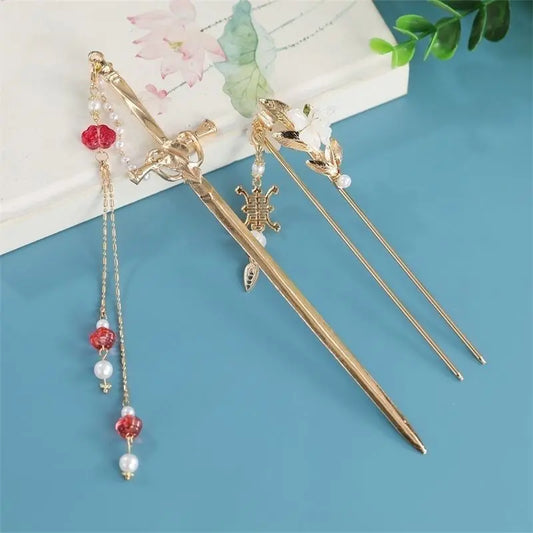
These contemporary Chinese craft items connect broadly with textile work, ornament and everyday craftsmanship. They are not presented as Zhuang-made heritage objects, and their appearance is not evidence of a Zhuang origin.
 DIY Chinese Embroidery Set
A hands-on introduction to stitching, colour planning and layered textile construction in a modern craft kit.
$36.99 Bamboo Tea Cup Mat Set
A contemporary household object highlighting bamboo as a durable and versatile craft material.
$76.99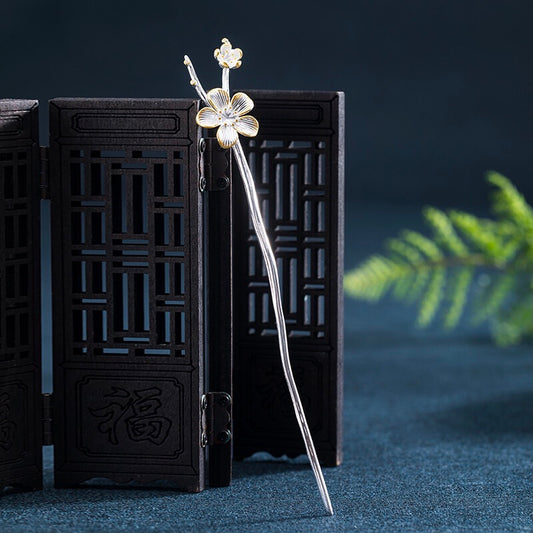 Plum Blossom Silver Hairpin
A contemporary floral hair ornament for exploring the relationship between pattern, adornment and personal style.
$46.99Frequently Asked Questions
Where do the Zhuang mainly live?
Guangxi is the main Zhuang region. Long-established communities also live in parts of Yunnan, Guangdong, Guizhou, Hunan and other provinces.
Do the Zhuang have their own language and writing?
Yes. Zhuang has many regional varieties. People may also use Mandarin or local Chinese varieties. Historical local scripts existed, while modern standardized Zhuang writing uses a Latin-based system alongside Chinese characters.
Is March 3 celebrated only by the Zhuang?
No. March 3 is shared by multiple communities in Guangxi. Zhuang celebrations often feature song fairs, embroidered balls and five-colour sticky rice, but local practice varies.
What is the difference between Zhuang brocade and embroidery?
Brocade is woven through the structure of the cloth, while embroidery creates designs with needle and thread on the surface. Traditional clothing may combine brocade, embroidery, dyeing and woven bands.
Is Buluotuo worshipped in exactly the same way by all Zhuang people?
No. Buluotuo is especially important in some Zhuang areas, and stories and ritual practices differ between communities.
References and Further Reading
Most linked sources are in Chinese. Population figures refer to 2020. Historical descriptions of customs should not be assumed to describe all families today.
- National Ethnic Affairs Commission: Zhuang overview. Population, distribution and language.
- National Ethnic Affairs Commission: Zhuang historical development. Historical formation and regional connections.
- National Ethnic Affairs Commission: Zhuang customs. Food, festivals, housing and everyday practices.
- China Intangible Cultural Heritage Network: March 3 traditions.
- China Intangible Cultural Heritage Network: Buluotuo.
- China Intangible Cultural Heritage Network: Zhuang three-part folk songs.
- China Intangible Cultural Heritage Network: Napo Zhuang folk songs.
Related Reading
Recommended Categories
Image note: The images used in this article were selected from the supplied materials without visible Chinese captions, logos or watermarks. Materials containing prominent Chinese text or platform marks were not uploaded.