The Korean ethnic group in China, known in Chinese as Chaoxianzu, has a cultural history shaped by migration, rice cultivation, language, music, and family life. Its traditions connect with the wider Korean cultural world while reflecting generations of community life in Northeast China.
A drum performance or a colorful ceremonial outfit may be the first thing a visitor notices. Yet everyday practices—preparing food for winter, sharing a heated living space, passing on a song, or speaking with older relatives—offer equally valuable ways to understand this heritage. Shared cultural roots do not mean that every community follows identical customs.

Korean People of China at a Glance
| Chinese name | 朝鲜族 |
|---|---|
| Pinyin | Cháoxiǎnzú |
| English names | Korean ethnic group in China; Korean Chinese |
| Population in China | 1,702,479 in the 2020 census. [1] |
| Main distribution | Jilin, Heilongjiang, and Liaoning, with communities elsewhere in China. [1] |
| Important autonomous areas | Yanbian Korean Autonomous Prefecture and Changbai Korean Autonomous County, Jilin. [1] |
| Language and writing | Korean language and its alphabetic writing system; actual use varies between families, places, and generations. |
| Cultural entry points | Farmers' dance, dress, music, food preservation, heated-floor homes, and seasonal celebrations. |
Who Are the Korean People of China?
Chaoxianzu is one of China's 56 officially recognized ethnic groups. In this context, the term identifies an ethnic community within China; it is not another name for citizens of North Korea. Ethnicity, nationality, language, and residence describe different things and should not be used interchangeably. [1]
Yanbian is a particularly important center of Korean Chinese cultural life, but it is not the community's only home. Nor does an individual's clothing, occupation, or level of Korean-language fluency provide a test of whether that person is “authentically” Korean Chinese.
Migration and Community Formation
The formation of Korean communities in China involved multiple movements of people rather than one single migration. Earlier family histories coexist with the much larger movements across the Yalu and Tumen river regions from the nineteenth century onward. Livelihood pressures, famine, and later colonial rule and conflict shaped different migration experiences. [2]
Building a new life meant more than crossing a border. Settlers developed farms and irrigation, formed local relationships, and interacted with Han, Manchu, and other neighboring communities. This history helps explain why Korean Chinese traditions have shared roots with the Korean Peninsula while also developing distinctive regional forms. [2]
Language, Writing, and Cultural Memory
Korean carries family histories, forms of address, songs, and ways of expressing respect. Its use is not uniform: home language, schooling, work, migration, and generational change all affect how people speak and read.
The Korean writing system is alphabetic. Letters representing sounds are arranged into syllable blocks; these blocks should not be mistaken for Chinese characters. The alphabet was created under King Sejong in the fifteenth century, and the Hunminjeongeum explanation was published in 1446. [5]
For readers unfamiliar with the language, a useful starting point is to notice the distinction between language and script. Learning how writing works is one doorway into a cultural world, but understanding songs, stories, and conversational etiquette also requires listening to the people who use it.
Rice Cultivation and Village Cooperation
Korean settlers contributed to the development of rice cultivation in Northeast China. Irrigation knowledge and cooperation between households were important parts of rural community formation. Historical accounts describe collective agricultural arrangements as well as mutual assistance in farm work. [2]
This agricultural setting matters when interpreting performance traditions. Music and movement could accompany collective work, celebrations, and village gatherings. A contemporary stage presentation is one setting in which these arts appear, not the whole of their social history. [9]
Traditional Dress and Changing Fashion
Commonly described women's dress combines a short jacket with a long skirt; men's dress includes jackets and loose trousers, sometimes with a vest. Fastenings, borders, sleeve shapes, fabric, and proportions all contribute to the appearance of an outfit. Historical descriptions also record changes in clothing across the twentieth century. [4]
White clothing has an important place in historical accounts, but it would be misleading to say that Korean people only wear white. Colorful ceremonial and festive clothing belongs to the tradition too. Age, occasion, local practice, available materials, and changing tastes affect what people wear. [4]
When looking at an image, ask whether it shows everyday dress, ceremonial clothing, a performance costume, or a modern portrait. These categories can influence one another, but they are not interchangeable historical evidence.

Homes, Heated Floors, and Household Textiles
Descriptions of Korean ethnic dwellings in Northeast China emphasize their relationship with a cold climate. Heated platforms or floors provided a warm space used for more than sleeping: household activities, meals, conversation, and receiving visitors could take place around them. Local accounts also describe low furniture and removing shoes before entering the heated living area. [6]
These arrangements help explain why bedding, cushions, storage, and the organization of floor-level space are useful subjects for cultural study. The home can be a place where practical skills and aesthetic preferences meet. This does not mean that every Korean Chinese family today lives in a traditional house or follows identical domestic routines.

Foodways and the Shared Table
Rice, soup, and seasoned or preserved side dishes are familiar elements in accounts of Korean Chinese foodways. Cold noodles and rice cakes provide other recognizable entry points. Ingredients and preparation methods vary by region, household, season, and occasion. [3]
A restaurant menu should not be treated as a complete record of home cooking. Similarly, an elaborate commercial feast is not necessarily representative of an ordinary historical meal. Cultural description is more useful when it asks who prepared a dish, where, when, and for what occasion.
Kimchi Making and Preparing for Winter
Kimchi making brings together vegetable selection, salting, seasoning, fermentation, and storage. In the preparation of winter supplies, practical knowledge includes judging ingredients and adapting methods to household needs. Such knowledge is learned through doing as well as through written recipes. [7]
The Korean ethnic group's kimchi-making technique, submitted by Yanji in Jilin, entered China's national intangible cultural heritage list in its fourth batch in 2014. The listing highlights a living practice and its transmission; it is not a claim that related food traditions belong exclusively to one place. [7]
Shared preparation and the exchange of food can also sustain relationships between relatives and neighbors. This social dimension is part of what makes a food practice more than a list of ingredients. No medical benefit needs to be claimed to recognize that cultural value.
Festivals, Family Gatherings, and Games
Chuseok, associated with the fifteenth day of the eighth lunar month, is an important seasonal occasion in Korean cultural traditions. Accounts of Korean Chinese observance describe family gatherings, remembrance of ancestors, and festive foods. Practices differ between families and places. [8]
Traditional recreation includes wrestling, swinging, and seesaw jumping. These activities bring movement, skill, and sociability into festive life. Historical descriptions are best read as records of particular practices, not as rules that every present-day family must follow. [3]
Farmers' Dance, Folk Songs, and Instruments
“Farmers' dance of China's Korean ethnic group” was inscribed on UNESCO's Representative List of the Intangible Cultural Heritage of Humanity in 2009. It combines music and movement with community participation and draws on an agricultural social setting. [9]
Ribbon-hat performances, in which a dancer controls the movement of a long ribbon attached to headgear, are one striking expression within this performance world. They should not stand in for every form of farmers' dance or all Korean Chinese dance traditions. UNESCO's account emphasizes a living practice that continues to adapt. [9]
The musical landscape also includes folk songs, narrative singing such as pansori, and instrumental traditions associated with the gayageum zither and janggu hourglass drum. A Central Conservatory of Music workshop illustrates how these forms can be studied through practitioners, teaching, and performance. [11]
These arts require training, memory, technique, and opportunities to participate. Describing an entire ethnic group as “naturally gifted at singing and dancing” obscures the work of individual artists and teachers.
Living Heritage Today
Heritage continues through people: teachers, musicians, dancers, cooks, makers, and families. Documentation of farmers' dance describes transmission through community activity, educational settings, and organized safeguarding work. [10]
Preserving a costume or recording a performance can be valuable, but neither replaces the social setting in which skills are learned. A living tradition may change its performance space or reach a new audience while retaining meaningful connections with community knowledge.
Common Misunderstandings
- “Chaoxianzu means North Korean nationality.” Here it names an ethnic group in China, not a citizenship category.
- “All Korean Chinese live in Yanbian.” Yanbian is an important center, not the only place where communities live.
- “Shared roots mean identical customs everywhere.” Regional and family histories produce variation.
- “A tourist portrait proves historical everyday dress.” Contemporary styling needs to be distinguished from dated historical evidence.
- “A heritage listing decides exclusive cultural ownership.” Listings recognize particular practices and safeguarding contexts; related traditions can exist across borders.
Cultural Symbols and Related Craft Inspiration
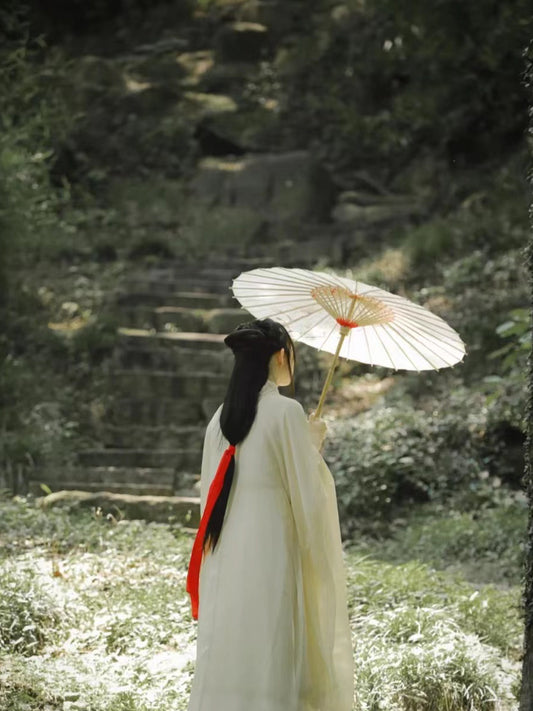
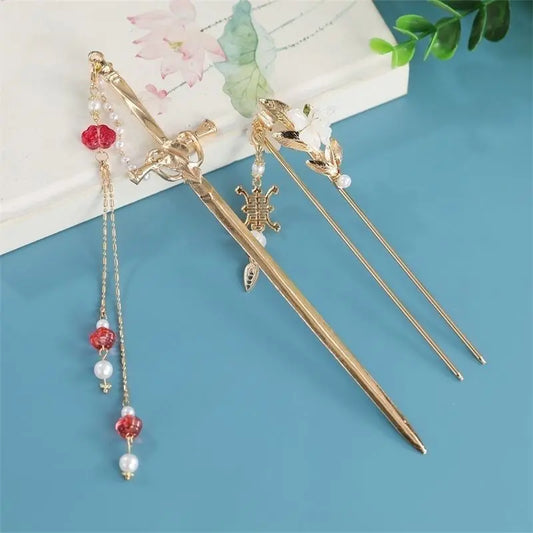
These contemporary Chinese craft items relate broadly to personal ornament and making. They are not presented as Korean Chinese heritage objects or reproductions of documented historical artifacts.
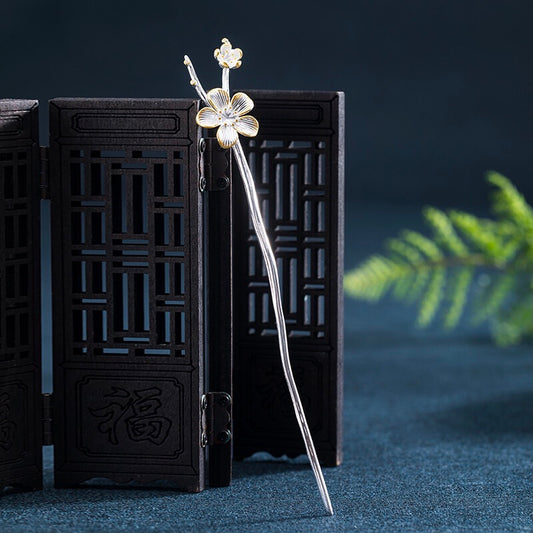 Plum Blossom Silver Hairpin
A contemporary Chinese floral hair ornament, not a reproduction of Korean Chinese ceremonial jewelry.
$46.99 DIY Chinese Embroidery Set
A hands-on introduction to stitching and layered textile construction in a modern craft kit.
$36.99 Bamboo Tea Cup Mat Set
A contemporary household object that highlights bamboo as a durable and versatile craft material.
$76.99Frequently Asked Questions
Where do Korean Chinese communities live?
Mainly in Jilin, Heilongjiang, and Liaoning, with communities elsewhere in China. Yanbian is an important center but not their only home.
How many Korean people were recorded in China’s 2020 census?
The 2020 census recorded 1,702,479 people in the Korean ethnic group. This is a dated census figure, not a real-time population estimate.
Is Korean writing the same as Chinese characters?
No. The Korean alphabet represents sounds, with letters arranged into syllable blocks.
Is traditional Korean clothing always white?
No. White has historical significance, while colorful ceremonial and festive garments also form part of dress traditions.
When did the farmers’ dance receive UNESCO recognition?
Farmers’ dance of China’s Korean ethnic group was inscribed on UNESCO’s Representative List of the Intangible Cultural Heritage of Humanity in 2009.
Why is food preparation considered cultural heritage?
It can transmit practical skills, seasonal knowledge, family memories, and relationships through shared preparation and teaching.
References and Further Reading
- National Ethnic Affairs Commission: Overview of the Korean Ethnic Group. Population and distribution; census figure from 2020. Source in Chinese.
- National Ethnic Affairs Commission: Historical Development. Migration, agriculture, and community formation. Source in Chinese.
- National Ethnic Affairs Commission: Customs and Practices. Food, recreation, and cultural practices; historical descriptions should not be assumed universal today. Source in Chinese.
- Heilongjiang Local Chronicles: Korean Ethnic Clothing. Garment forms and changing dress practices. Source in Chinese.
- National Hangeul Museum: Permanent Exhibition. The creation and structure of Hangeul and the publication of Hunminjeongeum.
- Mishan Municipal Government: Korean Ethnic Dwellings. Regional descriptions of housing and heated living spaces. Source in Chinese.
- China Intangible Cultural Heritage Network: Korean Kimchi-Making Technique. National heritage entry, Yanji, fourth batch, 2014. Source in Chinese.
- China Intangible Cultural Heritage Network: Mid-Autumn Customs. Seasonal celebrations, including Korean ethnic customs. Source in Chinese.
- UNESCO: Farmers’ Dance of China’s Korean Ethnic Group. Representative List inscription, 2009; community context and transmission.
- China Intangible Cultural Heritage Network: Farmers’ Dance. Safeguarding and transmission. Source in Chinese.
- Central Conservatory of Music: Korean Ethnic Music Workshop. Practitioner-led study of musical genres and instruments. Source in Chinese.