Manchu culture reaches far beyond the Qing imperial court: it also lives in language, storytelling, paper-cutting, clothing, seasonal customs, and family memory. From the mountains and rivers of Northeast China to communities across the country, its history is a story of movement, exchange, and changing everyday lives.
Beautiful robes and palace portraits can offer a starting point, but they cannot tell the whole story. To understand the Manchu people, we also need to listen to oral narratives, look at local craft traditions, and consider how families preserve and reinterpret their heritage today.

Manchu People at a Glance
| Chinese name | 满族 |
|---|---|
| Pinyin | Mǎnzú |
| English name | Manchu people |
| Population in China | 10,423,303, according to the 2020 census [1] |
| Main distribution | Liaoning, Hebei, Heilongjiang, Jilin, Inner Mongolia, and Beijing, with communities elsewhere in China [1] |
| Language and writing | The Manchu language and Manchu script; oral transmission and archival literacy face different challenges |
| Representative traditions | Oral storytelling, paper-cutting, historical robe traditions, seasonal customs, and family histories |
| Heritage examples | Manchu Shuobu oral narratives and Xiuyan Manchu paper-cutting are on China's national intangible cultural heritage list [8] [9] |
History and the Manchu Name
The formation of the Manchu people is closely connected with the Jurchen peoples of Northeast China. Accounts of the region's deeper past also discuss names such as Sushen, Yilou, Wuji, and Mohe. These names should not be treated as labels for one fixed, unchanged ethnic community across every historical period. Political organization, migration, language, and relationships between communities changed over time. [2]
During the late Ming period, Nurhaci consolidated Jurchen groups and founded the Later Jin state. Hong Taiji subsequently reshaped its institutions. In 1635, the name Manchu was formally adopted under Hong Taiji; in 1636, he proclaimed the Qing dynasty. The adoption of a name was an important political and historical event, not the creation of a people's entire culture overnight. [2]
Manchu history is therefore more than a sequence of emperors. It includes the movement of households, the establishment of communities, and long-term interaction with neighboring peoples. Local histories and family memories help bring these experiences into view.
The Eight Banners were a system of military and social organization, not simply another name for the Manchu ethnic group. The Qing banner structure included Manchu, Mongol, and Han military banner divisions. Banner affiliation and ethnic identity consequently cannot be treated as interchangeable categories in every context. [4]
Nor does being Manchu mean being a descendant of the imperial family. Royal lineages formed only one part of a much wider society. Reducing Manchu culture to palace life leaves out the experiences of ordinary families, artisans, storytellers, and communities far from the court.
Manchu Language, Script, and Cultural Memory
Manchu has its own language and writing tradition. The script was developed on the basis of Mongolian writing and was later refined with dots and circles to distinguish sounds more clearly. Manchu-language documents preserve a substantial body of Qing-period administrative, historical, and cultural material. [2]
It is important to distinguish three kinds of continuity: speaking Manchu as a language learned in the family, studying it as a second language, and learning to read historical documents. Progress in one area does not automatically mean that the others are secure.
Spoken Manchu is severely endangered, but describing it as completely vanished is inaccurate. Work reported by Heilongjiang University includes field recording in Sanjiazi, the collection of audio and video materials, and the development of language resources. These efforts demonstrate why careful documentation and teaching matter. [5]
Manchu Clothing: Historical Robes and the Modern Qipao
Long robes, jackets, decorative borders, and carefully arranged fastenings are important parts of the history of Manchu dress. Yet garments differed according to period, gender, social position, season, and occasion. A formal court robe should not be used as a model for every person's everyday clothing.

For example, the Palace Museum describes a particular robe embroidered with eight roundels of kui-dragon and peony designs, with a right-side fastening, side openings, and horsehoof cuffs. Such details are valuable because they describe a specific documented object. They should not be extended automatically to every robe shown in a photograph. [6]
Is today's qipao the same as Qing-period banner dress?
No. The modern qipao developed through twentieth-century changes in fashion, drawing on earlier robe traditions while also responding to new tailoring methods, urban lifestyles, and Western influences. The China National Silk Museum's exhibition on a century of qipao fashion traces this changing history. A fitted modern qipao is not simply an unchanged Qing garment. [7]

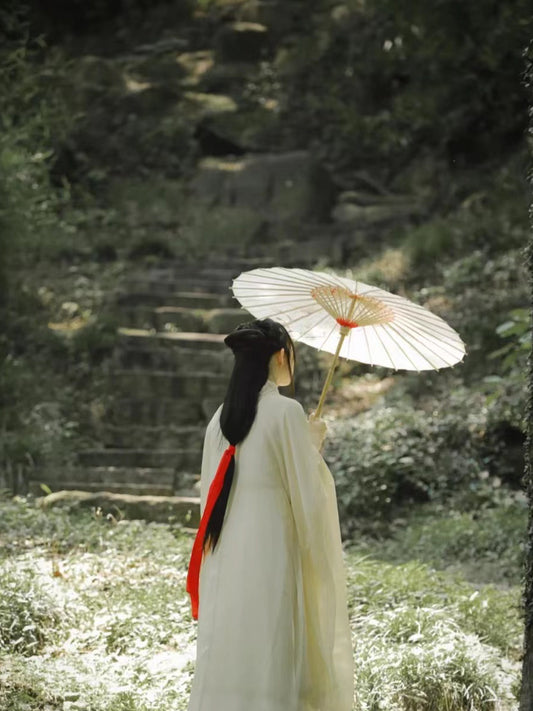
When looking at clothing or accessories, useful questions are: When was this made? Where was it worn? Who used it, and for what occasion? These questions reveal more than a single label such as “traditional costume.” Contemporary costume portraits can celebrate historical styles, but they are not documentary photographs of Qing everyday life.
Paper-Cutting and the Meanings of Patterns
Xiuyan Manchu paper-cutting in Liaoning offers a window onto local visual culture. Its themes include ancestral traditions, stories, seasonal life, and community customs. The heritage record also describes uses such as window decoration, hanging paper ornaments, lantern decoration, and patterns associated with needlework. Xiuyan Manchu paper-cutting entered China's national intangible cultural heritage list in 2008. [8]
A pattern is more than its outline. The material, cutting process, maker's explanation, and occasion of use all contribute to its meaning. A similar-looking motif can appear in several regions or traditions; resemblance alone does not establish a uniquely Manchu origin.
Rather than assigning one universal meaning to every flower, animal, or geometric form, it is better to ask how a particular community understands and uses it.
Manchu Shuobu: History Remembered in the Spoken Voice
Manchu Shuobu, associated with the oral narrative tradition known as ulabun, encompasses extended storytelling about ancestors, heroes, families, and local experience. It was included in China's first national intangible cultural heritage list in 2006. [9]
These narratives are not merely written texts waiting to be read aloud. A storyteller's voice, the relationship with listeners, and the setting of a performance help shape the experience. Recording the words is important, but so is understanding how stories are learned, remembered, and retold.
Mythic and legendary passages should not be read as straightforward chronological records. Their value also lies in the ways they express memory, imagination, relationships, and a community's sense of its past.
Food and Festivals in Everyday Life
The famous idea of a “Manchu–Han Imperial Feast” should not stand in for the food of every Manchu household. A ceremonial banquet and a family's ordinary meals are different subjects, and regional conditions and personal habits matter.
Descriptions of Manchu seasonal customs include making saqima, eating dumplings during Spring Festival, and decorating homes with window paper-cuts and hanging paper ornaments in some communities. These practices belong to a wider world of family visits, hospitality, and preparations for the new year. They should not be presented as identical in every locality. [3]
Banjin celebrations commemorate the adoption of the Manchu name. Contemporary events may bring together performances, dress, and community activities. Their significance today does not require every element of a modern program to have survived unchanged since the seventeenth century. [3]
Beliefs, Ancestors, and Family Memory
Shamanic traditions and ancestral rites are important subjects in the study of Manchu cultural history. However, court ceremonies, local practices, and family observances should be considered separately. Their form and significance have varied across periods and communities. [3]
Historical descriptions, present-day religious practice, and cultural demonstrations are also different kinds of evidence. A person's ethnic identity does not tell us what that individual believes or practices. Family histories, remembered places, and the stories attached to inherited objects may be just as meaningful to contemporary identity.
Manchu Culture as Living Heritage
Cultural continuity is not limited to keeping old objects in a display case. It can involve recording a speaker, studying an archive, teaching paper-cutting, documenting a storyteller, or asking older relatives about family experiences. Language research and heritage documentation show different ways of carrying knowledge forward. [5] [8] [9]
Contemporary design can also engage with the past. But a newly designed object inspired by historical imagery should be described honestly as a modern interpretation, not automatically as a traditional Manchu craft. Clear attribution respects both historical knowledge and the creativity of present-day makers.
Common Misunderstandings
- “Manchu culture is simply Qing court culture.” Imperial life is only one part of a much broader history of communities and families.
- “Everyone in the Eight Banners was Manchu.” The banner system also included Mongol and Han military banner divisions.
- “A modern qipao is identical to Qing banner dress.” Twentieth-century fashion substantially transformed the garment.
- “The Manchu language has completely disappeared.” Oral Manchu is severely endangered, while recording, research, and teaching continue.
- “A television costume proves how everyone dressed.” Historical interpretation requires dated objects and contextual evidence, not screen imagery alone.
Cultural Symbols and Related Craft Inspiration
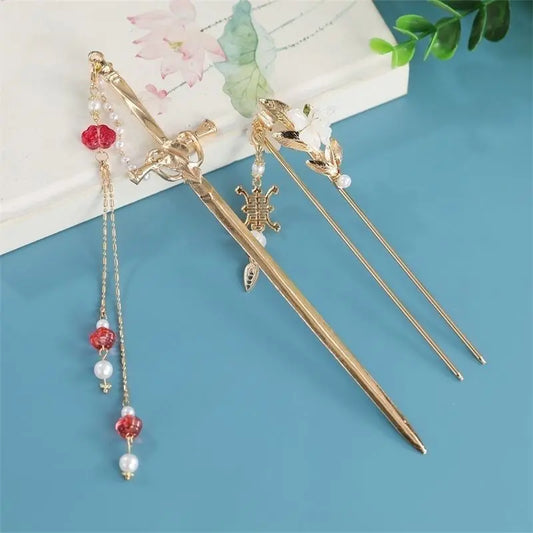
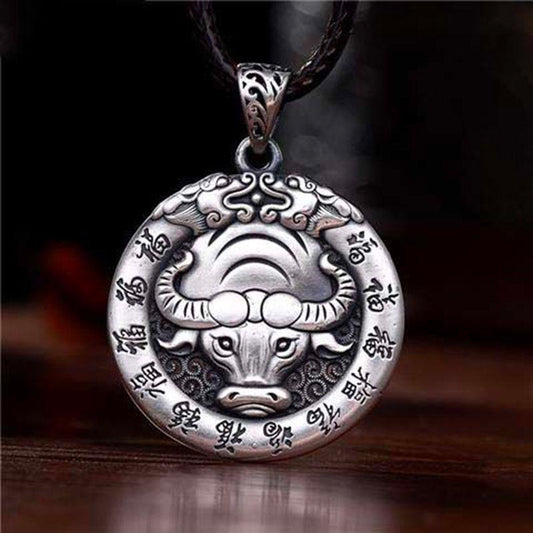
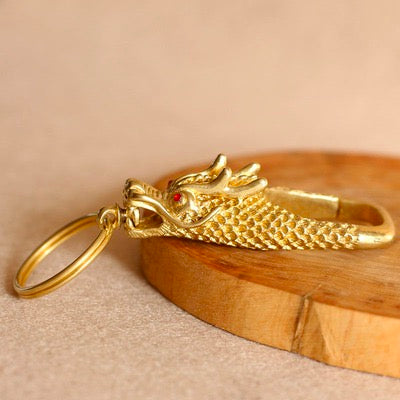
The following modern Chinese craft items connect broadly with personal ornament, embroidery, and bamboo work. They are not presented as Manchu-made heritage objects or as reproductions of historical Manchu artifacts.
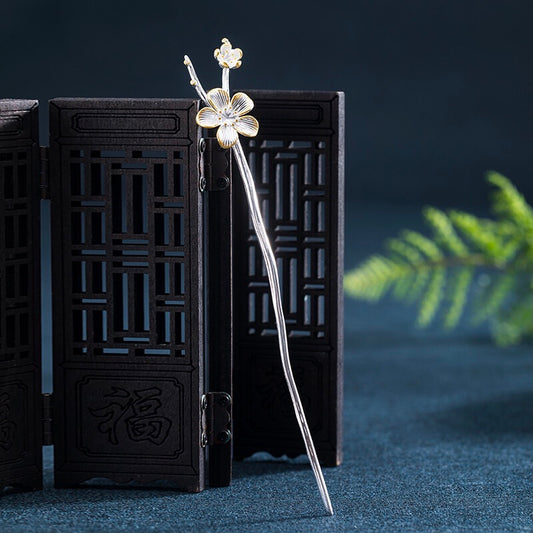 Plum Blossom Silver Hairpin
A contemporary Chinese floral hair ornament, not a reproduction of Manchu ceremonial jewelry.
$46.99 DIY Chinese Embroidery Set
A hands-on introduction to stitching and layered textile construction in a modern craft kit.
$36.99 Bamboo Tea Cup Mat Set
A contemporary household object that highlights bamboo as a durable and versatile craft material.
$76.99Frequently Asked Questions
Where do the Manchu people live?
Manchu communities are found across China, with important concentrations in Liaoning, Hebei, Heilongjiang, Jilin, Inner Mongolia, and Beijing.
How many Manchu people live in China?
The 2020 census recorded 10,423,303 Manchu people in China.
Do the Manchu people have their own writing system?
Yes. Manchu script developed from Mongolian writing and was later refined. It preserves a rich documentary tradition, while spoken-language transmission is a separate and severely endangered area.
Are all Manchu people descendants of the Qing imperial family?
No. The imperial family was only one part of Manchu society. Ethnic identity, royal ancestry, and banner affiliation are different concepts.
What is Manchu Shuobu?
Manchu Shuobu is an extended oral storytelling tradition encompassing ancestral, heroic, family, and local narratives. Voice, performance, and transmission are integral to it.
How should I understand Manchu clothing?
Look for the date, place, wearer, and occasion. Distinguish court clothing from other historical dress and from modern qipao fashion or contemporary costume photography.
References and Further Reading
- National Ethnic Affairs Commission: Overview of the Manchu People. Population and geographic distribution; the population figure refers to the 2020 census. Source in Chinese.
- National Ethnic Affairs Commission: Historical Development of the Manchu People. Historical formation, naming, and language background. Source in Chinese.
- Heilongjiang Provincial Government: Introduction to Manchu History and Customs. Regional descriptions of festivals, food, and customary practices. Source in Chinese.
- The Palace Museum: The Eight Banners System. The organization of the banner system. Source in Chinese.
- Heilongjiang University: Manchu Language Research and Field Documentation. Contemporary field recording and language-resource work. Source in Chinese.
- The Palace Museum: Robe with Eight Roundels of Kui-Dragon and Peony Embroidery. A documented collection object; not an attribution of the robe pictured in this article. Source in Chinese.
- China National Silk Museum: A Century of Chinese Qipao Fashion. The changing forms and history of the modern qipao. Source in Chinese.
- China Intangible Cultural Heritage Network: Xiuyan Manchu Paper-Cutting. National heritage entry, techniques, themes, and uses. Source in Chinese.
- China Intangible Cultural Heritage Network: Manchu Shuobu. National heritage entry for the oral narrative tradition. Source in Chinese.