For thousands of years, Chinese culture has developed a rich system of symbols believed to attract wealth, prosperity, and financial stability. These Chinese good luck symbols for money are deeply rooted in philosophy, folklore, and Feng Shui, and they continue to influence modern life, from home decoration and jewelry to business branding and gift-giving.
In this in-depth guide, we explore the most important Chinese symbols associated with money and abundance, explain their meanings, and show how they are traditionally used to attract financial luck.
Why Money Symbols Are Important in Chinese Culture
In traditional Chinese thought, wealth is not only about material accumulation but also about balance, timing, and harmony with natural forces. Influenced by Taoism, Confucianism, and Feng Shui, prosperity is believed to flow when energy (Qi) moves freely and aligns with auspicious symbols.
Chinese good luck symbols for money serve three main purposes:
- To attract wealth and opportunities
- To protect existing assets
- To encourage long-term prosperity and stability
These symbols are commonly displayed in homes, offices, shops, and worn as personal talismans.
Pixiu (貔貅) – The Ultimate Wealth Guardian
Pixiu is one of the most powerful and popular Chinese wealth symbols. It is a mythical creature resembling a winged lion, known for its ability to attract and safeguard riches.
According to legend, Pixiu feeds exclusively on gold, silver, and treasures and has no anus—symbolizing wealth that enters but never leaves.

Wealth Meaning
- Attracts unexpected wealth and windfalls
- Protects assets from loss
- Enhances business and investment luck
Pixiu is often found in Feng Shui statues, bracelets, and pendants, especially favored by entrepreneurs and investors.

Chinese Coins – Wealth, Continuity, and Protection
Traditional Chinese coins, usually round with a square hole in the center, are one of the oldest symbols of money luck. The round shape represents heaven, while the square hole symbolizes earth—together signifying harmony between cosmic forces.
Common Uses
- Tied with red string for good fortune
- Placed in wallets or cash registers
- Hung near entrances for protection
Chinese coins symbolize steady income, financial security, and the continuous flow of wealth.
Gold Ingot (Yuanbao 元宝) – Symbol of Abundance
The gold ingot, or yuanbao, was the official currency used in ancient China. Its distinctive boat-like shape has become a universal symbol of prosperity.
Yuanbao are commonly displayed during Chinese New Year and in Feng Shui wealth corners to attract financial blessings.

Symbolic Meaning
- Material wealth and abundance
- Good fortune in business
- Accumulation of assets
Dragon (龙) – Power, Authority, and Success
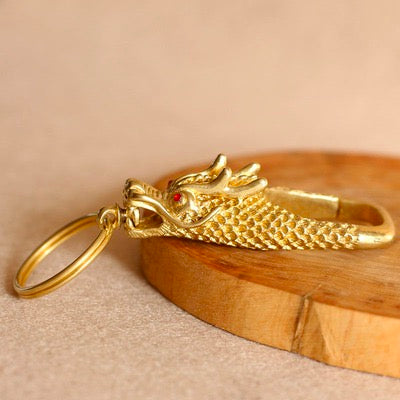
The dragon is one of the most revered symbols in Chinese culture. While not exclusively a money symbol, it represents power, authority, and success—all essential foundations of wealth.
In Feng Shui, dragons are believed to attract opportunities, leadership success, and long-term prosperity.
Financial Significance
- Success through influence and leadership
- Career advancement and recognition
- Protection of wealth
Three-Legged Money Frog (金蟾) – Attracting Wealth
The three-legged money frog, often depicted sitting on a pile of coins with a coin in its mouth, is a classic Feng Shui symbol for attracting money.
It is traditionally placed near entrances, facing inward, to symbolize money entering the home or business.

Meaning
- Attracts wealth and prosperity
- Encourages stable income
- Enhances financial luck
Lucky Bamboo (富贵竹) – Growth and Financial Stability
Lucky bamboo is widely used in Feng Shui as a living symbol of growth, resilience, and prosperity. Its upright growth represents upward financial progress.
The number of stalks also carries meaning:
- 3 stalks – Wealth, happiness, longevity
- 5 stalks – Balanced prosperity
- 8 stalks – Abundance and success

Red Color – The Color of Wealth and Luck
In Chinese culture, red is the most auspicious color. It symbolizes joy, vitality, and good fortune, making it closely associated with money luck.
Red envelopes (hongbao) filled with money are traditionally given during Chinese New Year, weddings, and celebrations as a blessing of prosperity.
Cat of Fortune (Zhao Cai Mao 招财猫)
Although originally from Japan, the beckoning cat has been widely adopted into Chinese culture as a money-attracting symbol, especially in shops and restaurants.
The raised paw is believed to invite wealth and customers.

How to Use Chinese Money Symbols Effectively
To maximize the benefits of Chinese good luck symbols for money, traditional Feng Shui suggests:
- Placing symbols in the wealth corner (southeast)
- Keeping symbols clean and respected
- Combining intention with action
- Avoiding clutter around wealth symbols
Wealth symbols work best when paired with positive habits, discipline, and gratitude.
Conclusion: Wealth, Symbolism, and Cultural Wisdom
Chinese good luck symbols for money reflect a holistic understanding of prosperity—one that values balance, timing, and moral integrity alongside material success.
From Pixiu and Chinese coins to dragons and lucky bamboo, these symbols carry centuries of cultural wisdom. Whether displayed in your home, worn as jewelry, or given as gifts, they serve as meaningful reminders of abundance, protection, and opportunity.
By understanding and respecting their meanings, you can incorporate these timeless symbols into modern life as both cultural expressions and sources of inspiration.