The Jino people are an ethnic group whose best-known homeland is Jino Mountain in Jinghong, Xishuangbanna, Yunnan Province, China. Their cultural heritage grew in a humid mountain environment shaped by rainforest ecology, tea cultivation, rice and maize farming, bamboo craftsmanship, oral tradition, and close village cooperation. Although the population is comparatively small, Jino clothing, songs, weaving, the Temaoke Festival, and the powerful Jino drum dance form a distinctive part of China's cultural diversity.
The Jino should not be described as a community frozen in an ancient past. Contemporary Jino families study, work, travel, use digital media, grow commercial crops, run businesses, and participate in tourism and cultural preservation. Traditions also vary among villages, families, generations, and performance settings. A photograph of one costume or one festival moment is evidence of a particular expression, not a uniform rule for every Jino person.
| Topic | Overview |
|---|---|
| Chinese name | Jinuo, commonly written Jino in English |
| Main homeland | Jino Mountain and neighboring areas of Jinghong, Xishuangbanna, Yunnan |
| Language | Jino language, generally classified within the Tibeto-Burman branch of the Sino-Tibetan family |
| Representative festival | Temaoke, historically associated with ironworking, agriculture, renewal, and community ritual |
| Representative heritage | Jino drum dance, songs, weaving, embroidery, bamboo work, and oral narratives |
| Important caution | Customs and clothing differ by village, generation, occasion, and modern context |
How Do You Pronounce Jino?
In English, Jino is commonly approximated as jee-NOH. The pinyin spelling is Jinuo, pronounced with a high, level first syllable and a falling second syllable. English speakers will not reproduce the tones exactly, so the most useful approach is to say the two syllables clearly.
Jino and Jinuo are both encountered in English-language material. Jinuo follows the fuller pinyin spelling, while Jino is a widely established ethnonym. Neither spelling should be confused with similarly spelled communities elsewhere.
Who Are the Jino People of China?
The Jino are one of China's officially recognized ethnic groups. They were formally recognized as a single ethnic group in 1979 after research into their language, history, self-identification, customs, and social life. This administrative date does not mean that Jino communities began in 1979; it marks their official recognition within China's modern ethnic classification.
鈥淛ino鈥?is an established romanization of the group's name. Popular explanations sometimes connect the name with kinship and descent, but origin traditions should be presented as community memory rather than reduced to one literal translation. Jino identity has been shaped by long residence in southwestern Yunnan and by contact with neighboring Dai, Hani, Bulang, Lahu, Han, and other communities.
The phrase 鈥渓ast recognized ethnic group鈥?appears frequently in introductions because of the 1979 decision. It is better understood as a fact about the sequence of official recognition, not as a ranking of cultural age or importance. No ethnic community can be summarized by the date on which an institution classified it.
A Short Jino Cultural Timeline
| Period | Why It Matters |
|---|---|
| Before modern classification | Jino communities developed village life, oral traditions, mountain agriculture, textile knowledge, and ritual practices around Jino Mountain over many generations. |
| 1979 | The Jino were formally recognized as a distinct ethnic group within China's modern classification system. |
| 1988 | February 6 to 8 was established locally as a shared period for the modern celebration of Temaoke. |
| 2006 | The Jino drum dance was included in the first national list of intangible cultural heritage. |
| Today | Language documentation, textile teaching, tea production, ecological protection, tourism, and digital media all shape cultural transmission. |
Where Do the Jino People Live?
The largest concentration is in Jino Mountain Jino Ethnic Township, administered by Jinghong in Xishuangbanna Dai Autonomous Prefecture. The landscape lies near the southern end of a mountain system and contains steep slopes, forests, valleys, streams, and a warm, rainy climate. Smaller Jino populations also live elsewhere in Jinghong and surrounding areas.
Geography has strongly influenced work and settlement. Mountain paths connected fields, forests, water sources, and villages. Bamboo and timber supplied building and household materials. Rainfall and elevation supported tea, rice, maize, vegetables, fruit, and other crops. Wild plants, mushrooms, bamboo shoots, and medicinal knowledge once contributed substantially to household life.
Today roads, schools, clinics, mobile communication, modern housing, and market connections have transformed the region. Tea production, ecological agriculture, hospitality, cultural tourism, transport, and service work supplement farming. The rainforest is therefore not merely a scenic background; it is part of an evolving relationship among livelihood, biodiversity, cultural knowledge, and environmental protection.
Jino Language and Oral Tradition
The Jino have their own spoken language, generally classified within the Tibeto-Burman branch of the Sino-Tibetan language family. Local speech can vary, and multilingualism is common. Mandarin is widely used in education, administration, media, and communication outside the community, while Jino remains important in families, villages, songs, and cultural activities.
Historically, the Jino did not use one broadly shared indigenous writing system for everyday record keeping. Knowledge therefore traveled through memory, speech, music, observation, and apprenticeship. Creation narratives, migration stories, farming knowledge, kinship expectations, and moral lessons could be carried in narrative songs, ritual words, children's songs, work songs, and informal storytelling.
Songs served more than an entertainment function. They could teach the timing of agricultural tasks, communicate affection, welcome guests, accompany weddings, recall historical experience, or express criticism without direct confrontation. A skilled singer needed not only a good voice but also command of metaphor, etiquette, local knowledge, and the ability to adapt words to the moment.
Language preservation is now closely tied to recording elders, encouraging intergenerational conversation, using Jino in cultural education, and supporting young speakers who can connect oral knowledge with contemporary media. Documentation is valuable, but recording alone cannot replace the social situations in which a language is naturally used.
What Does Traditional Jino Clothing Look Like?
Jino clothing is recognized for clear silhouettes, contrasting colors, woven bands, embroidery, and decorative silver-tone accessories. Black, white, red, blue, yellow, and other bright colors can be arranged in stripes or geometric panels. Women's outfits may include short jackets, skirts or shorts, leggings, embroidered chest pieces, belts, and distinctive head coverings. Men's traditional clothing often uses light-colored jackets with contrasting borders and loose trousers.

The back of a garment may display a circular radiating design often described as a sun motif. It provides a strong visual center and can invite associations with light, fire, vitality, or the natural world. However, not every circular design has one fixed meaning, and explanations should be checked against the maker, village, and garment context.
Textile skill once formed an important part of household production. Spinning, weaving, cutting, sewing, and embroidery required long practice. Geometric motifs could be built by counting threads rather than drawing the whole design first. Bags, belts, cloth panels, and clothing were practical objects as well as records of individual skill and local aesthetics.
Festival costumes seen in staged photographs may be newly made, carefully coordinated, or combined with modern accessories. They remain valid expressions of living culture, but should not automatically be labeled as unchanged ancient dress. Clothing changes with available materials, personal taste, public performance, tourism, and the preferences of younger makers.
Jino Clothing Symbols and Visual Motifs
Readers often ask whether every color and motif in Jino dress has a fixed symbolic meaning. The careful answer is no. A circular or radiating motif may be interpreted through associations with the sun, light, vitality, fire, or the mountain environment, while repeated geometric bands can express order, rhythm, skill, and local aesthetic preference. Meanings may differ between makers, villages, garments, and performance settings.
| Feature | Possible Reading | Important Caution |
|---|---|---|
| Radiating circle | Often associated with the sun, light, energy, or life | Not every circular design has one universal sacred meaning |
| Geometric bands | Show weaving skill, rhythm, structure, and color balance | Specific interpretations should be attributed to a maker or local source |
| Black or white ground | Creates strong contrast for woven and embroidered decoration | Color use changes with occasion, materials, and contemporary taste |
| Silver-tone movement | Adds sound, reflected light, and movement during dance | Modern accessories may be inspired by several regional traditions |
Tea, Farming, Gathering, and Jino Foodways
Traditional Jino livelihoods were closely connected with mountain agriculture. Rice and maize were important staples, while vegetables, beans, bamboo shoots, fruit, fungi, herbs, and forest products diversified the diet. Knowledge of rainfall, slope, soil, plant seasons, and seed selection developed through repeated work and oral instruction.

Tea is especially important in the modern economy of Jino Mountain. Families participate in growing, picking, processing, selling, and presenting local tea. Tea connects household income with a much longer regional history of cultivation and exchange. It also links Jino villages to national and international consumers.
Rice, maize, vegetables, meat, sour bamboo shoots, wild greens, mushrooms, chili, herbs, and fermented or preserved foods appear in local cooking. Bamboo can serve as a container or cooking material, giving rice and other ingredients a gentle fragrance. Actual household diets differ according to season, income, health, market access, and personal preference.
Cultural writing should avoid turning forest gathering into an exotic image. Gathering requires detailed ecological knowledge and careful identification. Modern conservation rules, food safety, changing land use, and environmental pressures also affect what can be collected and how traditional knowledge is practiced.
Jino Tea Culture
Tea in Jino Mountain is both a crop and a relationship among land, labor, hospitality, and the market. Cultivation involves decisions about slope, shade, pruning, soil, harvest timing, and the care of surrounding vegetation. Picking is only the beginning: fresh leaves must be handled and processed promptly, and the final character of a tea depends on technique as well as the growing environment.
For many families, tea supports household income and connects the region with buyers far beyond Xishuangbanna. At the same time, tea tourism can flatten a complex livelihood into a picturesque story. Responsible interpretation credits growers and processors, distinguishes household practice from commercial demonstration, and recognizes the importance of biodiversity, soil health, and long-term land stewardship.
Visitors offered tea should follow the host's pace, receive the cup politely, and ask before photographing people at work. Buying clearly labeled tea from local producers or community businesses is a practical way to support the knowledge and labor behind the drink.
Traditional Houses and Village Cooperation
Older Jino houses were often raised bamboo-and-timber structures adapted to a warm and wet environment. Elevating the main living floor improved ventilation and helped with moisture. Bamboo, wood, and thatch were readily available, while lower areas could store tools, fuel, or household materials.
The hearth was a practical and social center. Meals, conversations, teaching, and hospitality gathered around it. Oral history did not require a formal classroom: children learned by listening to adults discuss weather, fields, kinship, village events, and the consequences of past decisions.
Many contemporary homes use brick, concrete, tile, electricity, modern kitchens, and improved sanitation. This change should not be framed simply as cultural loss. Safety, comfort, fire prevention, and health matter. Documentation can preserve knowledge of older construction while residents choose housing that meets current needs.
Village cooperation historically helped families complete labor-intensive work, build houses, hold weddings, organize festivals, and share resources. Some records describe the distribution of hunted animals among community members. The details changed over time, but the underlying values of reciprocity, responsibility, and belonging remain useful for understanding Jino social memory.
What Is the Jino Temaoke Festival?
Temaoke is the best-known Jino traditional festival. The name is commonly explained as a 鈥済rand ironworking festival鈥?or 鈥渇estival of striking iron.鈥?It relates to the importance of iron tools, agricultural production, renewal, ancestor remembrance, and hopes for a productive year.
Historically, festival dates and procedures differed among villages and were connected with local leadership and agricultural time. In 1988, Februar…112 tokens truncated…hat changing form can coexist with continuity in values: respect for agriculture, kinship, village cooperation, skilled labor, and collective renewal.
Visitors should remember that a festival is not only a visual event. Asking before photographing close-up rituals, respecting controlled areas, avoiding obstruction, and listening to local explanations are simple ways to participate responsibly.
The Jino Drum Dance
The Jino drum dance, called situ guo in Jino, is one of the group's most visible performance traditions. Situ refers to the large drum and guo to dancing. The drum is struck while performers move with vigorous, grounded steps; gongs, cymbals, singing, and group movement may complete the performance.

Community narratives connect the drum with the creator figure Amoyaobai, who is said to have protected or saved the ancestors of the Jino. Ritual performance could express gratitude, seek peace and prosperity, and transmit remembered history. Songs associated with the dance may refer to origins, morality, customs, labor, and village life.
The Jino drum dance was included in China's first national list of intangible cultural heritage in 2006. Recognition can provide resources, teaching opportunities, and public attention, but transmission still depends on people who understand the complete sequence, music, words, ritual setting, and social meaning rather than only a short stage excerpt.

Traditional Belief and Community Values
Historical Jino belief included ancestor veneration and ideas often described as animistic: mountains, forests, water, crops, the hearth, and particular village spaces could be understood through relationships with spiritual forces. Elders and ritual specialists preserved knowledge of ceremonies, customary expectations, healing practices, and oral history.
These traditions were connected to agriculture and risk. In a mountain environment, weather, illness, harvest, fire, and wildlife directly affected survival. Ritual offered a way to express gratitude, seek order, remember ancestors, and coordinate community action. It should not be reduced to superstition without understanding its social and environmental context.
Contemporary Jino individuals hold varied beliefs and do not all participate in older rituals. Historical descriptions therefore need past-tense framing and local qualification. One ritual recorded decades ago cannot define every person today.
Jino and Neighboring Ethnic Groups
Xishuangbanna is culturally diverse, and Jino history includes long contact with Dai, Hani, Bulang, Lahu, Han, and other communities. Shared markets, crops, routes, craft materials, and festival audiences can produce visible similarities, but proximity does not erase distinct identities. Language, oral history, village organization, clothing, and ritual context must be considered together.
| Community | Language Background | Useful Point of Comparison |
|---|---|---|
| Jino | Tibeto-Burman, Sino-Tibetan | Jino Mountain homeland, Temaoke, drum dance, geometric textiles, tea and mountain agriculture |
| Dai | Tai branch, Kra-Dai family | Strong presence in Xishuangbanna, distinctive scripts, festivals, and Theravada Buddhist traditions in many communities |
| Hani | Tibeto-Burman, Sino-Tibetan | Mountain agriculture, varied clothing traditions, and well-known terrace landscapes in parts of Yunnan |
| Bulang | Austroasiatic | Long regional association with tea-growing landscapes and diverse village traditions |
This comparison is only an orientation. Each label contains substantial local diversity, and a shared color, crop, or ornament is not enough to identify an ethnic tradition.
Jino Culture in Contemporary China
Jino life today includes public education, modern healthcare, mobile technology, improved transport, tea businesses, ecological programs, tourism, wage employment, and movement between rural and urban places. Young people may wear everyday contemporary clothing while choosing traditional dress for festivals, performances, family events, or cultural education.
Preservation involves more than placing objects in a museum. Language needs speakers; weaving needs materials, time, teachers, and buyers who value skilled labor; dance needs musicians and knowledgeable performers; ecological knowledge needs access to healthy landscapes. Sustainable cultural work therefore connects heritage with education, livelihoods, intellectual credit, and community decision-making.
Tourism can create income and support visibility, but it can also simplify culture into a few photogenic signs. Responsible interpretation identifies whether an image is documentary, staged, reconstructed, or digitally altered. It avoids presenting every ornament as sacred and every performance as ancient and unchanged.
For visitors and readers, respect begins with specificity. Say 鈥渁 Jino festival costume鈥?rather than 鈥渨hat every Jino person wears.鈥?Ask permission before photographing individuals. Purchase crafts from identifiable makers or community enterprises. Most importantly, recognize Jino people as contemporary participants in their own cultural future.
How to Visit Jino Mountain Respectfully
- Ask before photographing. A public festival is not blanket permission for close portraits, homes, workshops, or ritual moments.
- Follow local boundaries. Do not enter restricted spaces, touch ritual objects, interrupt drum sequences, or block performers and residents.
- Distinguish presentation from daily life. Ask whether clothing, dance, or craft activity is a staged demonstration, a community celebration, or ordinary household practice.
- Support identifiable makers. When buying textiles, tea, baskets, or other crafts, look for information about the producer and origin instead of assuming every "ethnic-style" item is locally made.
- Respect the landscape. Stay on permitted paths, avoid collecting plants, reduce waste, and follow fire-prevention and conservation rules.
- Listen before interpreting. Local explanations should take priority over generalized travel captions or symbolic claims found online.
Three Picks from Chinese Showcase
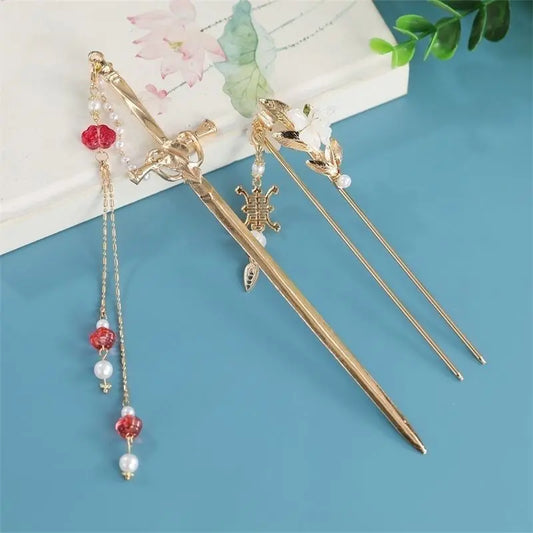
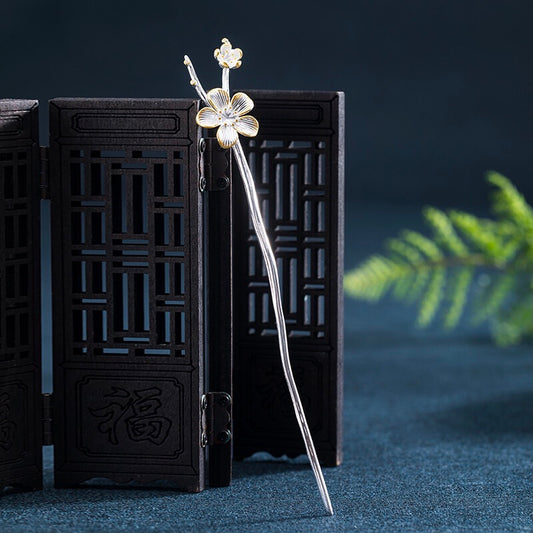
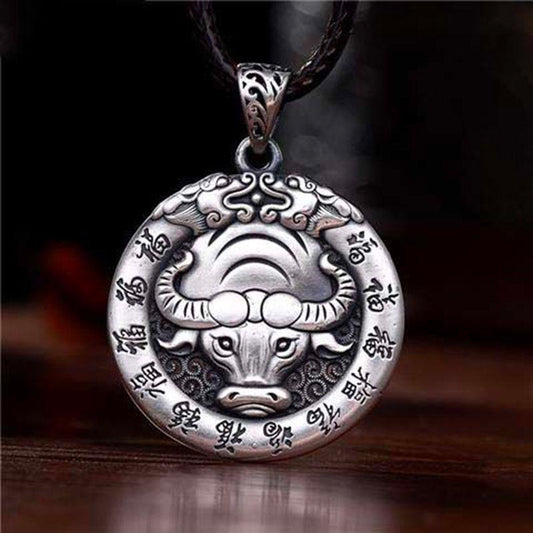
Three contemporary shop selections for readers interested in decorative design. These are not presented as documented heritage objects, community-made crafts, or religious endorsements. Check each product page for current specifications, price, and availability.

Miao Style Ebony Butterfly Tassel Hairpin – U-Shaped Silver Accent Hair Stick for Women
View product details
Colorful Fenghuang Enamel Brooch
View product details
Hetian Jade Bamboo Enamel Lotus Red Agate Pendant Necklace
View product detailsJino Culture Glossary
| Term | Meaning |
|---|---|
| Jino / Jinuo | Two English spellings used for the ethnic group; Jinuo more directly reflects Chinese pinyin. |
| Jino Mountain | The best-known Jino homeland in Jinghong, Xishuangbanna, Yunnan. |
| Temaoke | A major Jino festival associated with ironworking, agriculture, renewal, and community celebration. |
| Situ guo | The Jino drum dance; situ refers to the large drum and guo to dancing. |
| Amoyaobai | A creator or ancestral figure in Jino oral narratives connected with community origins and the drum. |
| Oral tradition | Knowledge transmitted through speech, song, memory, performance, observation, and apprenticeship. |
| Intangible cultural heritage | Living practices, skills, knowledge, and expressions transmitted by communities rather than only physical objects. |
Frequently Asked Questions
How do you pronounce Jino?
In English it is commonly approximated as "jee-NOH." The pinyin form Jinuo uses two Chinese tones, so this English rendering is only an approximation.
Are Jino and Jinuo the same name?
Yes. Jinuo is the fuller pinyin-style spelling, while Jino is a widely established English ethnonym for the same group.
Who are the Jino people?
The Jino are a Chinese ethnic group concentrated around Jino Mountain in Jinghong, Xishuangbanna, Yunnan. Their heritage includes a distinct spoken language, mountain agriculture, tea culture, textiles, oral traditions, Temaoke, and drum dance.
Where do the Jino people live?
Most live in and around Jino Mountain Jino Ethnic Township in Jinghong, Xishuangbanna, with smaller populations in neighboring parts of Yunnan.
Are Jino and Kino the same people?
鈥淛ino鈥?is the common English romanization in Chinese contexts. Older or alternate spellings may appear, but unrelated peoples elsewhere should not be confused solely because a name looks similar.
What language do the Jino speak?
They speak Jino, generally classified in the Tibeto-Burman branch of the Sino-Tibetan language family. Mandarin is also widely used.
What is the Jino Temaoke Festival?
Temaoke is a major festival associated with ironworking, agriculture, renewal, ancestors, and community celebration. Its modern shared celebration is held in early February.
What is the Jino drum dance?
It is a traditional dance centered on a large drum, accompanied by vigorous movement, percussion, and sometimes song. It entered China's national intangible-cultural-heritage list in 2006.
What do traditional Jino clothes look like?
They often combine black or white foundations with bright woven bands, embroidery, geometric panels, head coverings, leggings, belts, and metal ornaments. Designs differ by place and occasion.
What are the Jino known for?
They are known for tea and mountain agriculture, colorful textiles, oral songs, bamboo work, the Temaoke Festival, and the Jino drum dance.
Related Reading
Conclusion
The Jino cultural world was shaped by Jino Mountain, rainforest ecology, farming, tea, village cooperation, and oral knowledge. Clothing and weaving turn thread and color into visible identity; Temaoke connects iron tools with agriculture and renewal; the drum dance brings origin memory, rhythm, and community into one performance.
At the same time, Jino culture belongs to people living now. Roads, schools, smartphones, new houses, commercial tea, tourism, and urban work are not outside the story. A respectful account holds tradition and change together, credits local knowledge, and lets Jino communities define how their heritage should be represented and carried forward.
References
- Overview of the Jino Ethnic Group, National Ethnic Affairs Commission of China.
- Jino Customs and Traditions, National Ethnic Affairs Commission of China.
- Jino Drum Dance, China Intangible Cultural Heritage Network.
- Continuity and Change in the Jino Temaoke Festival, China Intangible Cultural Heritage Network.
- Contemporary Temaoke Celebrations in Xishuangbanna, Yunnan Ethnic and Religious Affairs Commission.
Recommended Categories