People of the northern forests, grasslands, and river valleys
The Ewenki are one of China’s officially recognized ethnic groups, living mainly in Inner Mongolia and parts of Heilongjiang. Their communities speak related Tungusic language varieties and developed different ways of life—pastoral, agricultural, forest-based, and, among a small Aoluguya community, reindeer-herding. Ewenki culture is therefore best understood as a diverse living tradition rather than a single “reindeer tribe” image.
Ewenki / Evenki
Chinese: 鄂温克族
Pinyin: Èwēnkè Zú
30,875 in China’s 2010 census; current discussions often describe a population of more than 30,000.
Ewenki Autonomous Banner, Chen Barag Banner, Genhe, and other parts of Inner Mongolia, with communities in Heilongjiang.
| Language | Ewenki, a Tungusic language, with several regional varieties; many people also use Mongolian, Chinese, or other local languages. |
|---|---|
| Traditional livelihoods | Pastoralism, hunting and forest work, farming, fishing, handicrafts, and reindeer herding in one small northern community. |
| Recognizable cultural media | Oral literature, song and dance, leatherwork, birch-bark craft, beadwork, embroidery, and portable dwellings adapted to mobile life. |
| Important cultural ideas | Kinship, hospitality, ecological knowledge, respect for animals and landscapes, and continuity through language and craft. |

Who Are the Ewenki People?
The name Ewenki is commonly interpreted in scholarship as a self-designation connected with “people” or “people living in the mountains and forests,” although translations vary by source and dialect. In China, the Ewenki are concentrated in the northeast, especially in the Ewenki Autonomous Banner near Hulunbuir, Chen Barag Banner, Genhe and Aoluguya, and neighboring counties and banners. Smaller communities live in Heilongjiang.
Geography matters because Ewenki life developed across more than one ecological zone. Some communities lived on the Hulunbuir grasslands and relied heavily on livestock. Others combined farming with animal husbandry. Forest communities possessed detailed knowledge of hunting routes, rivers, plants, and seasonal movement. The Aoluguya Ewenki became especially well known for reindeer herding, but they represent only a small part of the wider Ewenki population.
Language, Origins, and Historical Development
The Ewenki language
Ewenki belongs to the Tungusic branch of the languages of northern Eurasia. Researchers commonly discuss Hailar, Chen Barag, and Aoluguya varieties in China. The language traditionally had no widely used native writing system, so historical memory, genealogies, songs, stories, and ecological knowledge were transmitted orally. Today, many Ewenki people are multilingual. Depending on location and family background, they may use Ewenki together with Mongolian, Mandarin Chinese, Daur, or other neighboring languages.
Multilingualism supports communication and education, but it also creates pressure on a minority language with relatively few speakers. Recording elders, building digital archives, preparing teaching materials, and encouraging intergenerational conversation are therefore central to language preservation.
Migrations and changing administrations
The ancestors of today’s Ewenki communities moved through broad areas of the forests, river basins, and grasslands north of China. Historical documents used different names for related groups, so modern ethnic labels should not be projected mechanically onto every ancient reference. From the Qing period onward, military organization, border administration, trade, and resettlement reshaped community locations and livelihoods. In the twentieth century, the establishment of the Ewenki Autonomous Banner created an important administrative and cultural center.
Modernization brought schools, roads, health care, permanent housing, and wage employment. It also altered mobility, hunting practices, and the use of forest resources. Ewenki history is thus a history of adaptation: communities preserved relationships with land and kin while responding to changing political, economic, and ecological conditions.
Living Environments and Traditional Dwellings
Ewenki settlements stretch from open grassland to birch and larch forest. Pastoral families historically used portable or semi-portable dwellings suited to seasonal movement, while forest groups constructed conical frameworks covered with bark, hides, or later canvas. These structures are known by different regional names and should not be confused with every northern conical dwelling found across Eurasia.

The central hearth organized heat, cooking, and social space. Poles could be transported or gathered locally, and the covering changed according to available materials. This practical architecture expressed knowledge of wind, snow, fire safety, and seasonal travel rather than a fixed architectural style.
Pastoralism, farming, forest work, and reindeer
Herding horses, cattle, sheep, and other livestock became central in grassland communities. Agricultural Ewenki cultivated crops and maintained village economies. Forest livelihoods included hunting, gathering, fishing, transport, and craft production. Regulations and conservation policies have greatly reduced or ended many older hunting practices, while new jobs in tourism, public service, education, ecological protection, and business have expanded.
Aoluguya reindeer herding remains an exceptional cultural tradition. Reindeer supplied transport and formerly supported forest mobility; their antlers and association with northern landscapes now also shape tourism and cultural representation. Responsible discussion should focus on the herders’ knowledge and contemporary choices, not romanticize them as people frozen outside modern society.
Clothing, Jewelry, Patterns, and Handicrafts
There is no single Ewenki costume. Climate, livelihood, neighboring cultures, age, occasion, and community history all influence dress. Cold-weather garments traditionally used hides, fur, wool, and cloth. Robes, long coats, boots, hats, belts, and layered clothing offered warmth and freedom of movement. Festive garments may feature strong color contrasts, embroidered borders, metal ornaments, beadwork, and tassels.

Geometric bands, plant forms, antler-like curves, and symmetrical arrangements appear in contemporary clothing and craft. However, not every motif has one ancient or universally agreed meaning. Makers may choose designs for beauty, family memory, regional identity, or modern performance. Historical interpretation is strongest when an object’s maker, date, location, and use are documented.
Birch bark, leather, embroidery, and beadwork
Birch bark is light, flexible, and widely available in northern forests. Artisans used it for boxes, containers, utensils, and decorative objects. Bark could be cut, folded, stitched, pressed, or combined with woven rims. Leatherwork supplied boots, bags, harnesses, and garments, while embroidery and beadwork brought color and rhythm to collars, cuffs, hats, and accessories.

Contemporary artisans adapt these skills to jewelry, souvenirs, home decoration, and cultural education. The most meaningful preservation supports named makers, teaches material knowledge, and distinguishes community-based work from generic “northern ethnic” styling.

Food, Festivals, Family Life, Music, and Beliefs
Food shaped by environment
Pastoral diets traditionally emphasized meat and dairy products, including boiled or roasted meat, milk tea, yogurt, butter, and dried foods suitable for travel. Forest communities used game in the past and also relied on fish, gathered plants, berries, mushrooms, and traded grain. Farming communities ate millet, wheat, vegetables, and locally available meat. Hospitality remains important: offering tea, food, and a place near the hearth expresses respect for a guest.
Sebin and other celebrations
Sebin is an important contemporary Ewenki festival. The word is associated with happiness and peace, and programs may include singing, dancing, sports, communal meals, demonstrations of craft, and evening bonfires. Local forms differ, and public festivals often combine heritage presentation with modern community gathering. Mikuolu, celebrated in some pastoral areas, relates to livestock, seasonal work, and wishes for herd well-being.
Wedding customs historically reflected clan relations, residence, livestock exchange, and local religious practice. Today, civil marriage, modern clothing, photography, and urban venues coexist with selected blessings, songs, family rituals, and ceremonial dress.
Music, dance, and oral literature
Ewenki oral culture includes legends, migration memories, animal stories, work songs, lullabies, and improvisational singing. Dance may imitate riding, labor, birds, or the movement of animals, while drums and other instruments appear in certain ritual or staged contexts. Modern performers arrange older melodies for schools, festivals, recording projects, and professional stages.
Belief traditions are diverse
Some Ewenki traditions understand mountains, rivers, fire, animals, and ancestral places as spiritually significant. Shamanic practices historically appeared in several communities, but beliefs were never identical everywhere. Tibetan Buddhist influence became important among some pastoral Ewenki, while Orthodox Christian influence existed historically among some Chen Barag families. Many people today participate selectively, combine family traditions with secular life, or follow no religion.
Modern Life and Cultural Preservation
Most Ewenki people live in permanent homes and participate fully in contemporary education, public service, commerce, arts, tourism, and digital media. Grassland and forest economies now coexist with environmental regulation and ecological restoration. Young people may study or work in cities while returning for festivals, family gatherings, language projects, or seasonal activities.
Preservation is most effective when it strengthens living communities. Priority areas include recording fluent speakers, creating bilingual resources, documenting songs with performers’ consent, training young craft makers, protecting archives, and ensuring that tourism benefits local residents. Museums and festivals can help, but they should avoid reducing Ewenki identity to reindeer, fur costume, or shaman imagery.
Digital video, social media, online exhibitions, and community archives give younger Ewenki new ways to explain their culture in their own voices. The goal is not to reproduce every historical practice unchanged; it is to preserve knowledge, dignity, and the ability of communities to decide how traditions develop.
How Are the Ewenki Different from the Oroqen and Hezhen?
The Ewenki, Oroqen, and Hezhen are distinct officially recognized ethnic groups. They share parts of Northeast Asia’s environment and have histories of exchange, but their languages, community identities, geographic centers, and cultural practices should not be merged.
| Group | Key geographic association in China | Important distinction |
|---|---|---|
| Ewenki | Hulunbuir and other areas of Inner Mongolia; parts of Heilongjiang | Diverse pastoral, agricultural, and forest communities; Aoluguya reindeer herding belongs to a small subgroup. |
| Oroqen | Oroqen Autonomous Banner and parts of Heilongjiang | A distinct people with their own language and forest cultural history; not another name for Ewenki. |
| Hezhen | River regions of eastern Heilongjiang | Strong historical association with fishing and river life; a separate language and ethnic identity. |
Three Cultural Design Connections
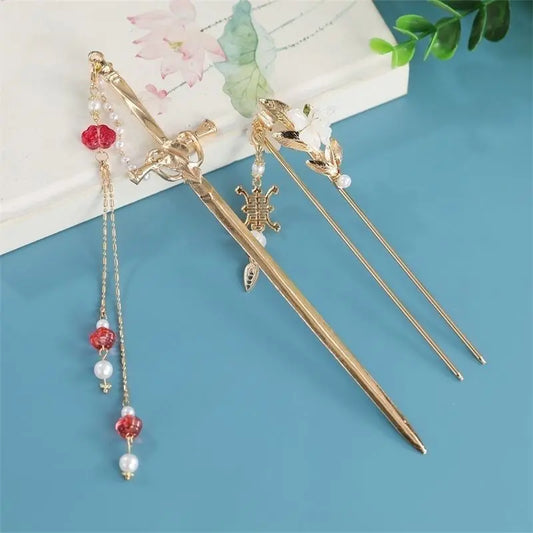
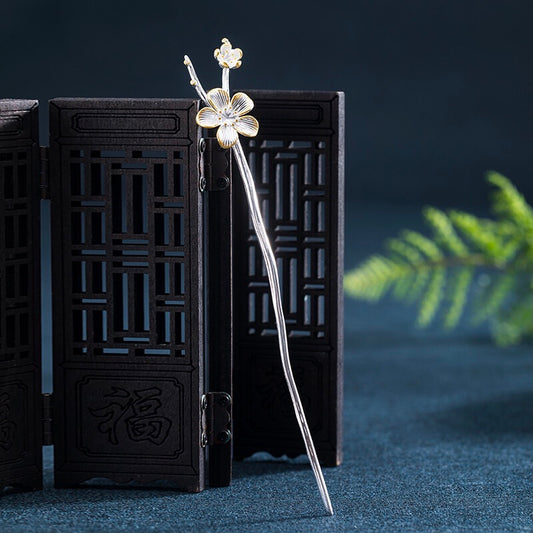
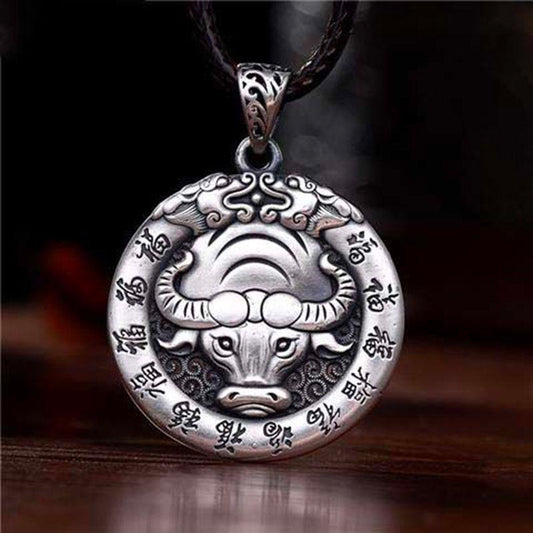
Rather than treating ethnic culture as a sales label, the following contemporary pieces are connected through broader visual ideas found in this article: the deer as a northern ecological image, wood as a material that recalls forest craft, and beads and leaves as a language of color and movement. These are not Ewenki artifacts or replicas; they are modern Chinese accessories that can open a respectful conversation about material, motif, and landscape.
Three Picks from Chinese Showcase
Three contemporary shop selections for readers interested in decorative design. These are not presented as documented heritage objects, community-made crafts, or religious endorsements. Check each product page for current specifications, price, and availability.

2 Black and White Flowers 2 Tree Leaf Beads Hairpin - Wood( enhancing personal charisma)
View product details
Blue Flower 6 Blue Beads Tassel Hairpin-Wood
View product details
Yi Lu You Ni" 999 Silver Deer Pendant – Gold-Accented Cloisonné Ruyi Lock Necklace
View product detailsFrequently Asked Questions
Where do the Ewenki people live?
They live mainly in Inner Mongolia, especially around Hulunbuir, with additional communities in Heilongjiang.
What language do the Ewenki speak?
They traditionally speak Ewenki, a Tungusic language with several regional varieties. Many Ewenki people are also fluent in Mongolian, Mandarin Chinese, or other local languages.
Do all Ewenki people herd reindeer?
No. Reindeer herding is associated mainly with the small Aoluguya Ewenki community. Other Ewenki communities developed pastoral, agricultural, forest-based, and mixed livelihoods.
What is the Sebin Festival?
Sebin is an important Ewenki cultural festival associated with happiness and peace. Modern celebrations can include song, dance, sport, food, craft, and bonfires.
What did traditional Ewenki clothing look like?
Styles varied by community, but cold-weather clothing often used hides, fur, wool, or cloth, with robes, coats, boots, hats, beadwork, embroidery, and metal ornament for festive wear.
What are Ewenki handicrafts known for?
Well-known media include birch-bark containers, leatherwork, embroidery, beadwork, carved or stitched objects, and practical items adapted to northern environments.
What religion do the Ewenki follow?
There is no single answer. Shamanic and nature-centered traditions influenced several communities, while some groups experienced Tibetan Buddhist or Orthodox Christian influence. Many people today live secular or individually chosen religious lives.
Are the Ewenki and Oroqen the same people?
No. They are distinct ethnic groups with separate identities and languages, although they share parts of Northeast Asia’s environment and history.
What do Ewenki people eat?
Food varies by region. Meat and dairy are important in pastoral areas, while grain, vegetables, fish, gathered foods, and formerly game also appear in forest and agricultural communities.
How is Ewenki culture being preserved today?
Preservation includes language documentation, bilingual education, community archives, festivals, museums, craft training, ecological knowledge projects, and digital media led by Ewenki participants.
References
- National Ethnic Affairs Commission of the People’s Republic of China. “The Ewenki Ethnic Group” and related cultural overviews. Accessed August 4, 2026.
- National Bureau of Statistics of China. Tabulation on the 2010 Population Census of the People’s Republic of China. 2012.
- China Intangible Cultural Heritage Network. “Sebin Festival” project overview. Accessed August 4, 2026.
- Chinese Academy of Social Sciences, Institute of Ethnology and Anthropology. Research materials on Ewenki history, language, and livelihood diversity. Accessed August 4, 2026.
- Editorial Committee for A Brief History of the Ewenki People. A Brief History of the Ewenki People. Revised edition, Nationalities Publishing House.
- Ewenki Autonomous Banner Museum and local cultural institutions. Exhibition and educational materials on Ewenki history and material culture. Accessed August 4, 2026.
- Chao Ke and other linguists. Studies of the Ewenki language and its regional varieties. Publication details vary by cited edition.
Related Reading
- Who Are the Oroqen People? History, Culture and Forest Heritage
- What Is the Hezhen Ethnic Group (Hezhe Zu)?
- Who Are the Yugur People? History, Language, Clothing, Food, and Traditions
- Who Are the Tatar People of China? History, Culture, Clothing, Food and Sabantuy
- Who Are the Derung People? Culture, History, Clothing and Kashiwawa Festival
- Who Are the Gin People of China? History, Culture, Ha Festival, and Coastal Life