The Jingpo people are one of China’s officially recognized ethnic groups. Their largest communities in China live in western Yunnan, especially in the Dehong Dai and Jingpo Autonomous Prefecture. Jingpo cultural life is not a single unchanging tradition: language, dress, ritual practice, and local history vary among communities, while modern life also includes education, migration, tourism, digital media, and cross-border family networks.

Who Are the Jingpo People?
In China, Jingpo communities are concentrated in Dehong, including areas around Longchuan, Yingjiang, Mangshi, Ruili, and Lianghe. Smaller communities also live elsewhere in Yunnan. Historical movement across the mountain borderlands means that related communities are also found in Myanmar and neighboring regions. Modern state borders therefore cut across older cultural and kinship landscapes.
“Jingpo” works as an official umbrella designation in China, but local identity may also be expressed through branch, language, village, lineage, or regional affiliation. Any careful introduction should preserve that internal diversity.
Five Branches and More Than One Language
Official Chinese ethnographic introductions commonly describe five branches: Jingpo, Zaiwa, Leqi, Lang’e, and Bola. Their speech forms are not simply interchangeable dialects. The Jingpo language belongs to the Jingpo branch of the Tibeto-Burman family, while Zaiwa, Leqi, Lang’e, and Bola are generally classified within the Burmish branch.
Both Jingpo and Zaiwa have modern writing systems based on the Latin alphabet. Chinese is also widely used in school, public administration, commerce, and media. Multilingualism is therefore an ordinary part of life for many people.
History, Migration, and the Mountain Borderlands
Historical accounts connect Jingpo ancestors with long-term movement through the eastern Himalayan and southwestern Chinese highlands. Over many generations, communities moved southward and westward, interacted with neighboring peoples, and established settlements in the region now divided between China and Myanmar. This was not one single migration at one date, but a layered historical process.
Oral narratives, genealogies, ritual recitations, and written records do not always answer the same questions. Oral tradition preserves community memory and meaning; archival and archaeological evidence address chronology in different ways. They should be read together without turning a respected origin story into an automatically proven historical event.
Villages, Houses, and Material Knowledge
Traditional settlements were adapted to humid subtropical mountains. Timber, bamboo, and thatch or tile provided locally available building materials, while raised floors could improve ventilation and reduce dampness. House forms changed with location, wealth, available materials, fire safety, and contemporary construction policy.

Bamboo work historically supported storage, transport, farming, food preparation, and house construction. The value of a basket or tool lies not only in its pattern but also in material selection, splitting, seasoning, weaving tension, and practical use.
Dress, Silver Ornaments, and Woven Geometry
Jingpo women’s ceremonial clothing is widely recognized for dark upper garments, brilliant woven skirts, red and multicolored geometric bands, and substantial silver-colored adornment. Rows of domed plaques and hanging elements create movement and sound. Men’s public festival dress may include dark jackets, woven trim, headcloths, bags, and long blades as ceremonial or performance accessories.

Textile patterns often rely on diamonds, stepped lines, narrow stripes, and repeated color blocks. Meanings can be local, contextual, and maker-specific. A geometric resemblance alone does not prove that every motif has one ancient universal explanation.


Munao Zongge: A Major Public Festival
Munao Zongge is the best-known Jingpo mass dance festival in China and is listed as a national intangible cultural heritage project. Large groups move in coordinated lines around decorated dance posts, guided by experienced leaders and accompanied by drums, gongs, and other instruments.
Different communities tell origin narratives involving ancestors, birds, the sun, or a celestial dance. These stories are meaningful oral traditions rather than laboratory-style historical proof. In modern public life, Munao Zongge also functions as a space for reunion, cultural education, tourism, and regional representation.
Oral Traditions, Epic Recitation, Music, and Dance
Jingpo oral heritage includes genealogical knowledge, songs, stories, and ritual recitation. Munao Zhaiwa, recognized as national intangible cultural heritage, preserves extended narrative performance and cultural memory. Transmission depends on skilled bearers, language knowledge, occasion, and attentive audiences.
Public performances often include drums, gongs, call-and-response singing, and dance. Stage programs may condense or rearrange older materials, so a performance seen at a tourism event should not automatically be described as an unchanged ancient ritual.
Food, Farming, and Everyday Livelihoods
Rice, maize, vegetables, herbs, chilies, and locally available meat or fish have shaped regional diets. Sour, spicy, grilled, pounded, or leaf-wrapped foods are common across southwestern China, but recipes vary by household and locality. Tea, forest products, market exchange, and wage work also connect mountain villages to wider economies.

Belief, Ritual Specialists, and Social Change
Historically, many communities maintained ritual relationships with ancestors, local spirits, and the natural environment. Specialists conducted ceremonies connected with health, agriculture, protection, and collective well-being. Christianity later became important in many Jingpo communities, while other households maintain different or combined practices.

Historic marriage customs, gift exchange, and lineage rules are documented in ethnographic sources, but they must not be projected onto every present-day family. Contemporary marriages are shaped by personal choice, law, education, mobility, and changing expectations.
Heritage in Contemporary Life
Heritage continues through family teaching, community festivals, school programs, cultural centers, museums, artisans, performers, researchers, and online creators. Challenges include language shift, reduced time for hand production, market pressure, simplified tourism imagery, and the loss of context when motifs are copied without attribution.
Responsible preservation is not the freezing of culture. It supports speakers, makers, and communities in deciding what to maintain, adapt, teach, document, or keep private.
Cultural Symbols and Craft Inspiration
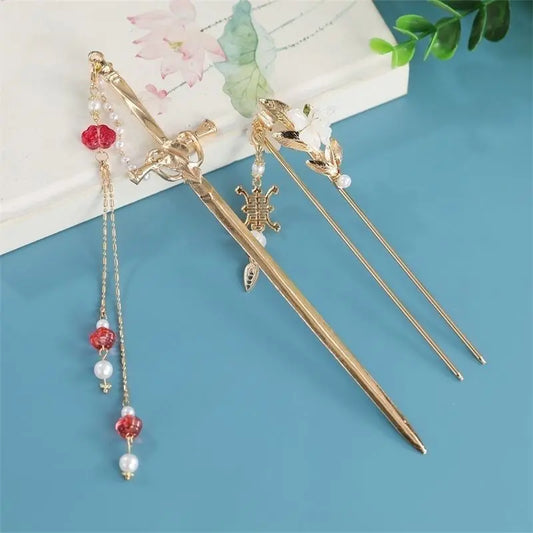
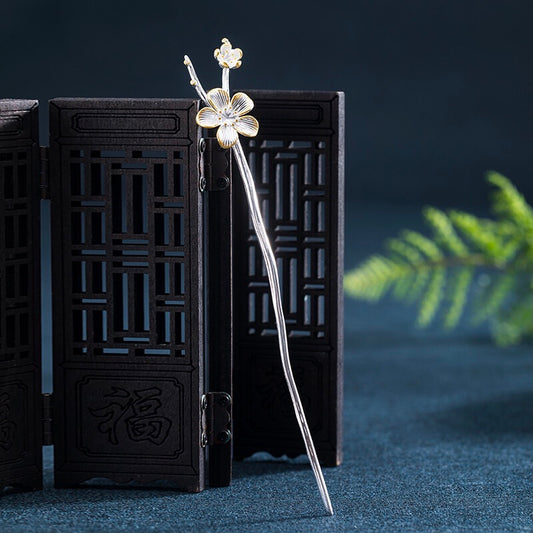
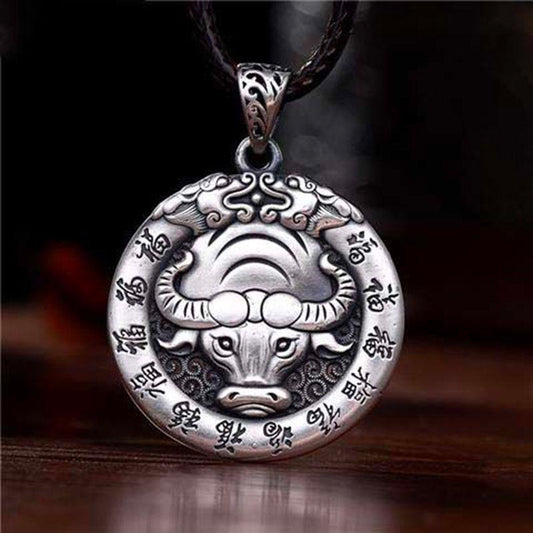
The following objects are contemporary store items connected to broader Chinese craft materials and techniques. They are offered as design inspiration and are not presented as Jingpo-made artifacts.
Three Picks from Chinese Showcase
Three contemporary shop selections for readers interested in decorative design. These are not presented as documented heritage objects, community-made crafts, or religious endorsements. Check each product page for current specifications, price, and availability.

Purple Floral Drop Earrings with Cloisonné-Style Wirework
View product details
Guyu Jinfeng Chinese Ebony Hair Stick with Chrysanthemum & Persimmon Charms
View product details
Linglan Flower Freshwater Pearl Necklace
View product details
Frequently Asked Questions
Where do the Jingpo people live?
In China, their largest communities are in Dehong Prefecture in western Yunnan. Related populations also live across the border in Myanmar and elsewhere in the region.
Is Jingpo one language?
No. The official Jingpo grouping in China includes several branches and languages. Jingpo and Zaiwa have Latin-alphabet writing systems, while Chinese is also widely used.
What is Munao Zongge?
It is a major collective dance festival and a national intangible cultural heritage project in China, featuring coordinated group dancing, decorated posts, drums, and gongs.
Do all Jingpo people wear silver-covered clothing?
No. Heavily ornamented dress is especially associated with ceremonies, festivals, performance, and public representation. Daily clothing is diverse and contemporary.
Does every textile motif have a fixed meaning?
No. Some meanings are documented locally, but interpretations may vary by maker, place, and context. Visual resemblance alone is not reliable proof.
How can visitors engage respectfully?
Use community-preferred names, ask before photographing private ceremonies, credit makers, avoid presenting replicas as old artifacts, and distinguish oral tradition from documented history.