

Pixiu Bracelet at a Glance
| Item | What to know |
|---|---|
| Chinese name | 貔貅手镯 |
| Pinyin | Píxiū shǒuzhuó |
| Recommended English term | Pixiu bracelet |
| Historical root | Pixiu appears in early Chinese literature as a fierce or powerful creature; its modern wealth-jewelry role developed later. |
| Common materials | Silver, gold-tone metal, jade, obsidian, tiger’s eye, glass, enamel, and cord. |
| Modern symbolism | Wealth aspiration, guardianship, confidence, and auspicious intention. |
| Evidence limit | No bracelet can guarantee fortune, prevent illness, or alter a person’s fate. |
What Is Pixiu?
Pixiu is a legendary Chinese creature whose name is written 貔貅. In the Records of the Grand Historian, the paired characters appear among fierce animals in an account connected with the Yellow Emperor’s military power. Early texts do not describe a standardized bracelet ritual or promise that a Pixiu object will make its owner rich.
Over centuries, visual culture and folklore reshaped Pixiu into an auspicious guardian. In popular modern interpretation, the creature is imagined as attracting treasure and preventing it from escaping. That image explains why Pixiu appears on pendants, rings, sculptures, and bead bracelets. It is useful to distinguish this later symbolic tradition from the earliest written references.
Who Should Avoid or Pause Wearing a Pixiu Bracelet?
1. People with material allergies
Nickel and some metal mixtures can cause allergic contact dermatitis. Itching, redness, blistering, or recurring rash under the bracelet is a reason to remove it and seek appropriate care.
2. Anyone with damaged skin
Do not place a bracelet over cuts, burns, eczema flares, infection, or a healing procedure site. Friction and trapped moisture can aggravate the area.
3. People with swelling or numbness
A bracelet should never compress the wrist. Remove it if fingers tingle, the skin changes color, swelling develops, or the jewelry becomes difficult to slide off.
4. High-risk work and activities
Loose jewelry can catch in tools, sports equipment, food-preparation machinery, or moving parts. Metal jewelry may also be unsuitable around electricity or certain chemicals.
5. Infants and young children
Beads, charms, magnets, clasps, and cords can create choking, scratching, or strangulation hazards. Children’s jewelry should use verified materials, age-appropriate construction, and supervision.
6. Buyers unsure of the material
Very cheap or unlabeled jewelry may contain unknown alloys, coatings, dyes, or treated stones. If the seller cannot identify the material, do not rely on color or price as proof of safety.

Common “Who Cannot Wear Pixiu” Myths Examined
How to Wear a Pixiu Bracelet Safely and Respectfully
- Check the fit: it should move slightly but not slide over the hand or leave deep marks.
- Inspect the surface: look for sharp casting edges, cracked beads, exposed wire, weak elastic, and loose charms.
- Keep it dry when appropriate: remove pieces with elastic, plated metal, glued elements, porous stone, or delicate cord before prolonged water exposure.
- Separate meaning from risk: remove it for machinery, contact sports, sleep discomfort, medical procedures, or cleaning chemicals without worrying that the act is disrespectful.
- Clean gently: use care suited to the stated material. A method safe for solid silver may be wrong for plated metal, dyed stone, or elastic cord.
- Stop if symptoms appear: persistent rash, blisters, warmth, discharge, marked swelling, numbness, or pain deserves attention rather than an “energy” explanation.

How to Choose a Pixiu Bracelet
Begin with material disclosure, construction, and fit—not a promise about fortune. Ask whether the metal is solid, plated, or an alloy; whether the stone is natural, treated, dyed, or glass; and whether replacement elastic or cord is available. People with known metal sensitivity may prefer clearly identified sterling silver, high-karat gold, titanium, or other materials recommended for their individual needs, but even labeled jewelry should be removed if irritation develops.
Next, consider daily life. Small polished beads are often lighter, while large stone beads and multiple metal charms may press against a keyboard or wrist bone. An adjustable woven cord can help with fit, but long loose ends are unsuitable near machinery. A symbolic object is more satisfying when it is comfortable enough to wear responsibly.
How Pixiu Differs from Similar Chinese Symbols
| Symbol | Visual clue | Common cultural association |
|---|---|---|
| Pixiu | Powerful hybrid beast, often with horns, wings, or a dragon-like head | Wealth aspiration and guarding treasure |
| Qilin | Hooved auspicious creature, sometimes with scales and antlers | Benevolence, peace, and the arrival of worthy people |
| Dragon | Long serpentine body, claws, scales, and horns | Authority, vitality, transformation, and rain |
| Jin Chan | Three-legged money toad, often shown with coins | Popular feng shui wealth symbolism |
| Guardian lion | Muscular lion in a seated pair | Protection of gates, halls, and important spaces |
Modern Meaning: Symbolic Jewelry, Not a Financial Tool
Today, many people wear Pixiu bracelets as reminders of ambition, discipline, protection, or connection with Chinese visual culture. Others simply enjoy the sculptural form. These interpretations can be personally valuable without turning the bracelet into a medical device, financial strategy, or guaranteed charm.
Respectful use therefore has two parts: understand the cultural story, and make ordinary evidence-based decisions about skin, materials, fit, children, and workplace safety. The wearer does not need to fear punishment for removing the bracelet when common sense requires it.
Three Pixiu Bracelet Design Approaches
The following live designs are presented for their materials and cultural composition. They are jewelry choices—not remedies and not guarantees of wealth or protection.

Natural Black Obsidian 3D Hard Gold Pixiu Bracelet with Six-Character Mantra
A bold bead-and-centerpiece composition for readers drawn to dark stone, gold-tone contrast, and layered symbolic motifs.
From $56.99 USD
View the design
Pixiu Weave Bracelet – Sterling Silver
The woven structure gives the Pixiu motif a textile-like rhythm and a quieter all-silver appearance.
$76.99 USD
View the design
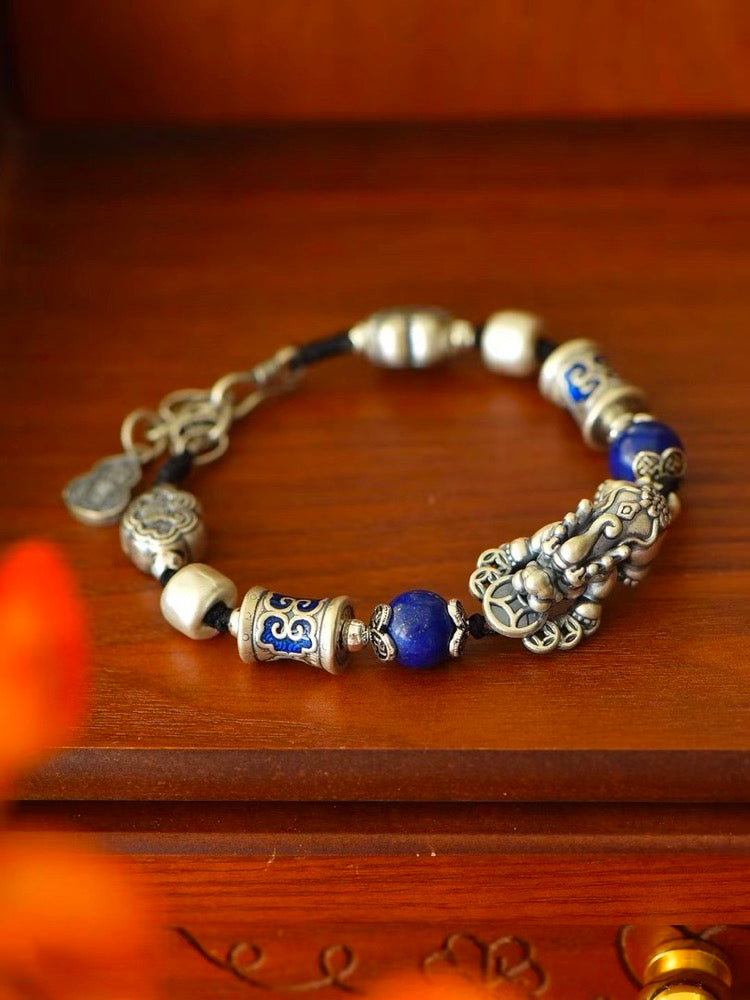
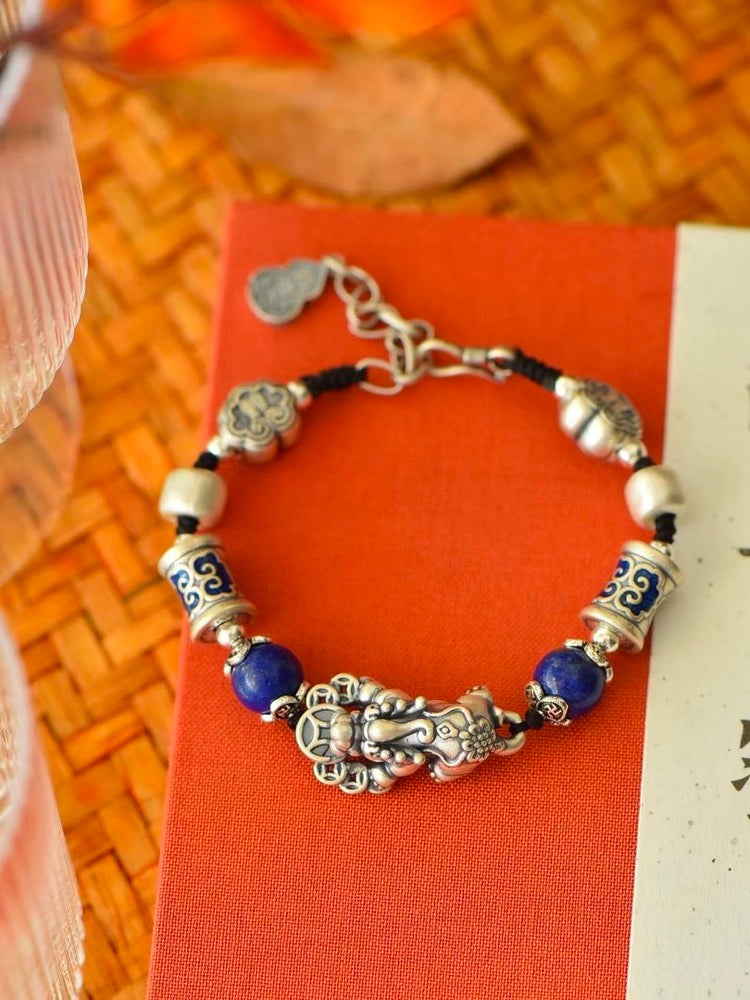
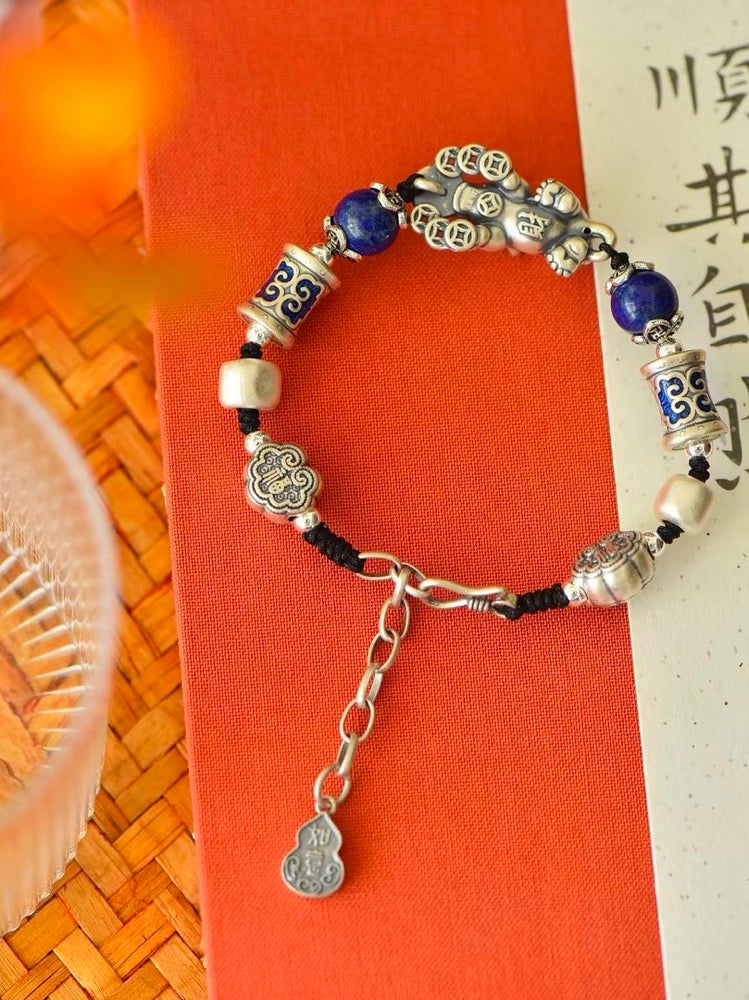
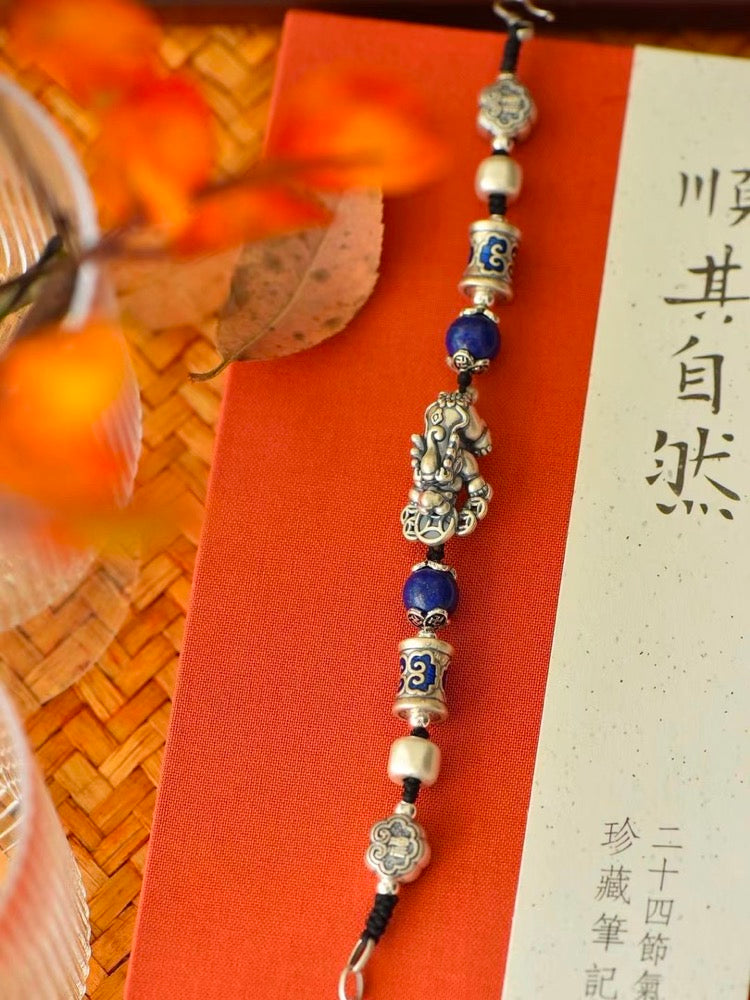
Pixiu Tongzhu and Character Fú Enamel Bracelet – Sterling Silver
Combines the guardian creature with the character Fú, creating a compact study of two familiar auspicious themes.
$76.99 USD
View the designFrequently Asked Questions
Who should not wear a Pixiu bracelet?
People with a known reaction to the bracelet’s materials, broken or infected skin, painful swelling, or a job or activity in which jewelry can snag, conduct electricity, or contact machinery should avoid wearing it until the risk is resolved. These are practical safety limits, not supernatural bans.
Can pregnant women wear a Pixiu bracelet?
There is no established cultural rule or scientific evidence that a Pixiu bracelet harms pregnancy. However, pregnancy can cause hand and wrist swelling, so any bracelet that becomes tight, painful, or difficult to remove should be taken off.
Can women wear a Pixiu bracelet during menstruation?
Yes. Menstruation does not create a medical or universally recognized cultural ban on wearing Pixiu jewelry. A person may remove it for comfort or personal custom, but this is a choice rather than a requirement.
Can people born in the Year of the Tiger wear Pixiu?
Yes. No reliable classical rule says that people born in the Year of the Tiger are forbidden to wear Pixiu. Modern zodiac restrictions vary among sellers and folk traditions and should not be presented as historical fact.
Can children wear a Pixiu bracelet?
Young children should generally avoid bracelets with small beads, detachable charms, sharp edges, long cords, or unverified metals because of choking, strangulation, scratching, and exposure risks. Older children need a secure fit and adult supervision.
Which hand should a Pixiu bracelet be worn on?
Many modern feng shui guides prefer the left hand, often explaining it as the receiving side, but this is a customary interpretation rather than a universal rule. Comfort, handedness, work, and bracelet design are valid reasons to choose either wrist.
Should the Pixiu head face outward?
Many wearers point the head outward as a symbolic gesture of seeking opportunity, while some designs naturally sit another way. There is no single historically binding orientation for every bracelet.
When should a Pixiu bracelet be removed?
Remove it for sleep if it presses the skin, and during bathing, swimming, strenuous exercise, food preparation, machinery work, or contact with chemicals when materials or safety require it. Take it off immediately if there is itching, blistering, numbness, or pain.
Does a Pixiu bracelet guarantee wealth or protection?
No. Pixiu is widely associated with wealth, guardianship, and auspicious intention in modern popular culture, but a bracelet cannot guarantee money, health, luck, or protection. It is best understood as meaningful cultural jewelry.
References
- Sima Qian. Records of the Grand Historian: Basic Annals of the Five Emperors. Early textual reference to 貔貅 in a martial context.
- Xu Shen. Shuowen Jiezi. Eastern Han lexicographic traditions concerning early character meanings and animal terms.
- Chinese Text Project. Digital editions of early Chinese texts; accessed August 10, 2026.
- American Academy of Dermatology Association. Patient guidance on nickel allergy and jewelry-related contact dermatitis; accessed August 10, 2026.
- National Health Service. “Contact Dermatitis”; accessed August 10, 2026.
- U.S. Consumer Product Safety Commission. Children’s jewelry safety information; accessed August 10, 2026.
- California Department of Toxic Substances Control. Metal-Containing Jewelry Law Fact Sheet, 2023.







1 comment
But will.see how it go
Tell me more