Chinese Culture
In Chinese culture, unlucky numbers are usually linked to pronunciation, social habits, and symbolic associations. The most famous example is the number 4, which sounds close to the word for death.
Quick answer: The most unlucky number in Chinese culture is 4 because it sounds similar to “death” in Mandarin and several Chinese dialects. Number combinations such as 14, 24, 44, and 444 may also be avoided. However, these meanings are cultural associations, not scientific rules.
Why Numbers Matter in Chinese Culture

Numbers in Chinese culture are more than tools for counting. They often carry emotional and symbolic meaning because Chinese has many homophones. A number may sound similar to a positive word, such as wealth, smoothness, or longevity. It may also sound close to a negative word, such as death or misfortune.
This is why people may care about numbers in phone numbers, license plates, apartment floors, wedding dates, business openings, prices, gift amounts, and red envelopes. A number that sounds pleasant can feel appropriate for a blessing. A number that sounds negative may feel uncomfortable in an important moment.
It is important to understand this as cultural etiquette rather than superstition. Numbers do not control the future. But in Chinese gift-giving, naming, and social communication, choosing a better-sounding number can show thoughtfulness and cultural awareness.
The Most Unlucky Number: 4
The number 4 is the best-known unlucky number in Chinese culture. In Mandarin, “four” is pronounced si, while “death” is also pronounced in a very similar way with a different tone. Because the sound is close, many people associate 4 with death, endings, or bad luck.
This avoidance is sometimes called tetraphobia, meaning fear or avoidance of the number four. It can appear in buildings, hospitals, hotels, elevators, phone numbers, and license plates. Some buildings may skip the fourth floor or avoid room numbers such as 404 or 444.
The avoidance of 4 is strongest in sensitive settings, such as hospitals, funerals, weddings, birthdays, and gifts for elders. In everyday life, many younger people may not care as much. Still, if you are choosing a gift amount, a wedding date, or a product code for a Chinese-speaking audience, avoiding 4 is usually the safer choice.
Unlucky Number Combinations
Once the number 4 is considered unlucky, combinations containing 4 may also feel uncomfortable. Some of these meanings are based on pronunciation, while others come from repeated visual association.
| Number | Common Cultural Reading | Where It May Be Avoided |
|---|---|---|
| 4 | Sounds close to “death” | Gifts, floors, phone numbers, license plates |
| 14 | May sound like an unlucky phrase connected with death | Gift money, wedding dates, room numbers |
| 24 | Contains 4, so some people avoid it | Floors, room numbers, product sets |
| 44 | Repeats the unlucky sound twice | Phone numbers, license plates, addresses |
| 444 | Strong repeated association with 4 | Business names, codes, gift amounts, room numbers |
| 250 | Means “foolish person” in Chinese slang | Gift money, jokes, product pricing in personal contexts |
Is 13 Unlucky in China?
The number 13 is not a traditional Chinese unlucky number in the same way that 4 is. Its unlucky meaning is mainly influenced by Western culture, where 13 is often associated with bad luck.
In modern hotels, airlines, and international buildings, 13 may sometimes be avoided because of global customer expectations. But if we are speaking strictly about Chinese number culture, 13 is not the central unlucky number. The stronger Chinese taboo is still 4.
Is 7 Lucky or Unlucky in Chinese Culture?
The number 7 has a mixed meaning in Chinese culture. It is not as unlucky as 4, but it is also not as clearly positive as 6, 8, or 9. In some traditions, 7 is connected with memorial customs, mourning periods, or spiritual ideas. Because of this, it can feel serious or solemn in certain contexts.
At the same time, 7 can also be seen as lucky by some people, especially under Western influence, where 7 is commonly treated as a lucky number. In modern China, 7 is not universally avoided. Whether it feels lucky or unlucky depends on the occasion, region, and personal belief.
Lucky Numbers: 3, 6, 8 and 9
To understand unlucky numbers, it helps to compare them with lucky numbers. In Chinese culture, numbers such as 6, 8, and 9 are often preferred because their sounds and associations feel positive.
| Number | Meaning | Common Use |
|---|---|---|
| 3 | Often connected with growth, life, and repeated blessings | General positive symbolism, combinations such as 333 |
| 6 | Associated with smoothness and things going well | Business, exams, travel, new beginnings |
| 8 | Sounds close to “wealth” or “prosper” in Chinese languages | Business names, phone numbers, wedding money, lucky dates |
| 9 | Sounds like “long-lasting” and is linked with longevity | Love, marriage, birthdays, long-term blessings |
Popular Chinese lucky number combinations include 168, 666, 888, 999, and 1314. The combination 1314 is often read as “for a lifetime” in romantic contexts. These meanings are flexible and depend on how the numbers sound in Mandarin or regional dialects.
Numbers to Avoid in Chinese Gift-Giving
When giving a gift, sending a red envelope, choosing a flower count, or preparing a product bundle for Chinese customers, avoid numbers that may sound negative. This does not mean the number is truly dangerous. It simply means the number may feel unsuitable for a blessing.
- Avoid 4 pieces when giving a set of items.
- Avoid 14, 44, or 444 in red envelope amounts or gift numbers.
- Avoid 250 in personal gift money because it can sound insulting in Chinese slang.
- Choose 6, 8, or 9 when you want the gift to feel more auspicious.
- Use even numbers carefully for weddings and celebrations, but avoid even numbers that include 4.
Chinese Symbol Pieces Inspired by Auspicious Meanings
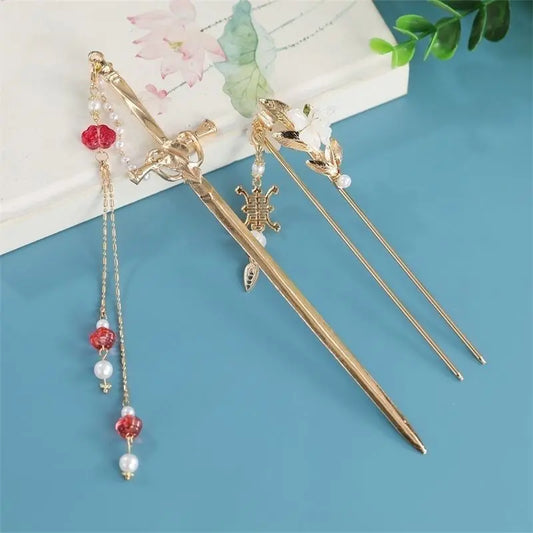
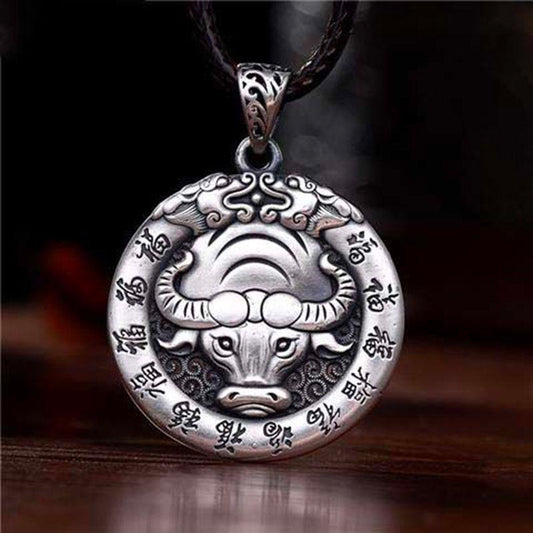
Because number culture is closely related to blessing language, symbolic jewelry often uses motifs such as Fu, Ruyi, double happiness, fish, coins, and auspicious flowers. These pieces should be understood as cultural symbols, not as promises of luck or wealth.

990 Pure Silver Heart Sutra Fu Ring
The Fu character is one of the most recognized Chinese blessing symbols. It can echo the same cultural wish behind lucky number choices: good fortune and peace.
View Symbol Piece
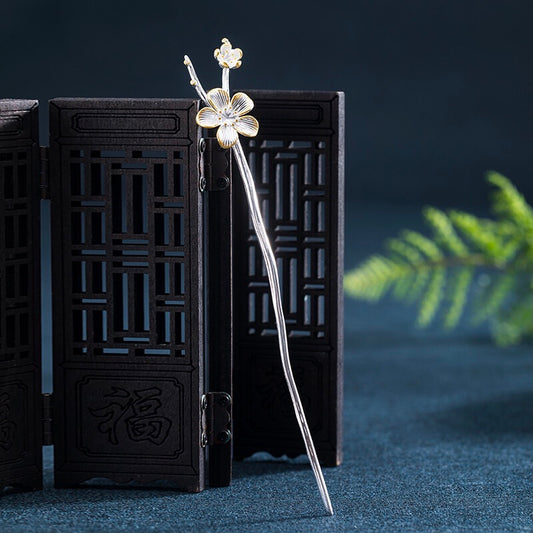
Six-Prong Hairpin
Six is commonly associated with smoothness in Chinese culture. This hairpin can be read as a quiet cultural nod to the idea of things going smoothly.
View Symbol Piece
Red Agate Double Happiness Earrings
Double happiness is a classic Chinese wedding and celebration symbol. It pairs well with positive numbers such as 6, 8, and 9 in festive contexts.
View Symbol PieceFAQ About Unlucky and Lucky Numbers in Chinese Culture
What numbers are bad luck in Chinese?
The number 4 is the most widely recognized unlucky number in Chinese culture because it sounds close to the word for death. Numbers such as 14, 44, and 444 may also be avoided because they repeat or contain the same sound.
Why do Chinese avoid number 4?
Chinese speakers often avoid 4 because its pronunciation sounds similar to “death.” This is why some people avoid 4 in phone numbers, floors, room numbers, license plates, and gift amounts.
Is 444 bad luck in Chinese?
Yes, many people consider 444 especially unlucky because it repeats the number 4 three times. It can feel too closely associated with the negative sound of “death,” especially in gifts, addresses, and phone numbers.
What numbers should be avoided in China?
For important occasions, it is safer to avoid 4, 14, 44, 444, and sometimes 250. The number 250 is not unlucky in the same way, but it can mean “foolish person” in Chinese slang.
Is 13 unlucky in China?
13 is not a traditional Chinese unlucky number like 4. Its unlucky meaning is mainly influenced by Western culture, although some international hotels or buildings may still avoid it.
Is 7 a lucky number in Chinese?
7 has mixed meanings. It may be linked with spiritual or memorial customs in some contexts, but it can also be seen as lucky by people influenced by Western number symbolism.
Is 7 or 8 lucky in China?
8 is much more clearly lucky in Chinese culture because it sounds close to words connected with wealth and prosperity. 7 is more mixed and depends on context.
Is 8 a lucky number in Chinese?
Yes. 8 is one of the luckiest numbers in Chinese culture because its pronunciation is associated with wealth, prosperity, and development.
Is 6 a lucky number in Chinese?
Yes. 6 is usually considered lucky because it is associated with smoothness and things going well. It is popular for business, travel, exams, and new beginnings.
Is 9 a lucky number in Chinese?
Yes. 9 is often associated with long-lasting relationships, longevity, and endurance because it sounds like the Chinese word for “long-lasting.”
Is 5 a lucky number in Chinese?
5 is usually neutral or context-dependent. It can be connected with the five elements and balance, but it is not as strongly lucky as 6, 8, or 9.
Is 4 a lucky number in Chinese?
Usually no. 4 is commonly avoided because it sounds similar to “death.” However, not everyone takes this seriously, and some people may ignore the taboo in everyday life.
Is 3 a lucky number in Chinese?
3 can be positive because it is associated with life, growth, and repeated blessings. It is not as famous as 8 or 9, but combinations like 333 can be read positively by some people.
Is 333 lucky in Chinese?
333 can be interpreted positively because 3 may suggest growth, life, or repeated good wishes. It is not a universal traditional rule, but it is generally not considered unlucky.
What does 777 mean in China?
777 does not have one fixed traditional Chinese meaning. Some people may see it as lucky because of Western influence, while others may simply read it as a repeated number without strong cultural meaning.
What are Chinese lucky number combinations?
Common Chinese lucky number combinations include 168, 666, 888, 999, and 1314. They are popular because their sounds can suggest smoothness, wealth, long-lasting love, or lifelong commitment.
References
Recommended Categories