Bifang (毕方, Bìfāng) is a one-legged mythical bird associated with unusual fires in early Chinese literature. The best-known account, in the Classic of Mountains and Seas, describes it as crane-like, blue-green with red markings, white-beaked, and able to call its own name. Other early texts give it a human face or place it in the Yellow Emperor’s divine procession. Bifang therefore represents more than a “fire monster”: it is an omen, a sacred attendant, and a vivid example of how ancient Chinese writers imagined the boundary between nature and the supernatural.
| Chinese name | 毕方 |
|---|---|
| Pinyin | Bìfāng |
| Recommended English name | Bifang, or “the one-legged fire bird” |
| Visual identifiers | A crane-like body, one leg, red markings on a blue-green body, and a white beak in the best-known description |
| Other early form | A human-faced, one-legged bird in another section of the Classic of Mountains and Seas |
| Cultural meaning | An omen of abnormal fire, a sign of dangerous energy, and in some traditions a being connected with wood and fire |
| Not the same as | Fenghuang, the Vermilion Bird, the Three-Legged Crow, or the Western phoenix |
What Is Bifang?
Bifang is an ancient Chinese mythical bird whose identity is built from several early textual traditions rather than one fixed story. In the most widely cited passage, it inhabits Mount Zhang’e and resembles a crane. Its strange coloring, single leg, self-naming cry, and association with extraordinary fire make it immediately recognizable. The account reads like a compact entry in a geographical bestiary: a place is named, an unusual creature is described, and its appearance is connected with a phenomenon in the human world.
That structure matters. Bifang is not introduced as the hero of an extended legend. Instead, it functions as a sign. Ancient readers could understand the bird as evidence that the landscape contained forces beyond ordinary experience. Its arrival warned that fire was near, or that an abnormal fire event might occur.

Where Does Bifang First Appear?
The Western Mountains account
The most influential description appears in the “Third Sequence of the Western Mountains” in the Classic of Mountains and Seas. At Mount Zhang’e, the text records a bird shaped like a crane, with one foot, red patterns on a blue-green body, and a white beak. Its cry sounds like its own name. When it appears, the text says, strange fire occurs in the region.
This short description established the features that later artists and writers usually preserve: the crane-like silhouette, a single leg, contrasting colors, and a direct connection with fire. It also explains the name as an onomatopoeic call—the bird announces itself by crying “Bifang.”
The Overseas South account
Another part of the same work places the Bifang bird in a distant mythic geography and gives it a human face and one foot. The difference should not be “corrected” into a single anatomical model. The Classic of Mountains and Seas preserves layers of regional knowledge, myth, ritual imagination, and textual editing. Variant descriptions are normal within such a compilation.
How Can You Recognize Bifang?
The safest visual identifier is the single leg. A long neck and a crane-like body are also common, while blue-green plumage, red markings, and a white beak follow the best-known source particularly closely. Flames may surround the crest, wings, or tail in later art, turning the textual association with fire into a visible design language.
Why one leg? No surviving early explanation is universally accepted. A crane resting on one leg may have influenced the image, and the rising, tapering form of flame may have encouraged later symbolic readings. Both ideas are reasonable hypotheses, but neither should be presented as a proven historical origin.

Why Is Bifang Associated with Fire?
The association comes directly from the statement that Bifang’s appearance is followed by or connected with guaihuo—an unusual, strange, or abnormal fire. The sentence establishes a relationship between the bird and the event, but it does not plainly say that the bird intentionally ignites buildings, breathes flames, or punishes people.
This distinction changes the meaning. As an omen, Bifang resembles a warning signal: its arrival reveals that a dangerous condition is present. In later storytelling, a warning creature can easily become the cause of the danger. That narrative shift is understandable, but it belongs to the history of interpretation rather than the literal wording of the earliest passage.
Fire itself is culturally double-edged. It cooks food, provides warmth, transforms raw material, and supports ritual. It can also spread beyond control. Bifang holds these meanings together. The bird can suggest disaster and fear, but also concentrated energy, transformation, and the need to respect forces that sustain life while threatening it.
What Does “Wood Gives Birth to Bifang” Mean?
The Huainanzi includes the compact statement that “wood gives birth to Bifang.” Later commentators and modern readers often connect this line with the generative relationship between wood and fire: wood fuels flame, so a fire-linked bird can emerge conceptually from wood.
That interpretation fits Chinese correlative thought, but precision is important. The original phrase is brief. It does not provide a long theory identifying Bifang as a complete “fire god,” nor does it describe a ritual for summoning the creature. Labels such as “wood spirit” or “fire essence” are interpretive summaries, useful when clearly marked as later explanations.
Why Does Bifang Appear with the Yellow Emperor?
In the “Ten Faults” chapter of the Han Feizi, Bifang appears in an account of the Yellow Emperor gathering spirits at Mount Tai. The bird accompanies the divine procession beside the chariot. Here it is not merely a herald of wildfire. It belongs to an ordered sacred entourage associated with supreme authority.
This passage broadens the symbol. Bifang’s dangerous power can be placed within cosmic or political order. Fire is not only catastrophe; under control, it becomes part of ritual grandeur and legitimate authority. The same creature can therefore warn of disorder in one source and serve a sacred ruler in another.

How Did Bifang’s Image Change Over Time?
Early texts supply compact, sometimes conflicting clues rather than a continuous biography. Commentaries helped later readers connect those clues, while illustrated bestiaries turned words into stable pictures. The crane-like version became especially influential because its long neck and single-legged stance are easy to recognize.
Modern novels, animation, games, tattoos, and concept art often intensify the fire theme. Bifang may gain burning wings, supernatural combat abilities, rebirth, speech, or command over all flame. These additions make the creature work in contemporary fantasy, but they are not all found in early literature. The most responsible modern description separates three layers:
- Early textual features: one leg, crane-like or human-faced form, distinctive colors, self-naming call, and a connection with strange fire.
- Later interpretation: explanations involving wood-fire transformation, spirit taxonomy, and more standardized iconography.
- Modern invention: flame breath, resurrection, elaborate magical powers, and detailed personal stories.
What Does Bifang Symbolize?
Bifang is sometimes described online as a straightforward symbol of luck, protection, rebirth, or victory. Such meanings may be suitable for a modern design, but they should not automatically be projected back into antiquity. The oldest sources emphasize anomaly and fire more than personal good fortune.
A historically grounded modern reading might see Bifang as a reminder to recognize risk, respect powerful systems, and transform destructive energy into disciplined action. That is an interpretation inspired by the sources, not a fixed ancient slogan.
Is Bifang the Same as the Phoenix or Vermilion Bird?
One-legged; linked with abnormal fire and omens; crane-like or human-faced in early sources.
A composite auspicious bird tied to harmony, virtue, rulership, and refined ornament. It is not defined by one leg.
One of the Four Symbols, associated with the south, summer, and the fire phase in later cosmology; it has a directional and astronomical role.
A solar bird identified by three legs and the sun, not by Bifang’s crane-like form or self-naming cry.
A different mythical bird known in later lore for double pupils and protective power.
Famous for death and rebirth through fire. That cycle is not a defining feature of the earliest Bifang accounts.
The shared language of birds and fire encourages visual borrowing, especially in modern fantasy. Even so, treating every fiery bird as “the same phoenix” erases the specific histories of Chinese mythic creatures.
Bifang in Modern Art, Games, and Design
Contemporary creators value Bifang because a few strong traits generate an immediate silhouette: one leg, a long beak, a crane-like neck, and flame-shaped plumage. The creature can look elegant, ominous, or heroic without losing its identity. Designers frequently combine blue-green feathers with red flame accents to echo the old description while adding cinematic light and movement.
When using Bifang in tattoos, fiction, or branding, it helps to decide which layer is being represented. A historically inspired design may prioritize the white beak, red markings, blue-green body, and single leg. A fantasy design may legitimately add wings of fire—provided it is presented as a new interpretation rather than a reconstruction of an ancient image.

Cultural Elements to Explore
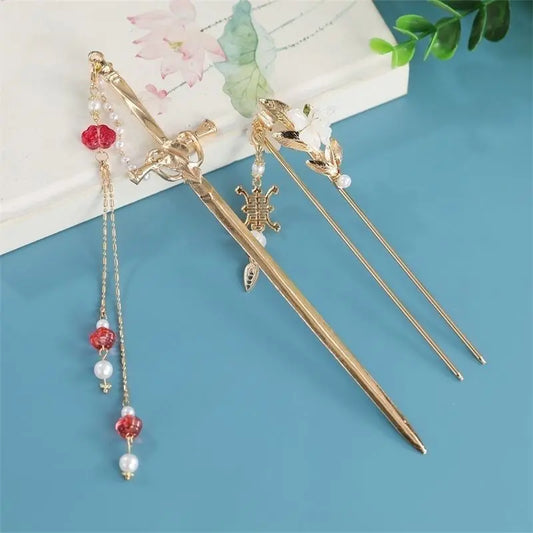
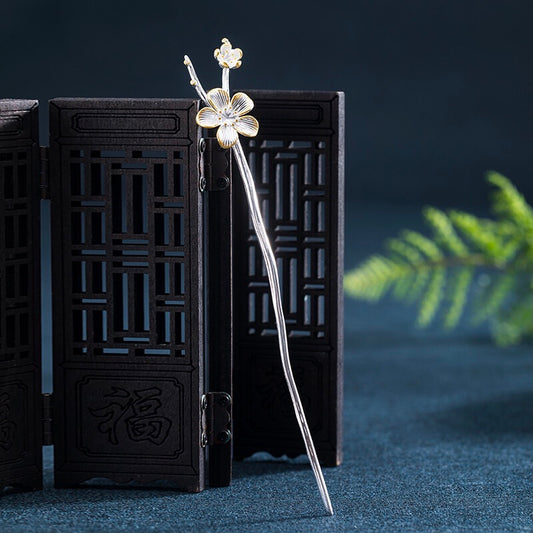
The following store pieces are included as visual pathways into Chinese bird, feather, embroidery, and phoenix design. They are contemporary accessories—not Bifang artifacts, ritual objects, replicas, or objects that carry supernatural power.

Wing and tassel movement
Layered wings and hanging pearls turn the motion of a mythic bird into wearable ornament—useful for comparing how modern design makes feathers feel dynamic.
Phoenix Wings Pearl Tassel Hairpin · $24.99
Explore the design
The auspicious bird tradition
This phoenix hairpin shows a different branch of Chinese bird symbolism: courtly grace, harmony, and auspicious beauty rather than Bifang’s warning of strange fire.
Elegant Phoenix Hairpin · $28.99
Compare the motif
Bird imagery through thread
Embroidery replaces flame and fantasy with textile texture, showing how a bird motif can be translated into line, color, and layered handwork.
Vintage Embroidered Bird and Pearl Brooch · $36.99
See the embroideryFrequently Asked Questions
What is Bifang in Chinese mythology?
Bifang is a one-legged mythical bird associated with unusual fire. Its best-known early description makes it crane-like, blue-green with red markings, and white-beaked.
How do you pronounce Bifang?
The pinyin is Bìfāng. “Bì” has a falling tone, while “fāng” has a high, level tone.
Does Bifang breathe fire?
Not explicitly in the best-known early passage. The text links Bifang’s appearance with strange fire, while flame breath is mainly a later or modern fantasy addition.
Why does Bifang have one leg?
The ancient texts describe one leg but do not give a definitive reason. Connections with a crane’s resting posture or the shape of flame are modern hypotheses.
Is Bifang a phoenix?
No. Bifang is an omen-bearing one-legged bird connected with strange fire; Fenghuang and the Western phoenix have different histories and symbolic systems.
Is Bifang a god of fire?
Calling Bifang a fire god is an interpretation, not a consistent early definition. The sources present it as a remarkable bird, an omen, and in one narrative a divine attendant.
What color is Bifang?
The best-known account describes a blue-green body with red markings and a white beak. Modern art often uses much more red, orange, or black.
Where is Bifang mentioned?
Important early sources include the Classic of Mountains and Seas, Han Feizi, and Huainanzi. They preserve different aspects of the creature.
What does Bifang symbolize today?
Modern readers often interpret it as warning, intense energy, transformation, or controlled power. These readings are inspired by the sources rather than fixed ancient meanings.
Is Bifang an evil creature?
Not simply. It can signal dangerous fire, but it also appears in the Yellow Emperor’s sacred procession. The tradition is more ambivalent than a good-versus-evil label suggests.
References
- Classic of Mountains and Seas (Shanhaijing), “Third Sequence of the Western Mountains.” Early transmitted text; consulted August 2026.
- Classic of Mountains and Seas (Shanhaijing), “Classic of Regions Beyond the Seas: South.” Early transmitted text; consulted August 2026.
- Han Feizi, “Ten Faults.” Warring States–early imperial transmitted text; consulted August 2026.
- Huainanzi, “Discourse on Broad Principles” (Fanlun Xun). Western Han transmitted text; consulted August 2026.
- Guo Pu, commentary on the Classic of Mountains and Seas. Eastern Jin commentary tradition.
- Yuan Ke, Annotations and Collation of the Classic of Mountains and Seas. Reference edition on Chinese mythology and textual commentary.
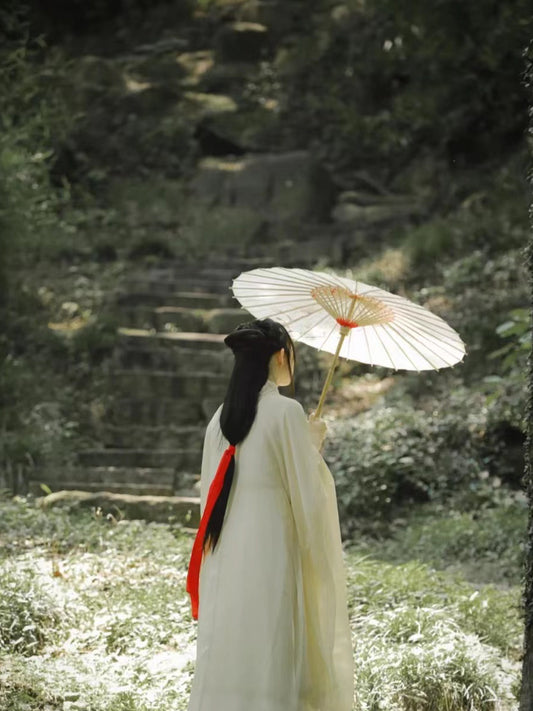
The supplied illustrations are modern artworks used to explain later visual interpretations. They are not treated here as archaeological or documentary evidence.