The Complete Guide to China‘s Preserved Delicacy
1. What Exactly Is a Century Egg (Pidan)?

The century egg, known in Mandarin as pídàn (皮蛋) or sōng huā dàn (松花蛋) (“pine‑flower egg” due to the snowflake‑like crystal patterns on the white), is a preserved food. Despite its name, it is not fermented or rotten, but chemically transformed through an alkaline curing process. The finished egg has a dark, translucent, amber‑to‑black egg white (albumen) that resembles jelly. The yolk becomes a creamy, semi‑solid mass ranging in color from dark green to gray to brown, with a strong, complex flavor: savory, slightly sulfurous, and mildly metallic. The texture is smooth and rich, similar to a ripe cheese or pâté. Contrary to Western first impressions, century eggs are not a dare or a novelty; they are a respected, everyday ingredient across China, Taiwan, Hong Kong, and Southeast Asian Chinese communities. They are prized for their depth of flavor and unique mouthfeel, especially when paired with contrasting ingredients like pickled ginger, vinegar, or soft tofu.
2. The Name: Why “Century” or “Thousand‑Year”?
Despite the name, century eggs are not aged for 100 or 1,000 years. The preservation period typically ranges from a few weeks to a few months. Several theories explain the exaggerated name:
- Appearance of age: The dark, translucent, “ancient” look of the egg white and the gray‑green yolk suggest great antiquity, so the name was a marketing device to emphasize the product‘s traditional, time‑honored nature.
- Long shelf life: The alkaline preservation method allows the eggs to be stored for many months without refrigeration (historically up to a year or more), hence “thousand‑year” as an exaggeration of their longevity.
- Literal translation: The Chinese name qiān nián dàn (千年蛋) literally means “thousand‑year egg,” but it’s understood hyperbolically, like “a ton of work” in English. The name is meant to intrigue, not to be factual.
Historical records indicate that century eggs have been made in China for at least 500 years, with the earliest known recipe appearing in a text from the Ming Dynasty (1368–1644). The method likely originated in Hunan province, where lime‑rich soils made the necessary alkaline ingredients readily available.
3. How Are Century Eggs Made? Traditional vs. Modern Methods
The core principle of making century eggs is to use an alkaline agent to denature egg proteins without spoilage. Below is a step‑by‑step comparison of traditional and modern methods.
Traditional Method (Ming‑Qing Dynasties to early 20th century)
Fresh duck eggs (the traditional choice) are coated in a paste made from:
- Quicklime (calcium oxide, 生石灰) – the primary alkaline agent
- Wood ash – provides additional alkalinity and minerals
- Salt (sodium chloride) – enhances flavor and aids preservation
- Clay – binds the mixture and regulates the penetration rate
- Rice hulls – added to the outer coating to prevent eggs from sticking together
The coated eggs are placed in earthenware jars or baskets, sealed, and stored in a cool, dark place for 50 to 100 days. During this time, the alkaline environment raises the internal pH of the egg to 9–12. The high pH denatures proteins, breaks down complex proteins into amino acids (creating umami), and causes the yolk fats to saponify (forming a creamy texture). The characteristic dark color comes from the reaction of hydrogen sulfide (from egg sulfur) with iron in the yolk, producing iron sulfide. After curing, the coating is washed off, and the eggs are ready to eat.
Modern Commercial Method
Today, most century eggs are produced using a faster, more controlled method that yields consistent results. The table below summarizes the key differences.
| Aspect | Traditional Home Method | Modern Commercial Method |
|---|---|---|
| Alkaline agent | Quicklime + wood ash + clay | Sodium hydroxide (food‑grade lye) or a precise blend of calcium hydroxide, sodium carbonate, and salt |
| Coating | Thick paste manually applied, often with rice hulls | Liquid solution immersion or precisely controlled coating spray, then plastic wrap |
| Curing time | 50–100 days | 10–14 days (accelerated by higher, controlled alkalinity) |
| Temperature | Ambient (15–25°C) | Controlled temperature chambers (20–25°C) for uniform results |
| Egg type | Primarily duck eggs | Duck, chicken, or quail eggs (chicken eggs cure faster) |
| Quality control | Variable; risk of over‑curing or spoilage | Uniform, tested for safety and consistency |
| Storage | Up to 1 year at cool room temperature | Refrigerated after production; vacuum‑packed for extended shelf life |
Regardless of method, after curing, the eggs are rinsed, sometimes coated with a thin layer of paraffin or vacuum‑sealed, and sent to market. Modern food safety regulations require that commercial century eggs be free of heavy metals (traditionally, some recipes used lead oxide to accelerate curing, which is now banned).
4. The Science: What Happens Inside a Century Egg?
The transformation is a fascinating example of alkaline denaturation. When the egg is exposed to high pH (9–12), the following chemical changes occur:
- Protein denaturation: The egg white proteins (ovalbumin, conalbumin) unwind and coagulate into a clear gel, losing their opaque white appearance. Water is trapped within the gel, creating the translucent, jelly‑like texture.
- Yolk transformation: The yolk‘s lipoproteins break down under alkaline conditions. The fats saponify (react with alkali) to form soaps, which emulsify the yolk into a creamy, smooth paste. Sulfur compounds are released, producing hydrogen sulfide.
- Color formation: Hydrogen sulfide reacts with iron from the yolk to form iron sulfide (FeS), which is black. The olive‑green and gray colors come from other metal‑sulfur complexes, including copper and zinc if present in the curing mixture.
- Umami development: Proteins are hydrolyzed into free amino acids, including glutamate (responsible for savory taste). This explains the intense, meaty flavor.
- Ammonia and sulfur aromas: The characteristic pungent smell comes from ammonia (from protein breakdown) and hydrogen sulfide (from sulfur‑containing amino acids).
Importantly, the high pH kills virtually all bacteria and pathogens, making the egg safe to eat without cooking. The eggs do not rot because the alkaline environment is hostile to spoilage organisms.
5. Nutritional Profile and Health Considerations
Century eggs are nutrient‑dense but should be consumed in moderation due to high sodium and, in some traditional products, residual alkaline salts. A typical century egg (about 50 g, duck egg) contains:
- Calories: ~80–100 kcal
- Protein: ~8–10 g
- Fat: ~6–8 g
- Sodium: ~300–500 mg (can be higher in some recipes)
- Iron: ~2–3 mg
- Calcium: ~50–70 mg
The high alkalinity means that eating century eggs raw on an empty stomach may cause mild gastric discomfort for some individuals, so they are typically consumed as part of a meal or with acidic accompaniments (vinegar, pickled ginger) to balance the pH. People with hypertension, heart disease, or kidney disease should limit intake due to sodium content. Lead is no longer permitted in commercial century eggs, but consumers should buy from reputable sources to avoid adulterated products.
6. How to Eat Century Eggs: Classic Serving Suggestions
Century eggs are almost always eaten cold and uncooked, as heating can intensify the sulfurous aroma and make the egg white rubbery. Here are the most popular ways to enjoy them:
- Simplest appetizer: Slice the egg into wedges, drizzle with soy sauce, sesame oil, and a sprinkle of chopped scallions or cilantro. Often served with pickled ginger to cut the richness.
- With cold tofu: Cubed silken tofu topped with century egg wedges, soy sauce, vinegar, chili oil, and preserved vegetables.
- Century egg congee (皮蛋瘦肉粥, pídàn shòuròu zhōu): The most famous preparation. Rice porridge is cooked with shredded pork, century egg cubes, and scallions. The egg‘s creaminess melts into the congee, creating a savory, comforting dish.
- Chopped and mixed into rice: Stirred into hot rice with a dash of soy sauce and pork floss (rousong).
- As a topping for banh mi (Vietnamese‑Chinese fusion): Sliced century egg is sometimes added to sandwiches for extra depth.
Never eat the egg directly from the shell without removing the white membrane that lines the shell; that membrane can be bitter. The ideal century egg should have a firm but jelly‑like white and a creamy, not chalky, yolk.
🏮 Just as the century egg transforms simple ingredients into something extraordinary through time and chemistry, traditional Chinese jewelry transforms precious materials into lasting art. Explore collections inspired by centuries of craftsmanship.
📌 Frequently Asked Questions (FAQ)
• Brzozowska, A. (2025). “Century Eggs: How They‘re Made & Why They’re Safe.” WebMD.
• “Century Egg.” National Geographic, Food History Series.
• “Century Egg.” The Woks of Life (Chinese ingredient glossary).
• “Pidan (Century Egg).” TasteAtlas.
• “Century Eggs (Pidan).” China Sichuan Food Blog.
• “Here‘s Why Century Eggs Are Actually Safe to Eat.” Food Republic (2022).
• McGee, Harold. (2004). “On Food and Cooking: The Science and Lore of the Kitchen” (alkaline preservation section). Scribner.
• Hsiung, Deh-Ta & Simonds, Nina. (2005). “The Food of China.” Whitecap Books.
🔗 Explore more Chinese culinary and cultural heritage at Chinese Showcase.
✨ Traditional Chinese Jewelry — Timeless Craftsmanship, Inspired by Nature
Just as the century egg transforms humble ingredients into a delicacy through time and care, traditional Chinese jewelry transforms gold, silver, jade, and gemstones into lasting heirlooms. Our collections feature motifs found in Chinese art for centuries — phoenixes, dragons, lotuses, and auspicious clouds — all meticulously crafted. Explore the collections below.
✨ Each piece reflects the artistry of Chinese tradition — like the century egg, a unique fusion of science, history, and culinary culture.
Three Picks from Chinese Showcase
Three contemporary shop selections inspired by this article’s materials, motifs, or wider decorative themes. These products are not historical artifacts. Check each product page for current specifications, price, and availability.

One Eye Vintage Men's Open Ring
View product details
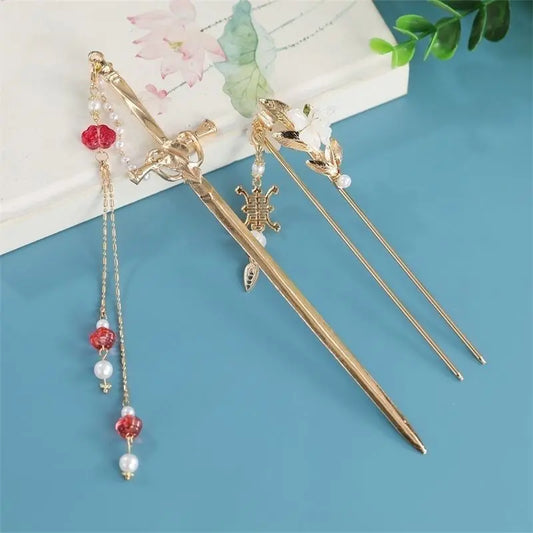
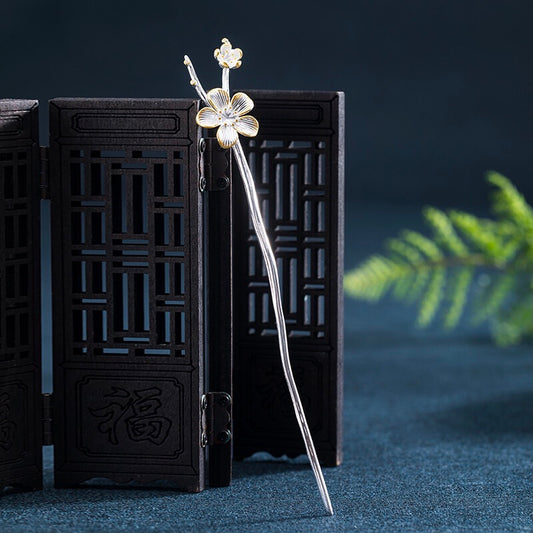
Handmade Chinese Chanhua Teal Leaf Pearl Hairpin – Traditional Silk Thread Hanfu Hair Accessory for Women
View product details