Introduction: Understanding China Through Flowers
Throughout five thousand years of Chinese civilization, flowers have been far more than gifts of nature. They are carriers of culture, symbols of spirit, and visual expressions of philosophy and values. No single flower can fully represent China in its entirety. Instead, a constellation of flowers together forms China’s floral panorama, each revealing a different facet of the nation’s cultural depth and collective character. This article offers a systematic exploration of the flowers most closely associated with China and interprets their deep integration with Chinese history, thought, and aesthetics.
The National Flower Debate: Peony and Plum Blossom
The Peony: A Symbol of Prosperity and Golden Ages
Historical Status:
The peony reached its cultural zenith during the Tang dynasty. Liu Yuxi’s famous line, “Only the peony is truly worthy of the name national beauty; when it blooms, the capital is stirred,” firmly established its title as the “King of Flowers.” Legends involving Empress Wu Zetian further enriched its imperial aura.
Multidimensional Symbolism:
- Wealth and Prosperity: Its full blossoms and vibrant colors symbolize national flourishing.
- Grandeur and Magnanimity: The large blooms reflect the bearing of a great civilization.
- Seasonal Meaning: Blooming in spring, it represents renewal and hope.
Artistic Expression:
- Painting: From Tang painter Bian Luan to modern master Qi Baishi, peonies remain a timeless subject.
- Decorative Arts: Widely used in porcelain, embroidery, lacquerware, and metalwork.
- Architecture: Frequently appears in imperial complexes such as the Forbidden City and the Summer Palace.
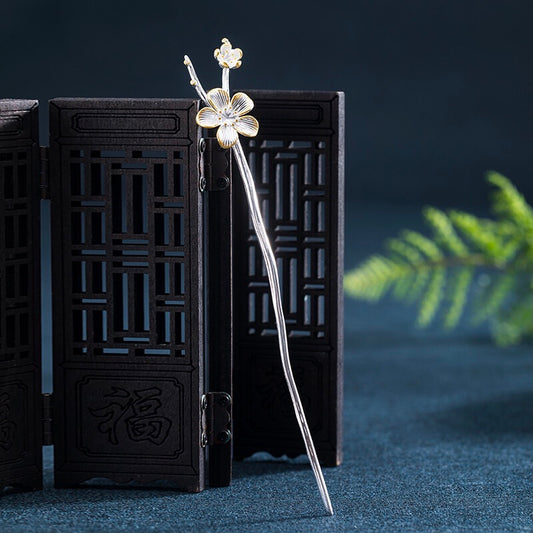
The Plum Blossom: Resilience and Moral Integrity
The plum blossom rose to spiritual prominence during the Song dynasty. Wang Anshi’s verse, “In a corner of the wall, a few plum branches bloom alone in the cold,” defined its enduring image of fortitude. Poets such as Lu You and Lin Bu further solidified its symbolic role.
Core Symbolism:
- Unyielding Strength: Blooming in winter, it reflects perseverance in adversity.
- Purity and Integrity: “Crushed into dust, its fragrance remains,” a metaphor for moral constancy.
- Humility: Heralds spring without competing for attention.
In modern history, the plum blossom became a spiritual emblem during times of national hardship. It was designated the national flower during the Republican era and remains the city flower of Nanjing, Wuhan, and others.
The Deeper Meaning of the National Flower Debate
The debate between peony and plum blossom reflects a fundamental duality in Chinese culture:
- The peony represents aspirations for prosperity and harmony.
- The plum blossom embodies inner strength in times of difficulty.
This dual pursuit mirrors the balance of yin and yang. As a result, many scholars advocate for “one nation, multiple flowers,” often including orchid and chrysanthemum to provide a more comprehensive cultural representation.

Cultural Flowers: The Four Gentlemen and the Three Friends of Winter
The Four Gentlemen: Plum, Orchid, Bamboo, and Chrysanthemum
Orchid: Elegance and Inner Refinement
Praised by Confucius as the “fragrance of the virtuous,” orchids symbolize nobility, humility, and sincere friendship. The culture of Chinese orchids extends across cultivation, appreciation, painting, and philosophy.
Bamboo: Integrity and Modesty
- Hollow core: Symbolizes humility.
- Distinct nodes: Represent moral integrity.
- Evergreen nature: Reflects resilience.
Celebrated by Su Shi and painted extensively by Zheng Banqiao, bamboo is both a cultural metaphor and a practical material in Chinese life.
Chrysanthemum: Transcendence and Longevity
From medicinal use in antiquity to Tao Yuanming’s reclusive ideal, the chrysanthemum came to symbolize withdrawal from worldly ambition, longevity, and endurance through autumn’s chill.
The Three Friends of Winter: Pine, Bamboo, and Plum
Together, pine, bamboo, and plum form a powerful moral alliance. Thriving through winter, they represent loyalty, humility, and perseverance—core virtues of the Chinese scholarly tradition.
Sacred Flower of Buddhism: The Lotus
The lotus occupies a unique position in Chinese culture, bridging religion, philosophy, and daily life.
- Buddhism: Purity and enlightenment; the Buddha is often depicted seated on a lotus throne.
- Daoism: Associated with immortality and balance, notably through He Xiangu of the Eight Immortals.
- Confucianism: Zhou Dunyi’s “On the Love of the Lotus” portrays it as the embodiment of the gentleman.
- Folk Symbolism: Auspicious homophones—lotus and fish signify “abundance year after year.”
Artistically, the lotus appears in temple architecture, sculpture, painting, ceramics, and embroidery, reflecting its unparalleled symbolic richness.

Regional Flowers: A Botanical Map of China
Northern China
- Peony: Luoyang and Heze.
- Chrysanthemum: Beijing and Kaifeng.
- Snow Lotus: Purity and rarity of the highlands.
Jiangnan (Southern Yangtze)
- Plum Blossom: Nanjing.
- Osmanthus: Hangzhou; honor and success.
- Magnolia: Shanghai; pioneering spirit.
Lingnan (South China)
- Kapok: Guangzhou; heroism.
- Bauhinia: Hong Kong; unity.
- Bougainvillea: Xiamen; resilience.
Southwest and Plateau Regions
- Camellia: Kunming; botanical richness.
- Rhododendron: Alpine vitality.
- Gesang Flower: Tibetan symbol of happiness.
Flowers and the Rhythm of the Seasons
Spring
- Peach Blossom: Love, renewal, utopia.
- Apricot Blossom: Scholarly success, medicine.
Summer
- Lotus: Moral purity.
- Sunflower: Loyalty and optimism.
Autumn
- Chrysanthemum: Longevity.
- Osmanthus: Achievement and honor.
Winter
- Plum Blossom: Endurance.
- Narcissus: New Year blessings.

Flowers in Chinese Life and Ritual
Festivals
- Spring Festival: Narcissus, kumquat, peach blossom.
- Qingming: Willow branches.
- Dragon Boat Festival: Mugwort and calamus.
- Mid-Autumn: Osmanthus.
- Double Ninth: Chrysanthemum.
Life Ceremonies
- Weddings: Peony, lotus, pomegranate.
- Birthdays and Longevity: Chrysanthemum, pine.
- Memorials: White chrysanthemum and lily.
Flowers in Modern China
In state ceremonies, diplomacy, and city branding, flowers remain vital cultural symbols. Nearly every major Chinese city has an official city flower, reinforcing identity and heritage.
China’s Floral Influence on the World
China is known as the “Mother of World Gardens.” Many iconic ornamental plants—roses, peonies, camellias, chrysanthemums—originated in or were significantly developed from Chinese species, shaping global horticulture.
Alongside plants, China exported a philosophy of nature: harmony between humanity and the natural world, subtle aesthetics, and moral symbolism rooted in living forms.
Conclusion: A Garden of Shared Values
China is not represented by a single flower, but by a complete cultural ecosystem. The peony’s prosperity, the plum blossom’s resilience, the orchid’s elegance, bamboo’s integrity, chrysanthemum’s transcendence, and lotus’s purity together form the spiritual garden of the Chinese nation.
To understand these flowers is to understand how China views life, nature, virtue, and time itself. In a globalized world, Chinese flower culture continues to bloom—rooted in history, alive in the present, and carrying hope into the future.
Let the peony bloom in abundance, the plum blossom stand firm in winter, and the lotus remain pure above the mud. When a hundred flowers bloom together, that is China.