In traditional Chinese festive culture, color is never merely a matter of visual aesthetics. It carries profound symbolic meaning, philosophical concepts, and collective psychological cues. During the Chinese New Year (Spring Festival), this system of color symbolism reaches its annual peak. People eagerly wear red and gold to welcome fortune and blessings, while at the same time consciously avoiding certain colors believed to attract bad luck or inauspicious energy. This behavior of “seeking the auspicious and avoiding the ominous” is not simple superstition, but a complex cultural coding system that integrates historical memory, linguistic symbolism, cosmology, and communal identity.
Understanding color taboos during the Spring Festival offers a key insight into the Chinese mindset of risk avoidance, blessing-seeking, and cyclical ritual behavior at the turn of the year.
I. Core Taboos: The “Negative” Symbolism of White and Black
Within the Chinese cultural context, white and black are the two primary colors most commonly avoided during the Spring Festival, and the cultural logic behind this preference is both clear and deeply rooted.
White: A Symbol of Mourning and Emptiness
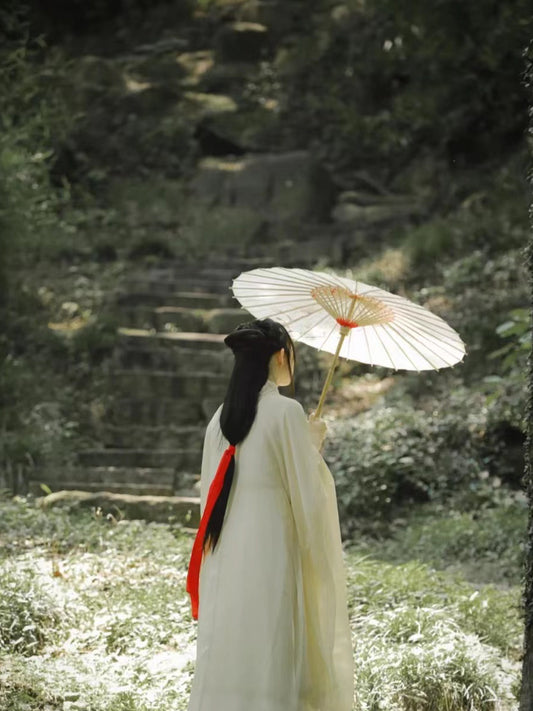
In Chinese culture, white is most strongly associated with funerals and mourning. Traditional funerals are referred to as “white affairs,” mourning garments are white, and memorial halls are decorated primarily in white—symbolizing death, loss, and emotional emptiness. The Spring Festival, by contrast, emphasizes vitality, joy, reunion, and renewal. These core values directly conflict with the symbolic meaning of white.
Wearing white during the New Year can subconsciously evoke associations with death and separation, which are widely considered inauspicious. It is believed to dilute the festive atmosphere or suppress good fortune, potentially bringing bad luck to the household. As a result, even individuals who prefer minimalist white clothing in daily life often deliberately choose alternative colors during the Spring Festival, as a gesture of respect for tradition and collective sentiment.
Black: A Tone of Solemnity and Restraint
Black is similarly associated with seriousness, heaviness, and unpropitious occasions. While modern fashion often treats black as elegant and timeless, traditional New Year customs regard black as too dark and restrained, lacking the brightness and expansiveness needed to welcome the New Year’s positive energy.
Historically, black was linked to authority, officialdom, or solemn environments, and in some regions, it also carried connotations of hardship or poverty. Wearing black at New Year was seen as symbolically “wearing last year’s misfortune into the new year,” which contradicts the spirit of renewal. Although black does not have as direct a funeral association as white, it is still generally considered unsuitable as a dominant color during the Spring Festival.

II. Contextual Taboos: Colors That Require Caution
Beyond the absolute avoidance of white and black, several other colors require contextual sensitivity due to their specific cultural associations.
Solid Blue: Possible Associations with Coolness and Melancholy
In traditional dyeing practices, indigo blue was commonly worn by ordinary people and was not strongly associated with celebration or luxury. While blue can symbolize calmness and elegance—such as in blue-and-white porcelain—large areas of solid blue may appear overly subdued or cold in the lively Spring Festival environment.
In some linguistic or cultural contexts, blue may also evoke feelings of melancholy or hardship. As a result, while blue patterns used as accents are generally acceptable, deep or solid blue garments are rarely a first choice for New Year celebrations.
Gray: An Ambiguous Middle Ground
Gray, as a transitional color between black and white, carries an equally ambiguous symbolism. It may suggest dullness, indecision, or lack of vitality, reinforced by modern negative expressions such as “gray mood” or “gray income.”
Within the Spring Festival’s strongly polarized color philosophy—where bright, auspicious hues dominate—gray lacks a clear positive association. Neither festive nor ceremonially solemn, it often occupies an awkward middle position and is therefore seldom recommended as a primary New Year color.
III. Deeper Cultural Roots: Homophonic Beliefs and Yin–Yang Philosophy
The formation of Spring Festival color taboos is deeply rooted in fundamental Chinese modes of thought.
The Influence of Homophonic Culture
The prevalence of homophones in the Chinese language provides fertile ground for both auspicious symbolism and cultural taboos. Just as “fish” (鱼) sounds like “surplus” (余) and symbolizes abundance, unfavorable homophones are carefully avoided.
- White: Beyond its funeral association, “white” can imply futility or wasted effort (as in “all for nothing”).
- Black: Closely associated with negative concepts such as bad luck, moral darkness, or misfortune.
Through repeated reinforcement within collective cultural psychology, these linguistic associations gradually become emotional responses and behavioral norms toward specific colors.
Reflections of Yin–Yang and Five Elements Philosophy
In traditional Chinese cosmology, colors correspond to the Five Elements, directions, and seasons. The Spring Festival marks the transition from winter to spring and aligns with the element of Wood, symbolizing growth and vitality. The celebratory energy of the New Year also emphasizes Fire, representing warmth, prosperity, and brightness—hence the prominence of red and purple.
White corresponds to Metal, associated with autumn and decline, while black corresponds to Water, linked to coldness and downward energy. Both conflict with the upward, life-affirming momentum of the New Year. Avoiding white and black, therefore, is a way of aligning human behavior with seasonal and cosmic rhythms.
The Psychology of the Yearly Threshold
Anthropologists describe festivals like the Spring Festival as a “liminal period”—a transitional phase between old and new orders. During such times, people become especially sensitive to symbolic signs. Any element perceived as ominous, including color, is treated with heightened caution. Color taboos thus function as ritual safeguards, helping individuals and families pass safely into the new cycle.

IV. Not Absolute: Flexibility and Modern Evolution
Chinese color symbolism is highly contextual and flexible, rather than rigid or uniform.
- Positive Meanings of Black: In calligraphy and ink painting, black symbolizes strength, dignity, and refinement. In professional settings, black formalwear remains appropriate. However, it is still avoided in core New Year family rituals.
- Alternative Meanings of White: White can represent purity and elegance, such as white jade. Nonetheless, its association with mourning remains dominant during Spring Festival in mainstream Han culture.
- The Complex Case of Green: Green symbolizes life and spring, but historical associations with infidelity (e.g., “wearing a green hat”) made it sensitive in family-centered celebrations. Today, green accents are widely accepted, though bright green hats are still approached with caution.
- Patterns and Color Balance: Even garments in black, white, or gray can feel festive when adorned with auspicious red or gold motifs—such as peonies, koi fish, or the character “Fu” (福). Modern fashion often uses this approach to balance tradition and style.
V. Modern Practice: Balancing Tradition and Individual Expression
In contemporary society, attitudes toward New Year color taboos are increasingly diverse:
- Core Observance: For family reunions, ancestral rituals, temple visits, and formal greetings to elders, most people still avoid wearing entirely white or black outfits as a sign of respect.
- Flexible Adaptation: In casual gatherings or travel scenarios, black, white, and gray are more readily accepted, especially among younger generations.
- Symbolic Adjustment: Many people add red accessories—scarves, jewelry, lipstick, or small accents—to psychologically “activate” auspicious energy.
- Creative Fusion: With the rise of “Guochao” (Chinese-inspired fashion), designers creatively reinterpret traditional taboos through modern cuts and symbolic motifs.
Conclusion: Cultural Empathy Behind Color Taboos
The avoidance of certain colors during the Spring Festival is fundamentally an act of collective cultural empathy. Through shared visual norms, people reinforce the sacredness and uniqueness of the New Year while expressing a collective desire for safety, prosperity, and renewal.
Rather than restricting personal aesthetics, these color choices represent a voluntary participation in a shared cultural narrative. For outsiders, understanding this color philosophy enables more graceful engagement with Spring Festival customs. For insiders, it reflects a deeper belief that the New Year is the moment most deserving of light, warmth, and blessing.
Choosing festive colors is like lighting a lamp of optimism in one’s heart—joining countless red lanterns and Spring Festival couplets in a radiant sea of hope. In this context, temporarily setting aside certain colors is not about fear, but about making space for the most vibrant symbols of life, renewal, and auspicious beginnings to shine.