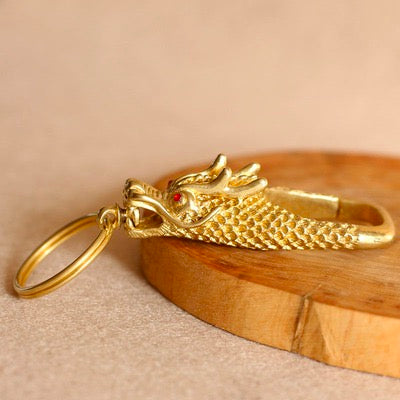
The Chinese fish-scale pattern, commonly romanized as Yulinwen, is a repeating geometric design inspired by the overlapping scales on a fish. It is usually constructed from rows of arches, semicircles, teardrops, diamonds, or U-shaped units. The repeated units create a surface that feels orderly, continuous, and gently animated.
Fish-scale designs have appeared on pottery, bronzes, gold and silver vessels, textiles, clothing, carved wood, furniture, porcelain, and garden architecture. Sometimes the pattern is the main decoration. In other works it becomes a dense background, known as a fish-scale ground, behind larger flowers, animals, or narrative motifs.
What Is a Chinese Fish-Scale Pattern?
At its simplest, the pattern consists of one small curved unit repeated horizontally and vertically. Adjacent rows are often offset so that the scales interlock rather than form rigid columns. The upper edge of one unit appears to overlap the unit below it, reproducing the protective layering seen on a fish.
Not every scale-shaped design has the same name or meaning. The broad term scale pattern can describe the scales of fish, dragons, snakes, or imagined animals. Fish-scale pattern usually refers more specifically to a geometric repeat that resembles fish scales. A complete fish motif, by contrast, depicts the animal's body, head, fins, and tail rather than only the structure of its scales.
| Feature | Typical Construction | Visual Effect |
|---|---|---|
| Repeated units | Similar arches, curves, drops, or diamonds extend across a surface. | Continuity and a unified decorative field |
| Staggered rows | Each row is shifted relative to the row above. | A natural overlapping effect |
| Layered edges | The top of one scale appears to cover part of another. | Depth without heavy three-dimensional carving |
| Curved geometry | Semicircles and U-shaped lines soften the repeat. | Rhythm associated with water and movement |
| Background use | Small scales fill the field behind larger motifs. | Contrast between a textured ground and a clear subject |
Three Fish-Scale Pattern Structures
The following diagrams are based on the three forms in the supplied reference image. They show how a small change in direction or overlap can produce a very different visual rhythm.


The first structure feels architectural because its curves rise from the ground. The second reverses the direction and emphasizes suspension. The third is more organic, using multiple overlapping outlines to reproduce the clustered appearance of actual scales. Historical objects may use these structures alone or combine them with dots, petals, ruyi heads, floral centers, and other small details.
The History of Fish-Scale Pattern in China
Neolithic Pottery and Fishing Communities
An early connection between scale-like decoration and fishing life can be seen in material from the Xinkailiu culture near Xingkai Lake in Heilongjiang. The China Museum Association describes a pottery jar from a culture dating to about 6,000 years ago. The vessel carries diamond and comb-point decoration that may be simplified from fish scales. Archaeologists also found fish pits, fishing tools, and pottery decorated with fish-scale, net, and wave patterns in the same cultural context.
This evidence suggests that early scale-like ornament could grow from close observation of fish, nets, and water. For communities whose daily lives depended heavily on fishing, these forms were not distant symbols. They belonged to the surrounding environment and to practical experience.
It is still important not to label every early diamond or curved pattern as a fish-scale design. Archaeological interpretation depends on the object's date, excavation context, manufacturing technique, and comparison with related finds. Visual similarity alone is not enough.
Scale Patterns on Shang and Zhou Bronzes
During the Bronze Age, scale patterns appeared within more complex animal decoration. Some represented the bodies of fish, snakes, dragons, or composite creatures. Others became independent bands or background textures. Discussions of Shang and Zhou bronze ornament connect scale patterns and several later geometric motifs with the long transformation of dragon and phoenix imagery.
For this reason, scale pattern is broader than fish-scale pattern. Scales carved on a dragon are part of a dragon image, while an all-over field of curved overlapping units may function as an independent fish-scale ground. The two can resemble each other without being identical in subject or purpose.
The Liao Dynasty Silver Ewer
A particularly clear example is the Liao dynasty silver ewer in the National Museum of China. Excavated in 1954 from the tomb of a Liao prince consort at Dayingzi in Chifeng, Inner Mongolia, the vessel has a central horizontal band with fish-scale pattern covering the areas above and below it.
The small repeated scales fit the rounded body of the ewer especially well. As light moves across the silver, the pattern creates alternating highlights and shadows. It enriches a large metal surface without overwhelming the elegant form of the vessel. The object also demonstrates the high level reached by Khitan gold- and silversmithing.
Fish-Scale Ground in Ming and Qing Decoration
In later decorative arts, the pattern was often used as a ground. A fish-scale ground covers the background with small repeated units while larger flowers, birds, dragons, people, or cartouches occupy the foreground. This method allows a craftsman to fill empty space while preserving a clear hierarchy.
Research on the interior decoration of Shufangzhai in the Forbidden City records a nanmu openwork floor-to-ceiling screen carved with peonies over a fish-scale ground. The compact background supports the larger blossoms and leaves, making them appear more prominent. Here, the scale pattern is not the main narrative subject. Its value lies in rhythm, contrast, and craftsmanship.
Fish-Scale Patterns in Classical Gardens
Fish-scale geometry also entered architecture. The Suzhou garden authority lists fish-scale designs among the curved geometric patterns used in traditional lattice windows. Craftsmen formed the repeating curves with brick, tile, or wood according to the scale and construction of the window.
In a garden, this pattern does more than decorate a flat surface. It filters views, air, and light. Leaves, rocks, and people are partially visible through the openings, while sunlight projects moving scale-shaped shadows onto walls and paths. The pattern therefore participates in the changing spatial experience of the garden.
Fish-Scale Pleated Skirts
Qing dynasty clothing introduces an important distinction. A fish-scale pleated skirt, sometimes discussed in relation to mamianqun, does not necessarily carry printed fish scales. Instead, many narrow pleats are connected with matching threads. When the skirt opens, the stitched pleats spread into scale-like sections.
Research published by the Tsinghua University Art Museum explains that the stitching helped reinforce the pleats while producing the appearance of fish scales. This means that fish-scale effects in Chinese clothing can result from three-dimensional construction, not only from a woven, embroidered, or painted surface pattern.
What Does the Chinese Fish-Scale Pattern Symbolize?
No single meaning applies to every fish-scale design. The interpretation changes according to the object, period, accompanying motifs, and intended use.
Abundance and the Fish-Yu Wordplay
In Chinese, the word for fish, yu, sounds like the word for surplus or abundance. Complete fish motifs therefore frequently express wishes such as 鈥渁bundance year after year.鈥?The Palace Museum notes the broad use of fish imagery in Song and Yuan ceramics and in Ming and Qing painted porcelain.
A fish-scale pattern can share this auspicious association when it appears with whole fish, lotus, water, paired fish, or other explicitly aquatic imagery. A purely geometric fish-scale ground, however, may simply be decorative. It is inaccurate to claim that every scale repeat was designed specifically to attract wealth.
Water, Movement, and Vitality
Scales shimmer as a fish moves through water. Repeated curved rows can therefore evoke ripples, flowing water, and living movement. This association becomes stronger when the pattern is combined with waves, aquatic plants, carp, or lotus flowers.
Continuity and Order
Each scale is small, yet the scales connect to form a complete protective surface. Modern viewers often read this structure as continuity, accumulation, cooperation, or resilience. These are reasonable contemporary interpretations based on the geometry, but they should not be presented as fixed meanings assigned to every ancient object.
Growth and Transformation
When scales belong to a carp transforming into a dragon, they participate in the familiar 鈥渃arp leaping over the Dragon Gate鈥?theme. That complete story can symbolize advancement, examination success, perseverance, and change of status. The transformational meaning comes primarily from the fish-to-dragon narrative rather than from an isolated scale shape.
Fish-Scale Pattern and Related Designs
| Term | Main Visual Feature | Important Difference |
|---|---|---|
| Fish motif | A complete fish with head, body, fins, and tail | Depicts the animal rather than only its scales |
| Fish-scale pattern | Rows of overlapping curves, drops, arches, or diamonds | An abstract repeat derived from the surface of a fish |
| Scale pattern | Scale-like units on fish, dragons, snakes, or fantastic animals | A broader term that is not limited to fish |
| Fish-scale ground | Small scales covering a background behind larger motifs | Functions as a decorative field rather than the main subject |
| Fish-scale pleated skirt | Pleats linked by threads and spreading like scales | A clothing structure, not necessarily a printed pattern |
| Lotus-petal pattern | Pointed petals arranged around a vessel or central form | Usually follows the logic of a flower rather than overlapping skin |
| Tortoiseshell pattern | A hexagonal framework resembling a turtle shell | Built primarily from six-sided cells rather than curved scales |
| Wave pattern | Horizontal or radiating curves emphasizing water movement | Prioritizes flowing waves rather than layered overlap |
Traditional Materials and Modern Design
The geometry adapts easily to different materials. On pottery it can be combed, stamped, or incised. On silver it can be chased, hammered, or engraved. On porcelain it can be painted, molded, carved, or defined through glaze. In wood it can become an openwork ground, and in textiles it can be woven, embroidered, printed, or constructed through pleating.
Modern designers can simplify the pattern into jewelry cutouts, scarf repeats, packaging, wall panels, tiles, bags, or digital graphics. The strongest adaptations preserve the principle of overlapping units rather than merely placing random semicircles together.
Density matters. If scales are packed too tightly, the surface can become visually heavy. If they are too far apart, the overlapping logic disappears. Designers should also establish hierarchy when combining scales with fish, dragons, lotus flowers, clouds, or ruyi motifs. One element should remain dominant while the others support it.
The three diagrams above offer different design directions. Upright arches communicate stability and upward movement. Hanging curves feel softer and more textile-like. Layered drops create richness and are suitable for statement details. Changing line weight, spacing, or color can modernize the motif without removing its recognizable structure.
Fish-Inspired Jewelry
These pieces use complete fish motifs rather than reproducing fish-scale pattern exactly. They extend the wider cultural themes surrounding fish imagery, including abundance, perseverance, harmony, and movement. Jewelry should be understood as symbolic adornment, not as a guarantee of wealth, luck, or protection.

Koi Fish Enamel Stud Earrings
Compact 925 sterling silver studs with gold plating, enamel, and natural red agate. The koi form offers a refined reference to perseverance and abundance.
View Koi Earrings
Double Fish and Swallow Enamel Necklace
A colorful pendant inspired by Chinese kite art, combining double fish, swallows, clouds, gilded 999 fine silver, and enamel.
View Fish Necklace
Jade Fish and Red Garnet Bracelet
An adjustable handmade bracelet combining a jade fish motif, red garnet, and 999 fine silver for a layered Chinese-inspired design.
View Fish BraceletFrequently Asked Questions
What is the Chinese fish-scale pattern, or Yulinwen?
Yulinwen is a repeating Chinese geometric design derived from overlapping fish scales. Common forms include staggered arches, semicircles, U shapes, teardrops, and diamonds.
What does fish-scale pattern symbolize in Chinese culture?
Its meaning depends on context. With fish and water imagery it may suggest abundance, vitality, and continuity. As a geometric ground, it may primarily provide rhythm, texture, and order.
Is fish-scale pattern considered lucky?
It can carry auspicious associations when connected with fish, lotus, water, paired fish, or the wordplay between fish and surplus. A plain scale repeat is not automatically a luck symbol.
How old is fish-scale pattern in China?
Scale-like pottery decoration linked to fishing communities is documented in the Xinkailiu culture near Xingkai Lake, dating to about 6,000 years ago.
What is the difference between fish pattern and fish-scale pattern?
A fish pattern depicts the complete animal, while a fish-scale pattern abstracts the overlapping structure of its scales into a repeat.
Are fish-scale pattern and dragon-scale pattern the same?
No. Both use scale units, but dragon scales belong to a dragon image or broader scale-pattern tradition. Fish-scale pattern refers more specifically to geometry associated with fish scales.
What is a fish-scale ground?
It is a dense background made from small repeated scales, used to support and contrast with larger flowers, animals, figures, or cartouches.
What is a Chinese fish-scale pleated skirt?
It is a skirt whose narrow pleats are linked with threads so that they spread into scale-like sections. The effect comes from construction and does not require a printed fish-scale design.
Where was fish-scale pattern traditionally used?
It appears on pottery, bronzes, silverware, porcelain, textiles, clothing, carved wood, interior screens, furniture, and garden lattice windows.
Is fish-scale pattern the same as tortoiseshell pattern?
No. Tortoiseshell pattern is usually organized around hexagonal cells, while fish-scale pattern relies on curved or pointed units that appear to overlap in rows.
Can fish-scale pattern be used in modern design?
Yes. Its repeat works well in jewelry, textiles, tiles, packaging, wall panels, bags, and digital graphics. Modern designs can adjust scale, spacing, direction, and color while preserving the layered structure.
Conclusion
Chinese fish-scale pattern began with close observation of aquatic life and developed into a versatile geometric language. From Neolithic pottery and Bronze Age animal ornament to Liao silverware, Qing palace carving, Suzhou garden windows, and fish-scale pleated skirts, it repeatedly adapted to new materials and functions.
The pattern can participate in ideas of abundance, water, vitality, continuity, and transformation, but it does not carry one automatic meaning. The best interpretation considers the object's date, material, use, and accompanying motifs. That flexibility is also why fish-scale pattern remains useful today: it is visually simple, structurally rich, and open to thoughtful reinvention.
References
- China Museum Association: Xinkailiu Culture Diamond-Pattern Pottery Jar
- National Museum of China: Liao Dynasty Scale-Pattern Silver Ewer
- Capital Civilization Office: Interpreting Decorative Traditions on Chinese Bronzes
- The Palace Museum: Western Scrollwork in Qing Palace Interior Decoration
- Suzhou Gardens and Landscaping Administration: Architecture and Lattice Windows
- Tsinghua University Art Museum: The Ancient and Modern Beauty of Mamianqun
- Tsinghua University Art Museum Journal: Qing Dynasty Fish-Scale Pleated Skirts
- The Palace Museum: Fish Motif and the Yu-Abundance Wordplay
Recommended Categories