1. Historical Context: The Decline of the Mongol Yuan Dynasty

To understand the Ming Dynasty’s founding, we must first examine the collapse of the Yuan Dynasty (1271–1368 CE), established by Kublai Khan following the Mongol conquest of China. By the mid-14th century, the Yuan regime was in terminal decline. The Mongol ruling class faced growing resentment from the native Han Chinese population, while natural disasters—famines, devastating floods of the Yellow River, and the Black Death plague in the 1340s—wreaked havoc across the countryside. Approximately seven million people starved, and central authority crumbled. Heavy taxation, forced labor on massive construction projects (including repairs to the Grand Canal and Yellow River dikes), and widespread banditry fueled peasant uprisings across northern and central China. The most successful of these rebellions was the Red Turban Movement, a rebel group rooted in the radical Buddhist White Lotus tradition whose members wore distinctive red headgear It was into this maelstrom that a young peasant named Zhu Yuanzhang would step forward.
2. The Man Who Would Be Emperor: From Orphan to Rebel
Zhu Yuanzhang was born in 1328 CE in Haozhou (modern Fengyang, Anhui province). His family was so impoverished that they frequently moved just to avoid rent collectors, and several of his brothers were given away due to poverty. When Zhu was 16, the Yellow River flooded his village. Then his parents and eldest brother succumbed to plague, leaving him penniless and alone. To survive, he took shelter in a Buddhist monastery near Fengyang, where at least he could find food and shelter. But the monastery itself was struggling financially, and Zhu was forced to wander central China for several years, begging for his daily bread This harsh period taught him resilience, self-reliance, and a deep empathy for the suffering of ordinary people. It was at the monastery that he learned to read and write—skills that would later prove essential for ruling a vast empire.
In 1352, the monastery where Zhu was staying was burned down by Yuan troops. Facing destitution, Zhu, now 24, joined a local rebel group. He soon distinguished himself as a capable military leader and rose rapidly through the ranks, taking the name Zhu Yuanzhang. He married the adopted daughter of rebel leader Guo Zixing, which brought him valuable connections. When Guo Zixing died in 1355, Zhu Yuanzhang took command of the rebel army. At this point, the rebellion began to transform from scattered peasant unrest into a serious military force capable of toppling the Yuan.
3. Rise to Power: The Fall of the Yuan and Founding of the Ming
Zhu Yuanzhang proved to be a brilliant military strategist and charismatic leader. In 1356, his forces captured Nanjing, a strategically vital city on the Yangtze River delta that he made his capital. Over the following decade, he systematically defeated his two most formidable rivals: Chen Youliang, whom he crushed at the Battle of Poyang Lake in 1360 CE (one of the largest naval battles in history), and Zhang Shicheng, whom he defeated in 1367 CE. Having eliminated all major competitors for control of southern and central China, Zhu sent his armies north. In 1368 CE, his forces captured the Yuan capital Dadu (present-day Beijing), forcing the last Yuan emperor to flee to the Mongolian steppes. On January 23, 1368 CE, Zhu Yuanzhang declared himself emperor, taking the reign name Hongwu, meaning “Vastly Martial,” and named his new dynasty Ming, which means “Bright” or “Radiant”. He was the second commoner in Chinese history (after Liu Bang, founder of the Han Dynasty) to ascend the Dragon Throne.
Timeline of Key Events in the Rise of Emperor Hongwu
| Date | Event | Significance |
|---|---|---|
| 1328 CE | Zhu Yuanzhang (Zhu Chongba) born in Haozhou, Anhui | Birth of the future Ming founder into extreme poverty |
| 1344 CE | Parents and elder brother die of plague; becomes orphaned beggar monk | Tragedy shapes his empathy for peasants but also his ruthlessness |
| 1352 CE | Joins Red Turban Rebellion after monastery burned by Yuan troops | Beginning of his military career at age 24 |
| 1355 CE | Assumes leadership of rebel faction after Guo Zixing‘s death | Zhu takes command and consolidates power |
| 1356 CE | Captures Nanjing, establishes it as his capital | Strategic base for controlling the Yangtze region |
| 1360 CE | Defeats rival Chen Youliang at Battle of Poyang Lake | Eliminates most powerful rival; secures central China |
| 1367 CE | Defeats Zhang Shicheng, last major rival in the east | Clear path to total power |
| January 23, 1368 CE | Proclaims himself Hongwu Emperor, founds Ming Dynasty | Official start of the Ming Dynasty |
| 1368 CE | Captures Dadu (Beijing), Yuan court flees north | Mongol rule over China ends after nearly a century |
| 1370–1380s CE | Consolidates control over Yunnan, Sichuan, and other peripheral regions | Full reunification of China under Ming rule |
| 1380 CE | Abolishes the position of Chief Minister after Hu Weiyong purge | Emperor assumes direct control over six ministries |
| 1398 CE | Emperor Hongwu dies at age 69; buried at Ming Xiaoling Mausoleum, Nanjing | End of a transformative 30-year reign |
4. Governance and Reforms: Centralizing Power and Uplifting the Peasantry
Emperor Hongwu’s reign was marked by sweeping institutional reforms that profoundly shaped Chinese governance for centuries. Having risen from the lowest ranks of society, he never forgot his peasant origins and designed many of his policies to benefit the rural poor.
Agricultural and Economic Reforms
Hongwu undertook large-scale land redistribution, confiscating estates from wealthy landowners and giving land to landless peasants to farm. He lowered land taxes, reduced forced labor obligations, and invested in massive public works projects: repairing dikes, digging irrigation canals, and rebuilding infrastructure devastated by decades of war. These measures boosted agricultural productivity, alleviated famine, and strengthened the rural economy that formed the backbone of the empire. He also standardized the currency system and reformed taxation, bringing greater financial stability.
Centralization of Government
The Hongwu Emperor was deeply distrustful of powerful ministers and court officials. In 1380 CE, he abolished the position of Chief Minister (Prime Minister) after executing his chancellor Hu Weiyong and tens of thousands of his alleged co‑conspirators. Thereafter, the six ministries (Personnel, Revenue, Rites, War, Justice, and Works) reported directly to the emperor. To manage the immense workload, he created a Grand Secretariat composed of trusted Hanlin Academy scholars, but they served only as his personal advisors, not independent power brokers. This restructuring placed ultimate decision-making authority squarely in the emperor‘s hands—a model of autocratic centralization that later Ming and Qing emperors largely retained.
Restoration of Confucian Civil Service System
Reversing earlier Yuan policies that had devalued traditional Chinese learning, Hongwu reinstated the Confucian civil service examination system in 1370 CE. Officials were selected based on merit through rigorous exams on Confucian classics, creating a loyal, educated bureaucracy dependent on imperial favor rather than hereditary privilege. This reform strengthened the state and provided social mobility, though Hongwu remained deeply suspicious of the scholar‑official class.
Legal Reforms: The Great Ming Code (Da Ming Lü)
Hongwu personally oversaw the compilation of the Da Ming Lü (Great Ming Code), a comprehensive legal code completed during his reign that blended Confucian principles with Legalist notions of strict punishment. The code clearly defined penalties for crimes and established procedures for legal administration, becoming the model for later Chinese dynasties and influencing legal systems across East Asia.
The Embroidered Uniform Guard (Jinyi Wei)
Perhaps the most infamous institution created by Hongwu was the Embroidered Uniform Guard, a secret police force and personal intelligence agency that operated outside normal legal channels. The Jinyi Wei monitored officials, generals, and even members of the imperial family for signs of disloyalty, arresting, torturing, and executing suspected plotters without trial. This brutal apparatus allowed Hongwu to maintain absolute control but sowed a climate of fear throughout the court.
5. Foreign Policy and Military Achievements
Hongwu’s foreign policy was notably conservative. He pursued a strategy of repelling foreign threats without expensive, overextended military campaigns. In the north, he strengthened frontier defenses along the Great Wall against residual Mongol forces. In the south, he consolidated control over Yunnan and Guizhou provinces, which had remained under Yuan influence until 1380 CE. He also enforced a strict maritime embargo (haijin) policy, banning private overseas trade to suppress piracy and prevent coastal populations from colluding with Japanese wokou pirates. While this policy protected Ming security in the short term, it also cut China off from the commercial dynamism of the Indian Ocean that would later be briefly revived under the Yongle Emperor’s treasure voyages.
6. A Complex Legacy: The Peasant-Emperor’s Contradictions
Emperor Hongwu left behind one of the most paradoxical legacies in Chinese imperial history. On one hand, he was a genuine champion of the poor, instituting land reforms, lowering taxes, and building infrastructure that improved millions of lives. His policies created a stable, self‑sufficient agrarian economy and a centralized state that endured for nearly three centuries. Historian Patricia Ebrey captures his impact: “Seldom has the course of Chinese history been influenced by a single personality as much as it was by the founder of the Ming Dynasty, Zhu Yuanzhang.”On the other hand, Hongwu was paranoid, vindictive, and brutal. He conducted four major purges of the court, executing officials and their families in the tens of thousands—sometimes as many as 30,000 in a single investigation. He reintroduced public flogging for officials who displeased him and had his own physicians executed after his death. This duality—the compassionate peasant and the ruthless autocrat—stemmed directly from his upbringing: he understood the suffering of the common people but had also learned to trust no one.
Despite his harsh methods, the Hongwu Emperor successfully overturned Mongol rule, reunified China, and restored native Han Chinese governance. He transformed a broken, war‑torn land into a unified empire with strong institutions, agricultural prosperity, and cultural confidence. When he died on June 24, 1398 CE at age 69, he was buried at the magnificent Ming Xiaoling Mausoleum on Purple Mountain east of Nanjing, a site that remains a testament to his enduring stature. His Ming Dynasty would go on to produce the monumental Forbidden City, the maritime voyages of Admiral Zheng He, and a cultural renaissance that produced timeless classics of literature, painting, and porcelain.
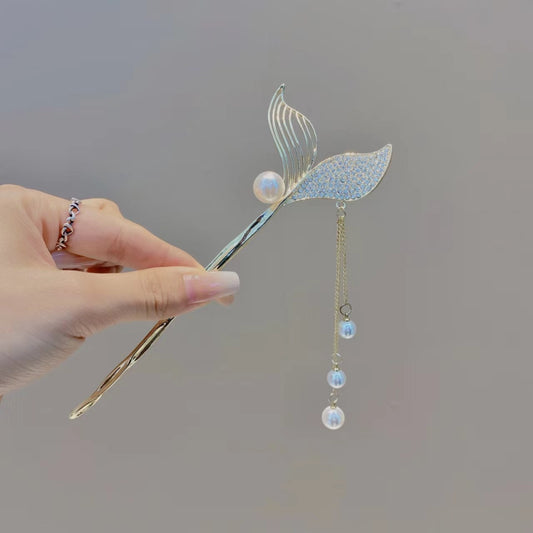
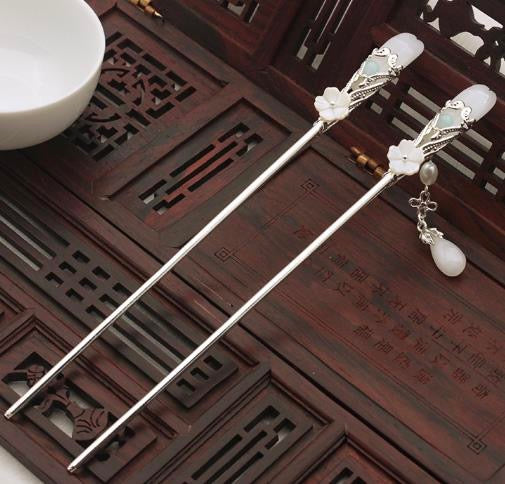
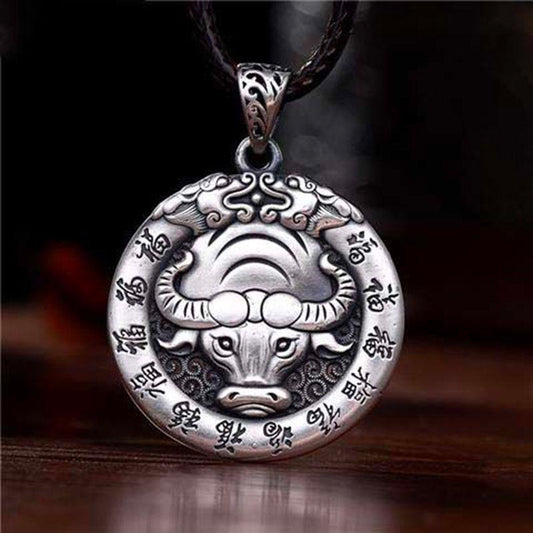
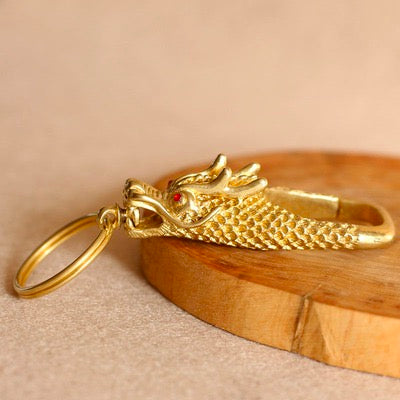
🏮 The Ming Dynasty‘s cultural and artistic achievements, from imperial jewelry to Ming-style porcelain, remain treasured worldwide. Discover traditional Chinese jewelry inspired by the elegance and refinement of this golden age.
📌 Frequently Asked Questions (FAQ)
• The Editors of Encyclopaedia Britannica. (1998). Hongwu: 1st Ming Emperor, Founder of Dynasty & Reformer. Encyclopaedia Britannica.
• Cartwright, Mark. (2017). Hongwu Emperor. World History Encyclopedia.
• Zhu Yuanzhang, the First Emperor of the Ming Dynasty. China Highlights.
• The Hongwu Emperor of the Ming Dynasty. TimeMaps Encyclopedia.
• Hung-wu. The Free Dictionary.
• Ming Dynasty: Dates, History, Culture & Achievements. WuKong Edu Blog.
• Twitchett, Denis and Mote, Frederick W. (1988). The Cambridge History of China, Volume 7: The Ming Dynasty, 1368–1644, Part 1. Cambridge University Press.
• Huang, Ray. (1974). Taxation and Governmental Finance in Sixteenth‑Century Ming China. Cambridge University Press.
• Brook, Timothy. (1998). The Confusions of Pleasure: Commerce and Culture in Ming China. University of California Press.
• Mote, Frederick W. (2003). Imperial China 900–1800. Harvard University Press.
🔗 Explore more Chinese cultural heritage at Chinese Showcase.
✨ Traditional Chinese Jewelry – Timeless Elegance Inspired by the Ming Dynasty
The Ming Dynasty was a golden era for Chinese jewelry arts. Goldsmiths, silversmiths, and jade carvers produced pieces of extraordinary refinement—from gold hairpins inlaid with kingfisher feathers (diancui 点翠) to jade pendants carved with imperial dragons. Ming jewelry design emphasized balance, natural motifs, and exquisite craftsmanship that continue to inspire traditional Chinese jewelry today. Explore our curated collections below and own a piece of living artistry.
✨ Each piece celebrates the artistic heritage of the Ming Dynasty — a time when China shone as one of the world‘s most sophisticated civilizations.