1. Historical Context: The Fall of the Sui Dynasty

To understand the Tang Dynasty’s founding, we must first examine the collapse of the Sui Dynasty (581–618 CE). The Sui had successfully reunified China after centuries of division, but the second emperor, Sui Yangdi (Emperor Yang), exhausted the empire through massive construction projects (including the Grand Canal), costly and failed military campaigns against Goguryeo (Korea), and oppressive taxation. Widespread peasant rebellions erupted around 613 CE, and by 617 CE, the Sui court had lost effective control over large parts of China. Warlords and regional governors rose across the land, each seeking to claim the mandate of heaven. It was into this chaos that Li Yuan, the Duke of Tang and a military governor in Taiyuan (modern Shanxi), would step forward.
2. The Rise of Li Yuan: From Sui Official to Rebel Leader
Li Yuan was born in 566 CE in Chang’an (present-day Xi’an) to a powerful aristocratic family with close ties to the Northern Zhou and Sui dynasties. His aunt, Empress Dugu, was the wife of Sui’s founder, Emperor Wen. Li Yuan began his career as a personal guard and steadily rose through the ranks, eventually becoming the military governor of Taiyuan, a strategic frontier post. It was his second son, the brilliant and ambitious Li Shimin, who convinced him that the Sui regime was beyond saving. Encouraged by key advisors such as Pei Ji and Liu Wenjing, and with the support of Turkic allies, Li Yuan launched his rebellion in 617 CE. His forces marched south, captured the Sui capital Chang’an in late 617, and placed a puppet Sui prince on the throne. In 618 CE, after news arrived that Emperor Yang had been killed in a coup, Li Yuan formally deposed the puppet and declared himself emperor, naming his dynasty “Tang” after his former dukedom.
3. Founding the Dynasty and Unifying China (618–624 CE)
Proclaiming the Tang Dynasty was only the first step. Most of China remained under the control of rival warlords: Xue Ju in the northwest, Liu Wuzhou in the north, Dou Jiande in Hebei, Wang Shichong in Luoyang, and several others in the south. Between 618 and 624 CE, Emperor Gaozu directed a series of military campaigns, often personally led by his son Li Shimin, to systematically eliminate these contenders. The most decisive victory came at the Battle of Hulao (621 CE), where Li Shimin defeated the combined forces of Dou Jiande and Wang Shichong, securing the eastern plain. By 624 CE, the Tang had reunified almost all of China proper, establishing a stable foundation for the dynasty.
Key Timeline of the Tang Founding
| Date | Event | Significance |
|---|---|---|
| 566 CE | Li Yuan born in Chang’an | Birth of the future emperor into an aristocratic family. |
| 613–617 CE | Widespread Sui rebellions | Collapse of central authority; opportunity for regional warlords. |
| 617 CE | Li Yuan rebels in Taiyuan | Urged by Li Shimin and advisors; captures Chang’an. |
| 618 CE | Li Yuan proclaims himself Emperor Gaozu | Official founding of the Tang Dynasty. |
| 621 CE | Battle of Hulao | Li Shimin defeats Dou Jiande and Wang Shichong; Tang control over eastern China. |
| 624 CE | Unification completed | Last rival warlords eliminated; Tang reunifies China. |
| 626 CE | Xuanwu Gate Incident | Li Shimin kills brothers, forces Gaozu to abdicate. |
| 635 CE | Death of Emperor Gaozu | Founder dies, having established a resilient empire. |
4. Key Military Campaigns and the Role of Li Shimin
While Emperor Gaozu provided overall direction and legitimacy, the military genius behind the Tang’s unification was his second son, Li Shimin. Li Shimin personally led the most crucial campaigns, displaying brilliant tactics and charismatic leadership. After capturing Chang’an, he faced Xue Ju (who threatened the capital), Liu Wuzhou (in the north), and then the twin threats of Wang Shichong (in Luoyang) and Dou Jiande (in Hebei). At the Battle of Hulao, Li Shimin defeated Dou Jiande’s numerically superior army by using a strategy of attrition followed by a sudden cavalry charge. This victory forced Wang Shichong to surrender and effectively ended all serious opposition to Tang rule. These military successes gave the new dynasty the territorial integrity and prestige needed to consolidate power.
5. The Institutions of Tang Governance Under Gaozu
Emperor Gaozu’s contributions were not limited to military affairs. He was a capable administrator who understood that a stable government required sound institutions. Building on the Sui model, he established the Three Departments and Six Ministries (三省六部) system, which became the standard for Chinese bureaucracy for centuries. He also implemented the Equal-Field system (均田制), distributing land to peasants in exchange for tax and labor obligations, which boosted agricultural production and weakened aristocratic landholding. Additionally, Gaozu commissioned a comprehensive legal code (the basis for the later Tang Code, 唐律疏议), reformed the coinage, and promoted Confucian rituals to legitimize his rule. These institutional foundations created a strong, centralized state that his successors, particularly Emperor Taizong, would use to unprecedented effect.
6. The Xuanwu Gate Incident (626 CE) and Abdication
Despite his achievements, Emperor Gaozu’s later reign was plagued by the intense rivalry among his sons. The crown prince was the eldest, Li Jiancheng, but Li Shimin had greater military prestige and a powerful support network. Li Jiancheng, allied with another brother, Li Yuanji, reportedly plotted to remove Li Shimin. On July 2, 626 CE, Li Shimin laid an ambush at the Xuanwu Gate, the northern entrance to the imperial palace, and killed both his brothers. He then sent his troops into the palace, effectively placing his father under house arrest. Two months later, Emperor Gaozu formally abdicated in favor of Li Shimin, who ascended the throne as Emperor Taizong (r. 626–649 CE). Gaozu lived out his remaining years in semi-retirement, dying in 635 CE. While the Xuanwu Gate Incident was a brutal act of filial violation, it brought to power one of China’s greatest emperors.
7. Legacy and the Flourishing of the Tang Golden Age
Emperor Gaozu is often overshadowed by his son, but his role as the dynasty’s founder is indispensable. He reunified China, established the central government institutions, and created the political conditions that allowed the Tang to become a golden age. Under Emperor Taizong’s Zhenguan era (贞观之治, 627–649 CE), the Tang expanded its borders, defeated the Eastern Turks, reopened the Silk Road, and saw a cultural renaissance in poetry, painting, calligraphy, and Buddhism. Chang’an became the world’s most cosmopolitan city, attracting merchants, monks, and envoys from Persia, India, Arabia, and Japan. Without Gaozu’s foundational work — the military conquest, the institutional framework, the economic recovery — there would have been no Tang golden age. Thus, while Taizong reigns in popular memory as the archetypal wise emperor, it was his father who lit the torch.
🏮 The Tang Dynasty’s luxurious aesthetics and masterful goldsmithing gave birth to some of China’s most exquisite jewelry traditions. Explore timeless pieces inspired by this golden age.
📌 Frequently Asked Questions (FAQ)
• Sima Guang (1084). Zizhi Tongjian (Comprehensive Mirror to Aid in Government) – Annals of Tang Founding.
• Liu Xu et al. (945 CE). Old Book of Tang (Jiu Tangshu) – Biographies of Gaozu and Taizong.
• Ouyang Xiu & Song Qi (1060 CE). New Book of Tang (Xin Tangshu).
• Graff, David A. (2002). Medieval Chinese Warfare, 300–900. Routledge.
• Twitchett, Denis (1979). The Cambridge History of China, Vol. 3: Sui and T’ang China, 589–906. Cambridge University Press.
• Wechsler, Howard J. (1985). Mirror to the Son of Heaven: Wei Cheng at the Court of T’ang T’ai-tsung. Yale University Press.
• Xiong, Victor Cunrui (2006). Emperor Yang of the Sui Dynasty: His Life, Times, and Legacy. SUNY Press.
• ChinaKnowledge.de – “Tang Taizong” and “Tang Gaozu”.
• Britannica Online – “Gaozu: Emperor of Tang Dynasty”.
🔗 Explore more Chinese heritage at Chinese Showcase.
✨ Traditional Chinese Jewelry – Echoes of Tang Dynasty Elegance
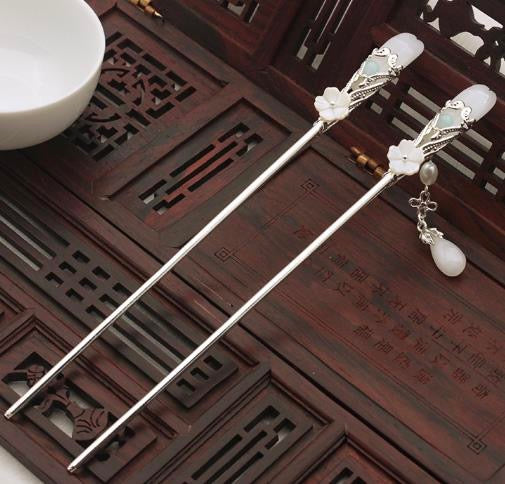
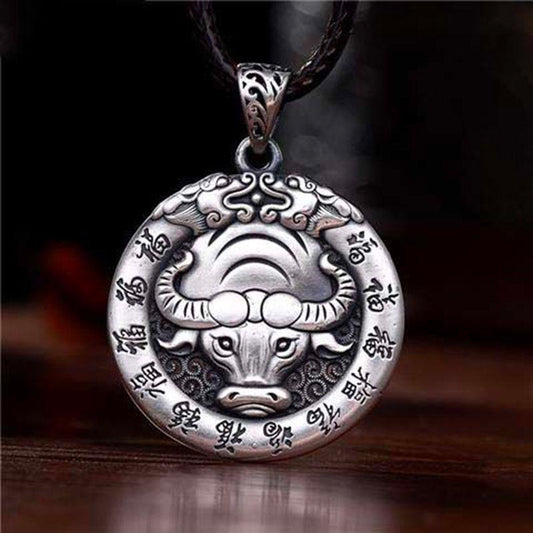
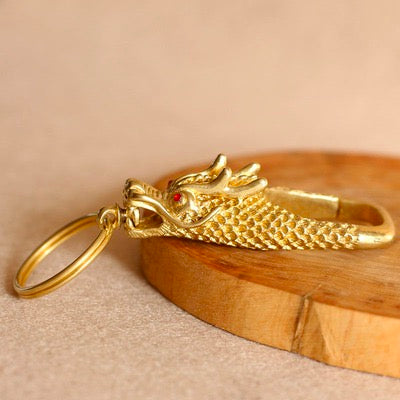
The Tang Dynasty was a peak period for Chinese jewelry arts. Goldsmiths, silversmiths, and jade carvers produced exquisite pieces for the imperial court and aristocracy — from ornate gold hairpins (步摇) inlaid with kingfisher feathers to jade pendants carved with dragons and phoenixes. The following collections capture that timeless spirit of luxury and craftsmanship.
✨ Each piece celebrates the artistic heritage of the Tang Dynasty — a time when China shone as the world’s most sophisticated civilization.