A Journey Through Faith and Tradition
1. The Deep Roots of Chinese Religious Practice
Religious practices in ancient China extend back over 7,000 years. Long before the teachings of Confucius, Laozi, or the Buddha arrived, the people of the Yellow River Valley worshipped personifications of nature and developed beliefs about life, death, and the spirit world. At the Neolithic site of Banpo Village, dating to around 4500–3750 BCE, archaeologists discovered 250 tombs containing grave goods, providing evidence of a belief in life after death. There was also a ritualistic burial pattern, with tombs oriented west to east to symbolize death and rebirth.
2. The Development of Organized Religion
By the time of the Shang Dynasty (1600–1046 BCE), religious beliefs had developed into a structured system. There was now a supreme god, Shangti, who presided over all matters of state. There were also many lesser gods, and ancestor worship became a prominent feature of religious life. Divination, performed by mystics using oracle bones, was a significant practice for communicating with ancestors and the gods. The Shang elite believed that the spirits of the dead continued to exist and took an interest in the world of the living.
3. The Major Religions in Ancient China
The following table summarizes the major religions in ancient China and their key characteristics.
| Religion / Tradition | Period of Prominence | Core Beliefs | Key Practices |
|---|---|---|---|
| Ancestor Worship & Folk Religion | Prehistoric – Modern | Belief in spirits, local deities, and ancestral power; maintenance of harmony with the spirit world | Ancestral offerings, divination, nature worship, funerary rites |
| Buddhism | Introduced c. 2000 years ago | Path to enlightenment; liberation from suffering; karma and rebirth | Monasticism, meditation, sutra recitation, temple worship |
| Taoism | Originated ~1800 years ago | Harmony with the Tao; immortality; natural spontaneity | Rituals, alchemy, breathing exercises (Tai Chi), temple worship |
| Confucianism | Zhou Dynasty – Modern | Social harmony through ritual and ethics; filial piety | Education, ancestor veneration, state rituals |
4. Ancestor Worship and Chinese Folk Religion
Ancestor worship was at the very heart of ancient Chinese religious life. The gods and ancestors were believed to affect crops, weather, childbirth, and warfare, making it essential to sacrifice and honor them. The Chinese believed that, if a person lived a good life and was buried correctly, their spirit would ascend to live with the gods. These spirits could be appealed to for help, and divination was used to receive their guidance. Ancestors were represented by physical symbols, such as spirit tablets, and rituals were held in their honor. In return for offerings, the spirits would provide blessings and protection. This tradition is so enduring that it is still practiced today during Tomb Sweeping Day, when families visit the graves of their ancestors.
5. The Rise of Taoism and Buddhism
Two major organized religions emerged in ancient China: Taoism and Buddhism. Taoism, China's indigenous organized religion, was founded upon a revelation in 142 CE. It incorporated the ancient philosophical text, the Laozi, as theology and took a divinized form of the legendary figure Laozi as its supreme deity. Buddhism, meanwhile, was introduced to China about 2,000 years ago and became immensely popular, dividing into three sections: Tibetan, Han, and Southern Buddhism. During the Sui and Tang dynasties (589–907), an inclusive policy for religious beliefs led to an era of unprecedented prosperity for both traditions.
Buddhism and Taoism were considered the two major religions in ancient China. Buddhism offered a path to liberation from suffering and the cycle of rebirth, while Taoism provided a way to achieve harmony with the universe and, for some, physical immortality. Although there was an ideological rivalry between them, in practice the two traditions, along with Confucianism, were often intermingled. Many people would draw from all three traditions, seeking solutions to life's problems through Buddhist prayers, Daoist rituals, and Confucian ethics.
6. The Three Teachings: A Legacy of Intermingled Faith
Buddhism, Taoism, and Confucianism were collectively known as the "three teachings" (sanjiao). On an elite level, these traditions were differentiated through texts and scripture. On a folk level, they were intermingled and jumbled, with the common people incorporating elements from all three into their daily worship and rituals. Scholars and ministers might have a "workday Confucian" and "weekend Daoist" approach to life, escaping from the rigid structures of official life by wandering the hills, writing poetry, or practicing Daoist breathing techniques, while still holding a Buddhist mass for a deceased parent.
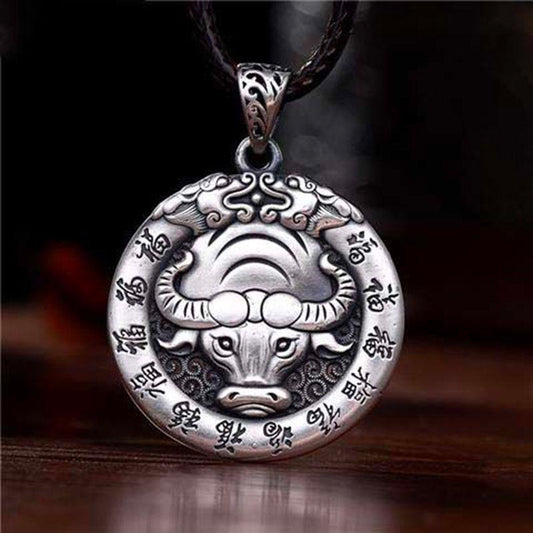
🏮 The ancient Chinese reverence for the spiritual world has inspired centuries of artistic expression, from jade carvings used in rituals to intricate symbols of protection and good fortune in traditional jewelry.
📌 Frequently Asked Questions (FAQ)
• World History Encyclopedia. "Religion in Ancient China."
• Oxford Research Encyclopedia of Asian History. "Daoism and Popular Religion in Imperial China." (2017).
• Cambridge University Press. "Religion and the supernatural world." (2023).
• China Daily. "Section Five TAOISM AND BUDDHISM IN THE SUI AND TANG DYNASTIES."
• Komarzyca, Daniel. "The influence of Indian Buddhism on Taoist social and political thought." (2019).
🔗 Explore more Chinese cultural heritage at Chinese Showcase.