The Han Chinese (Han Zu) – Complete Guide
1. Who Are the Han Chinese? Definition and Identity

The Han Chinese are a Sinitic ethnic group native to East Asia, primarily concentrated in China (including Taiwan, Hong Kong, and Macau) but also forming significant diaspora communities in Southeast Asia, North America, Europe, and Australia. The term “Han” (汉) comes from the Han Dynasty (206 BCE – 220 CE), which followed the short-lived Qin Dynasty. The Han Dynasty is considered a golden age — it standardized writing, expanded trade (the Silk Road), codified Confucianism as state ideology, and consolidated territories that remain core to China today. Before the Han, the group was often referred to as “Huaxia” (华夏), a term still used poetically. After the Han, the ethnic label stuck, and “Han” became synonymous with the dominant cultural group of China. Today, being Han implies shared ancestry, written language (Chinese characters), key philosophical traditions (Confucianism, Daoism, and Chinese Buddhism), and cultural practices (from Lunar New Year to tea culture). However, Han identity is not monolithic: there are substantial cultural, linguistic, and genetic differences among Han subgroups across China.
2. Population and Distribution: Where Do the Han Live?
As of the 2020 Chinese census, the Han population in mainland China was 1.286 billion, accounting for 91.5% of the total. Including Taiwan, Hong Kong, and Macau, the number exceeds 1.3 billion. The Han are not evenly distributed: they are concentrated in the eastern and central provinces, especially the North China Plain, Yangtze River Delta, Pearl River Delta, and Sichuan Basin. The western provinces (Tibet, Xinjiang, Qinghai, Ningxia) have lower Han percentages; for example, Tibet is about 12% Han, while Beijing is over 95% Han. Outside China, significant Han populations live in Singapore (74% of citizens), Malaysia (23% of population), United States (approx. 5 million), Canada (1.8 million), Australia (1.4 million), and throughout Europe and Latin America. The global Han diaspora is estimated at 50–60 million people.
3. The 56 Ethnic Groups of China: Han and Minorities
The People’s Republic of China officially recognizes 56 ethnic groups, with the Han as the majority and 55 ethnic minorities. The table below lists the largest minority groups for context.
| Rank | Ethnic Group | Population (approx.) | Percentage of China’s Population | Primary Regions |
|---|---|---|---|---|
| 1 | Han | 1.286 billion | 91.5% | Throughout China, concentrated in east/central |
| 2 | Zhuang (壮族) | 19.6 million | 1.4% | Guangxi, Yunnan, Guangdong |
| 3 | Hui (回族) | 11.4 million | 0.8% | Ningxia, Gansu, Xinjiang, Henan |
| 4 | Manchu (满族) | 10.4 million | 0.7% | Liaoning, Hebei, Beijing, Jilin |
| 5 | Uyghur (维吾尔族) | 11.8 million | 0.8% | Xinjiang |
| 6 | Miao (苗族) | 11.1 million | 0.8% | Guizhou, Hunan, Yunnan |
| 7 | Yi (彝族) | 9.8 million | 0.7% | Yunnan, Sichuan, Guizhou |
| 8 | Tujia (土家族) | 9.6 million | 0.7% | Hunan, Hubei, Guizhou |
The Han majority is so large that the next 55 groups combined still represent less than 9% of the population. Policies of “regional ethnic autonomy” have been established for many minority groups, but Han settlement and cultural influence extend even into autonomous regions.
4. Historical Origins: From Huaxia to Han
The origins of the Han Chinese lie in the Yellow River Valley (黄河, Huáng Hé), where Neolithic cultures (Yangshao, Longshan) developed millet agriculture and the early foundations of Chinese civilization. The mythical Xia Dynasty (c. 2070–1600 BCE) and the historically verified Shang (c. 1600–1046 BCE) and Western Zhou (1046–771 BCE) dynasties formed the cultural core of what would become the Han. The term “Huaxia” (华夏) was used during the Zhou to distinguish the culturally advanced central states from peripheral “barbarian” groups. The Qin (221–206 BCE) unified these states, but it was the Han Dynasty (206 BCE – 220 CE) that consolidated the heartland, expanded southward, and spread the Chinese writing system and Confucian values. After the Han fell, the label “Han” persisted as an ethnic marker, especially during periods of foreign rule (e.g., Yuan and Qing dynasties), when Han identity became a rallying point for cultural resistance. Over centuries, the Han assimilated many neighboring peoples through migration, intermarriage, and cultural diffusion, while also undergoing multiple waves of southward migration (especially during the Jin and Tang dynasties) that sinicized much of southern China.
5. Language: The Sinitic Language Family
Han people speak Sinitic languages (a branch of the Sino‑Tibetan family). The varieties are often mutually unintelligible but share a common writing system (Chinese characters). The official language of China is Standard Mandarin (Putonghua, 普通话), based on the Beijing dialect of Mandarin. Other major Han languages/dialects include:
- Cantonese (Yue) — spoken in Guangdong, Guangxi, Hong Kong, Macau; widely used in overseas communities.
- Hokkien (Min Nan) — spoken in Fujian, Taiwan, and Southeast Asia (esp. Singapore, Malaysia, Philippines).
- Hakka (Kejia) — spoken in scattered areas across southern China and diaspora.
- Wu (Shanghainese) — spoken in Shanghai, Zhejiang, Jiangsu.
- Xiang — spoken in Hunan.
- Gan — spoken in Jiangxi.
All Han languages/dialects use the same logographic writing system (Chinese characters), though some simplified characters are used primarily in mainland China, while Taiwan, Hong Kong, and Macau retain traditional characters.
6. Han Cultural Traditions: Festivals, Philosophy, and Arts
Han culture is the bedrock of Chinese civilization. Core traditions include:
- Festivals: Lunar New Year (Spring Festival), Lantern Festival, Qingming (Tomb‑Sweeping Day), Dragon Boat Festival, Mid‑Autumn Festival, and Double Ninth Festival. These are rooted in agricultural cycles, ancestor worship, and historical legends.
- Philosophy & Religion: Confucianism provides the ethical framework for family and social relations; Daoism contributes concepts of harmony with nature; Buddhism (especially Chan/Zen) adds meditation and compassion. Han religious practice is syncretic, often including ancestor veneration, folk deities, and feng shui.
- Cuisine: Eight great culinary traditions (Cantonese, Sichuan, Jiangsu, Zhejiang, Fujian, Hunan, Anhui, Shandong) reflect Han regional diversity. Staple foods include rice (south) and wheat (north).
- Arts: Calligraphy (shufa), ink painting (shuimohua), jade carving, porcelain, silk weaving, and classical poetry. The Han invented paper, printing, the compass, and gunpowder.
- Clothing: Hanfu (traditional Han clothing) has seen a revival. Key features include crossed collars, wide sleeves, and silk robes. However, daily wear is now modern Western clothing.
These traditions are not static; they evolve with modernity while retaining core Han values.
7. Han Subgroups and Cultural Variation
Despite a shared identity, the Han are internally diverse. Major subgroups based on language and geography include:
- Northern Han: Historically based in the Yellow River basin. Tend to speak Mandarin dialects, eat wheat‑based foods (noodles, steamed buns), and have a more reserved communication style.
- Southern Han: Descendants of migrants from the north who intermixed with indigenous Baiyue peoples. Speak southern dialects (Cantonese, Hokkien, Hakka), eat rice‑based foods, and have more elaborate clan structures.
- Sub‑ethnic groups: Hakka (meaning “guest families”) are a distinct Han subgroup known for their communal earth buildings (tulou) and diaspora connections. Teochew (Chaozhou) people in Guangdong are renowned for their cuisine and merchant networks. Hainanese Han on Hainan Island have unique customs.
Genetic studies confirm a north‑south cline, but all Han share a common origin in the Yellow River Valley with varying degrees of admixture from local populations during expansion.
8. The Han Diaspora and Global Influence
Han Chinese have migrated overseas for centuries — as traders, laborers (especially during the coolie trade of the 19th century), and students. Today, vibrant Chinatowns exist in almost every major city. The Han diaspora has profoundly shaped Southeast Asia: in Singapore, Han are the majority; in Malaysia and Thailand, they form influential minorities controlling substantial economic sectors. In the West, Han immigrants have excelled in technology, medicine, academia, and the arts. The diaspora maintains cultural ties through Chinese schools, festivals, and media, while also adapting to local cultures. The combination of the huge mainland Han population and the active diaspora makes Han Chinese one of the most globally influential ethnic groups.
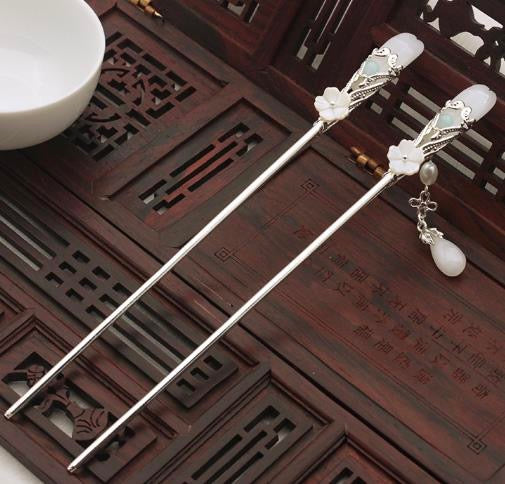
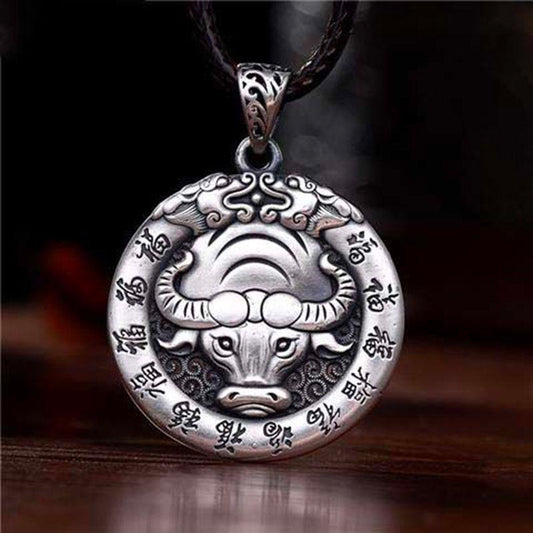
🏮 The artistry of the Han people is nowhere more evident than in traditional Chinese jewelry. For millennia, Han artisans have shaped jade, gold, and silver into pendants, rings, and hairpins that carry cultural meanings of fortune, family, and beauty. Explore collections inspired by this enduring heritage.
📌 Frequently Asked Questions (FAQ)
• National Bureau of Statistics of China. (2021). “Main Data of the Seventh National Population Census.”
• “Han Chinese.” (2026). Britannica Online Encyclopedia.
• “Ethnic Groups in China.” China Educational Tours (2025).
• “Han Ethnic Group — China’s Majority.” Travel China Guide (2026).
• “Chinese Ethnic Groups: Han.” China Discovery (2025).
• “Han Dynasty.” World History Encyclopedia (2020).
• “The Han People — Origins and Subgroups.” China Highlights (2026).
• “Sinitic Languages — Dialects of Han Chinese.” Glottolog Database.
🔗 Explore more Chinese cultural heritage at Chinese Showcase.
✨ Traditional Chinese Jewelry — Wearing the Spirit of the Han
For over five millennia, Han artisans have transformed jade, gold, silver, and gemstones into wearable art. Jade pendants, gold rings, silver hairpins, and pearl earrings are not merely ornaments — they carry the values of the Han people: harmony, prosperity, longevity, and filial piety. Our collections honor this enduring tradition.
✨ Each piece carries the spirit of the Han — a culture that has valued artistry, harmony, and tradition for over 2,000 years.