The Epic Conflict That Shaped a Nation
1. Background: The Fall of the Han Dynasty

The Three Kingdoms period did not begin in a vacuum. It was the culmination of the slow decline of the Eastern Han Dynasty (25–220 CE). By the late 2nd century, the Han court was weakened by eunuch factionalism, corrupt officials, and devastating peasant rebellions — most notably the Yellow Turban Rebellion (184 CE). To suppress the rebellion, the imperial court authorized local warlords to raise their own armies, which led to regional power bases. After the rebellion was crushed, these warlords turned on each other, carving the Han empire into de facto independent territories. The most powerful warlord was Cao Cao (曹操, 155–220 CE), who controlled the north and the figurehead Emperor Xian. After Cao Cao‘s death in 220 CE, his son Cao Pi (曹丕) forced Emperor Xian to abdicate, officially ending the Han Dynasty and proclaiming the Kingdom of Wei. In response, Liu Bei (刘备), claiming descent from the Han imperial house, declared himself emperor of Shu Han in 221 CE, and Sun Quan (孙权) followed by declaring himself emperor of Eastern Wu in 229 CE. The three kingdoms were thus formally established.
2. The Three Kingdoms: Wei, Shu, Wu — A Comparative Overview
The table below summarizes the key characteristics of each kingdom.
| Aspect | Wei (曹魏) | Shu Han (蜀汉) | Eastern Wu (东吴) |
|---|---|---|---|
| Founded by | Cao Pi (after Cao Cao) | Liu Bei | Sun Quan |
| Capital | Luoyang (洛阳) | Chengdu (成都) | Jianye (建业, modern Nanjing) |
| Territory (modern) | Northern China (Yellow River basin, North China Plain, Gansu) | Sichuan basin, parts of Yunnan, Guizhou, Shaanxi | Lower Yangtze valley, coastal southeast, parts of Hubei, Hunan, Jiangxi, Guangdong, and northern Vietnam |
| Population (estimate) | ~4.4 million (approx.) | ~1.1 million | ~2.5 million |
| Military strength | Largest army, strong cavalry | Small but elite infantry, skilled generals | Powerful navy, riverine warfare experts |
| Famous leaders | Cao Cao, Cao Pi, Sima Yi, Xiahou Dun, Zhang Liao | Liu Bei, Guan Yu, Zhang Fei, Zhao Yun, Zhuge Liang | Sun Quan, Sun Ce, Zhou Yu, Lu Xun, Lu Meng |
| Key strategists | Sima Yi, Guo Jia, Xun Yu, Jia Xu | Zhuge Liang (Chancellor), Pang Tong, Jiang Wei | Zhou Yu, Lu Xun, Lu Su |
| Downfall | Overthrown internally by Sima Yan (265 CE) | Conquered by Wei (263 CE) | Conquered by Jin (280 CE) |
3. Who Was the Most Powerful? Wei’s Dominance
Of the three, Wei was the largest and most powerful in terms of population, resources, and military manpower. It controlled the former Han heartland, the fertile North China Plain, and had access to the best cavalry horses. Wei’s leaders, from Cao Cao to Sima Yi, were brilliant political and military strategists. However, Wei could never fully destroy Shu or Wu, partly due to the strong natural defenses of Shu (mountains) and Wu (the Yangtze River). Wei’s fatal weakness was internal politics. The Sima clan, a powerful aristocratic family within Wei, gradually monopolized power. After Sima Yi defeated his political rival Cao Shuang in a coup (249 CE), the Sima family became the de facto rulers of Wei. In 265 CE, Sima Yan (司马炎) forced the last Wei emperor to abdicate and declared himself emperor of the Jin Dynasty. Thus, Wei collapsed from within before it could achieve reunification.
4. The Battle of Red Cliffs (208 CE): The Turning Point
Although it occurred before the formal establishment of the three kingdoms, the Battle of Red Cliffs (赤壁之战, Chìbì zhī zhàn) was the decisive engagement that created the tripartite division. After Cao Cao had unified the north, he marched south in 208 CE with a massive army (claimed to be 800,000, likely closer to 200,000). The allied forces of Sun Quan (Wu) and Liu Bei (Shu) faced him at Red Cliffs on the Yangtze River. Wu’s commander Zhou Yu (周瑜) and strategist Zhuge Liang (诸葛亮) used a fire attack — sending burning ships into Cao Cao’s fleet, which were chained together — to destroy the northern navy. Cao Cao retreated north, unable to cross the Yangtze. The battle effectively ended Cao Cao’s ambition to reunify China and confirmed that the south would remain independent. The Red Cliffs campaign is one of the most famous battles in world history, dramatized in the Romance of the Three Kingdoms and multiple films.
5. Why Didn’t Any of the Three Kingdoms Win?
Each kingdom had a critical flaw that prevented victory:
- Wei: Although the strongest, it was weakened by internal power struggles between the Cao and Sima clans. The Simas eventually replaced the Caos, but by then the focus had shifted from conquering Shu and Wu to consolidating control in the north.
- Shu: After Liu Bei’s death, the chancellor Zhuge Liang kept Shu stable, but he led five exhausting northern expeditions against Wei that drained Shu’s limited manpower and resources. The geography of Shu (mountainous, isolated) protected it but also limited its ability to project power. After Zhuge Liang’s death (234 CE), Shu declined.
- Wu: Wu was protected by the Yangtze River and had a strong navy. However, after the death of Sun Quan (252 CE), Wu was plagued by succession disputes, court intrigue, and weak emperors. By the 270s, Wu was internally unstable, making it vulnerable to Jin.
Thus, the stalemate lasted for decades, but neither Wei, Shu, nor Wu could overcome these internal and external obstacles.
6. Who Really Won? The Rise of the Jin Dynasty
The ultimate victor was the Jin Dynasty (265–420 CE), founded by Sima Yan (Emperor Wu of Jin). The Simas had already taken effective control of Wei, and in 263 CE, Jin forces invaded Shu and conquered it. Emperor Wu then focused on Wu. In 280 CE, Jin launched a multi‑pronged amphibious invasion down the Yangtze. The last Wu emperor, Sun Hao, surrendered. Jin reunified China, ending the Three Kingdoms period. However, the Jin victory was short‑lived: the dynasty was weakened by civil wars (War of the Eight Princes, 291–306 CE) and then driven south by nomadic invaders (the “Uprising of the Five Barbarians”), resulting in the fall of northern China. But for our purposes, the question “who won the Three Kingdoms?” is correctly answered: The Jin Dynasty, out of the ashes of Wei, conquered Shu and Wu and reunified China.
7. Legacy of the Three Kingdoms Period
The Three Kingdoms period lasted only 60 years, but its cultural impact has been immense. The semi‑historical novel Romance of the Three Kingdoms (三国演义) by Luo Guanzhong (c. 14th century) is one of the Four Great Classical Novels of Chinese literature. It romanticized figures such as:
- Guan Yu (关羽): Revered as a deity of loyalty and righteousness, later deified as Guan Gong, the God of War.
- Zhuge Liang (诸葛亮): Personified wisdom, strategy, and devotion.
- Cao Cao (曹操): Portrayed as a cunning, brilliant, but ruthless villain (though historical Cao Cao was more nuanced).
Today, the Three Kingdoms are a staple of video games (e.g., Koei’s Dynasty Warriors series), TV dramas, films, and comics. The era‘s strategies are studied in business schools worldwide, and its stories continue to inspire new generations. While Wei, Shu, and Wu failed to achieve lasting victory, they left behind a legacy of heroism, tragedy, and unforgettable drama that still captivates millions.
🏮 The Three Kingdoms era was a time of great warriors and strategists. Traditional Chinese jewelry from this period — jade pendants, gold rings, and military‑style brooches — reflected the martial spirit and courtly refinement. Explore collections inspired by the artistry of ancient China.
📌 Frequently Asked Questions (FAQ)
• Chen Shou (c. 280 CE). Records of the Three Kingdoms (三国志).
• Luo Guanzhong (c. 14th century). Romance of the Three Kingdoms (trans. Moss Roberts).
• de Crespigny, Rafe. (1990). Generals of the South: The Foundation and Early History of the Three Kingdoms State of Wu. Australian National University.
• “Three Kingdoms Period.” World History Encyclopedia (2017).
• “Three Kingdoms Period of China.” China Educational Tours (2026).
• “The Three Kingdoms (220–280).” China Highlights (2025).
• “Who Won the Three Kingdoms?” History Stack Exchange (2025).
• Lewis, Mark Edward. (2009). China Between Empires: The Northern and Southern Dynasties. Harvard University Press.
🔗 Explore more Chinese cultural heritage at Chinese Showcase.
✨ Traditional Chinese Jewelry — Echoes of the Three Kingdoms
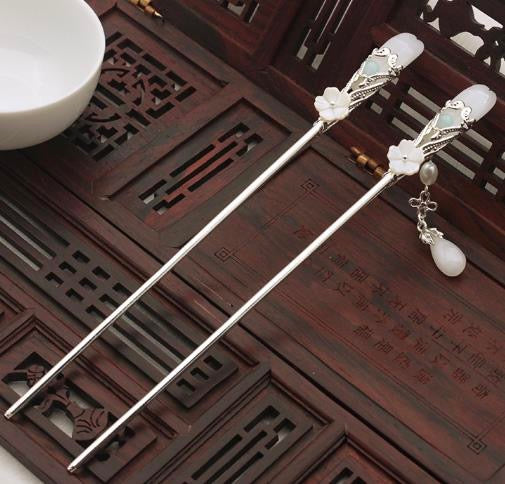
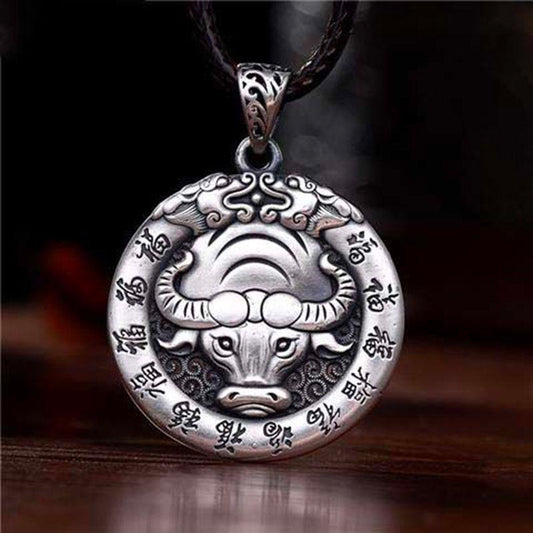
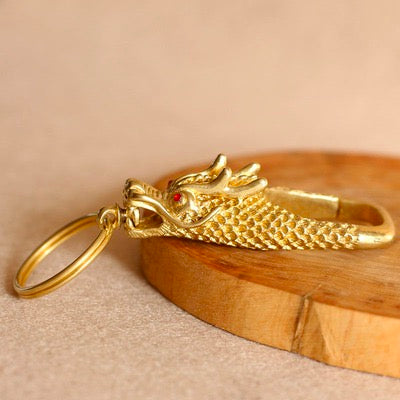
The artistry of Chinese jewelry reached new heights during the Han and Three Kingdoms periods. Jade pendants, gold rings, silver hairpins, and intricate brooches from this era displayed themes of power (dragons), loyalty (tiger motifs), and elegance (lotus and cloud patterns). Our collections draw on this rich heritage, offering pieces that reflect the spirit of ancient China.
✨ Each piece carries the spirit of ancient Chinese craftsmanship — refined, symbolic, and enduring. Perfect for those who love the romance of the Three Kingdoms.