The Gelao people are one of China’s 56 officially recognized ethnic groups. Their largest communities are in Guizhou Province, especially in Wuchuan and Daozhen Gelao and Miao autonomous counties, with other communities in western and central Guizhou and smaller populations in neighboring provincial-level regions. Gelao culture is not a single fixed costume or festival: it is a varied mountain culture shaped by local languages, farming, kinship, ritual performance, foodways, and long interaction with nearby peoples.
The 2020 national census recorded 677,521 Gelao people. The Gelao language is usually placed in the Kra branch of the Kra–Dai language family in contemporary linguistic research, although classifications differ in older Chinese scholarship. Because the language has several highly divergent varieties and many communities now use local Chinese varieties in daily life, language preservation is one of the most urgent parts of Gelao cultural transmission.

Gelao People at a Glance
| Name | Gelao people |
|---|---|
| Standard name | Gelao people |
| Pinyin | Gēlǎozú |
| Population | 677,521 in China’s 2020 national census |
| Main distribution | Primarily Guizhou, especially Wuchuan and Daozhen; other communities live across parts of Guizhou and neighboring regions |
| Language | Gelao varieties, generally classified in the Kra branch of Kra–Dai; Chinese varieties are widely used |
| Traditional livelihoods | Mountain agriculture, forestry, animal husbandry, household crafts, and local trade |
| Notable heritage | Gelao folk songs, Nuo opera traditions, the Maolong Festival, San Yaotai hospitality, embroidery, and plant-fiber weaving |
Name, Origins, and Cultural Identity
The English name Gelao follows the standard romanization of the Chinese ethnonym. Historical records contain several related names and references to peoples described with the character liao. Many modern accounts connect the ancestors of today’s Gelao communities with ancient populations of southwest China, especially in areas that later became Guizhou and its surroundings.
This connection should be expressed carefully. A broad historical label does not map neatly onto one modern ethnic group, and it is inaccurate to claim that every population called “Liao” in an old text was directly or exclusively Gelao. Gelao identity developed through long-term settlement, migration, intermarriage, political change, and interaction with Han, Miao, Tujia, Buyi, Dong, and other neighboring communities.
Today, identity is maintained through family memory, locality, festivals, ancestral narratives, food, music, clothing, and participation in village and county cultural life. Some people speak a Gelao variety; others primarily use Mandarin or a regional Chinese speech form while retaining a strong Gelao identity.
Historical Development and Settlement
Gelao communities have long been associated with the uplands of southwest China. Over centuries, imperial administration, military settlement, trade, land use, and population movement changed the social landscape. Rather than disappearing, communities adapted: they incorporated new crops and technologies, participated in regional markets, and preserved local customs in family and village settings.
Guizhou remains the principal center of Gelao population and public cultural life. Wuchuan and Daozhen are the best-known autonomous counties, while important communities also occur in Shiqian, Zunyi, Anshun, Pingba, Puding, Guanling, Liuzhi, and other localities. Smaller Gelao populations live in Chongqing, Yunnan, Guangxi, and elsewhere. Different settlement histories help explain why dialects and cultural practices vary so sharply.
The Gelao Language
Gelao is not one uniform spoken variety. Researchers describe a number of varieties whose differences can be large enough to hinder mutual understanding. In current international linguistic work, Gelao is commonly placed within the Kra branch of the Kra–Dai family. Older reference works in China sometimes described its affiliation as uncertain or treated it as an independent branch, so readers may encounter different classifications.
Gelao has traditionally been transmitted orally rather than through a single historically standardized writing system. Today, Mandarin and regional Chinese varieties dominate schooling, administration, and much daily communication. Language documentation therefore involves recording speakers, vocabulary, oral narratives, songs, place-names, and local knowledge—not simply publishing a word list.
Mountain Environment and Traditional Homes
Much of the Gelao heartland lies in Guizhou’s karst highlands, where steep valleys, limestone hills, limited flat land, and varied microclimates shape village life. Traditional farming combined staple crops with vegetables, beans, livestock, woodland resources, and careful use of slopes and small basins. Corn became important in many upland areas, but diets and crop choices differ by altitude and locality.

Older houses made use of materials available locally, including timber, earth, stone, and tile. Courtyard form, room arrangement, raised storage, animal pens, and decorative details depended on wealth, terrain, and contact with neighboring architectural traditions. Modern villages may include brick or concrete homes, improved roads, schools, and tourism facilities alongside older timber buildings. It is therefore better to speak of regional building traditions than of one uniquely “Gelao house.”
Clothing, Embroidery, and Handcrafts
Historical Gelao clothing often favored practical jackets, trousers or skirts, aprons, cloth belts, and head coverings suited to mountain work. Indigo, black, blue, burgundy, and other strong colors appear in many modern festival outfits, but cut, decoration, and headdress form differ from place to place. Contemporary performance clothing may be brighter and more standardized than everyday garments remembered by older generations.
Embroidery and applied decoration can appear on collars, cuffs, aprons, headwear, bags, and children’s clothing. Common visual structures include bands, diamonds, crosses, stepped forms, flowers, and repeated geometric units. These patterns should not automatically be assigned a fixed ancient meaning: some are family or regional preferences, while others have acquired new explanations through exhibitions and tourism.

Plant-fiber weaving was another practical skill, used for baskets, mats, containers, rain gear, and footwear. Such objects connect household craft with local ecology: the form follows the available bamboo, grasses, vines, and the demands of mountain travel.

Food, Glutinous Rice, and San Yaotai Hospitality
Gelao food reflects Guizhou’s upland agriculture and the wider food cultures of southwest China. Corn, rice, glutinous rice, beans, vegetables, preserved foods, chilies, pork, and seasonal mountain ingredients may all appear, but there is no single menu shared by every community. Sour and preserved flavors are common in the region, while festive meals often emphasize abundance, cooperation, and hospitality.
Glutinous-rice foods are prepared for celebrations in a number of localities. Pounding steamed rice in a wooden trough turns it into a cohesive cake and is also a social activity that requires rhythm and teamwork.

What is San Yaotai?
San Yaotai, literally “three courses” or “three stages,” is especially associated with Gelao hospitality in Daozhen. Guests are received through successive rounds commonly described as tea, wine, and a full meal. The custom organizes food, greetings, conversation, songs, and social etiquette into a ceremonial sequence. It should be understood as a distinctive local tradition, not as the everyday dining pattern of all Gelao people.
Festivals, Music, Dance, and Nuo Performance
Gelao festival calendars combine community-specific traditions with widely observed Chinese festivals. Dates, names, and ritual sequences vary. New Year observances, harvest celebrations, ancestor remembrance, communal meals, and local temple or village events can all be important.
The Maolong Festival
The Maolong Festival is especially associated with Gelao communities in Shiqian and is included in China’s national intangible cultural heritage list. Around the Lantern Festival period, performers carry and animate a dragon-like figure made with plant materials. Processions, music, dance, blessing, and community participation connect the event with hopes for favorable weather, safety, and agricultural well-being. Its form belongs to a particular regional tradition and should not be used as a summary of every Gelao festival.
Folk songs and oral tradition
Gelao folk songs accompany courtship, work, hospitality, festivals, and storytelling. Call-and-response performance allows singers to improvise, test memory, exchange wit, and transmit local knowledge. When lyrics are translated or staged for tourism, some nuance and dialect information can be lost, making community-led recording especially valuable.
Nuo opera and carved masks
Some Gelao communities maintain forms of Nuo ritual theatre. These performances can combine masks, recitation, music, movement, local history, and religious practice. They are not merely “folk entertainment”: in their original contexts, ritual specialists, performance lineages, sacred rules, and community purposes matter.

Beliefs, Kinship, and Life-Cycle Customs
Gelao religious life has historically included ancestor reverence, respect for local protective powers, household rites, seasonal agricultural observances, and—in some areas—ritual traditions involving Nuo specialists. These practices overlap with the broader religious landscape of southwest China and have changed over time. It is misleading to reduce them to one label or assume that all families participate in the same way.
Marriage customs likewise vary by period and region. Older practices could involve introductions through family and community networks, gift exchanges, songs, banquets, and formal recognition of the new household relationship. Contemporary marriages generally follow national law and modern personal choice, while selected clothing, foods, music, or ceremonial gestures may be retained as expressions of heritage.
Livelihoods, Modern Life, and Cultural Preservation
Today, Gelao people work in agriculture, education, business, public service, manufacturing, tourism, and many other fields. Better transport and digital communication have expanded opportunity, but migration also separates younger speakers and craft learners from village-based knowledge holders.
Preservation is most effective when communities decide what should be recorded, taught, performed, or adapted. Useful approaches include language documentation, local school materials, apprenticeships for singers and craftspeople, careful restoration of historic buildings, community archives, and fair payment for cultural practitioners.
Cultural tourism can create income and visibility, but it can also flatten regional diversity into a single marketable image. Accurate captions, local consultation, and a clear distinction between documentary photographs and modern illustrations help visitors learn without confusing reconstruction with evidence.
Craft-Inspired Selections
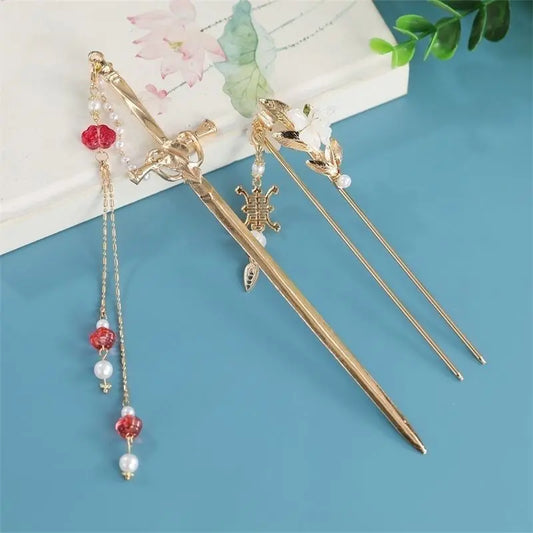
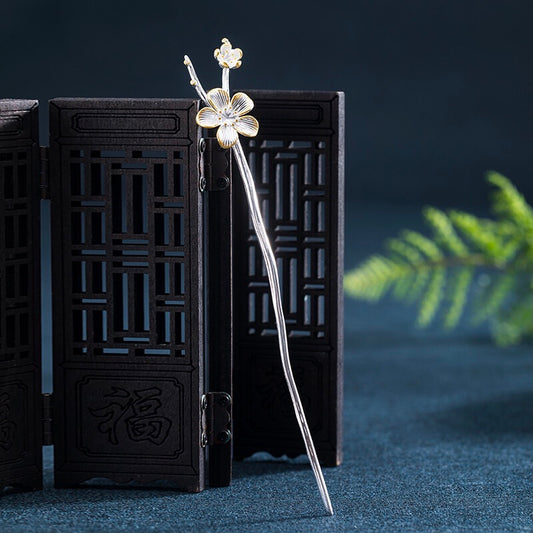
These store selections echo broader themes discussed above—handwork, botanical forms, curved ornament, and wearable craft. They are presented as contemporary cultural design, not as replicas of Gelao ceremonial dress.
Three Picks from Chinese Showcase
Three contemporary shop selections for readers interested in decorative design. These are not presented as documented heritage objects, community-made crafts, or religious endorsements. Check each product page for current specifications, price, and availability.

Freshwater Pearl Flower Ring-Sterling Silver
View product details
Pink Flower 9 Beads Tassel Hairpin-Wood
View product details
Bamboo And Bamboo Leaf Jasper Enamel Earrings - Gold Plated Copper
View product detailsFrequently Asked Questions
Where do the Gelao people live?
Most live in Guizhou Province, with major communities in Wuchuan and Daozhen and others across central and western Guizhou. Smaller populations live in neighboring regions.
What language do the Gelao people speak?
Gelao varieties are generally classified in the Kra branch of the Kra–Dai family. Many Gelao people now primarily speak Mandarin or local Chinese varieties.
Are all Gelao customs the same?
No. Language, clothing, festivals, food, and rituals vary considerably among counties and villages. A practice documented in Daozhen or Shiqian should not automatically be generalized to all communities.
What is the Gelao Maolong Festival?
It is a regional festival tradition best known in Shiqian, featuring a plant-material dragon figure, procession, music, dance, and communal wishes for well-being and favorable agricultural conditions.
What is Gelao San Yaotai?
San Yaotai is a three-stage hospitality custom especially associated with Daozhen: guests are received through tea, wine, and a full meal, accompanied by formal social interaction.
Is Nuo opera part of Gelao culture?
Yes, in some communities. Gelao Nuo traditions combine masks, recitation, music, movement, and ritual practice, but their form and meaning depend on the locality and performance lineage.
What are common Gelao crafts?
Depending on the region, crafts include embroidery, textile decoration, plant-fiber weaving, baskets, footwear, wood carving, and objects associated with local performance traditions.
Is Gelao culture disappearing?
It is changing rather than simply disappearing. Some languages and specialist traditions are endangered, while festivals, crafts, archives, schools, and community projects are creating new ways to transmit heritage.
References
- National Bureau of Statistics of China. China Statistical Yearbook 2021. Population data from the Seventh National Population Census.
- State Ethnic Affairs Commission of the People’s Republic of China. “Gelao” overview, history, customs, and development materials. Accessed August 14, 2026.
- A Brief History of the Gelao Ethnic Group. Ethnic Publishing House, 2008.
- He Jiashan. A Brief Description of the Gelao Language. Ethnic Publishing House, 1983.
- Guizhou Provincial People’s Government. “Ethnic Culture—Gelao.” Accessed August 14, 2026.
- China Intangible Cultural Heritage Network. Entries for Gelao Nuo Opera, Gelao Maolong Festival, Gelao San Yaotai Custom, and Gelao Folk Songs. Accessed August 14, 2026.