Pumi People at a Glance
| At a glance | Details |
|---|---|
| English name | Pumi people / Pumi ethnic group |
| Chinese name | 普米族 |
| Pinyin | Pǔmǐ Zú |
| Population | 42,861 in the 2010 census figure cited by China's National Ethnic Affairs Commission; later totals should be checked against Seventh National Census tables |
| Main areas | Lanping, Ninglang, Yulong, Weixi, Shangri-La, and nearby counties in Yunnan; Muli, Yanyuan, and Jiulong in Sichuan |
| Language | Pumi, generally classified in official Chinese references within the Qiangic branch of the Tibeto-Burman language family; northern and southern varieties differ substantially |
| Traditional livelihoods | Mountain agriculture, livestock raising, forestry knowledge, household crafts, and regional exchange |
| Notable heritage | Cuocuo song and dance, the four-string lute, migration songs, oral literature, wooden houses, and regionally varied life-cycle rituals |

Who Are the Pumi People?
The Pumi are a small ethnic group whose largest communities are found in the Hengduan Mountains of northwest Yunnan. Lanping Bai and Pumi Autonomous County and Ninglang Yi Autonomous County are especially important centers. Pumi communities also live in Yulong, Weixi, Shangri-La, Yongsheng, and other parts of Yunnan, as well as Muli Tibetan Autonomous County, Yanyuan, and Jiulong in Sichuan.
Local self-names include forms transcribed as Puyingmi, Purimi, and Peimi. The element mi is commonly explained as meaning "person" or "people." Official Chinese ethnographic references connect some versions of the name with the idea of "white people" and with respect for the color white. Historical records also used the broad label Xifan for populations in this region, but that older term covered more than the ancestors of today's Pumi and should not be treated as a precise modern ethnic name. "Pumi" was formally adopted as the unified official name in 1960.
Pumi Language and Oral Identity
Pumi is generally placed by official Chinese reference works within the Qiangic branch of the Tibeto-Burman language family. It is commonly divided into northern and southern varieties. Northern speech is associated especially with Muli and Yanyuan in Sichuan, while southern forms are used in Ninglang, Lanping, Lijiang, and Weixi. Differences in pronunciation and vocabulary can be large enough to make communication across distant communities difficult.
Historically, the Pumi did not share a widely used indigenous writing system. Some ritual specialists, often called Hangui in Chinese sources, used simple pictorial signs or Tibetan letters to record ritual texts. Most cultural knowledge was transmitted orally through family instruction, songs, genealogies, stories, and ceremonial recitation. Today, Standard Chinese is widely used in schools, administration, work, and media, while Pumi remains important for local identity and family communication.
Origins and Migration History
Official ethnic-history accounts connect Pumi ancestors with ancient Di-Qiang populations who once lived across parts of southern Gansu, eastern Qinghai, and the eastern Tibetan Plateau. Over a long period, groups moved south along the Jinsha and Yalong river systems. Before the seventh century, related communities were present in parts of what is now western Sichuan. From around the thirteenth century onward, further migrations brought Pumi ancestors into areas including Ninglang, Lijiang, Weixi, and Lanping.
This history survives not only in written records but also in oral tradition. Migration songs, origin narratives, and older funeral route texts may name places such as Batang, Litang, Gongga, and Qinghai. In ritual context, naming these places could symbolically guide the deceased back toward the homeland of the ancestors. Such songs are cultural memory rather than a complete modern map, but they offer valuable evidence of how communities understood their past.
As groups settled farther south, many shifted from mobile pastoralism toward mixed farming and livestock raising. Mountain dry fields supported corn, wheat, barley, broad beans, buckwheat, oats, and highland barley. Cattle, sheep, horses, mules, pigs, and poultry supplied food, transport, materials, and household wealth.
Landscape, Villages, and Traditional Homes
Pumi settlements are located across a landscape of steep mountains, deep valleys, and small upland basins. The vertical climate allows different crops and vegetation to grow at different elevations. Traditional villages were often established on gentle mid-mountain slopes where farmland, water, sunlight, and protection from flooding could be balanced. Some villages were organized around extended kin groups, while others developed through long contact with Naxi, Bai, Yi, Lisu, Tibetan, Han, and other neighbors.
Representative traditional buildings include log houses often called mulengfang, along with plank, earth-and-timber, and mixed structures. Logs were stacked horizontally to create thick walls suited to mountain winters. Side buildings might have an upper level for people and a lower level for animals, tools, or stored grain. In many homes, the hearth was the practical and social center: food was cooked there, guests were received, stories were told, and household matters were discussed.


The hearth carried ceremonial meaning as well as everyday use. Seating order, the treatment of cooking stones, and behavior around the fire could express respect for elders, ancestors, and the household. Similar hearth-centered traditions also occur among neighboring peoples of southwest China, so the form should be understood as part of a wider regional cultural landscape rather than something exclusive to the Pumi.
Clothing, Jewelry, and Household Crafts
Pumi clothing differs clearly by region. In parts of Ninglang, traditional women's dress may include a high-collared jacket, a long pleated skirt, a colored wool belt, a sheepskin layer, silver ornaments, and a large black head wrap. Men's older clothing could include short jackets, broad trousers, long outer robes, woven belts, and leg wraps. In Lanping, long interaction with Bai and other local communities influenced garment cuts, aprons, vests, headscarves, and decorative borders.
Today, modern clothing is standard in everyday life. Traditional or specially tailored garments are most visible at festivals, weddings, cultural performances, and heritage events. Stage costumes may use brighter commercial fabrics and standardized designs, so a performance photograph should not be treated as proof that every Pumi community historically dressed in exactly the same way.
Household crafts historically included spinning and weaving hemp, wool, and yak hair; leatherworking; bamboo weaving; wooden vessel making; brewing; and oil pressing. Wooden bowls and lacquered wooden utensils from the Ninglang area are well known. Geometric borders, floral forms, colored bands, beads, and metal ornaments add structure and movement to clothing. Their meanings can be local or personal, so modern symbolic explanations should not automatically be projected onto every older motif.
Food Culture and Hospitality
Pumi food reflects upland farming and livestock raising. Corn has been an important staple in many communities, alongside wheat, rice, barley, highland barley, buckwheat, beans, and potatoes. Grain may be prepared as flatbreads, porridges, roasted flour, noodles, or steamed and boiled foods. Pork, mutton, beef, poultry, preserved meat, and seasonal vegetables appear according to household resources and locality.
Some communities prepare cured pork and regional forms of pork-fat meat. These foods also occur among Mosuo, Naxi, Tibetan, and other neighboring populations, and should be described as shared highland traditions rather than uniquely Pumi dishes. Tea, butter or oil tea, and home-brewed grain drinks may be served at family gatherings and festivals. Hospitality is expressed through food, drink, seating, and repeated invitations to eat, but details vary from village to village.
New Year, the Fifteenth Festival, and Coming of Age
New Year is generally the most important traditional holiday, but its date is not uniform. Some Ninglang communities observe it around the seventh day of the twelfth lunar month, while communities in Lanping and Weixi may celebrate during the first lunar month. Families clean the home, prepare food, honor ancestors, visit relatives, and join music and dance. Fetching the first water of the year and activities around the household hearth may carry special meaning.
The Great Fifteenth Festival is associated especially with parts of Ninglang. Young people traditionally gathered outdoors, built temporary shelters, lit bonfires, sang, and danced. Other regional observances include harvest-tasting events, mountain-turning gatherings, and cave-circling traditions. Names and procedures differ locally, so none should be treated as a compulsory national calendar for all Pumi people.
In some communities, children traditionally marked adulthood at about thirteen. Boys "put on trousers" and girls "put on skirts" in a family ceremony near the hearth. Elders dressed the child in new clothing and offered blessings. The practice survives unevenly today, sometimes as a household tradition and sometimes as a public heritage presentation.

Marriage and Family Life
Historical Pumi marriage practices differed by region and changed through contact, law, education, and mobility. Family consultation, gift exchange, singing, feasting, and ties between households were important in many places. Modern Pumi families follow China's marriage law, and free choice, civil registration, monogamous marriage, and interethnic marriage are common.
A small number of Pumi villages near Yongning historically adopted matrilineal household patterns or visiting-marriage customs under strong local influence. This history is geographically specific. It should not be used to describe all Pumi people, nor should Pumi identity be confused with Mosuo identity. Contemporary relationships are diverse and cannot be reduced to one historical custom.
Cuocuo, the Four-String Lute, and Oral Literature
Pumi songs accompany work, travel, hospitality, marriage, mourning, worship, and recreation. Recorded genres include welcoming songs, horse-driving songs, shepherding songs, spinning songs, wedding songs, seasonal songs, mountain-deity songs, and laments. Some have established narratives, while love songs and social songs can be improvised according to the moment.
Traditional instruments include flutes, gourd reed pipes, jaw harps, suona, and the four-string lute. The lute is closely associated with Cuocuo, a communal form that combines instrumental rhythm, singing, and circular dance. Dancers join a line or circle and coordinate steps as the music changes. The Lanping Pumi Cuocuo tradition was included in China's second national list of representative intangible cultural heritage in 2008.


Oral literature includes creation stories, flood narratives, clan-origin songs, migration songs, and long narrative poems. These works preserve vocabulary, place names, kinship ideas, moral reflection, and memories of movement. Variation between performers is part of oral tradition, not necessarily an error.
Belief, Ritual Specialists, and Funeral Traditions
Traditional Pumi belief includes respect for ancestors and for mountains, trees, springs, lakes, hearths, and protective beings. Ritual specialists known in Chinese sources as Hangui have preserved chants, ceremonial knowledge, and route texts. Regional Buddhist influence is also present, especially in areas with long Tibetan cultural contact. Contemporary belief is diverse; no single religious description applies to every Pumi family.
Funeral customs have varied by locality. Cremation was historically important in parts of Ninglang, while burial became more common in some Lanping communities; Weixi recorded multiple practices. One notable ceremony is commonly translated in Chinese as "giving the sheep." Through recited route texts, the ritual symbolically guides the deceased along the remembered path of the ancestors. Such practices should be described respectfully as cultural and religious traditions, not as scientific claims about the afterlife.
Livelihoods, Education, and Cultural Preservation
Roads, schools, public health services, digital communication, tourism, and new employment have transformed Pumi life. Many households combine farming or animal raising with wage work, small businesses, forest-related industries, tourism, or urban employment. Younger people usually use Standard Chinese confidently, and many study or work far from their home villages.
These changes create both opportunity and pressure. When children use Pumi less often at home, local vocabulary, stories, and song styles can weaken. Preservation work therefore includes language recording, oral-history interviews, music teaching, four-string-lute making, Cuocuo transmission, architectural documentation, and community archives. The 2024 publication of the Dictionary of China's Ethnic Minorities: Pumi Volume, containing more than 3,600 entries, was an important reference project.
Cultural preservation is strongest when local people decide what to teach, perform, record, or adapt. A living culture is not limited to festival costumes. It also includes family conversation, agricultural knowledge, humor, food, craft decisions, local place names, and the right of Pumi communities to participate in modern life without being portrayed as frozen in the past.
Pumi Culture and Neighboring Peoples
Pumi communities have their own ethnic identity, northern and southern language varieties, migration memories, Cuocuo traditions, four-string-lute music, and locally distinctive clothing and life-cycle customs.
Wooden houses, hearth-centered domestic life, circle dances, cured foods, silver ornaments, and regional dress also occur among neighboring peoples in northwest Yunnan and southwest Sichuan.
Shared regional customs do not make the Pumi identical to the Mosuo, Naxi, Tibetan, Yi, Bai, or other neighboring peoples. The safest interpretation identifies the specific county, village, language, time period, and community rather than treating one costume or ceremony as representative of everyone.
Three Picks from Chinese Showcase
Three contemporary shop selections for readers interested in decorative design. These are not presented as documented heritage objects, community-made crafts, or religious endorsements. Check each product page for current specifications, price, and availability.

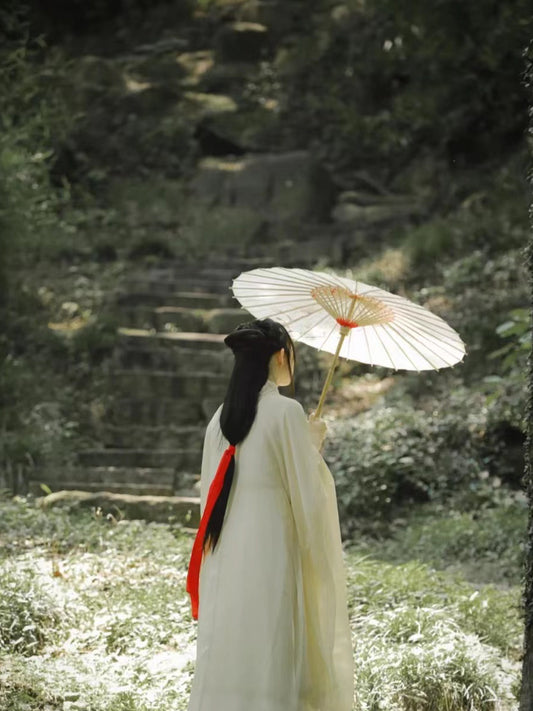
Handmade Oil Paper Umbrella – “A Thousand Miles of Rivers and Mountains” Design | Intangible Cultural Heritage | Thickened Bamboo Hanfu Parasol
View product details
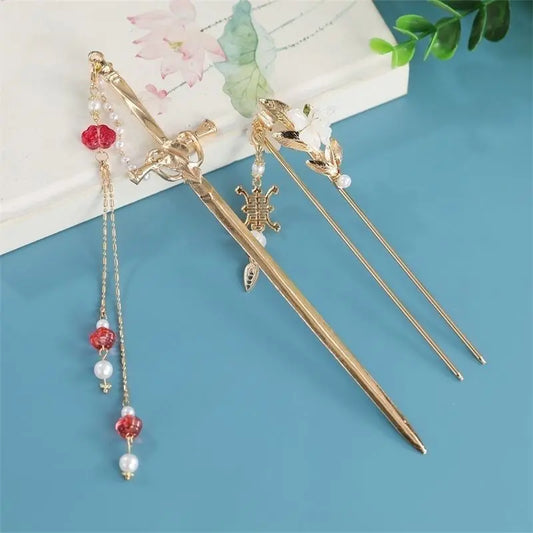
Traditional Chinese Ronghua Butterfly Pearl Hair Accessory – Handmade Wooden Hairpin Inspired by Ancient Landscape Art
View product details
Riverside Scene At Qingming Festival Tassel Bookmark
View product detailsFrequently Asked Questions
Where do the Pumi people live?
Most Pumi people live in northwest Yunnan, especially Lanping and Ninglang. Smaller communities live in Yulong, Weixi, Shangri-La, and nearby areas, as well as Muli, Yanyuan, and Jiulong in Sichuan.
What language do the Pumi speak?
They speak Pumi, a Tibeto-Burman language with major northern and southern varieties. Standard Chinese is widely used in education, public life, work, and media.
Do the Pumi have their own writing system?
Historically, the Pumi did not share a widely used indigenous script. Some ritual specialists used pictorial signs or Tibetan letters, while most knowledge was transmitted orally. Modern writing generally uses Chinese characters.
What is Pumi Cuocuo?
Cuocuo is a communal Pumi performance combining song, dance, and instrumental music, often led by a four-string lute. The Lanping tradition entered China's national intangible cultural heritage list in 2008.
Are the Pumi and Mosuo the same people?
No. They have interacted for generations and may share some regional customs, but Pumi and Mosuo identities, languages, and historical experiences are distinct.
Do all Pumi communities follow the same customs?
No. Language, clothing, festival dates, belief, architecture, and life-cycle rituals differ by county, village, and family. Regional variation is a central feature of Pumi culture.
References
- National Ethnic Affairs Commission of the People's Republic of China. Pumi Ethnic Group: Overview. Accessed August 11, 2026.
- National Ethnic Affairs Commission of the People's Republic of China. Pumi Ethnic Group: Historical Development. Accessed August 11, 2026.
- National Ethnic Affairs Commission of the People's Republic of China. Pumi Ethnic Group: Customs and Social Life. Accessed August 11, 2026.
- National Bureau of Statistics of China. China Population Census Yearbook 2020.
- Yunnan Provincial Ethnic and Religious Affairs Commission. Launch of the Dictionary of China's Ethnic Minorities: Pumi Volume. 2024.
- Yunnan cultural-heritage materials concerning the Pumi Cuocuo national intangible cultural heritage project. Accessed August 11, 2026.