The Chinese Showcase journal Chinesische Kultur
Daxue (Major Snow) in China's 24 Solar Terms
Daxue, or Major Snow, is the early-December solar term that follows Minor Snow. Explore the astronomy behind its date, the value of snow cover for winter wheat, and the regional food and storage traditions of early winter.
Daxue (大雪, Dàxuě), commonly translated as Major Snow or Heavy Snow, is the 21st of China's 24 solar terms. It begins around December 7 in the Gregorian calendar, when the Sun reaches 255° ecliptic longitude. Daxue follows Xiaoxue (Minor Snow) and leads into Dongzhi (Winter Solstice). Its name reflects the seasonal arrival of more substantial snow in parts of China.
A dusting on an early morning path and a layer of snow that lasts across a field give very different impressions of winter. The name Daxue describes the way snow can become a more prominent part of winter. A farmer may think of how a field will overwinter, while a household may be planning how to store food.
When Major Snow Begins
The 24 solar terms divide the apparent annual path of the Sun into 15-degree steps. Xiaoxue starts at 240°, Daxue at 255°, and Winter Solstice at 270°. The approximate Gregorian dates stay close from year to year because the sequence follows the solar year. The exact calendar date can shift with the year and the time zone used to display the crossing. The same name is also used for the span of roughly two weeks after the crossing.
In the Northern Hemisphere, daylight continues to shorten during Major Snow until the winter solstice. This makes Daxue the last solar term to begin before the shortest day of the year, even in places where the ground stays bare.
What Major Snow Means in Different Regions
The solar-term system emerged from long observation in the Yellow River region. Its weather names describe the kinds of change that mattered to people there. Across modern China, elevation, distance from the sea, moisture and the timing of cold air create very different early-December conditions. An account in China Meteorological News contrasts snowy scenes in northern China with fog around Guangzhou and the Pearl River Delta, and notes that freezing rain can occur in parts of Hubei and Hunan.
In today's weather reporting, a heavy snowfall is a measured event. The date of Major Snow works by astronomy alone. Snow can fall well before December in some places, and a mild or dry December week fits the calendar just as easily.
Winter Wheat, Snow Cover and Food Stores
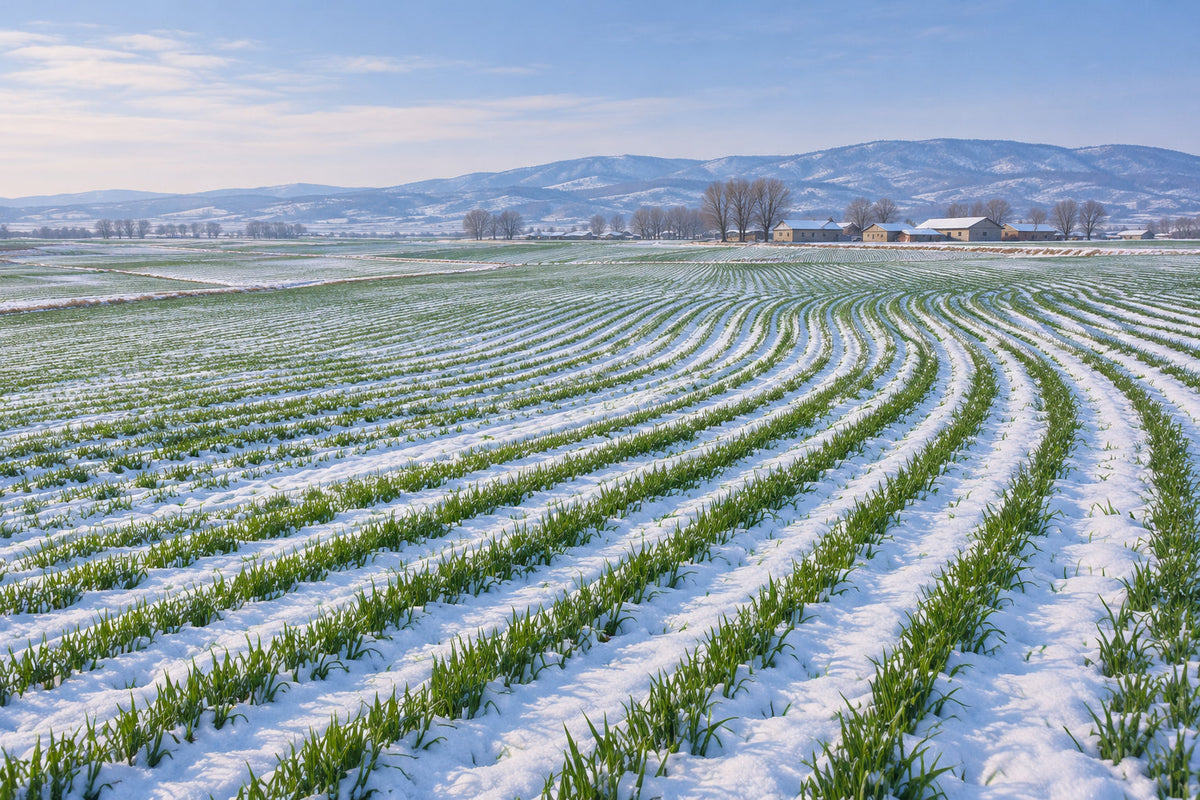
Snow can serve a practical purpose for winter wheat planted in autumn. A settled layer can reduce the crop's exposure to cold winds and insulate the ground. When it melts, some of that water can replenish soil moisture. This is the observation behind ruìxuě zhào fēngnián (瑞雪兆丰年), the saying that timely snow is a sign of a good harvest. The following winter wheat harvest still depends on how plants established in autumn, soil conditions and the weather that follows.
The China Agricultural Museum describes winter irrigation as one response to soil conditions in northern wheat areas. A winter with regular snow and a dry, exposed field pose different problems for an autumn-sown crop. Snow cover also lasts unevenly across a field. Wind can move it from exposed rises into deeper drifts, leaving some plants with less insulation than others.
Regional Foods Around Major Snow
The museum's Daxue food survey records lamb and preserved mustard greens in Jiangsu and Zhejiang, and sweet-potato porridge in parts of northern Shandong. Both examples show how a seasonal meal can draw on local ingredients and storage habits. The term is useful for reading a food calendar because a place and a dish can be linked without assuming the same meal appears everywhere.
Frequently Asked Questions
What is Daxue in English?
Major Snow and Heavy Snow are both used. The Hong Kong Observatory uses Heavy Snow.
Is Daxue the first snow of the year?
First snowfall depends on local conditions. Daxue marks the Sun's arrival at 255° ecliptic longitude around December 7.
How is Major Snow different from Minor Snow?
Minor Snow begins about two weeks earlier, around November 22. The names reflect a traditional progression toward deeper winter.
Can snow help winter wheat?
Settled snow can insulate wheat and contribute soil moisture as it melts. The benefit depends on the crop, snow cover and local weather.
Continue Through the Solar Terms
- Previous term: Minor Snow (Xiǎoxuě)
- Next term: Winter Solstice (Dōngzhì)
- All 24 Chinese solar terms by season
References
- Hong Kong Observatory. The 24 Solar Terms. Table of solar longitudes.
- UNESCO. The Twenty-Four Solar Terms, Knowledge in China of Time and Practices Developed Through Observation of the Sun's Annual Motion. Representative List, 2016.
- China Agricultural Museum. Eating with the Seasons: Major Snow (顺时而食·大雪), December 8, 2025.
- China Meteorological News. Major Snow feature in the Traveling Through the 24 Solar Terms series, December 7, 2023.
Rows of winter wheat emerge through a light cover of snow. AI-generated cover illustration.
The 24 Solar Terms
Choose a solar term below or browse the full seasonal guide.
| Season | Solar term guides |
|---|---|
| Spring | |
| Summer | |
| Autumn | |
| Winter |
Stories, symbols and everyday objects
Our journal explores Chinese culture and design. Traditions and interpretations vary by region and source. For a purchase, use the specifications on the individual product page.
About Chinese ShowcaseQuestions or corrections? Contact us ↗