
Chinese Buddhism Guide
Follow Buddhism’s passage from India to China through translated scriptures, living practices, sacred mountains, and works of art.
Read the full Chinese Buddhism guide
Buddhism in China
Chinese Buddhism encompasses traditions that developed as Buddhist teachings reached China from South Asia. Chan meditation and Pure Land devotion are two important traditions. Temple art makes these teachings visible through figures such as Guanyin and motifs such as the lotus and Dharma wheel.
Cover illustration created for Chinese Showcase.Explore Chinese Buddhist traditions
- Origins and Translation
Follow the travelers and translators who helped build a Chinese-language Buddhist canon.
- Beliefs and Daily Practice
Understand the Three Jewels, karma and compassion, then see how teachings inform meditation, recitation and temple life.
- Chan and Pure Land
See how Chan meditation and devotion to Amitābha developed in China and often came to be practiced side by side.
- Temples and Sacred Mountains
Discover White Horse Temple, Lingyin and Shaolin, and learn how four mountains became pilgrimage centers.
- Buddhist Art and Symbols
Read a sculpture through its posture, gestures and attributes. Learn how the lotus and other motifs appear in Buddhist art.
- Tibetan Buddhist Traditions
Explore Tibetan Buddhism’s sacred sites, devotional objects and connections with Mongolian communities.
Chinese Buddhist Symbols and Their Meanings
A lotus, a wheel or a ringed staff can help you read a Buddhist image. These emblems and devotional objects come from different settings, including Chinese temple art and Tibetan Buddhist practice.
- LotusPadma
-
In Buddhist art, the lotus is associated with purity and awakening. A lotus pedestal supports many images of buddhas and bodhisattvas, and its petals often form the base of an altar figure.
- Dharma WheelDharmachakra
-
The wheel represents the Buddha’s teaching. Turning the wheel is a traditional expression for putting that teaching into motion. Eight spokes often evoke the Noble Eightfold Path.
- Endless KnotOne of the Eight Auspicious Symbols
-
The endless knot is an interlaced design with no visible beginning or end. In Tibetan Buddhist art it often appears with other auspicious emblems, and its continuous lines can suggest interdependence.
- GuanyinAvalokiteśvara
-
Guanyin is the Chinese name for Avalokiteśvara, the bodhisattva associated with compassion. Buddhist images depict Guanyin in many forms, including the relaxed, seated Water Moon Guanyin.
- Six-Syllable MantraOṃ Maṇi Padme Hūṃ
-
This mantra is associated with Avalokiteśvara. In Tibetan Buddhist practice, it is recited and inscribed on objects including prayer wheels, stone carvings and pendants.
- Seated BuddhaPosture and hand gestures
-
A seated Buddha figure can represent meditation, teaching or a moment in the life of Śākyamuni. Hand gestures, the pedestal and other attributes can help identify the subject.
- Kṣitigarbha’s Ringed StaffKhakkhara
-
In East Asian Buddhist art, a staff with loose metal rings often identifies Kṣitigarbha. The staff also has a history as a practical implement carried by Buddhist monastics.
- Ga’u Prayer BoxPortable Tibetan shrine
-
A ga’u is a portable shrine or amulet box. Historical examples could hold a small sacred image, a printed prayer or other devotional contents.
- Tibetan Prayer WheelA revolving devotional object
-
A Tibetan prayer wheel is a revolving cylinder that holds written mantras. Turning it is a devotional practice. The prayer wheel and the eight-spoked Dharma wheel have different forms and uses.
Collection references include The Met’s Wheel of the Buddhist Law (Rinpō), Water Moon Guanyin and Quiver Decorated with the Eight Auspicious Symbols, and the Rubin Museum’s Amulet Box (Gau), C2008.21.
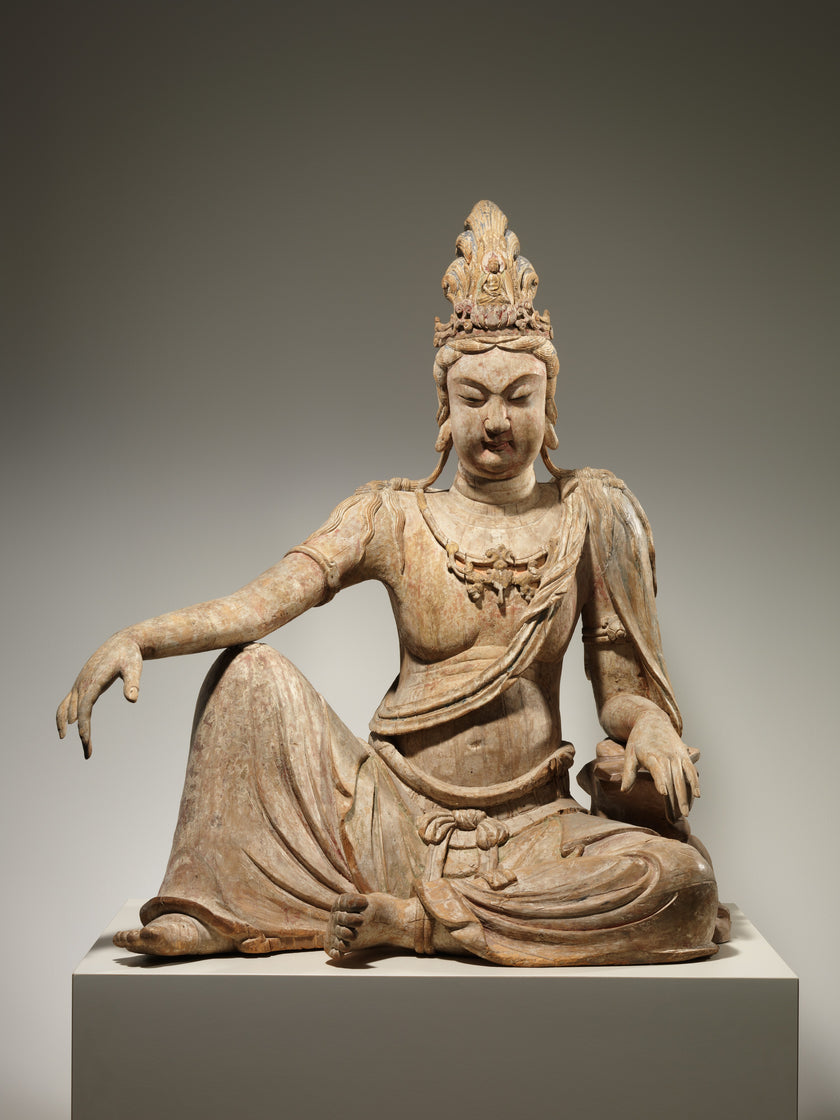
Water-Moon Guanyin
This wood figure presents Guanyin in a relaxed seated pose. The raised knee and draped robe help identify an image that invites close looking.
The Metropolitan Museum of Art, collection 28.56.Explore the artworkRelated Reading
-
The Heart Sutra
Read about the short scripture’s teaching on emptiness and why it is widely recited.
-
The Eight Auspicious Symbols
Identify the wheel, conch, endless knot and other emblems in the group.
-
Kṣitigarbha’s Staff
Learn how a ringed staff helps identify the bodhisattva Kṣitigarbha in Buddhist art.
-
The Six-Syllable Mantra
Read about the mantra associated with Avalokiteśvara in Tibetan Buddhist practice.
-
Tibetan Thangka
Look at how portable religious paintings organize deities, teachers and sacred landscapes.
-
The Lotus Motif
Follow the lotus from Buddhist imagery into the decorative arts of China.
Jewelry with Buddhist Symbols
Explore pieces featuring lotus flowers, mantra inscriptions and figures from Buddhist art, alongside jewelry inspired by Tibetan prayer boxes and prayer wheels.
-
Six-syllable mantraSix-Syllable Mantra Pendant
A rotating pendant with a mantra and auspicious emblems.
-
GuanyinSterling Silver Guanyin Pendant
A carved Guanyin figure with a six-syllable mantra inscription.
-
Prayer wheelGreen Prayer-Wheel Drop Earrings
Drop earrings with a green, prayer-wheel-inspired centerpiece.


Frequently Asked Questions
How did Buddhism reach China?
Buddhist teachings traveled from South Asia through land and sea networks. Translators, monks and lay communities helped establish Chinese-language scriptures, monasteries and practices.
What is the difference between Chan and Pure Land?
Chan emphasizes meditation and direct insight. Pure Land centers on devotion to Amitābha Buddha, often through reciting his name. The two practices have often coexisted in China.
What are the four sacred Buddhist mountains in China?
They are Wutai, Emei, Jiuhua and Putuo, associated respectively with Mañjuśrī, Samantabhadra, Kṣitigarbha and Guanyin.
What are common symbols in Chinese Buddhism?
The lotus and Dharma wheel are widely recognized. Guanyin figures often express compassion, and a ringed staff can identify Kṣitigarbha. The endless knot has a particularly visible place in Tibetan Buddhist art.
What does the lotus symbolize in Buddhism?
The lotus commonly represents purity and awakening. In Buddhist sculpture or painting, its petals often form the seat of an enlightened figure.
What are the Eight Auspicious Symbols in Buddhism?
A common Tibetan Buddhist set includes the parasol, two golden fish, treasure vase, lotus, conch, endless knot, victory banner and Dharma wheel. These designs appear together on textiles, paintings and ritual objects. Explore the Eight Auspicious Symbols
Who is the Laughing Buddha?
The Laughing Buddha is usually Budai, a Chinese monk traditionally regarded as an incarnation of Maitreya, the future Buddha. His broad smile, round belly and cloth sack are clues that help identify him. See how Buddhist figures are identified
What are the Three Jewels of Buddhism?
The Three Jewels are the Buddha, the Dharma or teachings, and the Sangha or Buddhist community. Taking refuge in them is a way of committing to the Buddhist path. Read about the Three Jewels
What is the difference between a Dharma wheel and a prayer wheel?
The Dharma wheel is a visual emblem of the Buddha’s teaching, often shown with eight spokes. A Tibetan prayer wheel is a revolving cylinder containing written mantras. Turning it is a devotional practice. Explore Tibetan prayer wheels
What does the Heart Sutra teach?
The Heart Sutra is a short Mahāyāna text about emptiness. In its famous passage about form and emptiness, it asks readers to see that what they experience has no fixed, independent existence. Read the Heart Sutra guide
Explore the Dao, religious lineages, sacred mountains and the history of Buddhist–Daoist exchange.