The Chinese Showcase journal Chinese culture
What Is Guyu? China’s Grain Rain Solar Term
Grain Rain closes traditional Chinese spring. Its name recalls the rain that helps crops grow, and communities from tea districts to the coast mark the season in different ways.
Guyu (谷雨, Gǔyǔ), or Grain Rain, is the sixth of China’s 24 solar terms and the last of traditional spring. It begins when the Sun reaches 30° of apparent ecliptic longitude, usually around April 19–21. The name connects late spring rainfall with the growth of crops.
Why Is It Called Grain Rain?
Gǔ refers to grain, and yǔ means rain. The familiar expression 雨生百谷 says that rain gives rise to many grains. The point is that sufficient moisture supports the season’s growth. In the Hong Kong Observatory’s English terminology, the same solar term is called “Corn Rain,” where “corn” is used in the broad sense of grain.
Guyu follows Qingming and precedes Lixia, the Beginning of Summer. Rain Water, the earlier spring term, recalls the transition from winter toward wetter conditions. Grain Rain turns attention to what plants can do with moisture when the growing season is further along.
When Does Grain Rain Begin?
The date is determined by the Sun’s angle on the ecliptic. The system divides that path into intervals of 15°, so Guyu follows the Qingming marker at 15° and comes before Lixia at 45°. An almanac gives the local date and time for a particular year.
The name is a useful seasonal cue, while the timing of the showers and the state of crops vary by region and year. Even districts that celebrate Grain Rain at the same moment may experience different temperatures, moisture, and frost risk.
From Late Spring Rain to Fieldwork
The China Intangible Cultural Heritage Network connects Grain Rain to two visible stages of crop growth. Autumn-sown crops can be resuming growth and extending their stems, while spring-sown crops may be just breaking through the surface. A field of wheat with upright, lengthening stems is at a different stage from a seedbed with its first leaves. Late spring rain can help both stages when the soil has room to absorb it.
What matters for new seedlings is the soil around their young roots. An established grain crop draws water from a broader root zone as its stems and leaves develop. A prolonged dry spell can slow either process, while waterlogged soil leaves less air around the roots. The name links rainfall to crops at a moment when their different stages are easy to see.
Tea at the Harvest Threshold and a Coastal Observance
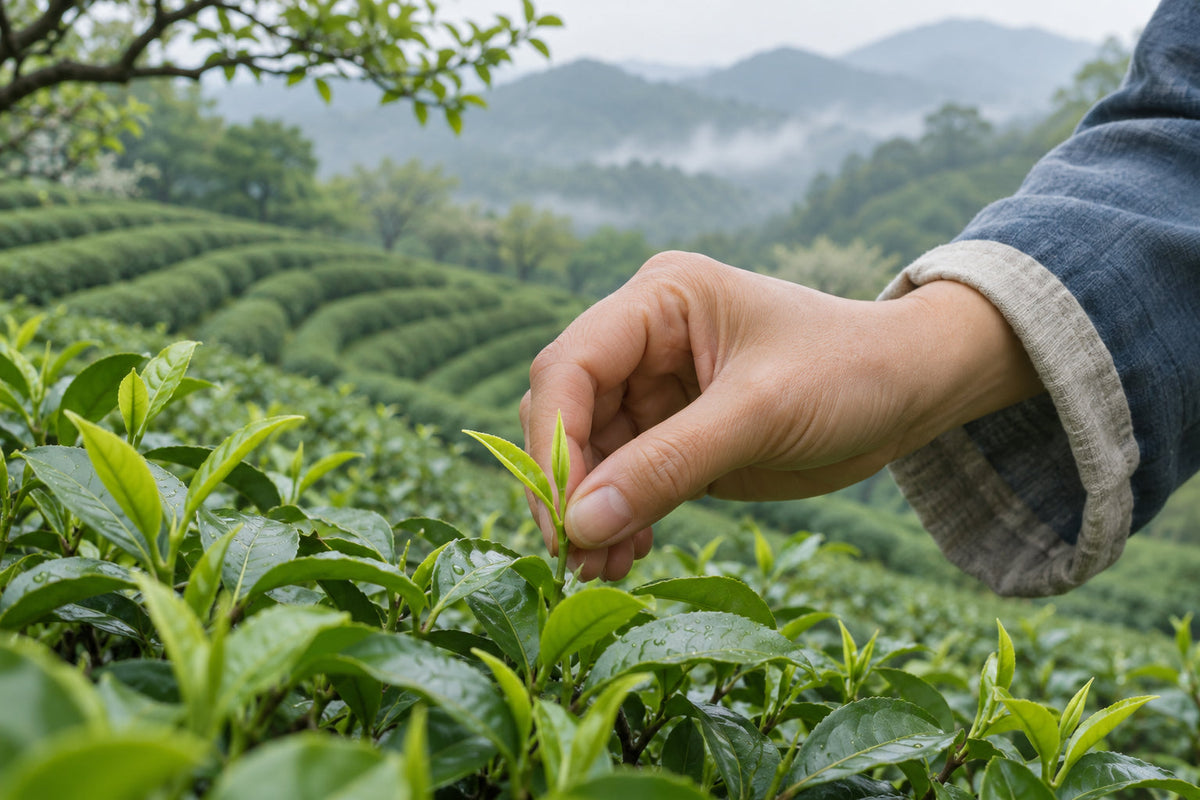
The China Agricultural Museum records both pre-Qingming and pre-Guyu picking windows for West Lake Longjing tea in Hangzhou. “Before Grain Rain” (雨前, yǔqián) identifies a seasonal window in some tea descriptions. It is a clue about the picking period. Region, elevation, the cultivar, and the maker’s own practice also shape what a tea tastes like.
Along the Shandong coast, Rongcheng offers a different example. The China Intangible Cultural Heritage Network documents a fishing observance associated with Grain Rain, when communities give thanks and express wishes for safe voyages and good catches. The coastal custom uses the same calendar marker that farmers associate with grain. In Rongcheng, the risks and hopes of a livelihood at sea give the date its local meaning.
Frequently Asked Questions
When is Guyu?
Grain Rain generally begins around April 19–21, when the Sun reaches 30° of apparent ecliptic longitude. The exact local date varies by year.
Is Grain Rain the last solar term of spring?
Yes. Guyu ends the sequence of six traditional spring terms, and Lixia begins the summer sequence in early May.
Does Grain Rain refer only to rice?
The Chinese term refers to grain broadly. The name recalls rain that supports crop growth, with local agricultural associations varying by region.
Why is Grain Rain mentioned in spring tea descriptions?
Some tea descriptions use the date to indicate when leaves were picked. The label describes a harvest window, alongside other information about the region and producer.
Continue Through the Solar Terms
- Previous term: Qingming (Qīngmíng)
- Next term: Beginning of Summer (Lìxià)
- All 24 Chinese solar terms by season
References
- Hong Kong Observatory. The 24 Solar Terms.
- China Intangible Cultural Heritage Network. Rain Brings Growth to the Grains, the Guyu Solar Term (雨生百谷——二十四节气之谷雨), 2017.
- China Agricultural Museum. The West Lake Longjing Tea Culture System, Hangzhou, Zhejiang (浙江省杭州西湖龙井茶文化系统), 2020.
- UNESCO. The Twenty-Four Solar Terms, knowledge in China of time and practices developed through observation of the sun’s annual motion. Representative List of the Intangible Cultural Heritage of Humanity, 2016.
A tea picker gathers tender leaves on a misty spring hillside. AI-generated cover illustration.
The 24 Solar Terms
Choose a solar term below or browse the full seasonal guide.
| Season | Solar term guides |
|---|---|
| Spring | |
| Summer | |
| Autumn | |
| Winter |
Stories, symbols and everyday objects
Our journal explores Chinese culture and design. Traditions and interpretations vary by region and source. For a purchase, use the specifications on the individual product page.
About Chinese ShowcaseQuestions or corrections? Contact us ↗