The lianzhu pattern is a linked-pearl decorative design; its best-known Silk Road form is the pearl roundel, a ring of bead-like dots framing a figure, animal, or flower. On surviving silks, this small repeated element turns a circle into an elaborate setting for an image. Its history connects Chinese art with Central Asian and Iranian visual traditions. [1] [2]
Follow the border before looking at the picture inside. What first appears to be a necklace of dots becomes a way to organize a whole surface: one medallion answers another, while flowers or smaller forms occupy the spaces between them. This guide explains how to recognize that structure, what dated museum objects tell us, and where historical certainty ends.
Scope: Here, “lianzhu” refers primarily to pearl-roundel ornament associated with Silk Road textiles. A simple dotted border, a real pearl necklace, and a pearl-roundel textile are related visually but are not interchangeable categories.
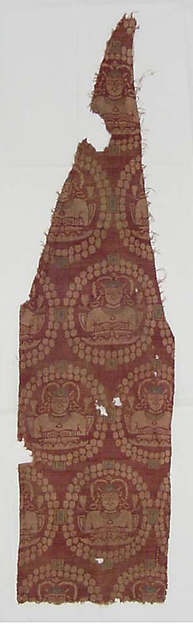
Lianzhu Pattern at a Glance
| Name used here | Lianzhu pattern; linked-pearl pattern; pearl-roundel motif |
|---|---|
| Recognizable feature | Repeated bead-like units forming a border, especially a circular frame |
| Common central subjects | Birds, animals, human figures, or floral forms; identification depends on the object |
| Historical setting | Exchange among China, Central Asia, and regions farther west |
| Documented examples | Northern Qi ceramic ornament; seventh-century Tang silk; seventh-eighth-century Central Asian silk [4] [6] [7] |
| Important distinction | A beaded design does not prove that an object contains real pearls or was made in one particular country |
How to Recognize a Lianzhu Pearl Roundel
A pearl roundel has two visual levels: the small bead-like elements along its edge and the larger enclosed field. In a repeated textile pattern, the large circles establish the rhythm; the small dots give their boundaries texture. A plain medallion has the circular field but lacks that distinctive beaded edge.
Start by tracing one complete frame. Then examine the central subject and the junctions between adjacent frames. Are the circles independent, touching, or joined by smaller ornaments? Do two birds face one another? Are rosettes placed in the gaps? The British Museum's MAS.864 offers a specific example: small pearl roundels enclosing paired birds, arranged in linked groups of four. [4]
This method is useful even when a fragment preserves only part of the design. Describe what remains visible before imagining a complete repeat. A missing section is not evidence for a symmetrical feature that no longer survives.
Where Did Pearl Roundels Come From?
A shared visual language across the Silk Road
The Met connects textiles with animals in pearl roundels to overland trade involving Sogdian merchants and traces the tradition to the late Sasanian period. That account places the motif within exchange across regions rather than within an isolated national history. [1]
Sogdian involvement is especially important, but it should not become a claim that every example was made by a Sogdian weaver. The British Museum notes that scholars still debate exclusive claims for Sogdian invention and manufacture. Its discussion points instead to the prominence and variety of these textiles in Sogdian wall paintings. [2]
Why “Sasanian-style” does not settle provenance
In his study of Sasanian textiles, Matteo Compareti discusses the difficulty of assigning surviving fabrics to specific workshops or territories. Pearl-roundel decoration is securely associated with Sasanian architectural stucco, while the attribution of many textiles is more complicated. Shared imagery alone does not identify the place where a fabric was woven. [3]
A careful label therefore separates design influence, place of manufacture, and findspot. An object excavated in one region may have been made elsewhere. A locally made piece may also adapt an imported pattern.
Dated Museum Examples: From Northern Qi to Tang Textiles
Individual collection records give the history a firmer foundation than a sweeping claim about “ancient Chinese patterns.” These examples are reference points, not a complete chronology.
| Object | Museum dating | What to notice |
|---|---|---|
| Jar, The Met | Northern Qi, 550-577 | Human heads enclosed by pearl roundels show that this framing device was not limited to cloth. [7] |
| Silk fragment, British Museum MAS.864 | Seventh century; Tang dynasty | Paired birds sit inside small linked roundels, with floral forms between them. [4] |
| Woven Textile with Male Bust, The Met 2008.79 | Seventh-eighth century; Central Asia | A human subject occupies the pearl-bordered field. [6] |
| Banner fragment, British Museum MAS.877 | Eighth-ninth century; Tang dynasty | A clamp-resist-dyed design combines geese, roundels, and floral elements. [5] |
The banner is particularly instructive. The British Museum describes its outer border as a Chinese adaptation of a pearl-roundel motif associated with Sasanian metalwork and stucco. The surviving fabric was used in a Buddhist banner, showing how a decorative form could enter a different material and religious setting. [5]
What Does the Lianzhu Pattern Mean?
There is no single documented meaning that applies to every pearl roundel. A border organizes an image, but the significance of that image depends on its subject and setting. A human bust, a pair of birds, and an animal do not become the same symbol simply because they share a frame.
Modern viewers may associate a continuous circle with wholeness or repeated beads with connection. These can be thoughtful contemporary readings. They should not be presented as proof that every historical maker intended “eternal love,” “wealth,” or “protection.” None of the museum records cited here establishes such a universal interpretation.
For a grounded explanation, ask three questions: What is depicted? What kind of object carries the pattern? What does the object's documentation actually say? This approach preserves the pleasure of interpretation while keeping it separate from established evidence.
A Motif Is Not a Weaving Technique
“Pearl roundel” describes the design. It does not, by itself, tell us whether the decoration was woven, dyed, embroidered, or worked in another material. The Tang examples above include both a patterned woven silk and a clamp-resist-dyed silk. [4] [5]
Likewise, “pearl” in the pattern's name does not mean real pearls were sewn onto the cloth. The bead-like shapes can be represented through colored threads or dye. When discussing a modern product, read its material listing separately from its motif description.
How to Appreciate the Motif in Contemporary Design
For a modern outfit or textile project, begin with proportion. Large medallions create a different effect from small repeated circles. A border of dots can echo the rhythm of a patterned garment, while an unpatterned accessory can give a busy fabric more visual space.
For historical reconstruction, select a documented object and period before choosing colors, garment shapes, or accessories. For contemporary styling, a freer combination is possible, provided it is described as an interpretation. A round pendant or pearl accent may complement this visual theme without being a reconstruction of Silk Road dress.
Common Misunderstandings
- “Every circular motif is lianzhu.” Look for the repeated bead-like border, not just a circle.
- “The name proves it contains pearls.” A represented pearl and a physical pearl are different things.
- “All pearl-roundel silks came from one country.” Shared designs travelled; attribution requires object-specific evidence.
- “Every example has the same auspicious meaning.” Central imagery and context matter.
- “Modern pearl jewelry reproduces the ancient motif.” A connection in appearance is not proof of historical continuity.
Related Products: Contemporary Styling Connections
These Chinese Showcase pieces offer modern connections to pearls, circular composition, and floral ornament. They are not presented as lianzhu-pattern objects, museum replicas, or period-authentic accessories. Follow each product link for current materials, options, price, and availability.

Freshwater Pearl and Mother-of-Pearl Butterfly Qipao Pendant
A pearl-and-butterfly accessory for contemporary qipao styling. Its material connection to pearls is distinct from the beaded borders discussed above.

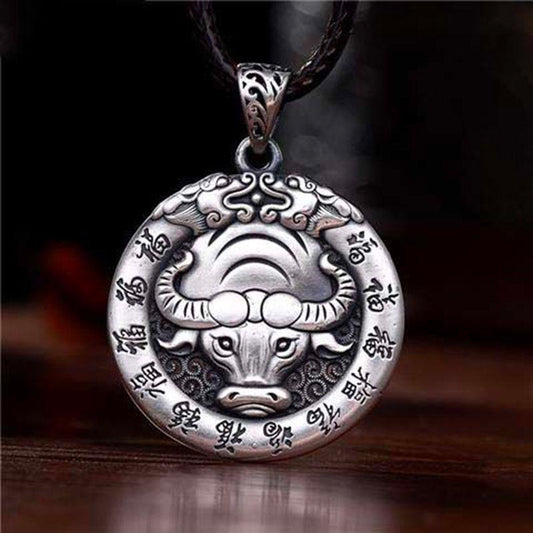
Dragons Playing with Beads Wire Inlay Round Pendant - Sterling Silver
A circular pendant for readers interested in how an enclosed field frames a central image. The dragon-and-bead subject is a separate decorative motif.

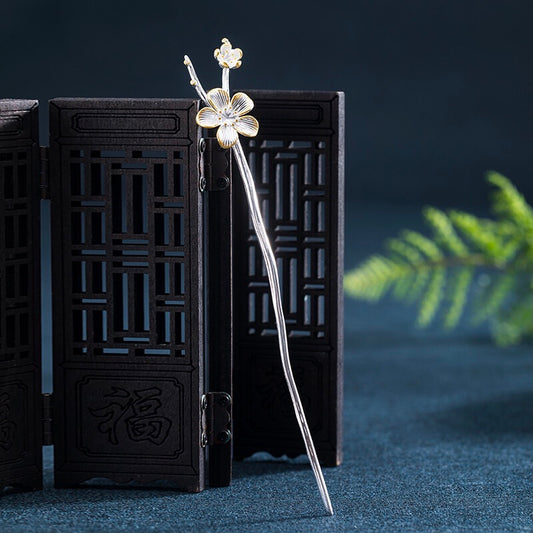
Bell Orchid and 5 Pearl Hairpin - Sterling Silver
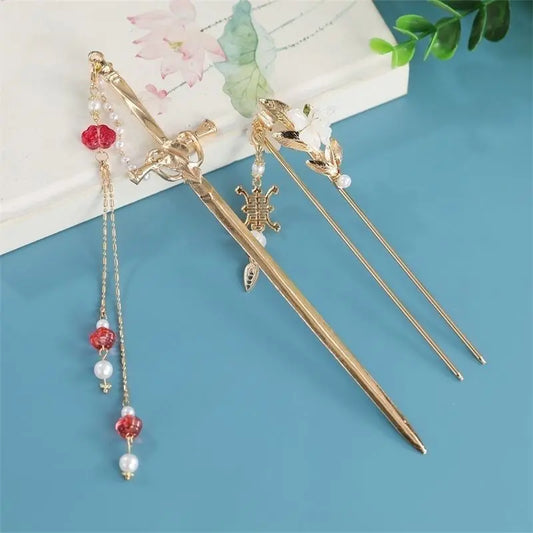
A floral hair ornament with pearl accents, selected as a modern styling companion rather than an example of historical pearl-roundel design.
Frequently Asked Questions
What is the lianzhu pattern?
Lianzhu is a linked-pearl or beaded decorative pattern. This article focuses on pearl roundels: rings of bead-like dots enclosing a figure or motif, often repeated across a textile.
Are pearl roundels made with real pearls?
Not necessarily. In the historical silks discussed here, the pearls are represented in the textile design. The name describes the appearance of the border, not the use of pearl beads.
Is lianzhu a Chinese or Persian pattern?
Its history crosses modern borders. Chinese objects, Central Asian silks, and Iranian decorative traditions share related forms. Attribution depends on the particular object; a pearl border alone cannot identify its place of manufacture.
Was the motif used during the Tang dynasty?
Yes. The British Museum records a seventh-century silk with linked pearl roundels (MAS.864) and an eighth- to ninth-century patterned banner fragment (MAS.877) as Tang objects.
What does the lianzhu pattern symbolize?
There is no single meaning valid for every example. The central subject, medium, date, and use are essential. Modern ideas of connection or wholeness should be identified as interpretations rather than universal ancient meanings.
How can I recognize a pearl roundel?
Look for a ring of repeated bead-like units around an enclosed image. Check whether neighboring roundels touch or connect, and distinguish the beaded border from a plain circular outline.
Further Reading
Explore more Chinese symbols and decorative motifs, or read Dong People: Grand Song, Drum Towers and Textile Traditions for a different, community-specific perspective on cloth and craft.
References and Image Credit
This overview draws on museum collection records and specialist scholarship. Museum dates and attributions are retained as published; they may change as research develops.
- The Metropolitan Museum of Art. Textile with Horned Animals in a Pearl Roundel.
- British Museum. Who were the Sogdians?.
- Matteo Compareti, Encyclopaedia Iranica. Sasanian Textiles.
- British Museum. Textile, museum number MAS.864.
- British Museum. Banner; textile, museum number MAS.877.
- The Metropolitan Museum of Art. Woven Textile with Male Bust in Pearl Roundel, 2008.79.
- The Metropolitan Museum of Art. Jar, Northern Qi dynasty (550-577).
Lead image: The Metropolitan Museum of Art, accession 2008.79; public domain under the museum's Open Access designation. Historical discussion and contemporary product recommendations are editorially distinct.