The Chinese Showcase journal Chinesische Symbole
Five Poisons Pattern and Its Dragon Boat Festival Meaning
Discover the meaning of the Five Poisons pattern, its five animals, and how Chinese Dragon Boat Festival traditions express wishes for a safe summer.
The Five Poisons pattern is a Chinese folk design associated with the Dragon Boat Festival and the wish to ward off harm. A snake raises its head, a centipede bends toward it, and a scorpion curls its tail. A toad and a gecko complete the grouping in one of the two book illustrations shown here. The animals that give the pattern its unsettling appearance are also what make its protective meaning so easy to picture.
The same subject can look very different on paper, cloth or porcelain. In one book illustration, dotted lines and flowers enclose the animals. In the other, their bodies carry the composition. A tiger embroidered on blue fabric and five red roundels show two more ways artists have arranged the theme.
Five Poisons Pattern at a Glance
| Chinese name | Wudu, meaning “Five Poisons” |
|---|---|
| Common grouping | Snake, centipede, scorpion, gecko and toad |
| Regional variation | Some groups include a spider in place of another animal |
| Festival | The Dragon Boat Festival, on the fifth day of the fifth lunar month |
| Traditional meaning | A wish to ward off harm and pass the summer safely |
| Where it appears | Paper charms, embroidery, sachets, ceramics and other decorative objects |
Which Animals Are the Five Poisons?
A common grouping is the snake, centipede, scorpion, gecko and toad. Those are the five in the line drawing below. Look for the snake’s upright head on the right, the centipede’s many legs on the left, and the scorpion’s pincers in the lower corner. The toad’s squat body anchors the centre. The gecko’s tail bends back toward the group.

Lists varied from place to place. The caption in the supplied book records a version that includes a spider in place of the snake. Other accounts describe a spider taking the place of the gecko. In a different setting, the same animal can carry a different meaning. A late Qing cloth ornament in the Suzhou Bay Museum, for example, pairs a spider with flowers as an emblem of welcome news. The other motifs and the setting tell a viewer which association is at work.
Why the Pattern Appears at the Dragon Boat Festival
The festival falls on the fifth day of the fifth lunar month. As the weather grew warmer and wetter, people associated this part of the year with insects, snakes and seasonal illness. Hanging mugwort and sweet flag, putting up paper charms and making small objects for children were among the ways households marked the season and expressed a wish for safety.
A picture gave those worries a shape. One family might put an image on a door, where it met anyone entering the home. Another might stitch the animals onto a child’s garment. The wish could be expressed at the threshold or carried with the person it was meant for.
Two Ways to Arrange the Same Subject

In the upper design on the book page, rows of dots form a diamond-shaped border. Leaf clusters turn along its edges. The animal forms inside are made from short curves, blocks and dots, with a scorpion’s raised pincers among the easiest features to spot. The same dark marks that outline the border also suggest the joints, feet or curves of a body.
The second book design gives the animals more room. Its longest forms make the frame themselves. The snake rises along the right and the centipede curves up the left, while the scorpion and gecko turn their tails back into the picture. You can read the first image from the border inward and the second by following the animals around the centre.
Tigers, Roosters and Gourds
Some seasonal pictures show what is meant to happen to the five creatures. A tiger can hold them in check, a rooster can peck at them, and a bottle gourd can enclose them. Each image turns the wish to ward off harm into an action the viewer can recognise.

In the blue embroidery, the large tiger immediately draws the eye. Orange stripes stand out against the blue ground, and smaller creatures wind through the leaves and blossoms. The scale of the tiger makes it the dominant figure, while the stitching gives each creature enough detail to be seen close up.
From a Child’s Vest to a Painted Dish
The Suzhou Bay Museum holds a late Qing purple satin vest embroidered with the Five Poisons. It also carries a festival tiger, a sword and seasonal fruit such as pomegranates and loquats. The plants place the scene in the early summer, and the tiger and sword give the smaller creatures a counterpart. On a child’s garment, the design expressed a family’s wish for the wearer to stay safe.
A porcelain dish in the National Museum of China, bearing a Wanli reign mark, tells the story another way. In the centre, Celestial Master Zhang rides a mythical animal and carries a sword. The five creatures gather around him among plants and rocks. More of the motif appears on the outer wall, where it can be seen as the dish is turned.
Five Animals in Five Red Circles

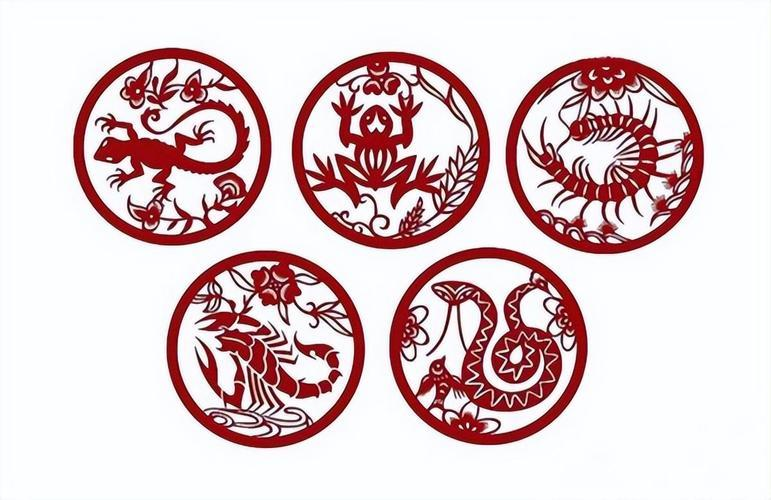
The red designs give each creature a separate frame. In the top row, a gecko, a toad and a centipede fill three circles. Below them, the scorpion’s raised tail and the snake’s coil follow the rims. Flower stems fit into the spaces left by legs and tails. The same frame gives all five images a shared rhythm, even though each animal has a very different silhouette.
Look again at the diamond from the book. Its border gathers the animals into one image. The red roundels distribute them into five. Both arrangements preserve the features that help a viewer recognise the animals, while leaving room for the ornament around them.
The Chinese Showcase Edit
Jewelry with Protective Motifs
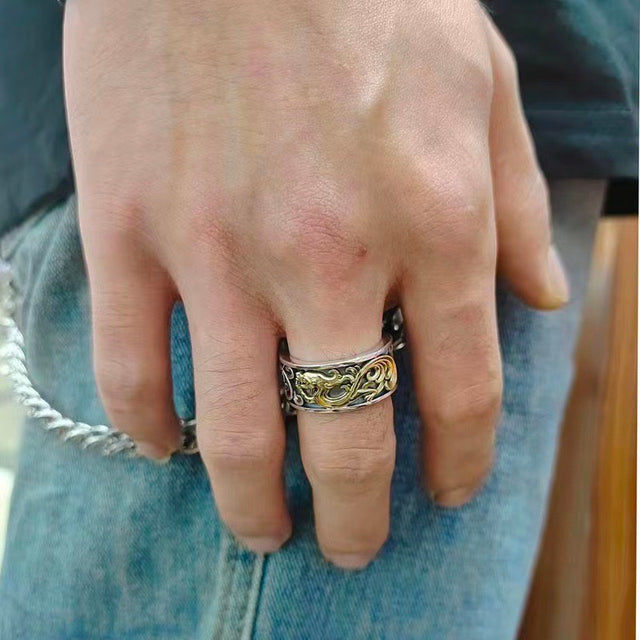
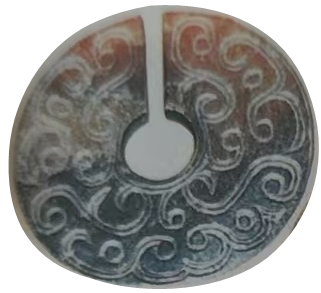
The tiger and gourd echo images in this guide. The coin ring draws on another way that Chinese decorative art has expressed a wish for safety.


Frequently Asked Questions
What does the Five Poisons pattern mean?
It expresses a wish to ward off harm and keep the household safe. The design is particularly associated with the Dragon Boat Festival.
What animals are in the Five Poisons?
A common group includes a snake, centipede, scorpion, gecko and toad. Some regional versions include a spider in place of another animal.
Why was the pattern embroidered on children’s clothing?
Families used the motif on clothing and small accessories to express a wish that children would stay safe through the summer.
Why do tigers or gourds appear in Five Poisons designs?
In folk imagery, a tiger can hold the creatures in check. A bottle gourd can enclose them. Both devices show the creatures being brought under control.
How do I identify the pattern on an object?
Look for a group of five creatures with recognisable silhouettes, such as a scorpion’s pincers or a centipede’s legs. A tiger, gourd or other festival motif can offer another clue.
A Wish for a Safe Summer
The snake still looks alert and the scorpion still raises its tail. Those details are part of the pattern’s character. The flowers, borders and guardians give the creatures a place within a design made for the home or the body. On a child’s vest, a paper charm or a dish set on a table, the design made a family’s hope for a safe summer visible.
References
- The Palace Museum, Beijing. Collection entry for the Dragon Boat Festival Five Poisons sachet and glossary entry for the Five Poisons pattern.
- China Intangible Cultural Heritage Network. An overview of northern and southern Dragon Boat Festival customs and regional variations in the Five Poisons.
- Taiwan Historica. Folk-objects note on Five Poisons charms and the tiger, rooster and gourd designs.
- Suzhou Bay Museum. Collection feature on a late Qing satin vest embroidered with the Five Poisons.
- National Museum of China. Collection entry for the polychrome dish showing Celestial Master Zhang driving away the Five Poisons.
Stories, symbols and everyday objects
Our journal explores Chinese culture and design. Traditions and interpretations vary by region and source. For a purchase, use the specifications on the individual product page.
About Chinese ShowcaseQuestions or corrections? Contact us ↗