The Chinese Showcase journal Chinesische Symbole
Chinese Peace Lock Meaning and the Longevity Lock Tradition
What does a Chinese peace lock mean? Explore the ping an suo, the traditional changming suo, and the wishes behind these lock-shaped gifts.
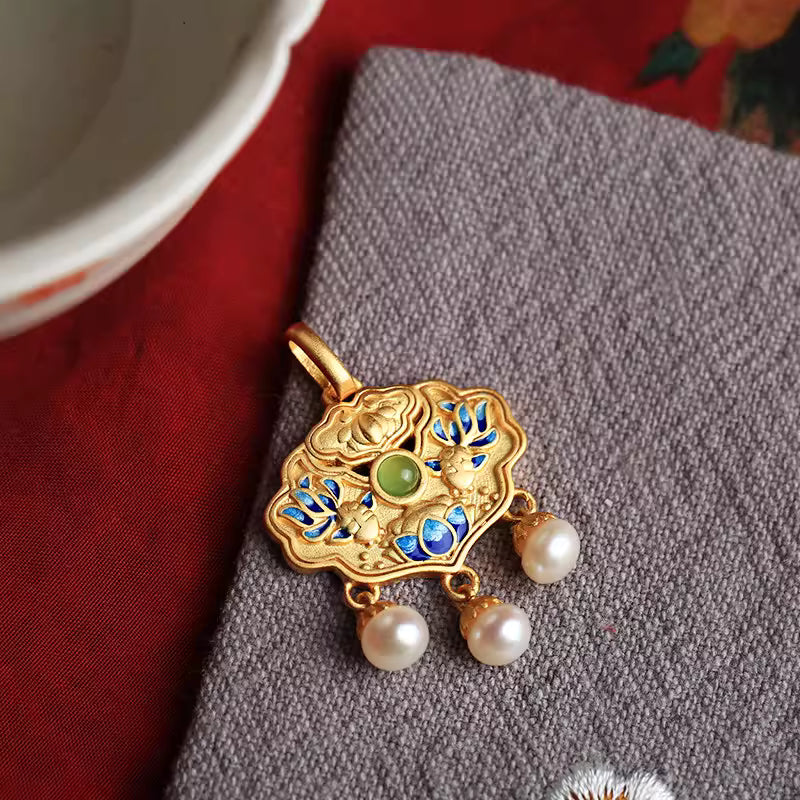
Ping an suo (平安锁, "peace lock" or "safety lock") is a Chinese lock-shaped ornament that expresses a wish for safety, health, and well-being. A changming suo (长命锁 / 長命鎖, also translated as "longevity lock") is a traditional form of lock ornament especially associated with wishes for a child’s safe growth and long life. [1] [2]
A household lock keeps valuable things safe. A small lock worn on a chain gives that familiar idea a more personal meaning. A family can have a blessing engraved on it, give it at a child’s first celebration, and keep it for years afterward.
What Does a Chinese Peace Lock Symbolize?
The lock takes its meaning from an ordinary gesture. People close a door to protect the household and fasten a chest to keep treasured belongings secure. The same outline, scaled down into a pendant or plaque, expresses a wish to keep peace and good fortune close. A written blessing or a familiar motif tells the recipient what the giver hopes the lock will stand for. [1]
A late Qing to early Republican silver longevity lock in the National Palace Museum, Taipei, shows how that wish took shape. Its squared body recalls a cabinet lock. One side bears characters for blessings, prosperity, and longevity. The reverse is decorated with motifs including a gourd and a fan. Small flower and leaf drops hang below the plaque, softening the angular outline and moving as the ornament moves. [1]
Peace Lock and Longevity Lock in Chinese Culture
In Mandarin, ping an conveys safety and peace, while suo means lock. Changming means long life. “Longevity lock” is the term commonly used in museum and folk-custom descriptions of the pieces traditionally given to children. “Peace lock” is also used for contemporary lock-shaped jewelry that emphasizes a wish for well-being. The same piece can carry both wishes. [1] [2]
A child’s gift is a familiar example, and the custom has also appeared at other stages of life. The National Palace Museum discusses lock-shaped ornaments worn by children, older people, and brides. In a modern setting, jewelry with the same outline can be a family keepsake or a gift for someone setting out on a new stage of life. [1]
From Long-Life Threads to Silver Locks
One account of the longevity lock’s origins connects it with the custom of tying colored threads to a child’s arm at the Dragon Boat Festival. These threads were known by names including changming lü and changming suo. In the latter expression, suo meant cord. A different word with the same pronunciation meant lock, a connection noted in records of Changzhou folk customs. Both objects gave families a way to express the wish for a child to grow up well. [2]
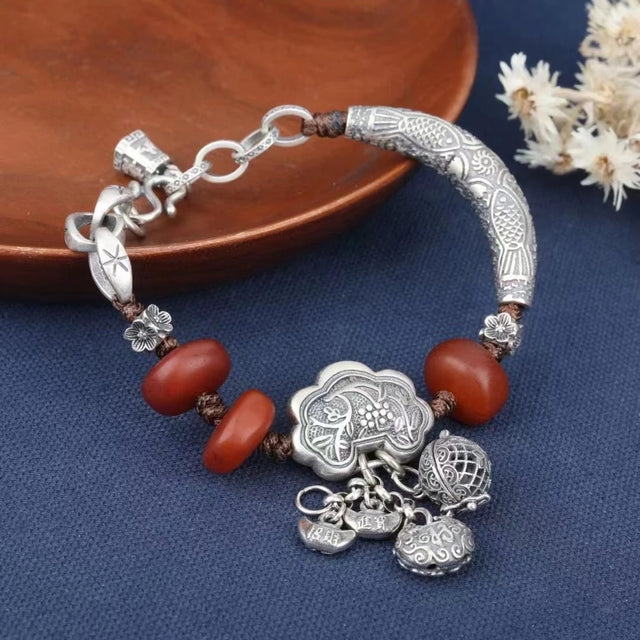
Across different places and households, artisans made locks from silver, gold, copper, or jade. The ornament might resemble a squared cabinet lock, or it might take on curved shoulders and a scalloped lower edge. Engraved words, relief patterns, small bells, and hanging drops gave each version its own character. [1] [2] [3] [5]
When Are Longevity Locks Given?
Families have marked a first-month celebration, a hundredth day, or a first birthday with a longevity lock. Local customs help explain the differences. In Gaoping, Shanxi, a silver longevity lock is a traditional first-month gift. Changzhou accounts describe first-month and hundredth-day occasions. Records from Lingtai, Gansu, describe godparents visiting on these and other milestones and bringing lock ornaments as gifts. [2] [3] [4]
The hundred-family lock, known as baijia suo, gives neighbors a role in the gift. A Changzhou account describes gathering small coins from households with different surnames and pooling their contributions to have a lock made. Some families threaded coins on a red cord. A few coins could carry a considerable wish when they came from people who had each taken a moment to give something. [2]
How to Read the Shape and Motifs on a Longevity Lock
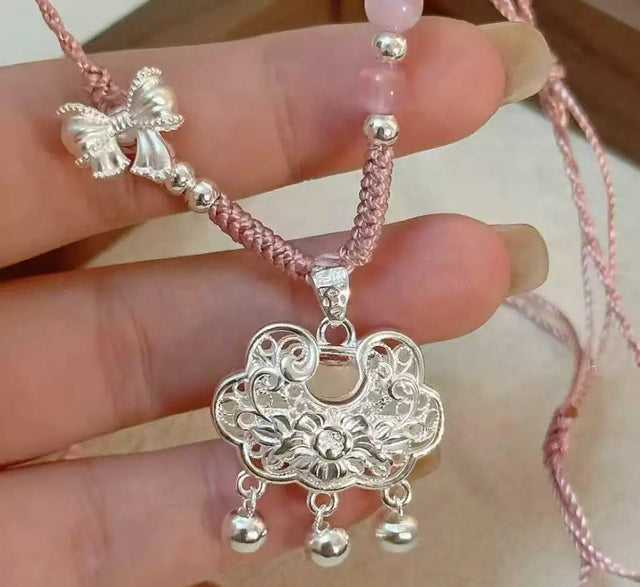
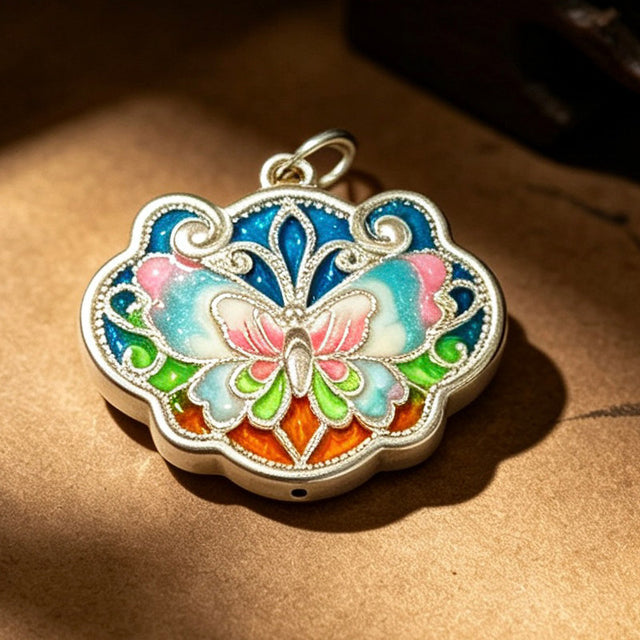
Start with the outline. A rectangular plaque may recall a cabinet lock, while the curved lobes of a ruyi shape lend a softer silhouette. Some lock pendants have a framed opening at the top. Others carry drops or bells along the lower edge. The two examples below show how differently an artisan can treat the face and still make the lock shape easy to recognize.


Next, look at the two sides. The Ganzhou Museum’s study of Hakka children’s clothing describes silver locks with blessings for long life, prosperity, or success in examinations on the front. Some have a qilin, dragon, or tiger on the reverse. Artisans also made pieces shaped like books, scissors, or abacuses, small forms an onlooker could recognize as wishes for learning, skill, or a livelihood. [5]
On a late Qing to early Republican flower-and-bird longevity lock in the National Palace Museum, the ruyi outline frames a bird turning among plum branches. The fine texture of the background draws attention to the raised branches, and hanging pendants extend the decoration below the lock face. Here the image carries the feeling of the blessing. [1]
Peace Lock, Peace Buckle, and Lock-Chain Pattern
- Peace lock
- A lock-shaped ornament, often with a broad face for decoration.
- Peace buckle
- A ping an kou, usually a circular jade pendant with a hole in the center.
- Lock-chain pattern
- A suoziwen design, formed by repeating linked units. The pattern can decorate a piece of jewelry, a textile, or other surfaces.
A family might keep a lock in a jewelry box with an old photograph from the day it was given. Years later, the first thing the gift brings to mind may be the person who chose it. The shape and the inscription hold part of that memory. So does the plain wish behind the gift: may you be safe, and may you grow well.
Frequently Asked Questions About Chinese Peace Locks
What does a Chinese peace lock mean?
A Chinese peace lock expresses a wish for safety, health, and well-being. The lock shape draws on the familiar idea of keeping something precious safe.
What do ping an suo and changming suo mean?
Ping an suo means “peace lock” or “safety lock.” Changming suo means “longevity lock.” Both names can describe lock-shaped ornaments, with a different emphasis in the wish they express.
Why is a longevity lock given to a baby?
Families traditionally gave a longevity lock to mark milestones such as a child’s first month, hundredth day, or first birthday. It carries a wish for safe growth and a long life. The occasion varies with the local or family custom. [2] [3] [4]
What is a hundred-family lock?
A hundred-family lock, or baijia suo, is associated with a custom of collecting small contributions from different households for a child’s lock. The gift represents the shared good wishes of relatives and neighbors. [2]
What is the difference between a peace lock and a peace buckle?
A peace lock follows a lock-shaped outline, often with space for a design on its face. A ping an kou, often called a peace buckle, is typically a round jade pendant with a hole at its center.
Peace Lock and Longevity Lock Jewelry

Hetian Jade Koi Fish Peace Lock Necklace
This gold-vermeil pendant pairs a koi motif and Hetian jade with small pearl drops.
View product details
Double Fish Longevity Lock Pendant
Two silver fish frame the top of a pale jade lock and trace the curves of the rounded ruyi design.
View product details
Hetian Jade Ruyi Long-Life Lock Studs
Small ice-green jade lock shapes set in sterling silver bring the ruyi outline to a pair of studs.
View product detailsRelated Reading
References
- Chen Huixia, “The Lock’s Other Use: Longevity Locks.” National Palace Museum Monthly, issue 504, March 2025, pp. 126–127. The two late Qing to early Republican locks are in the collection of the National Palace Museum, Taipei.
- Changzhou Folk Culture Series, section on birth customs and longevity locks.
- Lingtai County, Gansu. “Wearing the Lock,” local folk customs.
- Gaoping Municipal Government, Shanxi. Feature on the traditional craft of making silver longevity locks in Bofang village.
- Ganzhou Museum. “Hakka Children’s Dress and Adornment,” section on silver longevity locks.
Stories, symbols and everyday objects
Our journal explores Chinese culture and design. Traditions and interpretations vary by region and source. For a purchase, use the specifications on the individual product page.
About Chinese ShowcaseQuestions or corrections? Contact us ↗