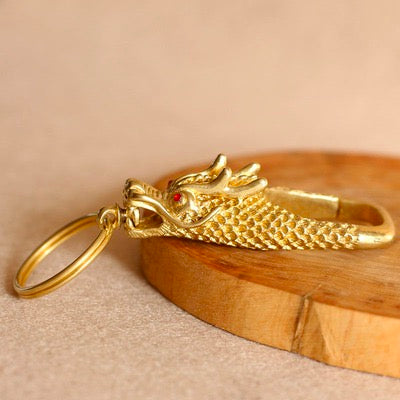
The Chinese fish pattern, or yu wen, is a decorative motif based on the shape of a fish. It appears as a single figure, a paired arrangement, a group of swimming fish or a scene with aquatic plants. Its long history connects prehistoric pottery with later ceramics, textiles, carving and jewelry.
Fish imagery is often associated with wishes for abundance, but not every fish motif means “surplus year after year.” Its interpretation depends on the period, the object and the surrounding design. This guide explains the forms, history and meanings of fish ornament, with museum-recorded examples and plain-text sources.

Chinese Fish Pattern at a Glance
| Topic | Overview |
|---|---|
| Name | Yu wen; Chinese fish pattern or fish motif |
| Basic subject | The fish figure, adapted through drawing, carving, molding or other decorative techniques |
| Common forms | Single fish, paired fish, groups of fish, fish-and-aquatic-plant compositions and lotus-and-fish designs |
| Early evidence | Fish decoration on Neolithic Yangshao pottery, including Banpo-related finds |
| Later contexts | Ceramics, textiles, carving and jewelry |
| Common auspicious reading | Fish can stand for surplus through a Chinese homophone; meaning is context-dependent |
| Important distinction | Fish motifs depict fish; fish-scale patterns organize repeated scale-shaped units |
What Is the Chinese Fish Pattern?
A fish pattern belongs to the wider family of animal ornament. Artists may retain eyes, fins, tails and scales, or simplify these features into strong outlines and geometric divisions. The subject remains recognizable even when the design is not a realistic picture of a particular species.
The name describes the motif, not the material or technique. A painted fish on porcelain, a carved fish and a woven fish pattern can use related shapes while being made in very different ways.
Fish ornament and fish-scale ornament should be kept separate. One emphasizes the animal; the other extracts the repeated arrangement of its scales. They can appear together without becoming interchangeable terms.
A Long History: From Prehistoric Pottery to Ceramic Scenes
Fish on Yangshao Pottery
The National Museum of China's description of a fish-pattern pottery basin identifies fish as an important motif in Yangshao remains represented by Banpo. It describes a development from whole figures toward parts, and from more naturalistic forms toward abstraction.
This does not mean that every triangle or geometric pattern originated as a fish. In its record for a Banpo-type geometric-pattern basin, the Palace Museum suggests that the decoration may have developed from fish imagery. The qualification matters: a proposed relationship is not a universal identification rule.
Human-Face-and-Fish Designs
Banpo human-face-and-fish pottery combines human and animal features in a striking composition. Interpretations have included belief, fishing and reproduction-related ideas, but its precise meaning remains a matter of research.
Later Chinese wordplay between fish and surplus should not be projected automatically onto prehistoric imagery. Different periods may use a similar subject for different reasons.
Fish, Water and Plants on Later Objects
Later ceramic decoration develops paired fish and fuller aquatic compositions. Techniques such as molding and applied relief can give fish a presence beyond a painted outline. Fish-and-aquatic-plant scenes integrate the animals with their surroundings.
A Jiajing-period wucai covered jar in the Palace Museum provides a documented example: its body carries eight red carp in different poses, accompanied by lotus plants, aquatic vegetation and duckweed. These details refer to that museum object, not to every fish-decorated vessel.

Common Types of Fish Ornament
The following categories describe composition and subject. They are a practical guide, not an exhaustive historical classification.
| Type | Main features | What to examine |
|---|---|---|
| Single-fish motif | One fish forms an independent decorative unit | The head, body outline, fins and tail |
| Paired-fish motif | Two fish are arranged together | Facing direction, spacing and symmetry |
| Group of fish | Several fish share the field | Size variation, density and movement |
| Fish-and-aquatic-plant design | Fish appear with water plants | How animals and vegetation organize the scene |
| Lotus-and-fish design | Fish combine with lotus flowers or leaves | Whether the scene also has an auspicious context |
| Human-face-and-fish design | Human and fish forms are combined | The specific prehistoric object and its archaeological background |
| Fish-transforming-into-dragon motif | Fish and dragon imagery express transformation | Features distinguishing it from an ordinary swimming fish |
How Fish Motifs Create Movement and Rhythm
Curved bodies guide the eye. The relationship between a fish's head and tail can suggest turning or swimming, giving a static design a sense of motion.
Pairs balance a composition. Two fish can establish visual symmetry without being identical. Changes in pose and spacing keep a balanced arrangement lively.
Groups create rhythm. Repeated silhouettes, scales and fins organize the surface. Varying their direction can produce a circulating or dispersed effect.
Plants shape the setting. Aquatic vegetation can connect areas of the design, divide the space or contrast with the direction of swimming fish. It is not always merely background decoration.

What Does the Fish Pattern Mean?
Abundance and Surplus
In later auspicious decoration, the Chinese words for fish and surplus are homophones. Fish imagery can therefore express a wish for a comfortable life with something left over. This is cultural symbolism, not evidence that an ornament produces wealth.
Lotus and Fish: Surplus Year After Year
Lotus-and-fish compositions can express the wish commonly translated as “surplus year after year.” The combination uses lotus/continuity and fish/surplus wordplay. A lotus-pond scene can also emphasize natural beauty, so the whole object should be considered before assigning a fixed meaning.
Fish Transforming into a Dragon
Fish-to-dragon imagery is associated with transformation and the Dragon Gate tradition. In auspicious contexts it can express aspirations for achievement or advancement. It does not promise examination success or career results.
| Design or relationship | Common interpretation | Limit of the interpretation |
|---|---|---|
| Fish and surplus wordplay | A wish for abundance | Not a verified financial benefit |
| Lotus and fish | Continuing surplus or abundance year after year | Not necessarily the purpose of every aquatic scene |
| Paired fish | Harmony or paired well-being in some auspicious contexts | Two fish alone do not establish a marriage theme |
| Fish-to-dragon imagery | Aspiration, transformation and achievement | Not a guarantee of academic or professional success |
| Prehistoric fish imagery | Evidence relevant to early life and belief | Later auspicious wordplay cannot simply settle its original meaning |
Fish, Carp and Fish-and-Aquatic-Plant Patterns
“Fish pattern” is a broad subject label. “Carp pattern” identifies a more specific animal, while “fish-and-aquatic-plant pattern,” often called yuzao wen, describes the combination of animals and vegetation.
A composition can belong to more than one category. A documented carp-and-plant scene is both fish ornament and aquatic scenery. However, decorative simplification can make species identification uncertain. Use a reliable object record rather than identifying a fish solely by color or a stylized outline.
Museum Examples and Recorded Measurements
These examples provide concrete reference points. Measurements apply only to the named objects and are not standard sizes for a motif or product category.
| Object and collection | Period or context | Recorded information |
|---|---|---|
| Fish-pattern pottery basin, National Museum of China | Neolithic Yangshao cultural context | Relatively naturalistic fish decoration on the outer wall |
| Human-face-and-fish pottery basin, National Museum of China | Yangshao culture; Banpo site | Combined human and fish imagery; precise meaning remains debated |
| Geometric-pattern pottery basin, Palace Museum | Yangshao culture, Banpo type | Height 16.4 cm; mouth diameter 37.4 cm; possible fish-related abstraction |
| Celadon lotus-petal and paired-fish washer, China (Hainan) Museum of the South China Sea | Yuan dynasty; Longquan kiln | Paired fish combined with lotus-petal ornament |
| Wucai covered jar with fish and aquatic plants, Palace Museum | Ming dynasty, Jiajing period | Overall height 33.2 cm; mouth diameter 19.5 cm; foot diameter 24.1 cm; eight red carp on the body |
The measurements above refer to the named museum objects. A pattern alone cannot authenticate or date an antique: shape, body, glaze, technique, inscriptions and provenance also matter.
How to Identify a Fish Motif
- Start with the outline. Look for a relationship between a head, body and tail.
- Check supporting details. Eyes, fins or scales may clarify the subject, but stylized designs can omit them.
- Read the arrangement. Is it one fish, a pair or a group? Compare direction and spacing.
- Look beyond the animal. Lotus, aquatic plants, dragons or inscriptions affect the interpretation.
- Consult the record. A documented museum identification is stronger than resemblance alone.
Fish Patterns in Modern Design
Contemporary designers can adapt a single fish outline for an independent ornament, use paired fish for balance or develop aquatic scenes across a larger textile or ceramic surface. The most useful design lessons are movement, repetition and the relationship between the motif and its setting.
When describing a modern item, separate observable design, verified specifications and cultural meaning. Fish-shaped decoration does not establish traditional manufacture, sterling silver, natural jade or any other material. Auspicious associations should be explained as background rather than as promises of good fortune.
Frequently Asked Questions
Does every Chinese fish pattern mean abundance?
No. Later auspicious decoration often uses fish/surplus wordplay, but prehistoric, pictorial and other contexts require their own interpretation.
How does a fish pattern differ from a fish-scale pattern?
A fish motif depicts the animal. A fish-scale pattern organizes repeated scale-shaped units. Both can appear in one design.
Do two fish always represent a happy marriage?
No. Paired fish are a compositional form. A specific meaning needs support from the object and its context.
Are fish in aquatic-plant patterns always carp?
No. Identify the species only when supported by a reliable record or clear evidence. A simplified outline or color alone may not be sufficient.
Can a fish motif reveal a porcelain object's age?
Not by itself. Dating requires material, technical and documentary evidence alongside the decoration.
Does fish jewelry bring wealth or guarantee success?
No verified effect is established by the motif. Abundance and achievement are symbolic wishes, not practical guarantees.
Conclusion
The fish pattern is more than a homophone for surplus. It also reflects observation of natural forms and the transformation of movement, symmetry and repetition into ornament. From prehistoric pottery to later paired-fish and aquatic scenes, the subject changes with its context. Reading the motif alongside the complete object reveals its beauty without reducing every fish to one auspicious formula.
Recommended Fish-Inspired Products
Explore three related designs from Chinese Showcase. These contemporary product selections illustrate fish-inspired ornament; they are not historical artifacts. Check each product page for current specifications, options and included accessories.

Fish-Shaped Openwork Pendant
A curved fish silhouette with openwork details offers a wearable example of fish-inspired design.
View product details
Carp and Lotus Round Pendant
Carp and lotus imagery share a circular openwork composition, echoing the combined motifs discussed above.
View product details
Carp and Lotus Covered Tea Cup
Fish and lotus decoration extends the motif to a covered tea vessel and its accompanying saucer.
View product detailsRelated Reading
Sources and Further Reading
- National Museum of China. “Fish-Pattern Pottery Basin.” Collection record.
- National Museum of China. “Human-Face-and-Fish Pottery Basin.” Collection record.
- Palace Museum. “Yangshao Culture Geometric-Pattern Pottery Basin.” Collection record.
- Palace Museum. “Wucai Covered Jar with Fish and Aquatic Plants.” Collection record.
- China (Hainan) Museum of the South China Sea. “Decorative Motifs: Fish.” July 23, 2024.
- China (Hainan) Museum of the South China Sea. “Cloud-Based Cultural Relic Appreciation, Episode Five: New Year Objects.”