The Bao'an people are one of China's smaller officially recognized ethnic groups. Most live in Jishishan Bao'an, Dongxiang and Salar Autonomous County in Gansu Province, especially around the upper Yellow River near Dahejia. They speak Bao'an, a Mongolic language, commonly use written Chinese, and are predominantly Muslim. Their history reflects centuries of migration and exchange among communities in the Qinghai-Gansu borderlands, while their best-known craft is the forging of the decorated Bao'an waist knife.
保安族
Bao'an people
24,434 in 2020
Bao'an, Mongolic family
Table of Contents
- Name, Population, and Distribution
- Origins and Historical Migration
- Bao'an Language
- Environment and Architecture
- Clothing and Headwear
- Bao'an Waist-Knife Craft
- Food and Hospitality
- Religion and Festivals
- Marriage and Family Customs
- Music, Dance, and Oral Literature
- Livelihood and Modern Life
- Cultural Preservation
- FAQ

Who Are the Bao'an People?
The Bao'an, also written Bonan in some linguistic literature, are one of the 56 ethnic groups officially recognized in China. The 2020 national census recorded a population of 24,434. Most Bao'an communities are concentrated in Jishishan Bao'an, Dongxiang and Salar Autonomous County in Linxia Hui Autonomous Prefecture, Gansu. Smaller populations live elsewhere in Gansu and in Qinghai, Xinjiang, and other parts of China.
The best-known settlements are around Dahejia near the Yellow River. Dazhuang, Ganhetan, and Meipo are often collectively called the "three Bao'an villages." The ethnic name is connected to Bao'an Fort in the Tongren area of Qinghai, where ancestors of today's Bao'an people lived before a major nineteenth-century migration.
The Bao'an are a distinct ethnic group. Shared Islamic practices or regional customs do not make them the same as the Hui, Dongxiang, Salar, Mongol, Tibetan, or Tu peoples. Each community has its own historical development, language experience, and cultural memory.
Origins and Historical Migration
The origin of the Bao'an people is still debated because early written evidence is limited. Scholarly explanations have emphasized Mongol, Hui, or Central Asian components, while local traditions preserve several different migration stories. These theories should not be presented as one proven family tree.
A cautious interpretation is that the Bao'an community formed through long-term interaction among soldiers, artisans, farmers, herders, merchants, and local families in the Qinghai-Gansu borderlands. Mongol, Tibetan, Tu, Hui, and Han communities all participated in the region's political and economic life. Language, religion, intermarriage, and shared work gradually contributed to a distinct Bao'an identity.
During the Ming period, military and administrative sites known as Bao'an Station, Bao'an Fort, and Bao'an Camp were established in the Tongren region. By the early Ming era, communities identified with Bao'an, Xiazhuang, and Gasar were living in the area. In the Xianfeng and Tongzhi reigns of the Qing dynasty, conflict and instability prompted migration into what is now Jishishan. Settlement near Dahejia transformed clothing, housing, trade, and agriculture, but the Bao'an language and many community traditions continued.

The Bao'an Language
Bao'an belongs to the Mongolic language family and is linguistically related to Dongxiang and Mongghul/Tu varieties. Centuries of contact have brought many loanwords from Chinese and neighboring languages. Researchers commonly identify regional varieties associated with Dahejia and Tongren.
The Bao'an language did not historically have one universally used native writing system. Written Chinese is widely used in education, government, publishing, and communication beyond the home. Many Bao'an people are bilingual or multilingual, depending on age, location, education, and social networks.
Language vitality cannot be measured by population alone. A national language-resource report based on sample communities found a high rate of Bao'an-language use, but migration, schooling, employment, and digital media can reduce intergenerational transmission. Recording vocabulary, stories, songs, place names, and craft terminology is therefore an important part of preservation.
Environment, Villages, and Traditional Architecture
The Dahejia area lies between the Jishi Mountains and the Yellow River. Its grassland, cultivated fields, river routes, and position between Gansu and Qinghai supported farming, animal husbandry, craft production, and regional trade.
Older Bao'an houses were commonly built with earth, timber, and later brick. Historical descriptions mention flat roofs, thick walls, and connected buildings. In periods of insecurity, linked rooftops allowed families to communicate across the village without leaving enclosed spaces. This layout reflected mutual assistance as much as architecture.
Traditional courtyards distinguished a main room from side rooms and organized space around elders, younger couples, guests, storage, and cooking. Most families today live in independent courtyards or modern houses with improved utilities. Surviving older buildings should be understood as evidence of changing community life, not as the only "authentic" form of Bao'an housing.

Traditional Clothing and Headwear
Bao'an clothing changed as communities moved and interacted with different neighbors. Early garments are described as sharing features with Mongol dress; in the Tongren area, Tibetan and Tu influences became visible. After migration to Gansu, clothing also adapted to Hui, Dongxiang, and Han styles and to new working conditions.
Historical men's clothing included fur-lined coats, front-opening robes, vests, cloth or leather belts, brimless caps, and boots. Festival robes could have colored edging, and a decorated waist knife might be worn with formal clothing. Women's dress included bright right-fastening tops, long garments, trousers, vests, embroidered shoes, and varied forms of head covering.
Some sources describe age- or marriage-related colors and distinctive items such as the flowered chuchu hat and the embroidered mina head covering. Contemporary dress is much more diverse. Traditional garments now appear mainly at festivals, performances, weddings, museums, and cultural events; they should not be treated as the everyday uniform of every Bao'an person.
Bao'an Waist-Knife Forging
The Bao'an waist knife is the community's most widely recognized craft. Historically it functioned as a tool, a traded object, a component of formal dress, and a source of household income. It also records generations of knowledge about iron, steel, heat, water, sharpening, metal decoration, handles, and sheaths.
Traditional production can require dozens of stages. Forming the blank, adding steel, repeated heating and hammering, quenching, polishing, and assembling the handle and sheath all affect the finished object. Named varieties include Shiyangjin, Boriji, Yawuqi, flat-sheath, abacus-hilt, fish, horse-head, and watermelon-head forms. Names and classifications can vary among workshops.
In 2006, Bao'an waist-knife forging was included in the first national list of intangible cultural heritage under the category of traditional craftsmanship. Heritage status recognizes knowledge and community value; it does not exempt knives from current manufacturing, transport, sales, or public-safety regulations.

Food and Hospitality
Bao'an food reflects the agricultural and pastoral economy of northwestern China. Wheat, highland barley, corn, beans, noodles, buns, fried breads, beef, mutton, milk products, potatoes, carrots, and stewed dishes are common in historical and contemporary descriptions. Dietary practice is shaped by Islamic halal requirements.
Hand-grabbed mutton and wancai, a dish combining cooked beef or mutton with vegetables, noodles, or broth, are frequently mentioned. A large feast can include several forms of bread, meat, soup, fruit, nuts, and tea. Everyday meals are naturally simpler and vary by household and income.

Tea is central to welcoming guests. Historical accounts mention brick tea and covered-bowl tea, while richer hospitality tea may include rock sugar, dates, longan, raisins, almonds, or other dried fruit. Guests are offered the best available food, and hosts may repeatedly encourage them to eat. Respect for elders and careful seating etiquette remain important values, although practice differs among families.

Religion and Major Festivals
Most Bao'an people practice Islam. Religious belief influences food rules, prayer, festivals, marriage, funerals, charitable activity, and community organization. Mosques are places of worship and may also support education, consultation, and social contact.
Major observances include Eid al-Fitr, Eid al-Adha, and commemorations of the Prophet's birth, with local names and practices shaped by Chinese Muslim traditions. Families clean their homes, prepare food, visit relatives, pray, and share meat or assistance according to household circumstances. Religious life is not identical in every village, and personal observance varies.

Marriage, Family, and Community Customs
Traditional Bao'an marriages were monogamous and strongly influenced by Islamic practice, family consultation, and village networks. Historical descriptions list matchmaking, negotiation of gifts, formal presentation of gifts, the wedding ceremony, banquets, and the bride's return visit to her natal family.
Some communities held wedding activities over several days. Banquet songs, joking with relatives, greetings to elders, and visits between the two families created a public celebration. Older sources also record the custom of a bride temporarily avoiding food prepared by the groom's family, explained as remembrance of her parents' care.
Modern marriage is governed by national law and shaped by education, employment, migration, personal choice, and household preferences. Local customs can survive in modified form, but no single village practice should be presented as compulsory for all Bao'an families.
Hua'er Songs, Banquet Music, Dance, and Oral Literature
Hua'er is a mountain-song tradition shared across parts of Gansu, Qinghai, Ningxia, and Xinjiang. Bao'an singers developed local styles that combine the broader hua'er tradition with musical features associated with neighboring communities. Songs may address love, hardship, labor, historical memory, landscape, and hopes for a better life.
Banquet songs are performed especially at weddings and festive gatherings. They include lyrical songs, narrative songs, and rhythmic forms that may be accompanied by simple dance movements. Bao'an dance is often described as strong, open, and energetic; staged works sometimes take knife forging, farming, or festival life as their subject.
Oral narratives include stories about the Jishi Mountains, rain, horses, ordinary heroes, and the origins of the Bao'an waist knife. These stories reveal community ethics and imagination, but they should be identified as oral literature rather than used as literal proof of ancient events.

Livelihood and Modern Life
Historically, Bao'an households combined farming, animal husbandry, metalworking, small-scale trade, and seasonal labor. Knife forging could connect artisans to pastoral markets where finished objects were exchanged for livestock and daily necessities.
Today, livelihoods include agriculture, craft production, construction, transport, retail, tourism, public service, education, and work in cities. Roads, schools, health services, communications, and housing have changed everyday life. Young people increasingly study and work outside the traditional villages while maintaining ties through family visits, online communication, festivals, and community events.
Modernization does not simply erase culture. It can provide new tools for language documentation, digital archives, craft marketing, museum education, and creative performance. At the same time, commercial pressure can encourage low-quality imitation or reduce a complex culture to one decorative symbol.
Cultural Preservation and Responsible Representation
Preserving Bao'an heritage requires more than displaying waist knives and festival costumes. Priorities include supporting Bao'an-language use, recording oral history, documenting forge terminology and techniques, training young artisans, preserving older village architecture, and ensuring that community members help decide how their culture is represented.
Knife-making heritage requires a particularly careful balance. Craft knowledge can be documented through safe demonstrations, museum collections, interviews, and lawful decorative production while respecting current regulations. High-quality craftsmanship, accurate labeling, and traceable workshop history are more valuable than mass-produced objects marketed vaguely as "ethnic."
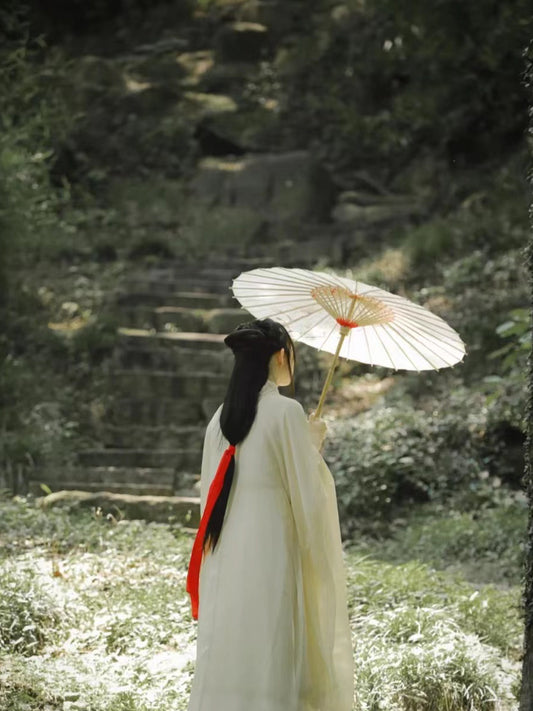
Images also need context. A painting, staged costume portrait, tourism performance, or unidentified mosque photograph should not be described as an archaeological artifact or definitive record of all Bao'an people. Responsible presentation distinguishes documentary evidence from illustration.
Frequently Asked Questions
Where do the Bao'an people live?
Most live in Jishishan County and the wider Linxia area of Gansu Province. Smaller communities live in Qinghai, Xinjiang, and other parts of China.
How many Bao'an people are there?
China's 2020 census recorded 24,434 Bao'an people.
What language do the Bao'an speak?
They speak Bao'an, a Mongolic language related to Dongxiang and Mongghul/Tu varieties. Written Chinese is widely used.
Are the Bao'an the same as the Hui people?
No. Both communities are predominantly Muslim and share some regional customs, but the Bao'an have a distinct language, formation history, identity, and cultural heritage.
What religion do the Bao'an practice?
Most Bao'an people practice Islam, which influences food, festivals, marriage, funerals, and community life.
Why is the Bao'an waist knife important?
It preserves specialized forging knowledge and historically served as a tool, trade item, formal accessory, and household livelihood.
Does every Bao'an person make waist knives?
No. Forging is a specialized craft learned through long practice and maintained by particular artisans and workshops.
Is Bao'an culture still changing?
Yes. Clothing, housing, weddings, language use, education, and employment continue to change while communities preserve selected traditions and cultural memory.
References
- National Ethnic Affairs Commission of China. "Bao'an Ethnic Group: Overview." Accessed August 1, 2026.
- National Ethnic Affairs Commission of China. "Bao'an Ethnic Group: Historical Development." Accessed August 1, 2026.
- National Ethnic Affairs Commission of China. "Bao'an Ethnic Group: Customs and Traditions." Accessed August 1, 2026.
- National Bureau of Statistics of China. China Statistical Yearbook 2021, ethnicity and population data from the Seventh National Population Census.
- Encyclopedia of China, Third Edition Online. "Bao'an Ethnic Group." Accessed August 1, 2026.
- China Intangible Cultural Heritage Network and Digital Museum. "Bao'an Waist-Knife Forging Technique." Accessed August 1, 2026.
- Research Center for Ethnic Minorities in Northwest China, Lanzhou University. "Bao'an: Unique Ethnic Folklore." Accessed August 1, 2026.
- National Language Resources Monitoring and Research Center for Minority Languages. "Use, Development, and Protection of the Bao'an Language." Accessed August 1, 2026.
Related Reading
Recommended Categories
Three Picks from Chinese Showcase
Three contemporary shop selections for readers interested in decorative design. These are not presented as documented heritage objects, community-made crafts, or religious endorsements. Check each product page for current specifications, price, and availability.

Fine Silver 999 Enamel Twelve Flower Deities Bracelet – Chinese Intangible Heritage Jewelry
View product details
Branch Red Pearl 3 White Pearl Tassel Hairpin - Wood
View product details