The Shui people—also written as the Sui people—are an officially recognized ethnic group in China. Their largest communities are in southern Guizhou, especially Sandu Shui Autonomous County and the upper reaches of the Duliu and Long rivers. Shui cultural life is associated with the Sui language, the Shuishu manuscript and oral-knowledge system, the Duan Festival, horsetail embroidery, rice farming, fish-centered foodways, bronze drums, and local song traditions.
Shui culture is neither isolated nor uniform. Long interaction with Dong, Bouyei, Miao, Han, Zhuang, Maonan, Yao, and other neighboring peoples has produced shared regional features. Customs also vary by county, village, surname group, family, and generation, while contemporary Shui lives include education, urban work, migration, tourism, digital communication, and modern creative industries.

Shui People at a Glance
| Chinese name | 水族 |
|---|---|
| Pinyin | Shuǐzú |
| English name | Shui People / Sui People |
| Population | 495,928 according to China's 2020 population census |
| Main distribution | Sandu, Libo, Dushan, Duyun, and nearby areas of southern Guizhou |
| Other communities | Northern Guangxi and parts of Yunnan |
| Language | Sui, in the Kam–Sui branch of the Tai–Kadai language family |
| Traditional writing | Shuishu, known in Sui as Le Sui; manuscripts depend on oral interpretation |
| Representative festivals | Duan Festival; Mao Festival in particular regional communities |
| National-level ICH | Shuishu custom, Shui Duan Festival, and Shui horsetail embroidery, all listed in 2006 |
Who Are the Shui People?
Most Shui people live in Guizhou Province. Sandu Shui Autonomous County is the best-known demographic and cultural center, while substantial communities also live in Libo, Dushan, Duyun, Rongjiang, and neighboring counties. Smaller populations are found in northern Guangxi and in parts of Yunnan.
The traditional homeland is a humid landscape of river valleys, rice paddies, bamboo, forests, and limestone hills. Water and cultivable land shaped older settlement patterns, but the name “Shui” should not be reduced to the claim that the people are called Shui simply because they live beside water.
The traditional self-name is commonly romanized as Sui. Historical Chinese texts used several related labels, including forms translated as “Shuijia.” The modern official Chinese name is Shuizu. Names and identities developed over time rather than remaining unchanged from one ancient population to the present.
Sui Language and the Shuishu Knowledge System
Sui belongs to the Kam–Sui branch of the Tai–Kadai language family and is related to Dong, Maonan, and Mulao. Long contact with Chinese and neighboring languages has influenced vocabulary and multilingual life. Today, many Shui people use both Sui and Mandarin or regional Chinese varieties, with patterns differing by household, age, and place.
Shuishu, known in Sui as Le Sui, is more than a set of written signs. Traditional manuscripts contain pictorial, ideographic, and other symbols connected with calendars, auspicious dates, marriage, funerals, building, travel, agricultural work, and ritual procedure.
The manuscripts often cannot communicate their full meaning without a trained specialist who combines the signs with memorized readings, formulas, and ceremonial knowledge. Written text and oral teaching therefore form one transmission system. The Shuishu custom entered China's first national list of representative intangible cultural heritage in 2006.
Historical Formation
Accounts of Shui origins include oral traditions and scholarly models involving migration from central or southern China, interaction with populations broadly described in historical writing as Baiyue, and movement into the Duliu and Long river regions. These interpretations illuminate different periods and communities but do not establish one simple, uncontested ancestry.
Older regional labels often covered populations with different languages and political histories. It is therefore unsafe to identify every ancient group mentioned under a broad southern name directly with the modern Shui people. Modern Shui identity formed through long settlement, migration, intermarriage, political change, and cultural exchange.
In 1957, Sandu Shui Autonomous County was established. It remains China's only autonomous county designated for the Shui people.
River-Valley Villages and Traditional Houses
Traditional settlements were commonly built near water and cultivable fields, with access to forest materials and paths linking neighboring villages. Some older houses preserve features of the southern Chinese raised-house tradition: a timber living floor above a lower level used for storage, tools, milling equipment, or livestock.

Elevation improves ventilation and helps households cope with damp ground and sloping terrain. House construction could also involve cooperative labor and calendrical choices interpreted through local tradition. Modern brick-concrete houses, apartments, and urban homes are now widespread, so no single wooden design represents contemporary Shui housing.
Rice, Fish, and Traditional Foodways
Rice agriculture has long shaped Shui foodways. Glutinous rice, fish, vegetables, sour flavors, preserved foods, and grain-based drinks appear frequently in accounts of everyday meals, hospitality, and festivals. Fish may be eaten fresh, dried, preserved, or cooked with herbs and vegetables.
One well-known festive preparation fills or wraps whole fish with bundles of chives and seasonings before cooking. Often translated as “fish wrapped with chives,” it is associated with Duan Festival meals and ancestral offerings in parts of the Shui region. Recipes and ritual details vary locally.

Rice and fish are not exclusive to the Shui. Their cultural meaning lies in local ecology, preparation, seasonal timing, family memory, and the social setting in which food is shared.
Clothing, Indigo, and Horsetail Embroidery
Historical descriptions commonly associate Shui dress with indigo, blue-black, and dark green cloth, accented by woven bands, embroidery, and silver ornaments. Women's garments could include side-fastening jackets, trousers or skirts, aprons, headcloths, embroidered shoes, and jewelry. Men's dress was often plainer in cut and decoration.
Garment style differs by locality, age, marital status, occasion, and historical period. Complete ceremonial clothing is now most visible at festivals, weddings, exhibitions, and cultural performances; it should not be treated as one everyday uniform worn identically by all Shui people.

Shui horsetail embroidery is the best-known textile tradition. Artisans wrap white silk tightly around several horse-tail hairs to form a firm cord. They couch the cord along a prepared outline, fill areas with braided colored thread, and combine it with other stitches. The raised contour gives finished work a shallow-relief quality.
The technique appears on baby carriers, aprons, chest panels, shoes, children's hats, purses, and protective cases. A complex carrier can require months of work. Shui horsetail embroidery entered China's first national intangible cultural heritage list in 2006.

What Is the Shui Duan Festival?
Duan is the largest and most widely recognized Shui festival. It marks harvest, the turning of the traditional year, ancestral remembrance, reunion, and hopes for well-being. Dates are calculated through the traditional calendar and differ among surname groups and villages.
Celebrations therefore unfold in several rounds over many weeks rather than on one universal date. Activities may include ancestral offerings, communal meals, visiting relatives, singing, bronze drums, lusheng music, and horse racing at a gathering ground. Not every activity occurs in every community or every year.
The Shui Duan Festival entered China's first national list of representative intangible cultural heritage in 2006 as project X-20, sequence number 468. The applying area was Sandu Shui Autonomous County.
What Is the Shui Mao Festival?
The Mao Festival, often called Jie Mao in transliteration, is celebrated in parts of Sandu, Libo, and neighboring areas. It is associated with the agricultural calendar, community gathering, song, courtship traditions, and prayers for fertile fields and well-being.
Local programs may include singing on a gathering hill, agricultural rites, catching fish, or catching ducks. Mao is culturally important but more regional than Duan, and it should not be described as an identical festival celebrated by every Shui community.
Bronze Drums, Songs, Dance, and Traditional Belief
Bronze drums belong to a wider cultural world shared by several peoples of southern China. In some Shui communities they are family or lineage treasures brought out for important gatherings. Their use cannot be understood as exclusively Shui, but local ownership and performance give them particular community histories.
Shui songs use rhyme, metaphor, antiphonal exchange, and repetition. Repertories may accompany courtship, work, festivals, weddings, and funerals. Recorded dance traditions include bronze-drum dance, lusheng dance, horn-drum dance, and staged performances inspired by cattle contests.
Historical religious life combined ancestral remembrance, understandings of natural forces, local deities, and calendrical knowledge interpreted through Shuishu. Contemporary belief and ritual practice vary widely, so it is inaccurate to assign one religious identity to every Shui person today.
Safeguarding and Contemporary Life
Urbanization, formal education, migration, and digital media have changed how knowledge moves between generations. Sui language use can weaken when children grow up away from older speakers. Shuishu requires both manuscript literacy and oral apprenticeship, while horsetail embroidery demands time that mass-market pricing may not reward fairly.
Safeguarding includes manuscript collection, audio and video documentation, cultural centers, museums, representative-bearer programs, school activities, apprenticeship, festivals, and community-led design. These efforts can support transmission, but tourism and online marketing may also standardize diverse local traditions.
Responsible interpretation should identify the community and source, distinguish historic objects from modern adaptations, credit makers, and avoid assigning a fixed sacred meaning to every motif.
Common Misunderstandings
- Shui and Sui usually refer to the same ethnic group; the spellings reflect different naming and romanization contexts.
- The Shui are distinct from the Mulao, Maonan, Dong, and Bouyei, although their languages and regional cultures have long interacted.
- Shuishu is not simply an everyday alphabet; manuscripts depend heavily on oral teaching and specialist interpretation.
- The Duan Festival is not held on one identical date or in one identical form across every village.
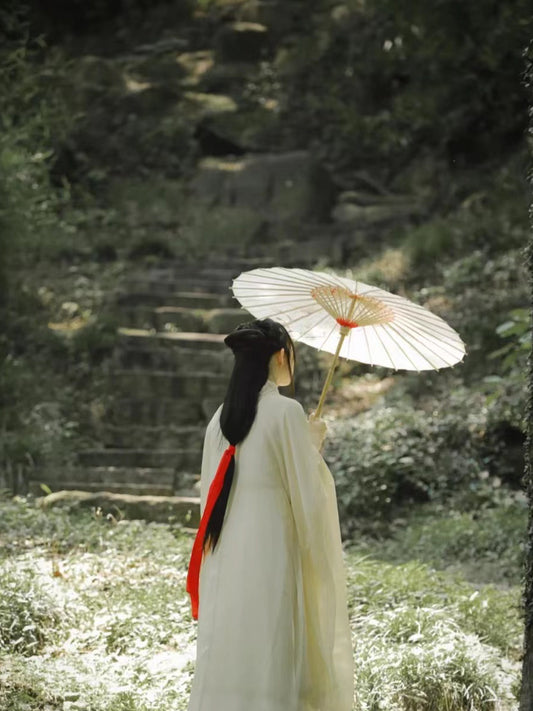
- Stage clothing and studio images are not a universal historical Shui costume.
- Indigo cloth, bronze drums, rice, fish, and many decorative motifs are shared regional traditions rather than exclusively Shui forms.
- A modern fish-themed craft can be culturally inspired without being a historic Shui artifact.
Cultural Symbols and Craft Inspiration
These active store selections use embroidery, blue-and-white fish imagery, and contemporary fish jewelry. They are offered for visual and material inspiration and are not presented as traditional Shui-made heritage objects.
Three Picks from Chinese Showcase
Three contemporary shop selections for readers interested in decorative design. These are not presented as documented heritage objects, community-made crafts, or religious endorsements. Check each product page for current specifications, price, and availability.

Cloisonne Butterfly White Flower Pearl Hairpin-Alloy
View product details
Blue Cloisonné-Style Floral Drop Earrings
View product details
Minimalist Cloisonné Lotus Open Ring for Women – Artistic Light Luxury Design | S925 Sterling Silver
View product detailsFrequently Asked Questions
Are the Shui and Sui people the same group?
Yes. Shui reflects the standard Chinese ethnic name, while Sui more closely represents the traditional self-name and is widely used in linguistic writing.
Where do the Shui people live?
Most live in southern Guizhou, especially Sandu Shui Autonomous County and nearby counties. Smaller communities live in northern Guangxi and parts of Yunnan.
Do the Shui people have their own language?
Yes. Sui is a living language in the Kam–Sui branch of the Tai–Kadai language family.
Is Shuishu an everyday writing system?
Not generally. It is a specialized manuscript and oral-knowledge system historically interpreted by trained practitioners for calendrical, ritual, and social purposes.
Is Shuishu national intangible cultural heritage?
Yes. The Shuishu custom entered China's first national list in 2006.
What is the most important Shui festival?
Duan is the largest and most widely recognized festival. Villages celebrate in different rounds according to the traditional calendar.
Is the Duan Festival national intangible cultural heritage?
Yes. It was listed in 2006 as national project X-20.
What makes Shui horsetail embroidery unusual?
Silk is wrapped around horse-tail hairs to create a firm cord, which is stitched onto cloth to build raised outlines before other areas are filled and decorated.
Do Shui people wear traditional clothing every day?
Generally no. Modern clothing predominates, while traditional-style dress is more visible during festivals, weddings, exhibitions, and cultural performances.
Does every Shui motif have one fixed meaning?
No. Meaning depends on maker, community, object, use, and modern design context.
Does every Shui community follow the same customs?
No. Festival dates, clothing, speech, ritual practice, and food preparation vary by region, village, surname group, family, and generation.
How is Shui culture safeguarded today?
Through community programs, manuscript collection, museums, schools, apprenticeships, documentation, language work, festivals, and carefully identified contemporary adaptation.
References
- National Bureau of Statistics of China: China Population Census Yearbook 2020
- National Ethnic Affairs Commission: Shui overview
- National Ethnic Affairs Commission: Shui customs
- National Ethnic Affairs Commission: Shui development and heritage safeguarding
- China Intangible Cultural Heritage: Shuishu Custom
- China Intangible Cultural Heritage: Shui Duan Festival
- China Intangible Cultural Heritage: Shui Horsetail Embroidery
- Sandu Shui Autonomous County: Local food traditions