The Caijia people are a community associated with the cultural landscape of southwestern China, especially western Guizhou. Their story brings together a distinctive language, local identities and memories preserved in families and historical records. Looking beyond a single population figure or an old photograph reveals a more thoughtful way to understand this community.

Caijia People at a Glance
| Common names | Caijia people; Cairen in some accounts |
|---|---|
| Regional focus | Western Guizhou and neighboring parts of southwestern China |
| Language research | Caijia, including documented speech varieties in Hezhang and Weining |
| Linguistic background | Sino-Tibetan; its more precise classification remains debated |
| Key distinction | Community identity, administrative classification and language use are not interchangeable |
| Reading population data | Community population and the number of language speakers must be counted separately |
Who Are the Caijia People?
Caijia is a name used for a community discussed in studies of Guizhou's cultural and linguistic diversity. Some sources also use Cairen. These terms need to be understood in their historical and local contexts, rather than treated as labels with exactly the same meaning in every document.
A shared surname is not enough to establish community membership. Likewise, an administrative ethnic designation does not fully describe a person's language, family traditions or sense of belonging. Understanding Caijia identity requires attention to how people describe themselves as well as how outsiders have recorded them.
Homeland and Regional Connections
Western Guizhou is central to accounts of Caijia communities. Hezhang and Weining, within the wider Bijie area, are particularly important in linguistic documentation. Broader community descriptions also refer to neighboring areas, including northeastern Yunnan, but their geographic coverage varies.
Local differences matter. A language survey in one settlement cannot stand for every family associated with the community. Nor should a portrait from one location become the standard image of everyone living across a wider region.
Regional connections can be explored through settlement histories, marriage networks, travel and the languages used between neighbors. These are useful questions for local research, not reasons to assume that all communities have followed an identical path.
History, Names and Origin Narratives
Accounts of Caijia origins sometimes connect the community with the ancient State of Cai. Such narratives can be meaningful as expressions of ancestry, but an origin story is not automatically a demonstrated line of descent. Establishing historical connections requires evidence from multiple kinds of records.
Older sources also use names that do not correspond neatly to present-day ethnic categories. A historical label containing the word Miao, for example, should not be treated on its own as proof of a modern classification.
The Caijia Language: A Distinctive Cultural Record
Caijia belongs to the Sino-Tibetan language family, although its more precise position remains a subject of scholarly discussion. Comparisons have involved Chinese, Bai and the poorly documented Longjia and Luren languages. Similarities are important research evidence, but they do not remove the need for careful comparison.
Shanshan Lü's A Reference Grammar of Caijia, published in 2022, provides a substantial description based on the Xingfa variety in Hezhang. Its treatment of sounds and grammar illustrates why a small language deserves detailed study in its own right.
A language is more than a list of translated words. Terms of address, ways of telling a story and expressions used in ordinary conversation can carry relationships and memories. Documenting how people actually speak helps preserve this context.
Why Speaker Numbers Need Care
Research describes Caijia as endangered and gives small speaker estimates. Such estimates are not the same as a census of everyone who identifies with the community. A person may retain family and community ties without speaking the ancestral language fluently.
For that reason, this article does not present an undated community estimate as a current population total. Any number should be accompanied by its date, geographic coverage and definition of who was counted.
Clothing and the Value of Historical Photographs
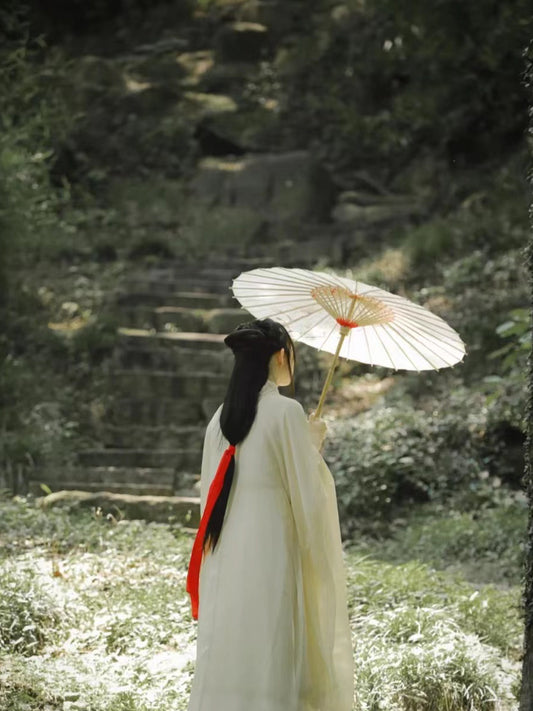
The paired portraits accompanying this article show long upper garments and fabric tied around the waist. The left portrait includes wrapped headwear; the right shows layered clothing and an object held beside the body. These visible details provide a starting point for observation.
They do not establish the garments' fibers, dye processes or ceremonial meanings. The photographs also cannot demonstrate a universal Caijia costume or tell us what community members wear today.
| Detail | What can be observed | What remains uncertain |
|---|---|---|
| Garment shape | Loose silhouettes and long upper garments | Local names, makers and precise construction |
| Waist binding | Fabric wrapped or tied around the waist | Material and any specific social meaning |
| Photographic setting | Outdoor surroundings and built structures | Exact place, date and circumstances |
Appearance is not a reliable way to determine ethnicity. Clothing may reflect occasion, individual preference, regional exchange or the circumstances of a photograph. A responsible caption separates what is visible from what has been independently established.
Keeping Cultural Memory Alive
Preservation begins with the people whose knowledge is being recorded. With their agreement, family stories, local place names, remembered songs and everyday conversations can become valuable records for future generations.
Craft documentation benefits from the same care. Rather than attributing a technique to an entire community on the basis of a brief description, a useful record identifies a maker, the tools used, the materials and the setting in which the work takes place.
Old photographs can support this work when original copies and their captions are preserved alongside edited display versions. Relatives or local researchers may later recognize a place, a garment or a person that an outside viewer cannot identify.
Living traditions need not remain unchanged to be meaningful. New forms of education, work and communication can coexist with efforts to learn family histories and maintain a language. Cultural continuity is something people shape, not simply something they inherit.
Related Chinese Craft Inspiration
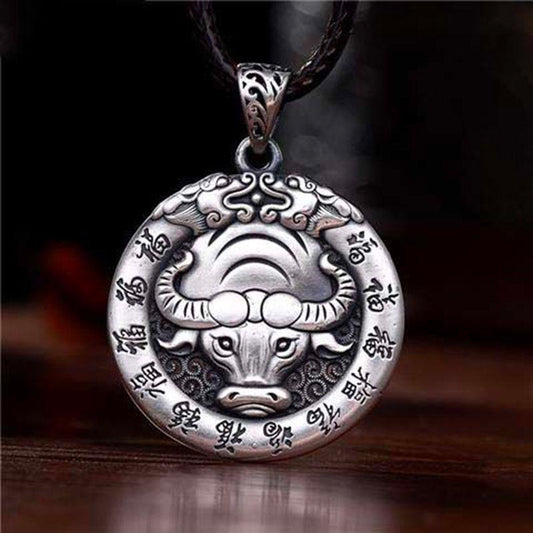
For readers interested in decorative textiles and accessories, the following selections offer a broader introduction to Chinese craft-inspired design. These are shop products, not documented Caijia traditional designs or items represented as Caijia-made. Refer to each product page for its materials and construction.
Three Picks from Chinese Showcase


Frequently Asked Questions
Where are Caijia communities associated with?
Accounts focus on western Guizhou and neighboring areas. Hezhang and Weining are especially relevant to published language research.
Is Caijia simply another name for people surnamed Cai?
No. Sharing a surname does not establish membership of the Caijia community.
How is the Caijia language classified?
It is described within Sino-Tibetan, while its more specific relationships remain debated.
Is the number of speakers the same as the community population?
No. Language ability and community identity are different measures, and estimates require dates and clear definitions.
Do these portraits show how all Caijia people dress?
No. They are historical images of individuals, not a universal dress standard. Their original date and the identities of the subjects remain unverified here.
Conclusion
The Caijia story is best approached through language, local histories and the voices of community members. Historical portraits open a window onto the past, while careful documentation helps connect that past with living experience. Respectful curiosity means preserving what is known and leaving room for what still needs to be understood.
References and Reading Notes
- Shanshan Lü, A Reference Grammar of Caijia, De Gruyter Mouton, 2022.
- Alfred F. Majewicz, review of A Reference Grammar of Caijia, Rocznik Orientalistyczny, 2023.