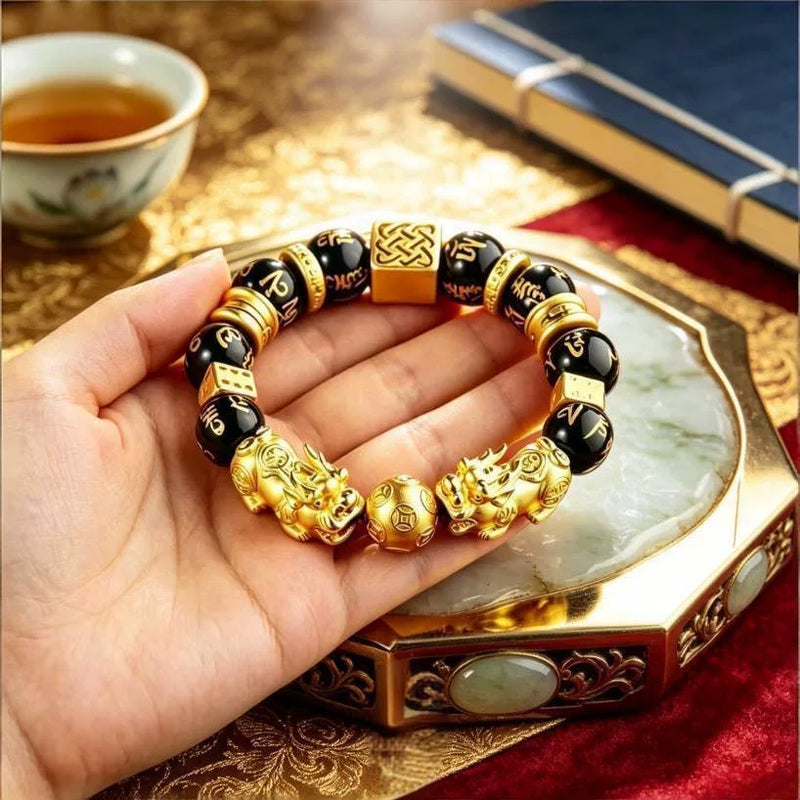
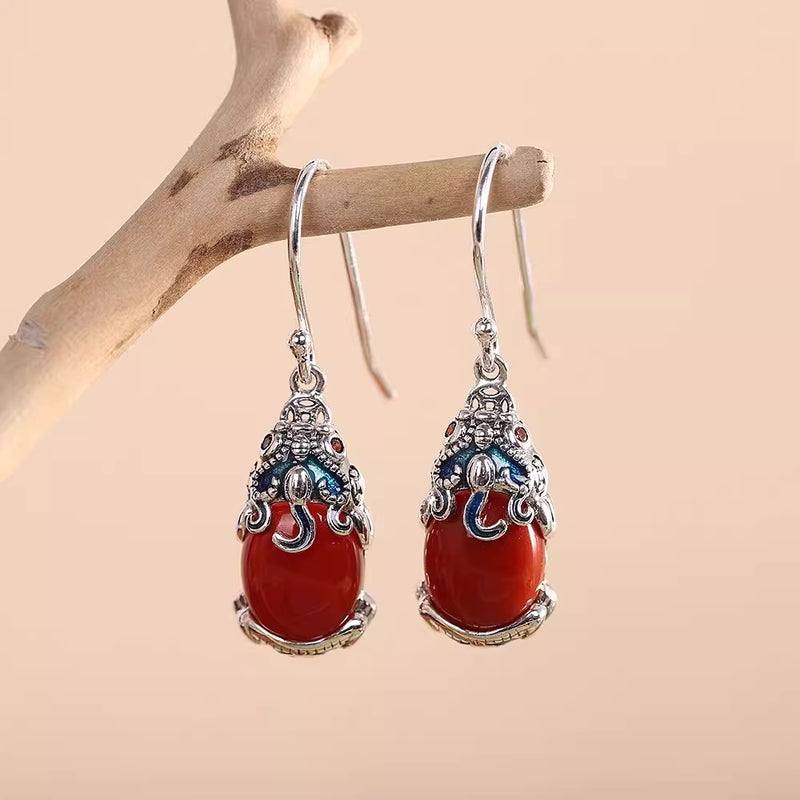
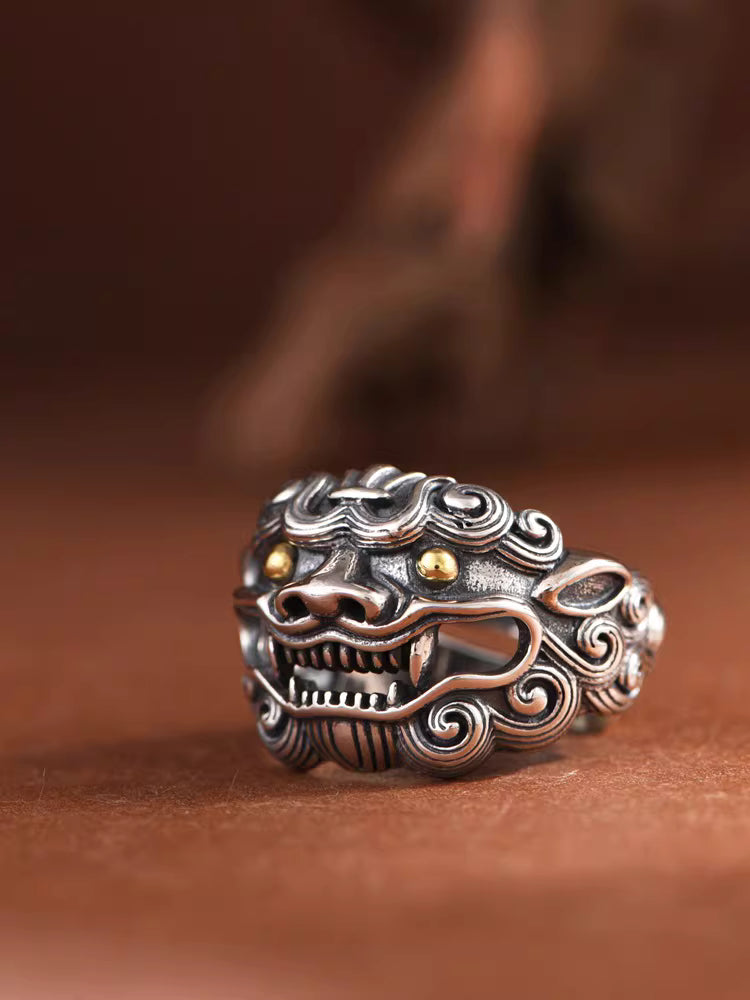
Pixiu is a mythical creature associated in Chinese folklore with wishes for prosperity and protection. Its image appears in jewelry and decorative objects, offering a connection to cultural stories as well as an expressive design. Understanding the symbolism can help you choose a piece for its appearance, meaning and everyday use.
The Pixiu Reading Room
Explore Our Pixiu Guides
Discover all 20 Pixiu-focused articles, plus 14 related guides covering jewelry, mythical creatures, and wealth traditions. Choose a topic below to continue reading.
Meaning & Symbolism
Who Can Wear Pixiu?
Wearing & Direction
Pairing Your Jewelry
Care, Storage & Daily Use
Pixiu Rings
Related Guides: Wealth Traditions
- How To Attract Wealth Feng Shui In China?
- How To Attract Wealth And Money For Chinese Woman?
- Traditional Feng Shui Meets Modern Wealth Decor: A Complete Guide
- Chinese Good Luck Symbols for Money
- 15 Chinese Good Luck Symbols For Money
- I Lost Money in Business: What Chinese Jewelry Should I Wear for Better Luck?
- Who is the God of Wealth in Chinese Mythology? (Caishen)
Related Guides: Jewelry & Symbols
What does Pixiu mean?
Pixiu imagery is commonly lionlike, with features such as wings and horns. Names and forms vary, so a single arrangement of teeth, horns or wings does not define every depiction.
The National Palace Museum's discussion of mythical beasts connects Pixiu with a treasure-retaining legend and explains its association with accumulating wealth. It also describes protective meanings surrounding the related Bixie tradition. These interpretations help explain the appeal of the motif as a gift or personal ornament.
Wealth and protection are symbolic associations. Wearing or displaying Pixiu does not guarantee income, business success, safety or good fortune.
Pixiu, Bixie and historical ornaments
Museum collections offer specific examples of related mythical beasts. The Metropolitan Museum of Art's first-century gold Bixie has a perforation that the museum interprets as evidence of possible use as a pendant or bead. The record also includes a twentieth-century magnifying glass; the two objects have different dates.
A National Palace Museum jade axe-form pendant, dated to the late Ming through early Qing period, includes a winged, lionlike figure that the catalogue cautiously identifies as probably Pixiu.
These objects show the variety of beast imagery in Chinese art. Their documented dates belong to those particular objects. They do not establish one origin date for every Pixiu story, or authenticate the age and materials of a modern piece.
How to choose Pixiu jewelry
Begin with the design you enjoy, then check the details that affect how the piece will look and feel.
- Material and finish: look for a specific description of the body, beads and decorative components. Gold-tone and silver-tone describe appearance; they do not confirm gold or silver content. A photograph alone cannot identify a gemstone.
- Size and fit: compare the stated dimensions with a piece you already wear. For bracelets, check wrist fit and whether the closure is elastic, adjustable or fixed. For pendants, check both ornament size and any included chain.
- Selected style: inspect the photos for the exact option you intend to order. Color, bead size, charm arrangement and the number of Pixiu figures can differ between variants.
- What is included: confirm whether the listing is for one item, a pair or a set. Display stands, styling accessories and photographed packaging should only be expected when the product details explicitly include them.
If a material, measurement or included accessory is unclear, ask before ordering rather than relying on the motif's name.
Wearing and caring for your piece
Choose a secure, comfortable fit and follow the care instructions for the actual materials. A carved stone ornament, a plated charm and an elastic bead bracelet can need different handling.
Avoid using salt water, abrasive polish, household chemicals, prolonged soaking or sunlight as a universal cleaning or activation method. These treatments may damage finishes or components. When the material is unclear, ask for suitable care advice before cleaning.
Store jewelry so that pieces do not rub against each other, and handle chains, tassels and elastic gently. Personal customs can be meaningful, while practical care should remain appropriate to the object.
Questions about Pixiu
What does Pixiu symbolize?
Pixiu is associated with wishes for prosperity and protection in Chinese folklore. People may choose the motif for its cultural meaning, as a thoughtful gift, or simply because they enjoy the design. Symbolism does not promise a particular outcome.
Are Pixiu and Bixie the same creature?
Some museum discussions connect the names, while historical terminology and forms vary. The National Palace Museum presents the connection as one account. It is more useful to consider the particular object and its description than to treat every related beast as identical.
Does a Pixiu ornament guarantee wealth?
No. It can express a personal wish or cultural connection, but buying or wearing one does not guarantee money or business success. Choose a piece according to its design, accurately described materials, fit and price.
Do I need an activation ritual or a particular wrist?
You can wear Pixiu jewelry as an ornament or for its symbolism. This guide does not prescribe an activation ceremony, wrist or orientation. Choose a secure, comfortable fit, and follow the care instructions for your particular piece.
Which material should I choose?
Compare the actual material, finish, dimensions, fit and care requirements stated in the listing. There is no basis here for ranking materials by promised spiritual or financial effects. Check uncertain details with the store before purchasing.
Museum sources
The cultural context above draws on these museum interpretations and collection records. Their inclusion provides references for the guide and does not imply endorsement of Chinese Showcase or its products.