The Chinese Showcase journal Chinese culture
What Is Bailu? The White Dew Solar Term
White Dew is the Chinese solar term for early September. Its name recalls droplets on plants as nights cool and different crops near harvest.
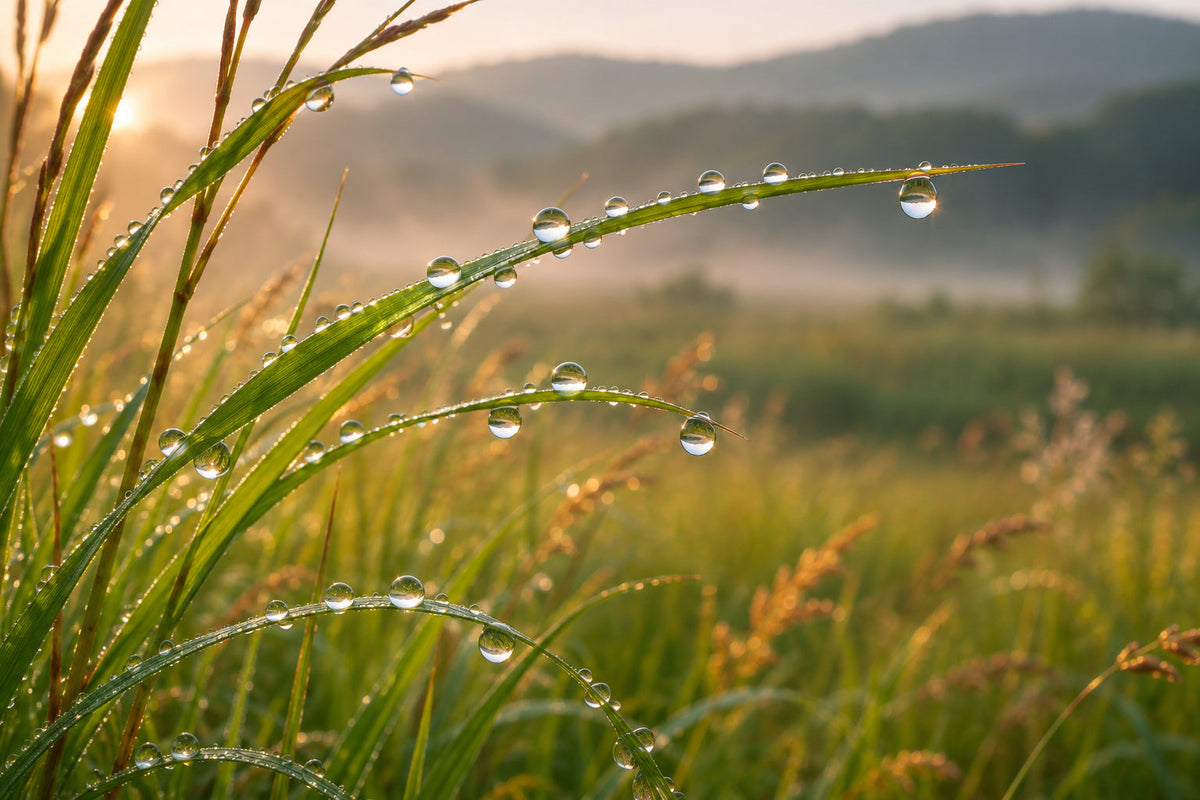
Bailu (白露, báilù, White Dew) is the 15th Chinese solar term and the third in traditional autumn. It begins around September 7–9, when the Sun reaches 165° ecliptic longitude. The name evokes clear dew that glints pale on grass and leaves in the morning. Cooler nights make this image especially fitting in regions already moving into autumn. [1, 2]
Why Morning Dew Looks White
A drop of dew is liquid water. After sunset, leaves, soil and other exposed surfaces lose heat by radiation. When a surface cools to the dew point of the air next to it, water vapor can condense onto it. Early light reflected by many tiny drops gives a blade of grass a silver or whitish sheen. White Dew has a descriptive name that comes into focus at the scale of a single leaf. [2, 3]
Clear skies often favor nighttime cooling. Light winds and enough moisture near the surface can also help dew form. The tops of plants may feel wet while a sheltered wall stays dry. A cloudy night or dry air can leave little visible dew, even during Bailu. An exposed morning landscape and a weather station’s air-temperature reading describe different parts of the same conditions. [3]
The Place of Bailu in Early Autumn
Bailu falls between End of Heat, Chǔshǔ, and the Autumn Equinox, Qiūfēn. The Sun advances from 150° at End of Heat to 165° at White Dew and then to 180° at the equinox. Terms are spaced by solar longitude. A Gregorian date may shift by a day or so depending on the year and time zone. [1]
The Chinese weather service records that many northern areas and highland districts already feel autumnal by White Dew, while the south tends to make the transition later. In between, a sunny afternoon can feel warm after a distinctly cool dawn. This difference between day and night helps explain why an early-morning sign gave the term its name. [2]
What Farmers and Households Notice
In an account from Shaanxi, the meteorological service describes maize approaching the end of grain filling around White Dew. Some fields are ready to cut earlier, while other crops are still maturing. Persistent autumn rain can complicate the work of harvesting, drying and preparing ground for the next crop. The practical question is whether a field and its grain are ready, and how long the next stretch of dry weather will last. [4]
Traditional observers also associated White Dew with the arrival of wild geese on autumn migration through the middle and lower Yellow River region. The old expression hóngyàn lái (鸿雁来), or the wild geese arrive, describes movement through a place where people were watching the calendar. The exact timing varies by species and route, so the saying works as a remembered scene of early autumn. [2]
White Dew can even be a name on a tea packet. China Weather Network describes a Nanjing-area custom of drinking Báilù chá, tea associated with the early-autumn period. Here the seasonal name helps tell the story of when the tea was picked. The taste of a particular batch still depends on the growing place, the leaves and their processing. In a different community, the term may be most familiar from the look of wet foliage or from work in the fields. [2]
Frequently Asked Questions
When does White Dew begin?
Bailu begins when the Sun reaches 165° ecliptic longitude, usually around September 7–9. The exact date and time change slightly from year to year.
What is the difference between White Dew and Cold Dew?
White Dew arrives in early September at 165°. Cold Dew follows the Autumn Equinox in early October at 195°, later in the season when many regions have cooler nights.
Is white dew a type of frost?
Morning dew is liquid water. Hoar frost is a deposit of ice crystals. The solar term’s name refers to the bright appearance of dew on a leaf or blade of grass.
Is White Dew Tea associated with a specific region?
One documented tradition of drinking tea associated with the White Dew season comes from around Nanjing. The name describes a seasonal association, so place and processing matter when you compare individual teas.
Continue Through the Solar Terms
- Previous term: End of Heat (Chǔshǔ)
- Next term: Autumn Equinox (Qiūfēn)
- All 24 Chinese solar terms by season
References
- Hong Kong Observatory. The 24 Solar Terms. Calendar table for White Dew and 165° solar longitude.
- China Weather Network. Seasonal Phenology of the 24 Solar Terms: White Dew and the Arrival of Cooler Weather (节气物候图鉴:白露至凉意生), 2026. Regional cooling, migratory observations and Nanjing-area White Dew Tea.
- United States National Weather Service. Dew and Frost Development. Surface cooling and dew formation.
- China Meteorological News, September 7, 2023. White Dew account from Shaanxi describing maize maturity and the risk of autumn rain.
Clear dew beads on grass at dawn. AI-generated cover illustration.
The 24 Solar Terms
Choose a solar term below or browse the full seasonal guide.
| Season | Solar term guides |
|---|---|
| Spring | |
| Summer | |
| Autumn | |
| Winter |
Stories, symbols and everyday objects
Our journal explores Chinese culture and design. Traditions and interpretations vary by region and source. For a purchase, use the specifications on the individual product page.
About Chinese ShowcaseQuestions or corrections? Contact us ↗