The Chinese gong-character pattern (工字纹, gōng zì wén) is a geometric ornament built from units that resemble the Chinese character 工. Horizontal bars and short vertical strokes are repeated, mirrored, interlocked, or extended into a continuous lattice. The name describes its visible structure; it does not prove that historical makers intended the modern ideas now associated with the written character.

Gong-Character Pattern at a Glance
| Item | Details |
|---|---|
| Chinese name | 工字纹 |
| Pinyin | gōng zì wén |
| Recommended English name | I-shaped motif or Chinese gong-character pattern |
| Visual structure | Horizontal bars joined by short vertical strokes, commonly repeated or interlocked |
| Secure historical evidence | At least the Song dynasty, including a jade cloud-and-dragon vessel in the Palace Museum |
| Common media | Jade, textiles, architectural borders, furniture, ceramics, metalwork, and modern graphic design |
| Core visual qualities | Order, balance, modular rhythm, continuity, and strong positive-negative relationships |
| Interpretive caution | Claims about labor, career success, or craftsmanship are modern associations unless supported by a specific historical source |
What Does the Name Mean?
The word gong refers to the Chinese character 工, whose printed form has two horizontal strokes connected by a vertical stroke. Wen means pattern, ornament, or decorative marking. The compound therefore means a pattern that looks like repeated 工-shaped units.
For English readers, I-shaped motif communicates the geometry most directly. Gong-character pattern is useful when the Chinese naming tradition matters. “Gong pattern” alone can be misleading because gong also has unrelated meanings in English and Chinese transliteration.
The label is morphological: it tells us what the form resembles. Some surviving objects may use only partial units, linked elbows, or interlocking bars. Identification should therefore rely on the whole construction rather than the presence of a single perfect 工 character.
History and Development
Rectilinear decoration has a long history in China, but not every ancient angular band should automatically be called gong-character pattern. Archaeological and museum terminology often separates meanders, angular spirals, thunder patterns, hooked forms, and I-shaped lattices according to their construction and context.
A particularly useful documented example is the Palace Museum's Song-dynasty Jade Burner with Cloud-and-Dragon Design. The museum describes its surface as having a gong-character ground beneath dragons, auspicious clouds, and sea-water imagery. This confirms that the pattern functioned as a structured background capable of supporting more animated motifs.
During later periods, modular geometric grounds became increasingly versatile across textiles, carved objects, architectural components, and decorative borders. Workshops could enlarge the unit for an open lattice, compress it into a dense ground, or combine it with floral, cloud, animal, and character designs. The pattern's adaptability mattered as much as any symbolic reading.
It is safer to describe the form's history through dated objects and documented museum terminology than to assign it a single prehistoric origin. Similar-looking shapes can arise independently from weaving logic, border construction, carving constraints, or the desire to divide a surface evenly.
How Can You Identify a Gong-Character Pattern?
Look first for a repeated framework of long horizontal segments and shorter cross-connections. The design usually feels architectural: each element locks into the next, creating a stable field of bars, corners, and carefully controlled gaps.
- I-shaped modules: a unit may be complete or implied through adjacent bars.
- Right-angle rhythm: turns are normally square rather than freely curving.
- Interlocking continuity: one module shares an edge or visual path with another.
- Balanced negative space: the uncovered ground is often as regular as the dark line.
- Scalable repetition: the pattern can work as a narrow border, a broad band, or a full ground.

Major Composition Methods
Continuous bands
Units are linked horizontally to form a border. This method suits garment edges, furniture rails, vessel bands, and architectural trim because the motif can continue for any required length.
Mirrored and opposed units
A module is reflected across a vertical or horizontal axis. The pairing creates a stronger central focus and can produce cross-like or stepped secondary shapes in the negative space.
Interlocking grids
Rows are offset so that the end of one unit meets the middle of another. The resulting surface feels woven, even when carved in stone, jade, wood, or metal.
Ground patterns
A small-scale repeat fills the space behind a dragon, cloud, flower, character, or other principal motif. Here the gong-character pattern provides order and texture without competing for attention.
Composite decoration
Craftspeople may combine the geometry with ruyi heads, cloud scrolls, floral sprays, or auspicious characters. The correct identification then depends on hierarchy: the I-shaped lattice is one layer within a larger design.
Symbolism and Cultural Interpretation
Historical evidence does not support one universal meaning for every gong-character pattern. Its most defensible qualities are visual and structural: regularity, balance, continuity, connection, and disciplined repetition. These qualities can suggest an ordered world, a stable framework, or uninterrupted rhythm, but interpretation varies by object and period.
Modern designers and sellers sometimes connect 工 with work, craftsmanship, professional achievement, or industriousness. Such associations are understandable because 工 can relate to work and craft in modern vocabulary. However, they should be presented as contemporary readings, not as proven intentions of ancient artisans.
Context remains decisive. A gong-character ground beneath dragons on a jade vessel serves a different role from the same geometry on a modern textile. Material, placement, neighboring motifs, patronage, and use all shape meaning.
How Is It Different from Similar Chinese Patterns?
| Pattern | How to recognize it | Main difference |
|---|---|---|
| Gong-character pattern | I-shaped bars, cross-connections, modular grids | Built around repeated 工-like structural units |
| Hui or meander pattern | A continuous line turning repeatedly at right angles | Usually reads as one unbroken path rather than interlocked I-shaped modules |
| Leiwen | Dense squared or angular spirals, especially on bronzes | Spiral logic is more important than crossbar construction |
| Wan pattern | Rotating hooked arms based on the wan character | Rotational movement replaces the I-shaped framework |
| Fangsheng pattern | Interlocked lozenges, diamonds, or squares | Diagonal or polygonal geometry dominates |
Names can overlap in catalogues, regional usage, and modern design libraries. When classifying an object, compare the repeated unit, the direction of the line, and the negative space rather than relying on a broad label such as “geometric pattern.”
Traditional Applications
Jade
On jade vessels and ornaments, the pattern can be incised, carved in low relief, or used as a finely textured ground. The hardness of jade rewards controlled geometry and makes the contrast between polished surfaces and cut lines especially clear.
Textiles and brocade
Warp-and-weft construction naturally supports stepped and rectilinear units. Gong-character repeats may appear in woven grounds, borders, furnishing fabrics, costume details, and mounting textiles. The term gongzi jin may refer to a brocade or woven design using this structure; it is related to, but not identical with, the broader motif name.
Architecture and furniture
Wooden screens, railings, lattice panels, carved borders, and furniture aprons can translate the pattern into openwork. In these contexts it is both decorative and structural, because the repeated bars help organize a frame.
Ceramics and metalwork
The motif may be painted, molded, engraved, inlaid, or cast as a border or ground. Its modular logic allows it to wrap around curved vessels while preserving a sense of order.
Modern Use and Cultural Transmission
Today, the gong-character pattern appears in textiles, packaging, visual identities, jewelry, interiors, and digital interfaces. Its clear geometry adapts well to vector drawing, laser cutting, embroidery, and repeating surface design.
Responsible reinterpretation begins with observation. Designers should preserve the recognizable module, maintain intentional spacing, and document whether a work is a historical reproduction, a modern adaptation, or an original design inspired by traditional geometry. This prevents a newly invented meaning from being mistaken for historical fact.
Museums, archaeological reports, craft histories, and close study of surviving objects remain essential for transmission. Digital pattern libraries are useful, but they should not replace object-based evidence or erase regional and chronological differences.
Designs in Dialogue with Geometric Rhythm
These live store designs are included for their relationship to line, repetition, and Chinese decorative language. They are contemporary accessories, not historical reproductions of the gong-character pattern.

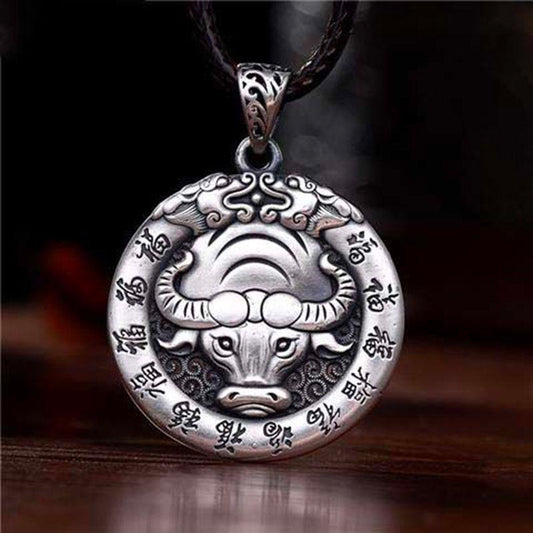
Written Line and Enamel Detail
An engraved silver surface shows how written and ornamental lines can share a compact field, echoing the way geometry organizes traditional decoration.
$46.99 USD
Explore the design
Curved Rhythm against Structured Form
Cloud scrolls offer a useful visual counterpoint to the gong pattern: flowing curves animate the surface while the circular bangle supplies order.
$36.99 USD
Explore the design
Segment, Interval, and Repetition
Bamboo joints create a measured sequence of sections, providing a natural analogy for the modular rhythm found in geometric borders.
$56.99 USD
Explore the designFrequently Asked Questions
What is the gong-character pattern?
It is a Chinese geometric motif made from repeated units resembling the character 工. The units may form bands, interlocking grids, or background textures.
How old is the gong-character pattern?
A secure museum-documented example dates to the Song dynasty. Similar angular designs may be older, but they should not be identified as gong-character patterns without object-specific evidence.
What does the gong-character pattern symbolize?
Its clearest associations come from its visual structure: order, balance, continuity, and connection. More specific claims depend on context and may be modern interpretations.
Does it symbolize work or career success?
Not as a universal historical rule. Because 工 can relate to work and craft, modern viewers may make that connection, but it should not be presented as established ancient symbolism.
Is it the same as a hui or meander pattern?
No. A hui pattern usually emphasizes one continuous turning line, while a gong-character pattern is organized around repeated I-shaped modules and crossbars.
Can it be used as a background pattern?
Yes. It often functions as an orderly ground beneath dragons, clouds, flowers, characters, or other principal motifs.
References
- Palace Museum. Jade Burner with Cloud-and-Dragon Design, Song Dynasty. Digital collection record; accessed August 2026.
- Palace Museum. Digital Collection of Jade and Decorative Arts. Accessed August 2026.
- Tian Zibing. A History of Chinese Arts and Crafts.
- Li Yanzu. Studies on Chinese decorative arts and design culture.
- China Garden Museum. Exhibition and educational materials on traditional Chinese decorative patterns. Accessed August 2026.