The Chinese Showcase journal Chinese culture
Mangzhong and the Grain in Ear Solar Term
Mangzhong is the early summer term when a ripening grain harvest can meet the sowing of the next crop. The name evokes awns on cereal heads and work that cannot wait.
Mangzhong (芒种, Mángzhòng), or Grain in Ear, is the ninth solar term. It begins around June 5 to 7, when the Sun reaches 75 degrees of ecliptic longitude. The term evokes cereal heads with awns and a busy period when harvesting and sowing can overlap.
Why the Name Points to an Ear of Grain
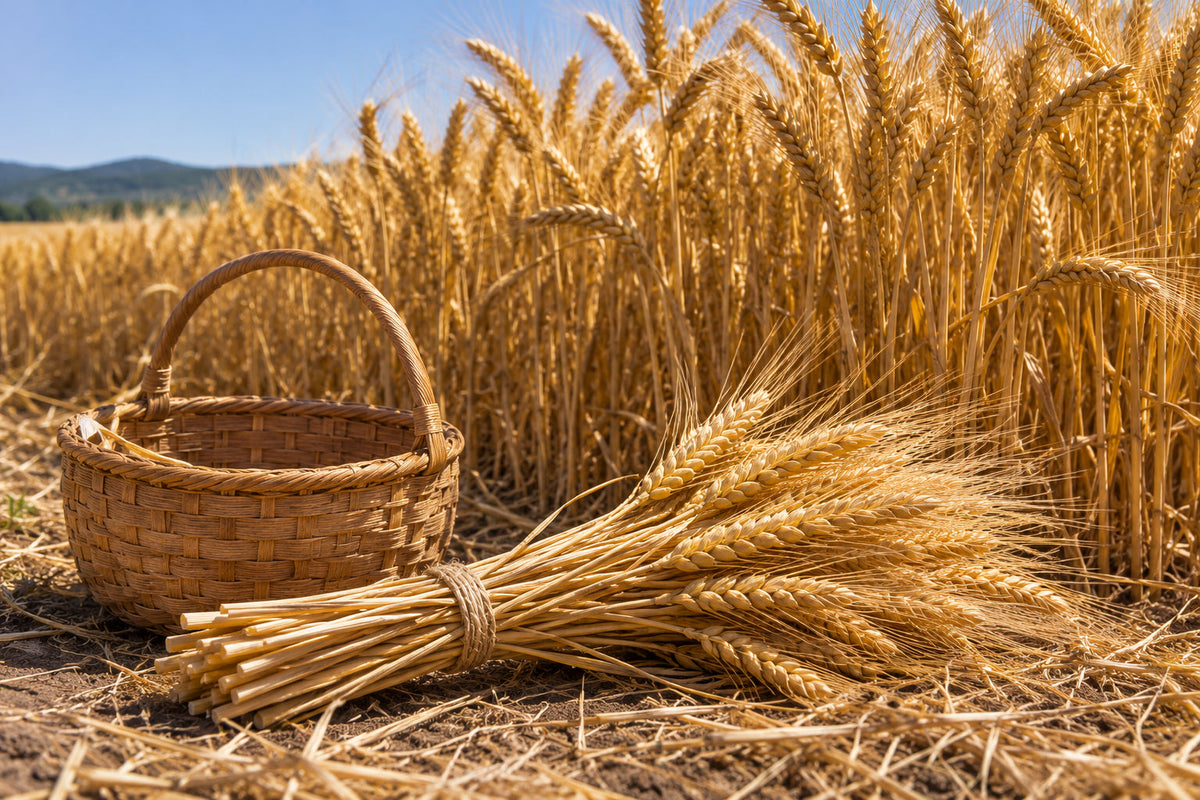
An awn is one of the stiff, narrow bristles that can extend from a cereal head. Look at the outline of an awned wheat ear against the sky and those bristles are the fine strokes projecting from the spike. 芒, máng, names that feature. 种 in the solar-term name is pronounced zhòng and also recalls the act of sowing. The expression is often translated as Grain in Ear. The Hong Kong Observatory’s wording is “Corn on Ear.”
The plant detail connects Mangzhong with the field through both the crop being cut and the work that follows the cutting. Some growers are gathering wheat or barley while others are already occupied with a new planting. The period is a useful shorthand for overlapping deadlines, especially on farms that follow a harvested winter crop with a summer crop.
Harvest and Sowing in the Same Week
A field report from Jiyuan, Henan, describes work around Mangzhong in 2024. Wheat harvesting was already well advanced in the area by June 5. The same report recorded summer sowing, including maize and peanuts. Mature wheat could be coming out of one field while workers nearby were preparing ground to put another crop in.
That overlap helps explain sānxià (三夏), or the three kinds of summer work: harvest, sowing and management of crops. The third part matters because earlier plantings still need attention while crews and machinery are busy elsewhere. The field report is useful precisely because it describes one place and one season. It gives a concrete example of scheduling pressure without treating June 5 as a uniform harvest date.
Wheat Harvests and Rice Planting Across Regions
Northern wheat districts offer the clearest view of a grain ready to cut. Farther south, many descriptions of Mangzhong focus on rice work and the handling of seedlings or fields. Rain can be helpful to one task and troublesome to another. A grower needing dry access to a wheat field and a grower establishing rice have different reasons to watch the same weather.
Local growing conditions can move a task forward or push it later. Varieties ripen at different times, and elevation, rain and access to irrigation all affect the schedule. That is why the name fits a phase in the farming year better than a date for a particular job. Readers can recognize Mangzhong in the overlap of tasks even where the crops change.
Anmiao and Wishes for Established Rice Seedlings
A heritage account describes ānmiáo (安苗), a seasonal observance in parts of southern Anhui held in connection with rice planting. People shaped and steamed offerings from fresh wheat flour, sometimes using forms associated with grain, fruit or livestock. After the care put into establishing the seedlings, the observance expressed a wish for a good crop and the well-being of the community.
In one local custom, wheat from the harvest could become an offering for the prospects of rice. That brings Mangzhong’s two kinds of work into a single material example. One season’s finished crop supplies the flour, and a new crop still taking root gives the occasion its purpose.
Frequently Asked Questions
When is Mangzhong?
It usually falls around June 5 to 7. It is the ninth of the 24 solar terms and comes before the Summer Solstice.
What is an awn on an ear of grain?
An awn is a slender bristle projecting from part of a cereal floret or its surrounding structures. It gives many wheat and barley heads a distinctive outline.
Why is Mangzhong associated with busy farming?
In some regions, summer harvest and sowing overlap. Jiyuan in Henan offers a documented example of wheat harvesting and summer planting underway together.
What is Anmiao?
Anmiao is a custom documented in parts of southern Anhui in connection with newly planted rice and wishes for a good harvest.
Continue Through the Solar Terms
- Previous term: Grain Buds (Xiǎomǎn)
- Next term: Summer Solstice (Xiàzhì)
- All 24 Chinese solar terms by season
References
- Hong Kong Observatory, The 24 Solar Terms and Date and Time of the 24 Solar Terms.
- China Intangible Cultural Heritage Network, The Solar Term Mangzhong: Grain in Ear (东风染尽三千顷——二十四节气之芒种).
- Jiyuan Municipal People’s Government, Field report on wheat harvest and the three summer farm tasks (26.02万亩·济源“三夏”进度条加速更新), June 2024.
- UNESCO Intangible Cultural Heritage, The Twenty-Four Solar Terms, knowledge in China of time and practices developed through observation of the sun’s annual motion, inscription 00647.
Golden bearded wheat and a woven harvest basket. AI-generated cover illustration.
The 24 Solar Terms
Choose a solar term below or browse the full seasonal guide.
| Season | Solar term guides |
|---|---|
| Spring | |
| Summer | |
| Autumn | |
| Winter |
Stories, symbols and everyday objects
Our journal explores Chinese culture and design. Traditions and interpretations vary by region and source. For a purchase, use the specifications on the individual product page.
About Chinese ShowcaseQuestions or corrections? Contact us ↗