Among the brilliant constellation of traditional Chinese handicrafts, there exists an exquisite art form built upon silk as its structure and velvet as its soul—Ronghua, or Chinese velvet flowers. These are not flowers grown from the earth, yet they outlast real blossoms in both form and spirit. Soft in appearance yet enduring in essence, velvet flowers carry centuries of cultural memory. From the coiffures of imperial consorts to the adornments of ordinary women, from traditional Chinese opera headpieces to inspirations in modern fashion, Ronghua stands as a radiant jewel within China’s intangible cultural heritage. This article offers a comprehensive exploration of its origins, craftsmanship, artistic features, symbolic meanings, and contemporary revival.

Historical Origins: From Imperial Splendor to Popular Tradition
1. Tang Dynasty Origins: The Birth of a Courtly Art
The origins of Ronghua can be traced back to the Tang Dynasty, a period that laid the foundation for its development.
- Material foundation: A highly developed silk industry provided superior raw materials.
- Cultural atmosphere: An open society and flourishing cosmetic culture popularized the fashion of wearing flowers.
- Technical preparation: Advanced silk embroidery techniques such as gold couching were already mature.
- Archaeological evidence: Silk ornaments excavated from Tang tombs reveal early forms of related craftsmanship.
During this period, velvet flowers were primarily used by the imperial court, featuring bold colors and relatively simple techniques such as wrapping and binding, often combined with gold, silver, and gemstones.
2. Song and Yuan Dynasties: Refinement and Diffusion
In the Song Dynasty, literati aesthetics influenced Ronghua design, leading to more refined forms and subtle color palettes. The craft gradually spread beyond the court to affluent households. By the Yuan Dynasty, cultural fusion introduced bolder contrasts, fuller forms, and influences from ethnic minority adornment traditions.
3. Ming and Qing Dynasties: Peak Prosperity and Technical Maturity
The Ming Dynasty marked a major leap forward, with Nanjing emerging as a center of velvet flower production due to its advanced brocade industry. Specialized workshops appeared, and velvet flowers became essential adornments for married women.
During the Qing Dynasty, the craft reached its zenith. Beijing velvet flowers integrated imperial aesthetics, expanded product categories, and perfected complex techniques such as velvet scraping, tip shaping, and floral assembly. Velvet flowers became widely used in weddings, festivals, rituals, and daily life.
4. Modern Decline: From Glory to Endangerment
By the mid-20th century, social change, shifting fashion norms, and industrial production led to a sharp decline. Many master artisans aged without successors, placing the craft on the brink of extinction.

The Craftsmanship of Ronghua: Art Woven from a Thousand Threads
1. Core Material: Selection and Preparation of Silk
High-quality mulberry silk—traditionally sourced from the Jiangnan region—is essential. After degumming, dyeing with natural pigments, sizing, and air-drying, the silk achieves the ideal balance of softness and structure.
2. Traditional Tools: Simplicity and Ingenuity
- Velvet frames made of wood
- Fine tweezers crafted from copper or bamboo
- Specialized small scissors
- Animal-hair brushes
- Heating tools for shaping
3. Production Process: Twelve Meticulous Steps
Classic Nanjing Ronghua production involves a multi-step process including silk boiling, dyeing, velvet strip making, hooking, tip shaping, floral assembly, bonding, sculpting, mounting, finishing, and packaging. Each step demands precision, patience, and aesthetic judgment.
4. Signature Techniques
- Velvet scraping: Creating fine, even fibers that define texture.
- Tip shaping: Crafting natural transitions that mimic petals and leaves.
- Floral transmission: Assembling complex, layered floral forms with balance and depth.
Artistic Features and Cultural Symbolism
1. Aesthetic Characteristics
Ronghua embodies the harmony of softness and resilience. Its silk velvet texture radiates warmth, while its lightweight form ensures comfort. Designs balance realism and artistic abstraction, combining stillness with implied movement.
2. Categories and Uses
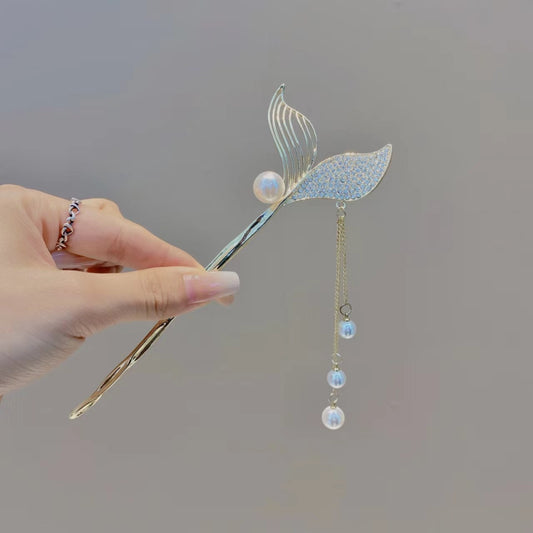
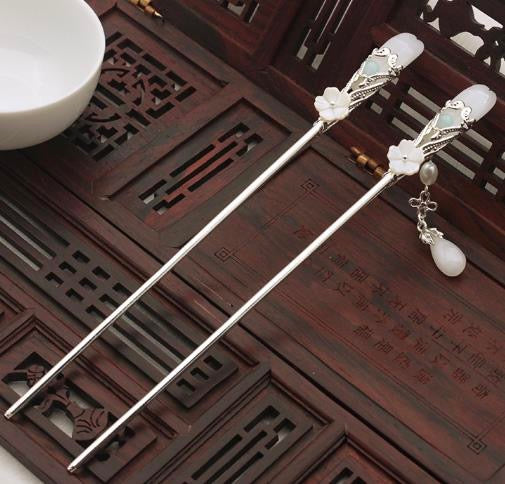
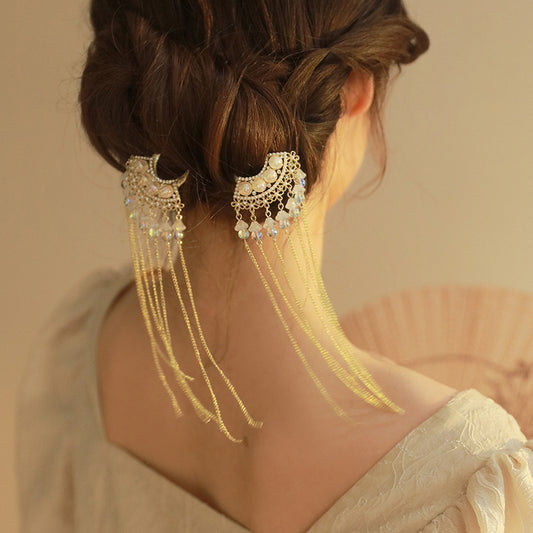
- Head ornaments: Hairpins, temple flowers, crown decorations
- Garment adornments: Corsages, shoulder flowers, hat flowers
- Ceremonial uses: Weddings, birthdays, festivals
- Interior décor: Vase flowers, hanging panels, decorative objects
3. Symbolic Meanings
- Peony: Wealth and honor
- Lotus: Purity and integrity
- Plum blossom: Resilience and nobility
- Pomegranate: Abundance and fertility
- Buddha’s hand citrus: Blessings and longevity

Contemporary Revival and Innovation
1. Intangible Cultural Heritage Protection
Ronghua has been officially recognized at provincial and national levels as intangible cultural heritage. Artisans receive institutional support, documentation initiatives preserve techniques, and educational programs foster new generations of practitioners.
2. Workshops and Living Traditions
Renowned studios in Nanjing and Yangzhou continue to produce fully handmade velvet flowers while collaborating with modern designers, developing cultural products, and engaging global audiences through online platforms.
3. Modern Design Innovations
- Integration with contemporary fashion and haute couture
- Minimalist and abstract interpretations
- Cross-disciplinary collaborations in art and design
- Customized and personalized creations
Modern Value and Cultural Significance
1. Cultural and Artistic Value
Ronghua is a living archive of Chinese aesthetics, craftsmanship, and women’s cultural history. Its techniques and visual language are irreplaceable.
2. Economic and Social Value
As part of the cultural and creative industries, velvet flowers support artisan livelihoods, inspire entrepreneurship, and serve as symbols of regional identity and cultural confidence.
3. Sustainability and Slow Living
Made from natural materials through low-energy manual processes, Ronghua represents an environmentally conscious alternative to mass production, encouraging appreciation for durability, craftsmanship, and mindful consumption.

Conclusion: A Flower That Never Withers
Ronghua, shaped by silk and sustained by human hands, continues to bloom after a thousand years. More than an object of beauty, it embodies the refined aesthetics, resilience, and ingenuity of Chinese civilization.
True inheritance is not mere preservation, but renewal. May velvet flowers live not only in museum cases, but in contemporary life, creative expression, and shared cultural memory—forever blossoming, never fading.