The Ruyi pattern is one of the most recognizable auspicious motifs in Chinese decorative art. Its soft, cloud-like curves appear on porcelain, jade, architecture, textiles, furniture, hair ornaments, and jewelry. At first glance, the design may look simply ornamental. In Chinese visual culture, however, it carries a lasting wish: may life unfold according to one's hopes, with harmony, safety, and smooth progress.

What Is the Ruyi Pattern?
The Ruyi pattern is a family of ornamental forms shaped like the head of a traditional Ruyi. A basic version often has a rounded central lobe with two curling sides. Depending on the period, material, and workshop, it can resemble a cloud, a heart-shaped leaf, a mushroom cap, a lingzhi fungus, or a three-lobed floral form.
There is no single drawing that defines every Ruyi motif. Some examples are spare and geometric. Others are filled with flowers, coins, bats, longevity characters, scrolling vines, or Buddhist and Daoist symbols. A Ruyi head may stand alone as a focal emblem, repeat along the border of a robe or ceramic vessel, or join other motifs in a larger symbolic composition.
The Palace Museum describes Ruyi patterning as a type of cloud ornament. It notes that, from the Song dynasty onward, cloud forms on decorative objects were frequently shaped like Ruyi heads and came to be known as Ruyi clouds. The museum also explains that the “Ruyi-style cloud-head pattern” resembles the head of a lingzhi fungus, which is why it is sometimes called a lingzhi cloud.

Ruyi Object and Ruyi Pattern: What Is the Difference?
The Ruyi object is a long, gently curved implement with a decorated head. The Ruyi pattern is the two-dimensional or relief ornament inspired by that head. The two are connected, but they are not identical. A carved jade Ruyi is a complete object; a row of cloud-shaped forms around a porcelain rim is a decorative pattern.
This distinction matters because the motif developed through several visual traditions at once. It inherited the name and outline of the Ruyi object, the movement of ancient cloud patterns, and the auspicious association of lingzhi. Its meaning is therefore layered rather than tied to only one origin.
From a Practical Tool to an Auspicious Emblem
The earliest Ruyi was not created purely as a luxury object. Museum accounts connect it with the ancient “claw staff,” a long-handled implement similar to a back scratcher. Its curved end could reach places the hand could not, allowing the user's intention to be fulfilled. This practical association is often used to explain the name Ruyi: something that works “according to one's wishes.”
According to educational material from the Palace Museum, the Ruyi object appeared by the Warring States period and continued to change through the Han, Wei-Jin, Tang, Song, Ming, and Qing dynasties. Over time, one branch retained a practical function while another became increasingly ceremonial and decorative. Ruyi objects could be held, displayed, presented as gifts, or used as symbols of rank, refinement, and goodwill.

During the Ming and especially the Qing dynasty, Ruyi objects became prominent in court culture. They appeared during New Year celebrations, birthdays, weddings, enthronements, presentations, and imperial rewards. The Palace Museum reports that its collection contains more than two thousand Ruyi objects in materials including jade, metal, bamboo, wood, ceramics, and enamel.
As the object became more prestigious, craftspeople continually refined its head into an elegant ornamental unit. That unit could then move beyond the original object and decorate almost any surface. The transformation from tool to emblem helps explain why the Ruyi pattern feels both familiar and elevated: it began in daily life but acquired ceremonial significance through centuries of artistic use.
What Does the Ruyi Pattern Symbolize?
1. Fulfillment and Favorable Outcomes
The most direct meaning comes from the words ru yi, commonly understood as “as one wishes.” A Ruyi motif can therefore express the hope that plans will proceed smoothly and that worthy goals will reach a favorable conclusion. This is why it works naturally in gifts for graduations, new careers, weddings, birthdays, and important transitions.
2. Harmony and Smooth Progress
Ruyi lines are usually rounded, continuous, and balanced. They rarely depend on harsh angles or abrupt breaks. Visually, this gives the motif a sense of movement without instability. The flowing outline has consequently become associated with an untroubled path, harmonious relationships, and the ability to move through change with composure.
3. Peace and Completeness
Symmetry, fullness, and enclosure are important qualities in many Chinese auspicious designs. A well-balanced Ruyi head feels complete and settled. When used on locks, pendants, bracelets, or household objects, it can communicate a wish for peace, protection, and family harmony.
4. Longevity
Some Ruyi heads take the form of lingzhi. In traditional culture, lingzhi was treated as an auspicious fungus associated with vitality and long life. This visual overlap allowed Ruyi designs to absorb longevity symbolism, especially when paired with cranes, peaches, pine trees, deer, or the character for longevity.
Ruyi Pattern Combinations and Their Meanings
| Combination | Common cultural reading | Suitable occasion |
|---|---|---|
| Ruyi and bat | The bat is associated with fu, or good fortune; together they suggest fortunate wishes. | New Year, housewarming, general blessing |
| Ruyi and lotus | Grace, clarity, inner peace, and harmonious wishes. | Birthday, friendship, personal milestone |
| Ruyi and peony | Prosperity, elegance, status, and flourishing life. | Wedding, anniversary, formal gift |
| Ruyi and longevity peach | Health, long life, and a peaceful old age. | Gift for parents or elders |
| Ruyi and persimmon | A visual pun for shi shi ru yi, “may everything be as you wish.” | New venture, graduation, New Year |
| Ruyi and fish | Abundance and surplus combined with smooth fulfillment. | Business opening, family celebration |
Traditional Chinese patterns often communicate through sound, association, and combination. A bat can represent good fortune because the words sound alike in Chinese; a fish can imply surplus for the same reason. When these symbols appear with a Ruyi form, the design becomes a sentence in images rather than a single decorative shape.

Where Does the Ruyi Pattern Appear?
Porcelain and Ceramics
On porcelain, Ruyi heads may form bands around the mouth, shoulder, foot, or panels of a vessel. They can divide painted scenes, frame floral medallions, or repeat as a border. The National Museum of China describes a Qing blue-and-white Ruyi-handled vase decorated with scrolling flowers, key-fret, Ruyi, and lotus-petal motifs, demonstrating how the pattern could work as part of a coordinated decorative system.
Architecture and Interiors
Ruyi curves appear in painted beams, door and window panels, railings, screens, carved stone, furniture, and architectural borders. In these settings, they often merge with clouds and scrolling foliage. Repetition creates rhythm, while the auspicious meaning gives an ordinary structural surface an additional cultural role.
Textiles and Dress
In embroidery and woven textiles, Ruyi heads can edge collars, cuffs, hems, cloud collars, robes, and rank-related decorative fields. Because the motif is modular, it can be repeated without losing its identity. Silk, brocade, kesi, and embroidery also allow the form to be enriched with gold thread, flowers, birds, or jewel-like color.
Jade, Metalwork, Lacquer, and Enamel
Carving, openwork, repoussé, filigree, inlay, and cloisonné give Ruyi forms physical depth. A simple outline can become a raised border, an openwork pendant, or a gem-set centerpiece. This adaptability is one reason the motif has remained useful to craftspeople from the imperial workshop to contemporary jewelry studios.
Ruyi Patterns in Chinese Jewelry
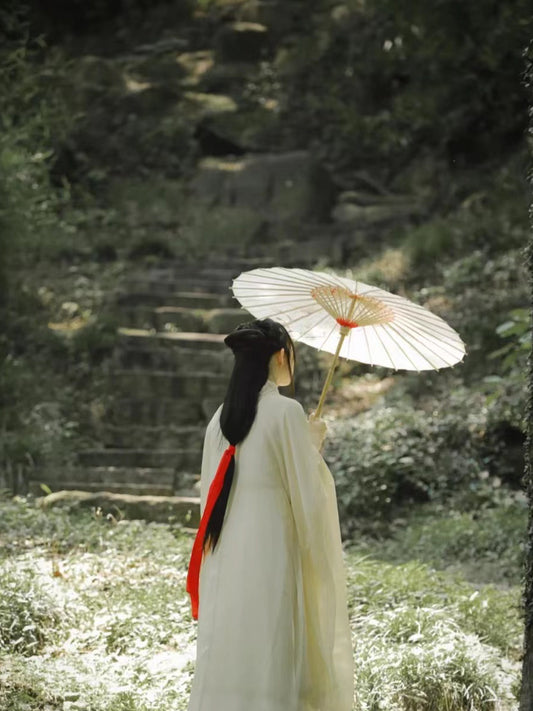
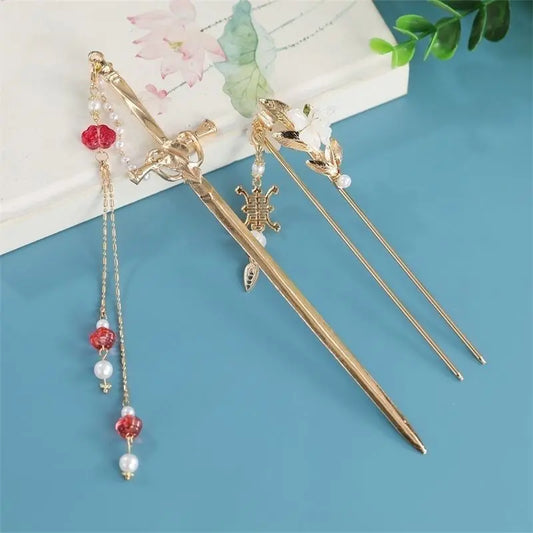
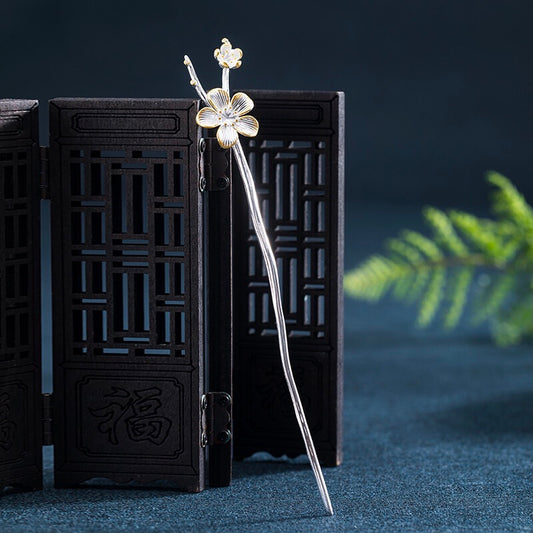
Modern Ruyi jewelry translates a historical design into something personal and wearable. A pendant keeps the full outline visible and is often chosen as a direct blessing. Earrings make the curved form lighter and more dynamic. Rings wrap the motif around the finger, while bracelets and open cuffs can place paired Ruyi heads at each end. Hairpins connect the pattern with traditional Chinese hairstyling and work particularly well with Hanfu, qipao, and New Chinese fashion.
When choosing a piece, consider both symbolism and daily practicality. Small silver or jade Ruyi forms are easy to wear with modern clothing. Enamel, pearls, tassels, and red agate create a more ceremonial effect. For a gift, the recipient's life stage can guide the design: a graduation gift may emphasize progress, a wedding gift harmony, and a gift for an elder peace and longevity.
Recommended Ruyi Jewelry

New Chinese Style Ruyi Faux Jade Metal Hairpin
A court-inspired hair accessory that places the Ruyi silhouette into an elegant Hanfu-ready form.
$36.99 USD View Product
Chinese Ruyi Jade Tassel Earrings
Long palace-style drops combine Ruyi curves, jade color, and graceful movement for formal or New Chinese styling.
$36.99 USD View Product
S925 Silver Ruyi Cloud Red Agate Ring
A compact interpretation of the Ruyi cloud, accented with red agate and an adjustable vintage-inspired setting.
$36.99 USD View Product
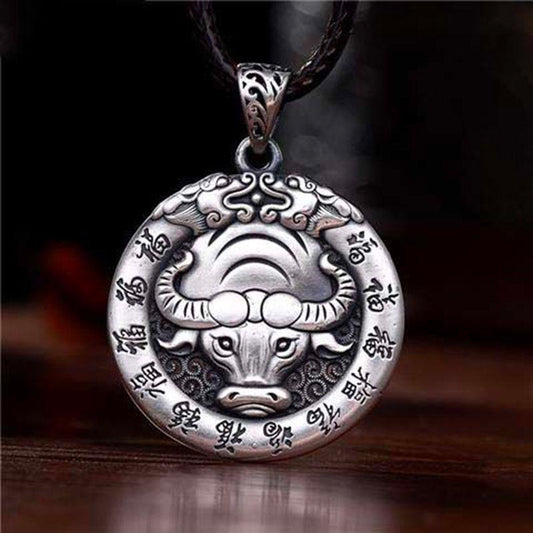
Ruyi and “Fu” Pendant in Sterling Silver
The Ruyi outline meets the character for good fortune, creating a direct and versatile auspicious gift.
$56.99 USD View ProductHow to Wear Ruyi Jewelry
For everyday outfits, choose one Ruyi piece as the focal point. A small pendant or ring pairs naturally with neutral shirts, knitwear, and simple dresses. With qipao or Hanfu, longer earrings and ornamental hairpins can echo the garment's lines without competing with embroidery. A modern New Chinese look often works best when traditional symbolism is balanced with clean tailoring and restrained color.
Gold-tone Ruyi jewelry complements warm red, black, ivory, and deep green. Silver designs feel lighter with pale blue, white, grey, and jade tones. Pearls soften a highly detailed motif, while red agate adds a stronger festive accent. The most meaningful piece is not necessarily the most elaborate; it is the one whose symbolism and scale feel right for the wearer.
Why the Ruyi Motif Still Matters
The Ruyi pattern has survived because it is unusually adaptable. It can be imperial or intimate, elaborate or minimal, structural or decorative. Designers can reduce it to three clean curves or build it into a dense composition of flowers, clouds, animals, and characters without losing its identity.
Its emotional appeal is equally durable. “May things go as you wish” is not a promise of a life without difficulty. It is a humane expression of support. The motif can remind the wearer to meet uncertainty with patience, to act thoughtfully, and to value the peace already present in daily life.
From a practical claw staff to a courtly treasure, and from a cloud-shaped border to contemporary jewelry, the Ruyi has traveled through Chinese history while retaining its central message. Its rounded line is more than decoration: it is a visual language for hope, harmony, and goodwill.
Frequently Asked Questions
What does Ruyi mean in English?
Ruyi is commonly translated as “as you wish” or “according to one's wishes.” In decorative art, it expresses favorable wishes, fulfillment, and smooth progress.
Is the Ruyi pattern the same as a cloud pattern?
They are closely related but not always identical. Many Ruyi motifs developed as stylized cloud heads, while others resemble lingzhi or the head of a Ruyi object. “Ruyi cloud” is a recognized term for this overlapping form.
Does Ruyi jewelry bring good luck?
Ruyi jewelry carries a traditional blessing and can serve as a meaningful personal symbol. It should not be treated as a guaranteed way to alter luck or predict future outcomes.
Who can wear Ruyi jewelry?
Anyone can wear it. The motif is suitable for everyday use, cultural dress, milestone gifts, and occasions when the giver wants to express support, harmony, or good wishes.
Is Ruyi jewelry appropriate as a gift?
Yes. It is especially suitable for graduations, weddings, birthdays, career changes, housewarmings, and gifts for parents or elders. The accompanying symbols can help tailor the message.