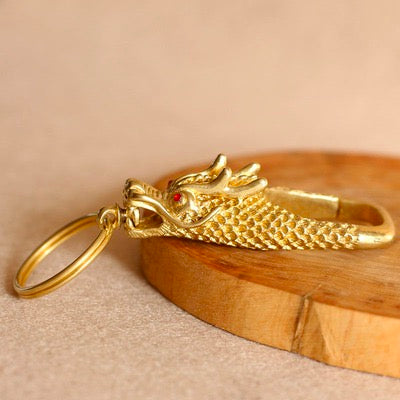
Guibeiwen, or the Chinese tortoiseshell pattern, is a traditional geometric design named after the segmented surface of a turtle's shell. Its most recognizable form is a field of connected hexagons that can repeat across a textile, ceramic vessel, lacquer object, window lattice, piece of furniture, or item of jewelry. The cells may remain empty, or they may contain flowers, ruyi heads, longevity characters, birds, animals, and other auspicious motifs.
The pattern is visually orderly, but its meaning goes beyond geometry. Because the turtle has long been connected with longevity, endurance, wisdom, and stability in Chinese culture, Guibeiwen came to express wishes for a long life and a secure foundation. At the same time, surviving textiles show that its development also belongs to a broader history of technical invention and cultural exchange across Eurasia.
What Is Guibeiwen?
The Chinese name Guibeiwen is written 龟背纹 in simplified Chinese and 龜背紋 in traditional Chinese. Gui means turtle or tortoise, bei means back, and wen means pattern or decorative motif. The English phrase “Chinese tortoiseshell pattern” describes its visual source, although “turtle-back pattern” is a more literal translation.
In its classic form, Guibeiwen uses adjoining six-sided cells. The cells can be arranged in straight rows, staggered like a honeycomb, stretched vertically, compressed horizontally, or linked by curved ruyi-shaped lines. Because hexagons cover a surface without leaving gaps, the pattern works especially well as an all-over ground.
Guibeiwen and Guijiawen (龟甲纹, turtle-shell pattern) are often used interchangeably. When writers distinguish them, Guibeiwen usually emphasizes the continuous geometric framework, while Guijiawen may refer more broadly to shell divisions, realistic turtle-shell markings, or the outline of an entire shell. Museum catalogues do not always follow the same distinction, so the actual object and its structure matter more than the label alone.
The Structure of the Chinese Tortoiseshell Pattern
The simplest Guibeiwen is a continuous hexagonal lattice. From that foundation, artisans developed several visual strategies:
- Plain tortoiseshell ground: linked hexagons form an even, restrained background.
- Filled cells: each compartment contains a flower, leaf, character, animal, or geometric symbol.
- Alternating cells: neighboring hexagons use different motifs or colors to create rhythm.
- Guibei-Ruyi pattern: the six-sided framework is softened with ruyi-shaped curves or floral lobes.
- Layered composition: roundels, dragons, flowers, or other large motifs are placed over a smaller Guibeiwen ground.
This last method became important in later Chinese textiles. A regular geometric ground could organize the surface while larger motifs created hierarchy. The viewer first notices the flowers, dragons, or medallions, then discovers the smaller tortoiseshell network supporting them.


Not the Same as Real Tortoiseshell Material
Guibeiwen is a visual pattern; it is not made from turtle or tortoise shell. This distinction matters today because international wildlife-protection rules restrict trade in products made from endangered turtles, including hawksbill sea turtles. A Guibeiwen design can be woven, painted, carved, embroidered, printed, or cast without using any animal material.
Not the Same as Jizhou “Tortoiseshell Glaze”
Chinese ceramics also include a famous brown-and-buff surface known in English as “tortoiseshell glaze,” especially on Jizhou ware of the Song and Yuan periods. That glaze creates irregular mottled effects resembling natural shell coloration. Guibeiwen, by contrast, usually refers to an ordered compartment pattern, most often based on hexagons. The two share a name inspired by turtle shell, but their visual systems and production methods are different.
Origins and Historical Development
The Turtle in Early Chinese Culture
The turtle held an important place in early Chinese ritual and thought. Turtle plastrons were used in divination, and inscriptions made on turtle shell and animal bone form part of the corpus now called oracle-bone script. Later traditions also counted the turtle among auspicious or spiritually significant creatures.
That history helps explain why shell-derived forms carried cultural weight. However, the ancient ritual importance of turtles should not be treated as proof that every later hexagonal design came directly from oracle-bone practice. The animal symbol and the repeatable textile pattern developed through related but not identical histories.
Northern Dynasties and Cultural Exchange
A securely documented example is the Northern Dynasties tortoiseshell geometric brocade in the collection of the China National Silk Museum. The museum identifies it as a silk textile with yellow and brown coloring and notes that this period was marked by strong cultural exchange. It also suggests that the appearance of this type of tortoiseshell pattern may have been influenced by contacts with India and other regions.
This does not make Guibeiwen “foreign” or “purely Chinese.” Historical patterns often grow through movement: forms travel with cloth, artisans, religion, trade, and diplomatic gifts, then acquire new structures and meanings in local practice. Guibeiwen became part of Chinese decorative culture through precisely this kind of adaptation.
Tang and Song Development
From the Northern Dynasties through the Tang period, silk production expanded in technical and visual complexity. Geometric compartments could frame birds, flowers, animals, and medallions. The structured surface allowed different motifs to repeat without becoming chaotic.
During the Song period, regularity, refinement, and layered patterning remained important. Guibeiwen could function as a quiet ground, a narrow border, or a framework for more elaborate decoration. It appeared not only in textiles but also in architectural latticework and other crafts where repeated geometry suited the material.
Yuan Dynasty: Guibei Ground and Floral Roundels
The China National Silk Museum's Yuan dynasty “tortoiseshell-ground floral-roundel brocade” offers a clear example of a mature composition. Six-sided Guibeiwen cells form the ground, six-petaled flowers fill the cells, and larger floral roundels are arranged above them. The museum describes this relationship between a small patterned field and larger framed motifs as a form of jin di kai guang, or creating larger visual openings upon a brocade ground.
The result is both mathematical and organic. The hexagonal system creates order, while the flowers prevent the cloth from feeling mechanical. This balance helps explain why Guibeiwen remained useful across changing fashions.
Ming and Qing Elaboration
By the Ming and Qing periods, the pattern was frequently combined with ruyi forms, longevity characters, dragons, flowers, and the “Three Abundances” of peach, pomegranate, and finger citron. It could be woven as a dense ground and overlaid with dominant motifs in techniques sometimes described as “adding flowers upon brocade” or creating framed openings within the patterned field.
The Palace Museum records a Qianlong-period blue textile named the “Fu-Shou Three Abundances Guibei Pattern Brocade,” showing that the tortoiseshell ground could participate directly in an explicitly auspicious design. In such compositions, pattern and meaning reinforced one another: the turtle-derived structure suggested long life, while fruits, flowers, and characters added wishes for blessing, descendants, and prosperity.
What Does Guibeiwen Symbolize in Chinese Culture?
Longevity
Longevity is the most familiar meaning. Turtles are long-lived animals, and Chinese art often places them alongside cranes, lingzhi fungus, pine trees, and peaches in longevity imagery. A tortoiseshell pattern can therefore serve as a quieter, more abstract way to express a wish for a long and healthy life.
Stability and Endurance
A hard shell suggests protection and endurance, while the connected cells create a visual impression of strength. Guibeiwen is therefore suitable for objects associated with the home, long relationships, family continuity, or steady progress. “Protection” here is symbolic language, not a promise of supernatural or physical protection.
Order and Continuity
Each hexagon connects with its neighbors, allowing the pattern to extend beyond the visible edge. This makes it an effective symbol for continuity, interdependence, family connection, and the passing of traditions from one generation to another.
Wisdom and Reflection
Because turtles were associated with divination and accumulated age, they also came to suggest wisdom, patience, and careful judgment. In a modern context, Guibeiwen can be used as a reminder to build slowly, protect what matters, and make decisions with a long view.
Where Is Guibeiwen Used?
The pattern's modular structure makes it adaptable to many materials:
- Silk and brocade: as an all-over ground, border, or compartment system containing flowers and animals.
- Embroidery: as a counted framework that can be repeated across garments, bags, covers, and ceremonial textiles.
- Ceramics: as painted or incised decoration on bottles, jars, dishes, and architectural tiles.
- Lacquer and metalwork: as engraved, inlaid, painted, or relief decoration.
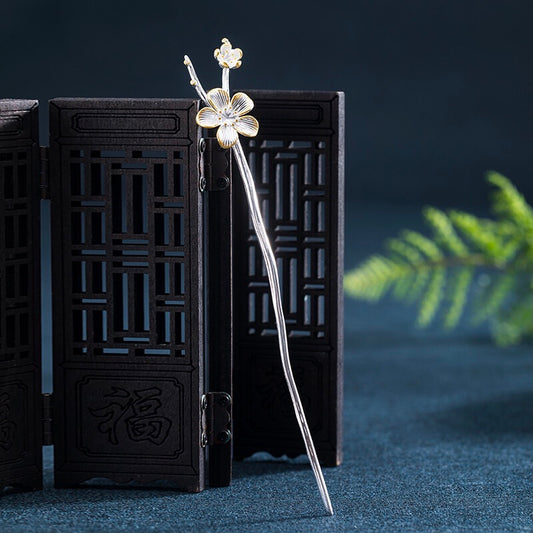
- Architecture: in windows, screens, doors, railings, and carved panels.
- Furniture: on cabinet doors, screens, bed panels, and decorative borders.
- Jewelry: as openwork, enamel compartments, repeated bezels, or a geometric frame for jade and gemstones.
Guibeiwen also appears in regional and ethnic textile traditions. Its form and meaning can differ between communities, so a motif on a minority woven textile should not automatically be explained through court art alone. Local oral traditions, weaving methods, and ceremonial uses deserve their own attention.
Chinese Guibeiwen and Japanese Kikko
Japan has a closely related pattern called kikko, written with characters meaning turtle shell. It became prominent in textiles, lacquer, family crests, Buddhist objects, and armor. Variants include hexagons containing floral diamonds, three linked shell cells, and repeated compartments used as background patterns.
Long histories of exchange connected China and Japan through textiles, Buddhism, diplomacy, trade, and craft techniques. Related tortoiseshell patterns moved through these networks and were developed differently in each place. It is therefore misleading to call every six-sided design exclusively Chinese or exclusively Japanese without examining its date, object type, and cultural context.
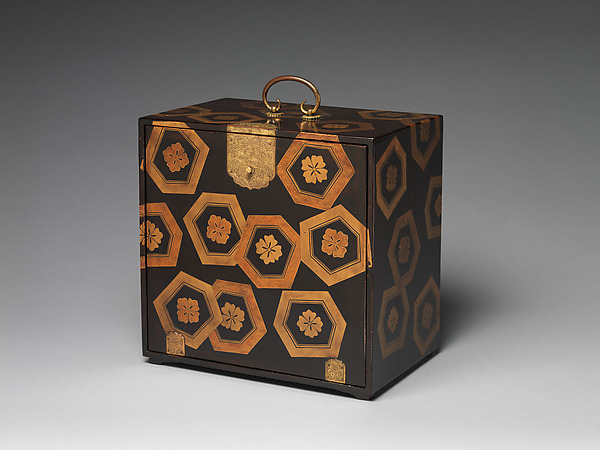
Chinese Guibeiwen is often encountered as a repeating ground integrated with ruyi, longevity, flower, dragon, or roundel designs. Japanese kikko frequently appears as a sharply defined compartment, crest, or armor-related form. These are tendencies rather than absolute rules, but they help readers avoid treating the two traditions as identical.
How to Use Guibeiwen in Modern Design
A contemporary design does not need to reproduce a museum textile exactly. The strongest modern adaptations usually preserve the logic of the pattern while simplifying its density.
Keep the Hexagonal Rhythm
The repeated six-sided framework is the pattern's clearest identity. Designers can enlarge the cells, use only a partial cluster, or allow some sides to remain open. This keeps the reference recognizable without making the surface overly busy.
Use Limited Color
Historical brocades can contain many colors and metallic threads because their materials and scale support such richness. On a small package, pendant, or screen, one neutral ground and one accent color often produce a cleaner result.
Choose Fill Motifs With Intention
A lotus can suggest purity and renewal, a crane can extend the longevity theme, a ruyi can express wishes for things to go smoothly, and a simple flower can soften the geometry. Combining too many auspicious symbols without hierarchy can make the design difficult to read.
Explain the Pattern Accurately
For international audiences, describe Guibeiwen as a cultural motif rather than a magical device. It can carry wishes for longevity and stability, but it does not guarantee health, luck, wealth, or protection. Accurate storytelling makes the object more meaningful and avoids turning Chinese culture into vague mysticism.
Is Guibeiwen Appropriate as a Gift?
Guibeiwen is well suited to gifts for parents, grandparents, mentors, couples, and people entering a new stage of life. Its meanings can be adapted to the relationship:
- For an older relative, it can express a respectful wish for longevity and well-being.
- For a wedding or anniversary, the continuous cells can represent a stable and lasting bond.
- For a housewarming, the pattern can suggest a secure foundation and an orderly home.
- For graduation or a new job, it can symbolize patience, resilience, and steady growth.
A short card can make the symbolism clear: “Guibeiwen is a traditional Chinese turtle-back pattern associated with longevity, stability, and continuity. May this piece accompany you through a steady and fulfilling new chapter.”
Chinese Jewelry Symbols Related to Longevity and Continuity
The following pieces do not reproduce Guibeiwen exactly. They extend its cultural themes through the crane, gourd, bamboo, lotus, and jade. Jewelry should be understood as symbolic language and personal adornment, not as a guarantee of health, safety, prosperity, or any future result.

Hetian Jade Crane Earrings
The crane is a familiar Chinese longevity symbol. Paired with jade and enamel, it offers a graceful complement to Guibeiwen's themes of long life and continuity.
View Symbol Piece
Silver Gourd and Bamboo Pendant
The gourd is associated with blessing and long life, while bamboo suggests resilience and upright growth. Together they echo the pattern's steady, enduring character.
View Symbol Piece
Jade Lotus Seedpod Bangle
The seed-filled lotus pod suggests continuity, growth, and abundance. Its repeated circular forms offer an organic counterpart to Guibeiwen's connected geometric cells.
View Symbol PieceFrequently Asked Questions
What does Guibeiwen mean?
Guibeiwen means “turtle-back pattern” in Chinese. It normally describes a repeating geometric design inspired by turtle-shell divisions, especially linked hexagonal compartments.
What does the Chinese tortoiseshell pattern symbolize?
Its most common meanings are longevity, stability, resilience, continuity, patience, and orderly growth. These are cultural associations rather than guaranteed effects.
Are Guibeiwen and Guijiawen the same?
The terms often overlap. Guibeiwen usually emphasizes a continuous turtle-back geometric ground, while Guijiawen may be used more broadly for turtle-shell divisions or shell-like motifs. Naming varies among catalogues and regions.
Is every hexagonal pattern Guibeiwen?
No. A hexagonal grid can arise in many design traditions. Cultural context, the object, its date, its accompanying motifs, and the terminology used by a reliable catalogue help determine whether it should be identified as Guibeiwen.
Is Chinese tortoiseshell pattern made from real shell?
No. Guibeiwen is a drawn, woven, carved, painted, embroidered, or cast pattern. It does not require animal shell. Modern products should avoid materials obtained from protected turtle species.
Is Guibeiwen the same as tortoiseshell glaze?
No. Jizhou tortoiseshell glaze is a mottled ceramic surface with irregular brown, buff, and sometimes bluish effects. Guibeiwen is normally an ordered compartment pattern, often based on linked hexagons.
Is the tortoiseshell pattern Chinese or Japanese?
Related shell-based geometric patterns exist in both cultures and circulated through long histories of exchange. Guibeiwen has a Chinese development, while Japanese kikko became a distinct system used in crests, textiles, lacquer, Buddhist art, and armor.
Does Guibeiwen represent Xuanwu?
Not automatically. Xuanwu is usually depicted as a turtle entwined with a snake and is associated with the north. A plain hexagonal Guibeiwen ground may carry turtle symbolism without representing Xuanwu.
Where was Guibeiwen traditionally used?
It appears on silk, brocade, embroidery, ceramics, lacquerware, metalwork, furniture, screens, doors, windows, architectural decoration, and personal accessories.
Is Guibeiwen a lucky pattern?
It is generally considered auspicious because of its associations with longevity and stability. In modern use, it is best understood as a meaningful visual blessing rather than an object that controls luck.
Conclusion
Chinese Tortoiseshell Pattern-Guibeiwen turns a natural shell structure into a flexible visual system. Its linked hexagons can remain restrained or become densely filled with flowers, ruyi forms, longevity characters, animals, and medallions. That adaptability allowed the pattern to move between silk, ceramics, lacquer, architecture, furniture, and jewelry.
Its history is equally layered. Early Chinese reverence for the turtle gave the motif cultural depth, while surviving Northern Dynasties and later textiles show the importance of craft development and cross-cultural exchange. Tang and Song artisans expanded compartment patterns; Yuan weavers placed floral roundels over Guibei grounds; Ming and Qing designers built increasingly elaborate auspicious compositions.
Today, Guibeiwen remains useful because its meaning is gentle and durable. It can express longevity without depicting a literal turtle, stability without heaviness, and continuity through a pattern that seems able to extend indefinitely. Used with accurate context and thoughtful design, it is not simply an old hexagonal ornament but a visual language for long life, resilience, connection, and order.
References
- China National Silk Museum: Northern Dynasties Tortoiseshell Geometric Brocade
- China National Silk Museum: Tortoiseshell-Ground Floral-Roundel Brocade
- The Palace Museum: Blue Fu-Shou Three Abundances Guibei Pattern Brocade
- Beijing Art Museum: Kangxi Guibei-Ruyi Floral and Five-Dragon Brocade
- National Museum of China: Turtles and Lingzhi as Longevity Symbols
- The Metropolitan Museum of Art: Cabinet with Design of Stylized Tortoiseshell Patterns
- Wikimedia Commons: Ming Flower Brocade With Hexagonal Lattice
Recommended Categories