At first glance, Pan Hui Wen can resemble a maze of hooks, curls, and loops. A closer look may reveal tiny heads, eyes, open mouths, or narrow bodies hidden inside the network. The pattern is therefore both animal-based and nearly abstract. It demonstrates how ancient metalworkers could take a recognizable living form and reorganize it into a continuous ornamental system.
The motif is often confused with the coiled chi-dragon pattern, ordinary snake patterns, dragon scrolls, and geometric hook designs. Correct identification depends on scale, body shape, repetition, archaeological date, material, and the terminology used by the museum or excavation report.
Pan Hui Wen at a Glance
| Chinese name | 蟠虺纹 |
|---|---|
| Pinyin | Pán Huǐ Wén |
| Recommended English name | Interlaced Hui-Snake Pattern |
| Alternative explanatory name | Coiled Small-Serpent Pattern |
| Main period of popularity | Spring and Autumn to Warring States periods |
| Primary medium | Bronze ritual vessels and musical instruments |
| Common objects | Ding, hu, jian, pan, dui, dou, bells, and bo |
| Basic motif | Small coiled serpent-like or dragon-serpent units |
| Composition | Repeated bands, interlocking grids, dense all-over fields, and openwork structures |
| Main visual qualities | Fine lines, compact repetition, interlacing, rhythm, and continuous movement |
What Is Pan Hui Wen?
The word pan (蟠) means to coil, curl, or lie in a winding form. Hui (虺) is an old Chinese term associated with a small snake or snake-like creature. Pan Hui Wen can therefore be understood literally as a pattern of coiled hui creatures.
In museum and art-historical terminology, the name usually refers to a decoration constructed from many small serpent-like units rather than one large snake. The animals may face one another, turn away from one another, bite or approach neighboring bodies, or become so highly stylized that only the hooks and curves remain visible.
The pattern can function as the main decoration on a vessel, fill an individual register, or cover parts of a musical instrument. On some bronze bells and bo, related coiled creatures were also cast as layered openwork handles. This ability to move between flat relief, continuous surface ornament, and three-dimensional structure is one reason the design is important in the study of ancient Chinese bronze art.

How to Recognize the Interlaced Hui-Snake Pattern
1. Look for many small animal units
A typical Pan Hui Wen composition is not dominated by one complete serpent. It contains numerous small creatures packed into a band or field. From a distance the result may look geometric; close viewing may reveal tiny heads and bodies.
2. Follow the narrow, coiled bodies
The bodies are usually slender and may form S-curves, C-curves, hooks, loops, or double bends. They can share outlines or overlap visually with adjacent units, making it difficult to decide where one animal ends and another begins.
3. Check for continuous repetition
The design often extends horizontally around a neck or foot, or spreads across the belly and lid of a vessel. Repetition is essential: a single curled snake is not enough to identify a full Pan Hui Wen system.
4. Examine the head and eye details
Clear examples may show rounded eyes, small heads, jaws, or horn-like projections. In worn, simplified, or heavily geometric versions, these features may be reduced to dots and hooks.
5. Consider the date and object
The strongest identifications usually occur on Spring and Autumn or Warring States bronzes. A modern textile, later ceramic, or jade carving with similar curls should not automatically be called Pan Hui Wen without supporting context.
Historical Development of Pan Hui Wen
Shang and Western Zhou foundations
Snake forms, dragons, kui-dragons, and other coiled animals already appeared in Shang and Western Zhou bronze decoration. These earlier traditions established a visual vocabulary of curved bodies, animal heads, repeated bands, and symmetrical organization. They provided important precedents, but it would be inaccurate to label every early snake or dragon motif as Pan Hui Wen.
Many Shang and early Western Zhou bronzes emphasize large animal masks, clearly separated registers, and powerful axial symmetry. Individual creatures tend to remain visually prominent. Mature Pan Hui Wen, by contrast, depends more heavily on small scale, dense repetition, and the conversion of animals into a surface network.
Spring and Autumn period: expansion and refinement
During the Spring and Autumn period, regional bronze traditions became increasingly varied. Older animal-mask systems did not disappear, but craftspeople explored coiled dragons, chi-dragons, interlaced hui creatures, hooked bands, and geometric designs with new intensity.
By the middle and late Spring and Autumn period, Pan Hui Wen could cover large areas of a bronze vessel. Small creatures were arranged in regular bands, diagonal networks, or dense fields. Some examples preserved recognizable heads; others pushed the animals toward abstraction.
A late Spring and Autumn bronze bo in the Palace Museum is decorated with Pan Hui Wen across several parts of its body, while its openwork handle is built from layered coiled forms. A Pan Hui Wen jian in the same museum uses intertwined hui units in a grid-like arrangement around the vessel’s body. These objects demonstrate that the pattern was not limited to one shape or function.
Warring States period: abstraction and technical variety
Pan Hui Wen continued into the Warring States period, although many examples became increasingly geometric. Heads, eyes, and bodies could be compressed into hooked lines and repeated cells. At the same time, bronze decoration incorporated sophisticated inlay, openwork, relief, and contrasting metals.
Not every Warring States object with gold, silver, copper, or turquoise inlay bears Pan Hui Wen. The importance of these techniques is broader: they created a visual environment in which dense animal and geometric designs could be articulated with new color and precision.
Qin, Han, and later revivals
After the Warring States period, bronze ritual systems and decorative priorities changed. Cloud forms, geometric designs, fantastic animals, and narrative imagery became increasingly prominent, while classic Pan Hui Wen was used less frequently.
Later antiquarian bronzes and modern replicas sometimes revived coiled-animal ornament. Such works must be separated from excavated or reliably provenanced Spring and Autumn and Warring States objects. Similar appearance alone does not establish an ancient date.
Composition, Lines, and Repetition
Pan Hui Wen occupies a productive boundary between representation and abstraction. Its smallest components can be read as animals, but the completed surface behaves like geometry. Four compositional forms are especially useful for identification.
Continuous horizontal bands
Small hui creatures repeat around the neck, rim, shoulder, or foot of a vessel. The bodies may alternate direction, producing a balanced rhythm that can continue around the entire circumference.
Interlocking grids
Animals facing different directions create diamond, square, or diagonal networks. Shared curves and repeated heads make the design appear woven, even though it was cast or carved.
Dense all-over fields
The pattern can cover most of a lid or vessel body. Empty space becomes limited, and the eye moves continuously through the curls. This type of composition produces visual richness without relying on a single dominant emblem.
Openwork and three-dimensional structures
On selected musical instruments and fittings, coiled animals were transformed into pierced or layered forms. The ornament then became part of a handle or structural attachment rather than remaining a flat surface design.
The line itself is usually narrow and energetic. Short curves, hooks, and tight changes of direction repeat at a small scale. Ancient craftspeople adjusted the pattern to curved surfaces, boundaries, raised bosses, handles, and inscriptions, showing that repetition was carefully designed rather than mechanically applied.
How the Pattern Changed Across Objects and Regions
On food vessels such as ding, dui, and dou, coiled hui patterns often appear on lids, bellies, and feet, combined with triangles, geometric bands, or animal-shaped attachments. A vessel could use the pattern as a dominant surface or as one register within a larger decorative program.
On containers such as hu and jian, the broad curved body allowed the design to form wide networks. The pattern might be separated by raised bands, handles, or other ornaments. On bells and bo, the layout had to respond to musical-instrument terminology and structure, fitting between bosses and designated surface zones.
Regional states and workshops did not use a single fixed formula. The scale of the creatures, direction of repetition, height of relief, density of the field, and accompanying motifs could differ. However, a regional attribution should never be based on the pattern alone. Vessel shape, inscription, alloy, casting method, excavation context, and related finds are also necessary.

Pan Hui Wen and Similar Chinese Patterns
Pan Hui Wen vs. Pan Chi Wen
Pan Hui Wen usually consists of many small, slender serpent-like units and creates a compact repeated surface. Pan Chi Wen, the coiled chi-dragon pattern, more often uses thicker-bodied dragon forms whose heads and individual bodies remain easier to distinguish.
The boundary is not absolute. Highly stylized pieces may be catalogued differently by different scholars or museums. When a recognized institution provides an object name, that terminology should take priority over a casual visual guess.
Pan Hui Wen vs. ordinary snake patterns
A snake pattern may show one or several relatively complete snakes. Pan Hui Wen is defined not only by snake-like appearance but by extensive repetition, interlocking, and the creation of a continuous ornamental field.
Pan Hui Wen vs. dragon patterns
“Dragon pattern” is a broad category that includes kui-dragons, coiled dragons, paired dragons, and many later imperial forms. A dragon may have clear horns, limbs, claws, or a prominent head. Pan Hui Wen generally reduces the animal and repeats it at a smaller scale.
Pan Hui Wen vs. Qiequ Wen
Qiequ Wen is typically a long horizontal hooked band associated especially with the late Western Zhou and early Spring and Autumn periods. It is often more geometric and may not preserve multiple recognizable small animal heads. Pan Hui Wen usually contains a denser population of interlaced animal units.
Pan Hui Wen vs. cloud-and-thunder patterns
Cloud-and-thunder patterns are constructed mainly from spirals, squared meanders, and continuous linear units. They can serve as background or principal decoration. Pan Hui Wen may resemble such geometry from a distance, but closer inspection can reveal its animal basis.
Meaning and Cultural Context
The safest historical interpretation begins with context. Pan Hui Wen decorated bronzes used in elite ritual, feasting, water service, display, and music. Its presence could contribute to visual authority, craftsmanship, and the social value of an object. Dense casting also demonstrated technical control.
Snakes and dragon-serpents carried many associations in ancient China, including connections with water, transformation, dangerous natural forces, and fantastic beings. Yet no surviving rule proves that every Pan Hui Wen object expressed one identical religious message.
Modern descriptions often assign meanings such as protection, warding off evil, regeneration, endless life, or good fortune. These can be valid contemporary design interpretations, but they should not be presented as universal Spring and Autumn beliefs unless inscriptions, texts, or archaeological contexts support the claim.
Pan Hui Wen in Bronze, Jade, Ceramics, and Textiles
Bronze
Bronze is the central and best-documented medium for Pan Hui Wen. Casting could produce fine raised lines, repeated heads, layered bodies, and openwork structures. The motif appears on ritual vessels and musical instruments in ways closely tied to their shape and function.
Jade
Spring and Autumn and Warring States jades include coiled chi-dragons, dragons, grain patterns, and other curled animal motifs. Some resemble Pan Hui Wen, but jade catalogues often use different terms. A jade object should be identified from its own specialist record rather than labelled from visual similarity alone.
Ceramics
Classic Pan Hui Wen was not a dominant mainstream ceramic motif across later Chinese history. Antiquarian ceramics and modern reproductions may borrow the appearance of ancient bronzes. Their descriptions should say that the design is bronze-inspired rather than implying uninterrupted use on all ceramics.
Textiles
Ancient and later textiles contain continuous dragons, serpents, clouds, and geometric scrolls, but materials and naming systems differ. Modern fabric designers can adapt the pattern’s interlocking rhythm, yet a generic scroll should not be sold as an authentic ancient Pan Hui Wen design.
Pan Hui Wen in Modern Design
For modern use, designers can extract three core qualities: repeated small units, interlocking curves, and a balance between animal form and abstraction. These qualities translate well into circular pendants, bracelet borders, ring bands, textile repeats, packaging, and graphic identities.
At small sizes, the original density may become visually unclear. Simplifying the number of heads or widening the spaces between curves can preserve rhythm without copying an ancient object line for line. Modern compositions should also avoid presenting imagined reconstructions as archaeological drawings.

Product descriptions should use precise phrases such as “inspired by interlaced ancient Chinese animal ornament” when the design is only broadly related. “Authentic Pan Hui Wen,” “museum replica,” or a specific dynastic attribution requires verified evidence.
Selected Contemporary Designs
These products were selected for their coiled, circular, or continuous curving forms. They are modern commercial designs and are not presented as reproductions of Pan Hui Wen artifacts.

Personalized Coiled Dragon Creative Ethnic Ring
Its compact coiled animal form provides a modern comparison for how a creature can be organized around a circular object.
$24.99 USD
View Product
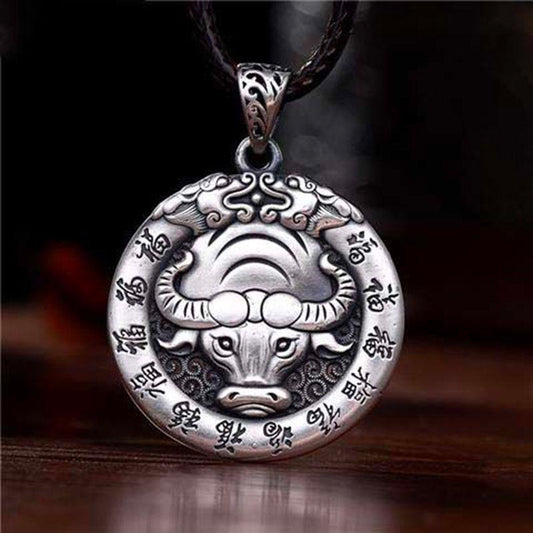
Dragons Playing with Beads Wire Inlay Round Pendant
The round layout and repeated curved bodies echo the density of ancient interlaced animal designs without being identified as Pan Hui Wen.
$96.99 USD
View Product
Vintage Blue Enamel Cloud Pattern Bangle
This contemporary bracelet illustrates how continuous curving ornament can wrap around an object, while remaining clearly labelled as a cloud-pattern design.
$36.99 USD
View ProductFrequently Asked Questions
How do you pronounce Pan Hui Wen?
It is written Pán Huǐ Wén in pinyin. The character 虺 is pronounced huǐ in this term.
What is the Chinese interlaced hui-snake pattern?
It is a repeated ornament made from many small coiled serpent-like or dragon-serpent units that interlock into bands, grids, or dense surface designs.
When did Pan Hui Wen first appear?
Related snake and coiled-animal forms are older, but mature and clearly recognizable Pan Hui Wen became especially prominent during the Spring and Autumn period and remained in use during the Warring States period.
Is Pan Hui Wen the same as Pan Chi Wen?
No. Pan Hui Wen usually uses many small, slender serpent-like units, while Pan Chi Wen generally features thicker and more individually recognizable chi-dragons. Some highly stylized examples remain difficult to classify.
Is Pan Hui Wen simply a snake pattern?
It is based on small snake-like or dragon-serpent creatures, but its defining feature is the repeated, interlocking composition rather than the presence of a single snake.
What objects carry Pan Hui Wen?
It is best known from bronze vessels and musical instruments, including ding, hu, jian, pan, dui, dou, bells, and bo.
What does Pan Hui Wen symbolize?
No single universal meaning is proven for every ancient example. Modern designers may associate it with protection, transformation, or continuity, but these interpretations should be separated from established historical evidence.
How can Pan Hui Wen be distinguished from a geometric pattern?
Look closely for repeated heads, eyes, mouths, and narrow coiled bodies. In very abstract examples, date, material, provenance, and museum terminology are necessary for identification.
Related Reading
Recommended Categories
References
- The Palace Museum. “Bo with Interlaced Hui-Snake Pattern.” Accessed July 2026.
- The Palace Museum. “Jian with Interlaced Hui-Snake Pattern.” Accessed July 2026.
- The Palace Museum. “Set of Bo with Coiled Chi-Dragon and Hui-Snake Decoration.” Accessed July 2026.
- The Palace Museum. “Ding of Cai Zi with Transformed Hui-Snake Pattern.” Accessed July 2026.
- National Museum of China. Collection materials on ancient Chinese bronze vessels. Accessed July 2026.
- Ma Chengyuan, editor. Chinese Bronzes. Shanghai Classics Publishing House.
Motif names can vary among museums and scholars, especially when animal forms are highly abstract. This article uses “interlaced hui-snake pattern” as a practical English term while preserving the pinyin name Pan Hui Wen.