The Chinese elephant pattern, commonly described as xiang wen, is a decorative motif based on the elephant's body, head, trunk, tusks, or highly abstracted silhouette. In Chinese visual culture, the elephant is associated with strength, stability, peace, wisdom, and auspicious government. It also participates in rebus designs because the word for elephant, xiang, sounds like the word for an image or sign, while combinations such as an elephant carrying a vase can express wishes for peace.
Article Guide
What Is the Chinese Elephant Pattern?
The Chinese elephant pattern is any ornamental design in which an elephant is the principal subject or a recognizable part of a larger symbolic composition. Some examples show a naturalistic elephant with a long trunk, broad ears, sturdy legs, and curved tusks. Others compress the animal into interlocking spirals and angular lines so that it fits the surface of a bronze vessel, jade ornament, textile border, ceramic panel, or architectural element.
In archaeological and museum descriptions, the motif may be identified as an elephant design, elephant-mask design, elephant-head motif, or stylized elephant ornament. The Chinese expression xiang wen is useful as a broad label, but it does not refer to one rigid pattern. It is a family of designs that changed with material, period, workshop, and intended use.

| Feature | Typical Interpretation | Common Context |
|---|---|---|
| Full elephant | Strength, dignity, stability | Bronzes, paintings, sculpture, textiles |
| Elephant head or mask | Protective power and solemn authority | Vessels, fittings, ritual decoration |
| Curled trunk | Vitality, movement, gathering good fortune | Jewelry, carvings, modern decor |
| Elephant with vase | Peace and harmony | Porcelain, painting, court art |
| Elephant with precious objects | Prosperity and auspicious abundance | Festival art, furnishings, gifts |
History of Elephant Motifs in China
Elephants once lived across a much larger part of ancient China than they do today. Early written records, excavated bones, and visual representations indicate that people in the Yellow River and Yangtze regions knew the animal directly. This helps explain why elephant forms appear in early ritual art rather than entering Chinese decoration only as a distant foreign curiosity.
During the Shang and Zhou periods, bronze workers incorporated elephants into vessels and ornaments. A bronze surface was not treated like a blank sheet of paper: every animal had to be reorganized around handles, rims, curves, and casting divisions. The elephant therefore became compact and rhythmic. Its trunk might curl into a spiral, its legs might merge with geometric bands, and its body might be filled with thunder patterns. These transformations created designs that look mysterious at first but retain enough anatomy to be recognized.

In later centuries, increased contact across Central Asia, South Asia, and maritime trade routes gave Chinese artists new ways of seeing elephants. Buddhist imagery strengthened associations with wisdom, mental discipline, royal dignity, and sacred power. Court paintings and tribute scenes sometimes presented elephants as rare and magnificent animals connected with an orderly realm.
By the Ming and Qing periods, the elephant often appeared in auspicious rebus designs. One especially familiar image shows an elephant carrying a vase. The vase, ping, evokes peace, ping'an; combined with the elephant, the composition can suggest peaceful signs, harmony, or a world at peace. Such designs appeared on porcelain, cloisonne, jade, textiles, paintings, and household furnishings.
Major Forms of the Elephant Pattern
1. Naturalistic Elephant
The easiest form to recognize shows a complete elephant in profile. Artists emphasize the long trunk, heavy body, pillar-like legs, broad head, and sometimes tusks or a decorative saddle cloth. Naturalistic examples are common in painting, sculpture, export art, and later decorative objects.
2. Geometric or Abstract Elephant
Ancient metalwork often reduces the elephant to a set of controlled curves. A spiral may indicate the trunk, an oval the eye, and a blocky section the body. Surrounding key-fret or thunder patterns can make the animal blend into the background. Identification depends on reading the whole arrangement rather than one isolated line.

3. Paired Elephants
Two elephants facing each other create visual balance. The pair may frame a central symbol, vessel, flower, or sacred object. Symmetry makes the motif suitable for borders, architectural panels, textile repeats, and ceremonial objects.
4. Elephant with Auspicious Objects
An elephant may carry a vase, ruyi scepter, treasure, canopy, lotus, or richly patterned cloth. In this form, the animal's meaning is expanded by the accompanying object. The design should be interpreted as a complete symbolic phrase rather than as separate decorative items.
What Does the Elephant Symbolize in Chinese Culture?
Strength without haste. The elephant's immense body suggests power, but its measured movement makes that power seem controlled rather than aggressive. It is therefore a suitable emblem of dependable authority.
Stability and support. Four sturdy legs and a grounded stance visually express security. Elephant imagery can convey a wish that a household, career, or institution remain steady.
Peaceful order. In court and auspicious art, tame elephants may signify a well-governed, harmonious world. An elephant bearing a vase strengthens the wish for peace through wordplay and visual association.
Wisdom and dignity. Buddhist contexts give the elephant additional associations with disciplined strength, awareness, and spiritual importance. However, not every Chinese elephant image is Buddhist; object type and accompanying symbols matter.
Good fortune and abundance. Modern feng shui and gift culture often treat elephants as auspicious animals. An upward or curled trunk is popularly read as gathering luck, although this simplified rule should not replace historical interpretation.

Where Elephant Patterns Appear
Bronze vessels: Early elephant designs appear as cast relief, masks, handles, feet, or complete vessel forms. Patina and wear can obscure details, so museum rubbings are often useful for study.
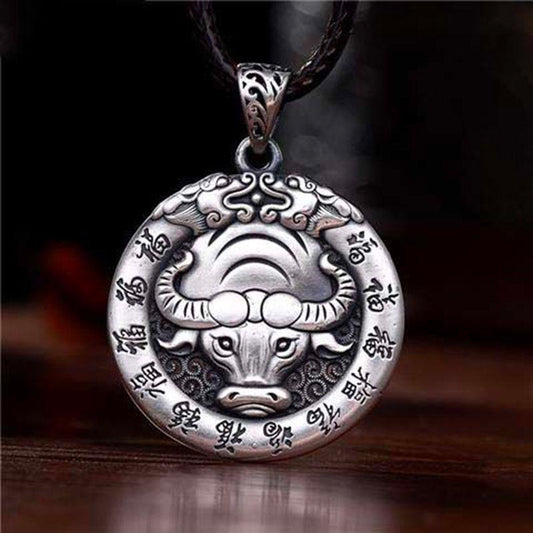
Jade and hardstone: Carvers used compact elephant silhouettes for pendants, belt ornaments, table objects, and auspicious carvings. The material adds associations with refinement and endurance.
Ceramics and cloisonne: Ming and Qing craftsmen used colorful elephants, often elaborately caparisoned, in decorative and ritual wares. The saddle cloth and objects carried on the back may carry the main symbolic message.
Textiles and embroidery: Repeating elephants can form borders or medallions. Their bodies may contain flowers, clouds, waves, or geometric fillers that coordinate with the surrounding pattern.
Architecture and furniture: Elephant heads, trunks, and feet may appear on supports, brackets, incense burners, screens, and carved panels. Here the animal can visually suggest bearing weight and guarding space.

How to Identify a Chinese Elephant Motif
- Find the trunk first. In abstract designs, the trunk is usually the clearest clue. Look for a long curve ending in an inward or upward spiral.
- Locate the eye. A circular or almond-shaped eye often anchors the head near the base of the trunk.
- Check the body mass. Even stylized elephants tend to have a broad rectangular or rounded body supported by short, substantial legs.
- Look for repetition. Bronze and textile motifs frequently use mirrored or repeated elephants.
- Read nearby symbols. A vase, lotus, ruyi, treasure, cloud, or saddle cloth can explain the intended auspicious message.
- Consider the object's date and function. An ancient ritual bronze, Buddhist sculpture, Qing court object, and contemporary pendant do not communicate in exactly the same way.
Elephant Pattern Compared with Similar Motifs
| Motif | Key Visual Clue | Main Difference |
|---|---|---|
| Elephant | Long trunk, heavy body, column-like legs | Grounded and massive |
| Tapir-like mythical beast | Shorter snout, hybrid anatomy | More fantastic and less anatomically stable |
| Dragon | Serpentine body, claws, horns | Dynamic, celestial, and elongated |
| Taotie mask | Frontal paired eyes and symmetrical face | Mask-like rather than a full animal profile |
Recommended Products
These selections connect elephant imagery with other established Chinese symbols of peace, blessing, and protection.
 Elephant Gourd Beads Keychain
Elephant strength paired with the gourd's protective symbolism.
Elephant Gourd Beads Keychain
Elephant strength paired with the gourd's protective symbolism.
 Ruyi Cloud Tassel Hairpin
A wearable wish for matters to proceed as desired.
Ruyi Cloud Tassel Hairpin
A wearable wish for matters to proceed as desired.
 Hulu Bamboo Peace Pendant
Combines peace, resilience, and protective gourd imagery.
Hulu Bamboo Peace Pendant
Combines peace, resilience, and protective gourd imagery.
Frequently Asked Questions
What does an elephant symbolize in Chinese culture?
It commonly symbolizes strength, stability, dignity, wisdom, peaceful order, and good fortune. The precise meaning depends on the accompanying symbols and historical setting.
Is the Chinese elephant pattern a lucky symbol?
Yes, it is widely treated as auspicious, especially in combinations involving a vase, ruyi, lotus, treasure, or gourd. Historically, it could also express royal authority and ritual importance.
What does an elephant carrying a vase mean?
The vase is associated with peace through the sound of the word ping. The composition is therefore read as a wish for peace, harmony, and an orderly world.
What does an elephant with its trunk up mean?
In modern popular symbolism, an upward trunk is often said to gather luck and positive energy. Historical Chinese objects are better interpreted through their full composition rather than trunk direction alone.
Were elephants native to ancient China?
Elephants lived much farther north in ancient times than they do today. Archaeological evidence and early records show that ancient communities in China knew the animal directly.
Is every spiral animal on a bronze vessel an elephant?
No. Dragons, birds, tigers, taotie masks, and hybrid beasts can all use spirals. A convincing identification should include a trunk, eye, broad body, legs, and the overall arrangement.
Is the elephant motif Buddhist?
It can be Buddhist, particularly when connected with sacred narratives, lotus imagery, or ritual contexts. Yet elephant motifs existed in Chinese art before Buddhism and also appear in secular auspicious design.
Conclusion
The Chinese elephant pattern is a durable visual language rather than a single fixed icon. From tightly organized bronze designs to richly decorated court elephants and modern jewelry, it transforms the animal's physical qualities into cultural ideas: strength that remains calm, authority that supports order, and stability that protects peace. Reading the trunk, body, companion symbols, material, and historical context together reveals far more than a decorative animal. It reveals how Chinese artists turned observation, sound, belief, and craftsmanship into an auspicious pattern that could travel across centuries.
References
- Jessica Rawson, Chinese Bronzes: Art and Ritual, British Museum Publications, 1987.
- Lothar von Falkenhausen, Chinese Society in the Age of Confucius, Cotsen Institute of Archaeology Press, 2006.
- Patricia Bjaaland Welch, Chinese Art: A Guide to Motifs and Visual Imagery, Tuttle Publishing, 2008.
- Terese Tse Bartholomew, Hidden Meanings in Chinese Art, Asian Art Museum, 2006.
- Metropolitan Museum of Art collection publications on Chinese ritual bronzes, accessed 2026.