A blessing can be as simple as a wish for a healthy parent, a peaceful home, or a good harvest. In Chinese decorative art, these everyday hopes often gather around one familiar word: fu, usually translated as blessing, good fortune, or happiness. Bai Fu Tu, the Hundred Blessings Diagram, gives those wishes a visible form through repeated lettering, auspicious figures, and carefully arranged symbols.
Two book illustrations reveal different ways of expressing this theme. One combines the figures of Fu, Lu, and Shou with children, flying bats, and a blessing banner. The other gathers many variations of the word fu into a circular composition. One invites us into a lively scene; the other turns writing itself into a pattern. Together, they show how a shared wish can inspire remarkably different kinds of art.
Bai Fu Tu at a Glance
| English name | Hundred Blessings Diagram; Hundred Fu Characters Design |
|---|---|
| Central idea | An abundance of blessings, good fortune, and happiness |
| Narrative example | Fu, Lu, and Shou with children, flying bats, and a blessing banner |
| Calligraphic example | Many decorative forms of Fu arranged in a circular composition |
| Visual tradition | Auspicious imagery, New Year pictures, and decorative lettering |
| Cultural meaning | Wishes for well-being, prosperity, longevity, virtue, and family reunion |
1. What Does Bai Fu Tu Mean?
Bai Fu Tu is commonly rendered in English as the Hundred Blessings Diagram or Hundred Fu Characters Design. The name brings together abundance and blessing, although works associated with the theme do not all share one fixed composition. Some emphasize numerous written forms of fu; others communicate the broader idea through figures and auspicious imagery.
The word “hundred” can express fullness and multiplicity as well as a literal number. The book caption accompanying the circular illustration describes more than one hundred variations. It is therefore more accurate to appreciate the design as a gathering of many blessings than to assume that every example must contain exactly one hundred characters.
Nor should “good fortune” be understood only as financial success. The classical Five Blessings described in the Great Plan chapter of the Book of Documents encompass longevity, prosperity, well-being, love of virtue, and completing one's natural lifespan. Happiness here involves health, conduct, security, and the course of an entire life.
2. Fu, Lu, and Shou: Giving Blessings a Human Form
The first illustration is identified in its book caption as a traditional Fengxiang New Year picture from Shaanxi. Its composition brings together the Three Stars, conventionally known as Fu, Lu, and Shou. These figures make abstract aspirations easier to recognize: Fu represents blessings, Lu relates to official emoluments and advancement, and Shou expresses the wish for longevity.
In the illustration, an elderly figure with a prominent forehead and flowing beard recalls familiar representations of Shou. Robed figures add dignity, while children introduce movement and the warmth of family life. The original banner expresses the bestowal of blessings from the Heavenly Official; the edited version below uses the English wording “Heavenly Blessings.” The scene connects hopes for the old and young within one shared world.

These details invite an interpretation centered on family continuity: elders enjoying long lives, children growing safely, and a household having enough to live securely. The picture expresses wishes rather than documenting a particular family or event.
Fengxiang woodblock New Year pictures form an important regional tradition. The craft entered China's first national list of intangible cultural heritage in 2006. The supplied book reproduction, however, does not establish the date, maker, or original coloring of this particular image. Its black-and-white appearance may reflect the publication rather than the original print.
3. Bats, Banners, and the Language of Auspicious Art
Chinese auspicious designs often connect images with words through sound. The pronunciation of fu in the word for bat echoes the word for blessing. This association helps explain why bats appear as favorable motifs in many traditional decorative settings, including the first illustration.
The pleasure of such imagery lies partly in recognition. A viewer sees an animal, recognizes a verbal association, and discovers a wish within the picture. Text and image can reinforce one another: figures establish the scene, a banner clarifies its purpose, and surrounding motifs add layers of meaning.
Context still matters. A single motif may take on different emphases depending on its companions, inscription, occasion, and place of use. Reading the whole composition offers a richer understanding than treating every symbol as an isolated entry in a universal dictionary.
4. The Circular Design: When Writing Becomes Pattern
The second illustration takes another approach. Instead of building a narrative around human figures, it uses many written forms of fu as its principal material. The accompanying caption describes a design based on seal-script forms, arranged into a circle.

Viewed from a distance, the composition resembles a dense decorative medallion. Closer inspection reveals changing proportions, curved and straight strokes, compact structures, and more open shapes. The meaning remains connected, but its visual expression keeps changing.
This balance between repetition and variation gives the design its energy. If every form were identical, the pattern would be more predictable. If every form ignored its neighbors, the circle would lose coherence. The maker must allow individual differences while preserving the rhythm of the whole.
The circular arrangement can also suggest reunion and completeness. Its bands encourage the eye to travel around the composition, encountering one variation after another. This is an interpretation of its visual effect, rather than proof of a single prescribed meaning.
Decorative lettering should not automatically be treated as a chart of historically standardized scripts. Some forms may have been adapted to suit the pattern. Without further documentation, the illustration cannot establish that each variation belongs to a distinct dynasty or reproduces a named calligrapher's work.
5. From Seasonal Decoration to Family Memory
A blessing picture gains another dimension when it enters a home. Cleaning a room, arranging a festive display, and putting up a new image make the arrival of a new season tangible. An ordinary wall becomes a place where a household expresses what it hopes to protect and welcome.
Such images can also invite conversation. An older relative might identify the figures, explain a familiar motif, or help a child find different versions of fu. The picture becomes an activity shared between generations. Years later, its associations may include the smell of a holiday meal or the memory of preparing a room together.
The writing and giving of blessings also had a place in Qing court life. The Palace Museum describes an imperial practice of writing fu characters and presenting them to recipients. Court ceremony and household custom had different settings, but both demonstrate how a written wish could become something to give, display, and treasure.
6. How to Appreciate a Hundred Blessings Design
Begin with the whole composition. In a narrative picture, notice how the deities, children, and surrounding motifs share the available space. In a calligraphic design, follow the circular outline before looking closely at individual characters.
Then compare the details: a broad curve beside a compact shape, a lively figure beside a dignified elder, or one version of Fu beside another. The design's richness comes from the relationship between these differences and the order of the whole.
When choosing a display or gift, let the occasion and the recipient guide the selection. A wish for an elder's well-being may emphasize longevity, while a new-home gift may focus on harmony and reunion. Explaining that intention can make the object more personal than leaving its meaning unspoken.
Blessing-Themed Gifts to Explore at Chinese Showcase
These contemporary designs connect the article's theme with personal gifts carrying wishes for happiness, prosperity, and well-being. They are selected for their cultural symbolism and craftsmanship; these associations do not guarantee wealth, health, safety, or a change in fortune.

Ruyi and Fu Pendant
A 999 fine-silver pendant combining the ruyi wish, "as you wish," with the Fu blessing motif. A meaningful gift for a birthday, a new chapter, or a wish for things to go well.
View product details
Abacus and Fu Pendant
A 999 fine-silver pendant pairing an abacus with Fu. Its motifs express good wishes for prosperity, careful stewardship, and a promising beginning.
View product details
Fu Character Rotating Pendant
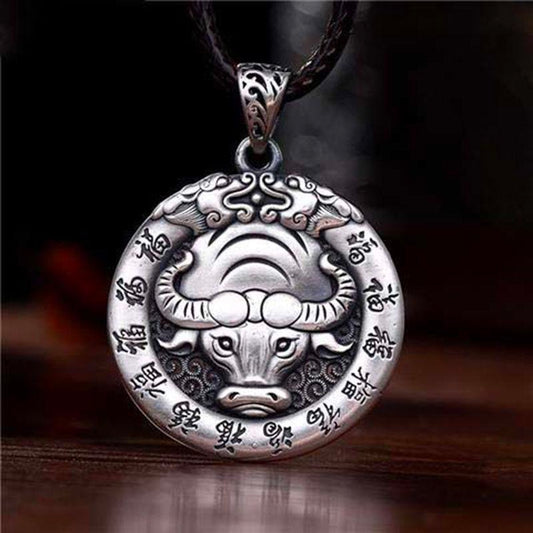
A 999 fine-silver rotating pendant centered on Fu, the same blessing motif explored in the circular artwork. A contemporary way to carry a personal wish for happiness and good fortune.
View product details
Gourd Keychain
A practical 999 fine-silver keychain with a gourd motif, traditionally associated with well-being, longevity, and prosperity. A small everyday gift carrying warm wishes.
View product detailsFrequently Asked Questions
Does every Hundred Blessings Diagram contain exactly one hundred characters?
No. Counts and formats vary. The circular example discussed here is described by its book caption as containing more than one hundred variations. The broader idea is an abundance of blessings.
What is the difference between the two illustrations?
One expresses blessing through the Three Stars, children, bats, and a banner. The other makes repeated, varied lettering the main subject of a circular pattern.
Why do bats appear in Chinese blessing designs?
Their Chinese name contains a sound associated with fu, or blessing. That wordplay gives bats a favorable meaning in many traditional decorative contexts.
Is Bai Fu Tu only a New Year decoration?
It has a close relationship with festive wishes, but its theme can also suit gifts and home decoration. The appropriate use depends on the particular design and the occasion.
Can a blessing design guarantee prosperity or protection?
A design can convey a meaningful wish and connect its owner with a cultural tradition. It does not guarantee wealth, health, safety, or a particular outcome.
Conclusion
Whether expressed through a gathering of figures or a circle of intricate lettering, Bai Fu Tu brings attention back to ordinary hopes: loved ones staying well, effort finding its reward, and a family having time together. Many forms of blessing ultimately speak to the same desire for a life shared with care.
References
- Chengdu Museum. Auspicious Characters and the Classical Five Blessings. Chinese-language museum article; title translated. Background on the Five Blessings in the Book of Documents.
- National Library of China. New Year Pictures and Auspicious Figures. Chinese-language thematic resource; title translated. Background on Fu, Lu, Shou and blessing imagery.
- Shaanxi Intangible Cultural Heritage. Fengxiang Woodblock New Year Pictures. Chinese-language project entry; title translated. Background on the regional craft and its national heritage recognition.
- Palace Museum. The Imperial Practice of Writing Blessings. Chinese-language museum reference; title translated. Background on Qing court practices of writing and presenting Fu characters.