A Guide to Faith and Tradition
1. The Religious Landscape of China

China is home to a rich and diverse religious landscape shaped by thousands of years of cultural evolution. The constitution guarantees freedom of religious belief, and the government officially recognizes five religions: Buddhism, Taoism, Islam, Protestantism, and Catholicism. Beyond these institutional religions, Chinese folk religion — an ancient system of beliefs that includes ancestor worship, veneration of deities, and practices like geomancy (feng shui) — remains deeply woven into the daily lives of many people.
China has close to 200 million religious believers, with over 380,000 clerical personnel, about 5,500 religious groups, and over 140,000 places registered for religious activities.
2. Complete Comparison Table: Major Religions in China
| Religion | Estimated Followers | Key Characteristics | Major Regions / Ethnic Groups |
|---|---|---|---|
| Buddhism | ~100 million | Largest institutional religion; Mahayana tradition; includes Tibetan Buddhism (Vajrayana) | Nationwide; strong presence in Tibet, Inner Mongolia, and among Han Chinese |
| Chinese Folk Religion | ~400-450 million | Syncretic belief system; includes ancestor worship, deity veneration, divination, feng shui | Nationwide; especially prevalent in rural areas and among Han Chinese |
| Islam | ~30 million | Sunni majority; includes Hui (Chinese Muslims) and Uyghur, Kazakh, and other ethnic groups | Xinjiang, Ningxia, Gansu, Qinghai, Yunnan, and urban centers nationwide |
| Christianity (Protestant & Catholic) | ~72 million | Growing presence; includes state-sanctioned churches and underground communities | Nationwide; particularly in Zhejiang, Fujian, Henan, and Anhui |
| Taoism | ~5-10 million (formal adherents) | Indigenous Chinese religion; emphasizes harmony with the Dao; includes ritual and alchemical traditions | Nationwide; strong cultural influence across Chinese society |
3. Buddhism: China's Largest Institutionalized Religion
Buddhism is the largest institutionalized religion in China, with an estimated 100 million followers. It was introduced to China from India over 2,000 years ago and has since become deeply integrated into Chinese culture. Buddhism in China is predominantly Mahayana, with major schools including Chan (Zen), Pure Land, and Tiantai. Tibetan Buddhism (Vajrayana) is also widely practiced in Tibet, Inner Mongolia, and other regions. Buddhism has influenced Chinese art, literature, philosophy, and ethics, making it a cornerstone of traditional Chinese thought.
There are approximately 13,000 Buddhist temples and about 200,000 Buddhist monks and nuns in China. The religion's emphasis on compassion, mindfulness, and the pursuit of enlightenment continues to attract followers across all social classes.
4. Chinese Folk Religion: The Syncretic Foundation
Chinese folk religion, sometimes called Shenism, is the traditional belief system of the Han Chinese people. It is a highly syncretic system that incorporates elements from Buddhism, Taoism, Confucianism, and local traditions. Practices include ancestor worship, the veneration of gods and goddesses (shen), divination, geomancy (feng shui), and the celebration of festivals such as the Lunar New Year and the Ghost Festival.
According to recent studies, nearly 70% of the population may engage in some form of folk religious practice, making it the most widespread belief system in China. This high prevalence is often overlooked in surveys that ask for a single religious identity, as many Chinese do not consider their folk practices to be a "religion" in the institutional sense. Folk religion plays a central role in community life, family rituals, and traditional festivals.
5. Islam: A 1,300-Year Presence
Islam has been present in China for over 1,300 years, with the first Muslims arriving as traders during the Tang Dynasty. Today, China has a Muslim population of approximately 30 million, belonging primarily to the Hui (Chinese Muslims) and Uyghur ethnic groups, as well as Kazakh, Dongxiang, Kyrgyz, Salar, Tajik, Uzbek, and Tatar peoples. Most Chinese Muslims are Sunni, and they are concentrated in Xinjiang, Ningxia, Gansu, Qinghai, and Yunnan provinces.
Muslim communities have their own unique cultural traditions, including distinctive cuisine, architecture, and religious practices. There are thousands of mosques across China, and the Islamic community maintains a vibrant religious and cultural life.
6. Christianity: A Growing Presence
Christianity has been growing in China, with an estimated 72 million believers. This includes both Protestants and Catholics. The growth has been particularly notable since the late 20th century, with Christianity expanding in both rural and urban areas. Many mission organizations estimate that 6% to 9% of China's population are now Christians.
Christian communities in China include both state-sanctioned churches and independent congregations. The religion has developed a distinctive Chinese character, with local adaptations in liturgy, music, and community life. Despite varying levels of social acceptance, Christianity continues to attract followers across different demographic groups.
7. Taoism: The Indigenous Way
Taoism is one of China's oldest indigenous religious traditions, rooted in the teachings of Laozi and the Dao De Jing. It emphasizes living in harmony with the Dao (the Way) and includes both philosophical and ritual dimensions. Taoist practices include meditation, alchemy, and various rituals aimed at achieving longevity and spiritual transcendence.
While the number of formal Taoist adherents is smaller compared to Buddhism and folk religion, Taoism has profoundly influenced Chinese culture, medicine, martial arts, and aesthetics. Many Chinese people incorporate Taoist concepts such as yin-yang and feng shui into their daily lives.
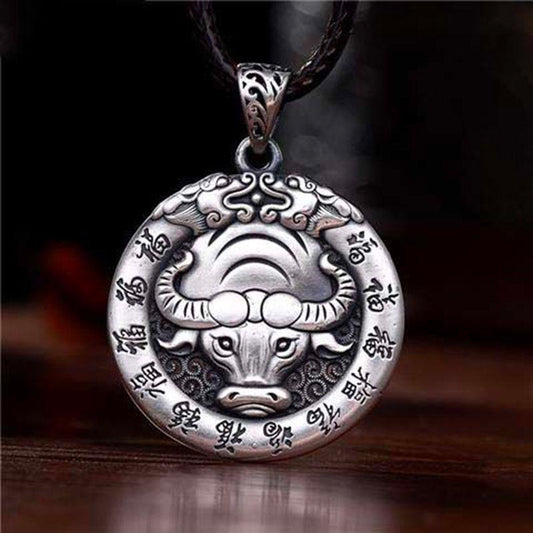
🏮 The religious traditions of China, from Buddhism to folk religion, have inspired generations of artists and craftspeople. Traditional Chinese jewelry often incorporates symbols of good fortune, spiritual protection, and cultural heritage.
📌 Frequently Asked Questions (FAQ)
• China Daily. "Xi: Further adapt religions to Chinese context." (2025).
• The ARDA. "National Profiles: Chinese Folk Religionists." (2025).
• Zhang, C., Lu, Y., & Sheng, H. (2021). "Exploring Chinese folk religion: Popularity, diffuseness, and diversities." Chinese Journal of Sociology.
• Oxford Reference. "Islam in China."
• Visual Capitalist. "Ranked: Countries With the Largest Christian Populations." (2025).
• International Christian Concern. "Christianity Steadily Growing in Asia Amid Persecution." (2025).
• 百度百科. "中国伊斯兰教."
🔗 Explore more Chinese cultural heritage at Chinese Showcase.
Three Picks from Chinese Showcase
Three contemporary shop selections for readers interested in decorative design. These are not presented as documented heritage objects, community-made crafts, or religious endorsements. Check each product page for current specifications, price, and availability.

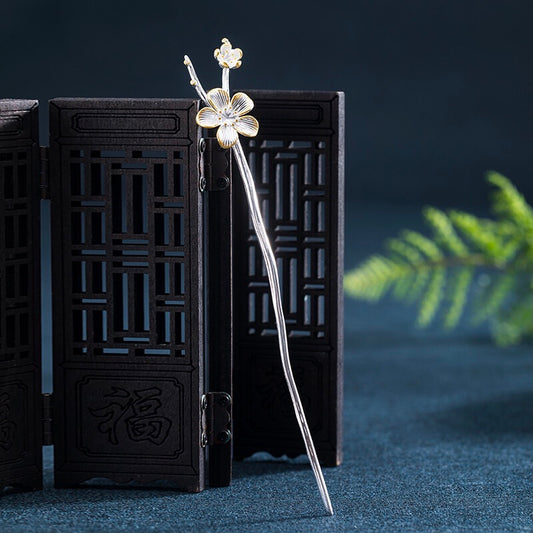
Traditional Chinese Plum Blossom Hairpin – Ebony Wood Hair Stick with Jade Teardrop for Hanfu
View product details
Cute Fox Pendant for Women – New Chinese Style Enamel Animal Charm | 999 Fine Silver
View product details