l
Liangzhu Ancient City: One of China’s Oldest Urban Civilizations and the Rise of Jade Culture
When people ask about the oldest city in China, Liangzhu Ancient City offers one of the most powerful archaeological answers. It reveals an early urban civilization more than 5,000 years ago, shaped by rice farming, water control, ritual jade, and social hierarchy.
Quick Answer: Liangzhu Ancient City, located in today’s Hangzhou area of Zhejiang Province, is one of China’s earliest and most important urban civilization sites. Dating roughly from 3300 to 2300 BCE, it shows advanced city planning, a large-scale water management system, social stratification, rice agriculture, and a highly developed jade ritual culture. Its jade cong, bi, and yue artifacts are especially important for understanding early Chinese belief and authority.

To understand the oldest cities in China, we should not look only at later capitals such as Luoyang, Xi'an, Anyang, or Nanjing. Those cities are extremely important in Chinese history, but Liangzhu Ancient City takes the discussion much further back. It belongs to a prehistoric world before written dynastic history, yet its archaeological remains show that complex urban life had already appeared in the lower Yangtze River region.
Liangzhu Ancient City is not famous because it looks like a modern city. It is famous because archaeology reveals that it had many features of early urban civilization: a central palace area, large earthen platforms, city walls, elite cemeteries, waterworks, rice agriculture, craft specialization, social hierarchy, and a shared ritual system centered on jade. In other words, Liangzhu was not just a village. It was a sophisticated center of power and belief.
Why Liangzhu Changes the Story of China’s Oldest Cities
For a long time, many people associated the birth of Chinese civilization mainly with the Yellow River basin. This view is understandable because later dynasties, early states, and many famous ancient capitals developed in northern and central China. However, Liangzhu reminds us that Chinese civilization had multiple roots. The lower Yangtze River region was not a cultural edge. It was one of the major centers of early civilization.
The Archaeological Ruins of Liangzhu City were inscribed on the UNESCO World Heritage List in 2019. UNESCO describes the site as evidence of an early regional state supported by rice agriculture and unified belief. This is important because it places Liangzhu within the global history of early urban civilizations, not merely within local Chinese archaeology.
Key idea: Liangzhu may not be the earliest human settlement in China, but it is one of the earliest known examples of complex urban civilization in China. Its value lies in city organization, water management, ritual jade, and social structure.
How Old Is Liangzhu Ancient City?

Liangzhu culture is generally dated to around 5300 to 4300 years before present. The core city site is often placed around 3300 to 2300 BCE. That means Liangzhu existed long before the later written histories of the Xia, Shang, and Zhou dynasties became central to traditional Chinese historical memory.
This time depth matters. When ancient Egypt and Mesopotamia were developing early urban civilizations, the lower Yangtze River region was also producing a complex society with impressive engineering and ritual systems. Liangzhu proves that early Chinese civilization was not waiting to begin in the Bronze Age. Its roots were already deep in the late Neolithic period.
Liangzhu Was More Than a Settlement
One of the strongest reasons Liangzhu is discussed as an early city is its structure. It had a central area, large platforms, surrounding zones, and elite cemeteries. The Mojiaoshan palace area is particularly significant. It was an artificial platform rather than a simple natural hill, and its construction required planning, labor organization, and authority.
Large-scale building projects do not happen by chance. They require leadership, food supply, labor mobilization, and a social system capable of directing many people toward a shared project. Liangzhu’s urban structure suggests that power had already become centralized in some form.
Elite burial sites such as Fanshan and Yaoshan also reveal a society with clear differences in rank. Some tombs contained large numbers of refined jade objects, while others were much simpler. This difference shows that Liangzhu society had social stratification, ritual privilege, and possibly political hierarchy.
The Water System: Engineering Behind the Ancient City
Liangzhu Ancient City was built in a watery landscape. The lower Yangtze region offered rich conditions for rice agriculture, but it also required careful water control. Flooding, storage, transport, and irrigation were not small problems. They were central to survival and urban development.
The Liangzhu water management system included dams, embankments, and related hydraulic works. These were not minor village ditches. They formed a large regional system that helped support the city and its agricultural base. The ability to build and maintain such a system shows a high level of social organization.
This is one reason Liangzhu is so important. It demonstrates that early Chinese urban civilization was not only about walls and palaces. It was also about environmental management. The city rose through its ability to organize land, water, food, labor, and belief.
Liangzhu Jade: The Heart of Its Spiritual World
If the water system shows Liangzhu’s engineering power, jade shows its spiritual and social power. Liangzhu jade artifacts are among the most famous achievements of late Neolithic China. They were not simply ornaments. They were ritual objects, status symbols, and carriers of belief.
The most iconic Liangzhu jade forms include jade cong, jade bi, and jade yue. The jade cong, often square on the outside and circular inside, is closely associated with ritual and cosmological meaning. The jade bi, a round disk, later became one of the classic ritual forms in Chinese culture. The jade yue, shaped like an axe, may have symbolized military or political authority.
The sophistication of Liangzhu jade carving is remarkable. Producing these objects required skilled craftsmanship, access to materials, specialized labor, and a shared symbolic system. The concentration of jade in elite tombs shows that jade was closely tied to rank and power. In Liangzhu society, jade helped define who had authority, who belonged to the elite, and how the sacred world was represented.
Why Liangzhu Jade Still Matters Today
Modern Chinese jade jewelry is not the same as Liangzhu ritual jade. A pair of jade earrings or a jade pendant today should not be described as a replica of ancient Liangzhu objects unless it is intentionally made as one. Still, jade remains one of the strongest cultural bridges between ancient and modern Chinese aesthetics.
In Chinese culture, jade is often associated with refinement, moral character, calmness, protection, purity, and long-lasting beauty. Liangzhu gives this symbolism a much deeper historical background. It shows that jade has been meaningful in Chinese civilization for thousands of years, long before later dynastic art and jewelry traditions developed.
Liangzhu Ancient City at a Glance
| Feature | What It Shows | Why It Matters |
|---|---|---|
| Dating | Roughly 3300-2300 BCE for the ancient city site | Places Liangzhu among China’s earliest urban civilizations |
| Location | Lower Yangtze River region, near modern Hangzhou | Shows that Chinese civilization had major southern roots |
| Water system | Dams, embankments, and water management works | Reveals large-scale engineering and social organization |
| Jade artifacts | Jade cong, bi, yue, and other ritual objects | Shows ritual authority, belief, and elite identity |
| Rice agriculture | Economic foundation of Liangzhu society | Supported population growth, labor division, and urban life |
| World Heritage status | Inscribed by UNESCO in 2019 | Recognized as a site of outstanding universal value |
Was Liangzhu the Oldest City in China?
The answer depends on how we define “city.” If we mean the earliest place where humans lived, then Liangzhu is not the earliest. China has many older prehistoric settlements. But if we mean an early urban civilization with planning, hierarchy, engineering, ritual authority, and regional influence, Liangzhu is one of the strongest candidates.
It is better to say that Liangzhu Ancient City is one of the earliest and most important urban civilization sites in China. It is not simply a local archaeological ruin. It is one of the key sites used to understand the deep roots of Chinese civilization.
Liangzhu and the Multiple Origins of Chinese Civilization
Liangzhu also helps explain the idea that Chinese civilization developed through multiple regional centers. The Yellow River basin, the Yangtze River basin, the Liao River region, the middle Yangtze, and other areas all contributed to early Chinese civilization. This is sometimes described as a “multiple origins” or “many stars” pattern.
In this larger picture, Liangzhu represents the brilliance of the lower Yangtze region. Its rice farming, jade ritual system, hydraulic engineering, and urban planning show a civilization with its own character. Later Chinese civilization was shaped not by one single source, but by the long interaction and integration of many regional traditions.
Recommended Jade-Inspired Jewelry
Because Liangzhu culture is famous for its advanced jade craftsmanship, jade-inspired jewelry is the most fitting product category for this article. These modern pieces are not Liangzhu replicas, but they echo jade’s long association with refinement, calm beauty, protection, and Chinese cultural memory.

Natural Xiuyu Jade Earrings
A refined jade earring choice for readers interested in the long history of jade aesthetics, from ancient ritual culture to modern Chinese-style jewelry.
$36.99 USD
View Product
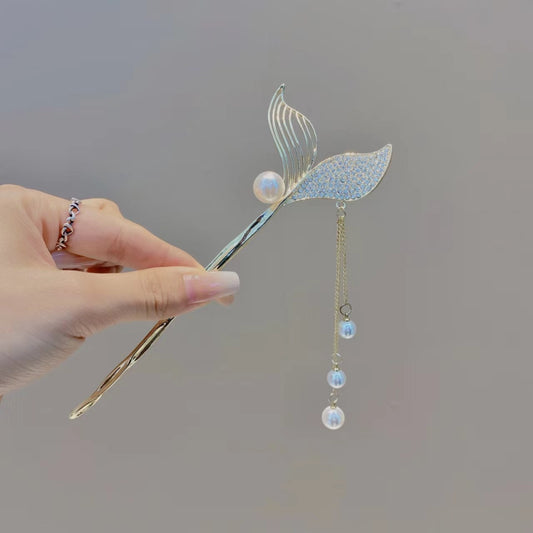
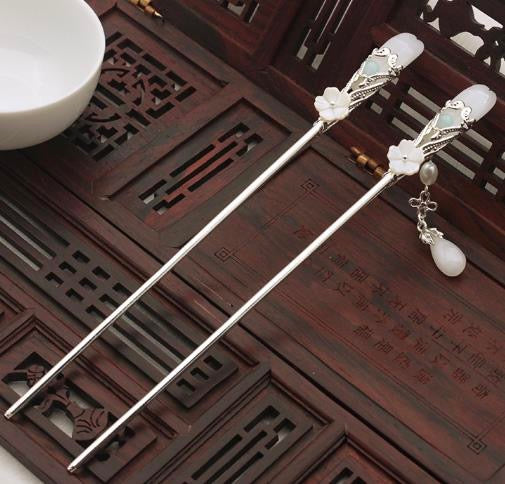
Traditional Chinese Hair Stick with Jade and Pearls
This jade-and-pearl hair accessory suits readers who love classical Chinese styling and want a softer modern expression of jade culture.
$36.99 USD
View Product
Bamboo Leaf Earrings with Jade Gourd Drop
Combining jade gourd and bamboo motifs, this pair connects jade beauty with auspicious meanings of blessing, resilience, and gentle protection.
$36.99 USD
View Product
Magnolia Blossom Ring with Hetian Jade
Hetian jade and magnolia symbolism make this ring suitable for readers drawn to purity, elegance, and traditional Chinese jade-inspired design.
$36.99 USD
View ProductFinal Thoughts
Liangzhu Ancient City gives us a deeper way to think about the oldest cities in China. It was not a later imperial capital, and it did not survive as a modern city in the same way as Luoyang or Xi'an. Yet from the archaeological point of view, it is one of the clearest examples of early urban civilization in China.
Its city structure, palace area, water system, elite tombs, rice agriculture, and jade ritual objects show that complex society had already developed in the lower Yangtze region more than 5,000 years ago. Among all these features, jade is especially important. Liangzhu jade was not merely beautiful. It expressed authority, belief, hierarchy, and the spiritual imagination of an early civilization.
That is why Liangzhu matters today. It proves that Chinese civilization was ancient, diverse, and deeply rooted. It also shows that jade, one of the most enduring symbols of Chinese culture, has carried meaning from prehistoric ritual life into modern art, jewelry, and cultural identity.
FAQ About Liangzhu Ancient City
Where is Liangzhu Ancient City located?
Liangzhu Ancient City is located in the lower Yangtze River region, near modern Hangzhou in Zhejiang Province, China.
How old is Liangzhu Ancient City?
The core ancient city is generally dated to roughly 3300-2300 BCE, making it one of China’s most important late Neolithic urban civilization sites.
Why is Liangzhu famous for jade?
Liangzhu produced highly sophisticated jade ritual objects, especially jade cong, jade bi, and jade yue. These objects reflected social rank, ritual belief, and political authority.
Does Liangzhu prove China has 5,000 years of civilization?
Liangzhu is one of the key archaeological sites supporting the deep history of Chinese civilization. Its urban planning, water system, jade ritual culture, and social hierarchy provide strong evidence of complex civilization around 5,000 years ago.
What kind of jewelry fits Liangzhu-inspired content?
Jade-inspired jewelry is the best fit because Liangzhu culture is strongly associated with jade craftsmanship. Jade earrings, jade hairpins, jade pendants, and jade rings are suitable modern choices.
References
- UNESCO World Heritage Centre: Archaeological Ruins of Liangzhu City
- UNESCO World Heritage Centre: Liangzhu City, Chinese Page
- Ministry of Culture and Tourism of China: Liangzhu Inscribed on the World Heritage List
- Qiushi: Liangzhu as Evidence of 5,000 Years of Chinese Civilization
- National Ethnic Affairs Commission: Why Liangzhu Matters to Chinese Civilization