A Guide to Dining Etiquette
1. The Importance of Seating Arrangement

In China, seating at a meal is taken very seriously, particularly at formal banquets. The arrangement reflects the social hierarchy and respect for seniority. The seat facing the entrance is the most important and is reserved for the host or the guest of honor [citation:1][citation:2]. The seat opposite the entrance is typically reserved for the co-host, who can more easily communicate with staff and ensure the meal runs smoothly [citation:1][citation:2]. Other guests are seated according to their status, radiating outward from the highest-ranking attendee [citation:1][citation:2].
Guests should wait until they are told where to sit rather than choosing their own seat [citation:1][citation:2]. The host should actively take care of all guests, inviting them to enjoy the meal [citation:1][citation:2]. At a rectangular table, elders sit at the shortest side, against the back wall and facing the door; at a round table, the innermost seat is left for the elder [citation:3].
2. Chopstick Rules and Taboos
Chopsticks are the primary eating utensils in China, and there are many rules governing their use. One of the most important is the distinction between personal and communal chopsticks. Since dishes are shared, it is considered impolite to use personal chopsticks to serve food from communal plates. Instead, restaurants often provide "公筷" (gōng kuài), or serving chopsticks [citation:1][citation:2]. Some places use "black-and-white chopsticks" where black are for personal use and white are for serving [citation:1][citation:2].
Key chopstick taboos include:
- Never stick chopsticks upright in rice: This resembles incense sticks burned for the dead and is a major taboo associated with death [citation:1][citation:3][citation:4].
- Do not bite, lick, or stab food with chopsticks: This is considered uncouth and disrespectful [citation:1][citation:2][citation:5].
- Avoid pointing or gesturing with chopsticks: Using chopsticks to point at others is an insult [citation:4][citation:12].
- Do not tap or bang chopsticks on the bowl: This mimics beggars and is an insult to the host [citation:3][citation:12].
- Do not use chopsticks to drag plates or move bowls: Use your hands instead [citation:1][citation:2][citation:12].
When not in use, chopsticks should be placed horizontally on a chopstick rest or on the plate, not vertically [citation:11].
3. Toasting and Drinking Customs
Alcohol plays a central role in Chinese social and business interactions. The word "干杯" (gān bēi) literally means "dry cup" and is used to toast, with the genuine expectation that you will finish your drink [citation:1][citation:2]. If you only take a sip, someone might jokingly ask "你在养鱼吗?" (nǐ zài yǎng yú ma?), meaning "Are you raising fish?" as a humorous way to say your leftover drink could feed fish [citation:1][citation:2].
When toasting the host, stand up, hold your glass with both hands, and make sure your glass is lower than the host's to show respect [citation:1][citation:2][citation:4]. The person closest to the teapot or wine bottle should pour for others, from the senior and superior to the junior and inferior [citation:4]. Guests should not pour tea or wine for themselves [citation:4]. When someone refills your glass, express thanks or tap twice with your index and middle fingers if your mouth is full [citation:1][citation:2].
4. Complete Comparison Table: Key Table Manners
| Category | Do | Don't |
|---|---|---|
| Seating | Wait to be seated; honor the host's arrangement | Take the seat facing the entrance unless invited |
| Chopstick Use | Use communal chopsticks for serving; place chopsticks horizontally when not in use | Stick upright in rice; point with them; tap bowls; bite or lick |
| Toasting | Stand when toasting; hold glass with both hands; keep glass lower than elder's | Refuse a toast from an elder; drink alone without toasting others |
| Dining | Try everything offered; compliment the host; leave a little food on plate if full | Eat the last of a dish; talk with mouth full; put bones back in rice bowl |
| Paying | Offer to pay; express gratitude if host insists | Forcefully refuse the host's generosity |
5. Serving and Eating Etiquette
In Chinese dining, food is served communally. Dishes are placed in the center of the table and everyone helps themselves [citation:3][citation:10]. A typical meal begins with cold dishes, followed by hot meat and vegetable dishes, then soup, and finally a starchy staple like rice or noodles [citation:12].
It is polite to try everything served and to compliment the host on the meal [citation:1][citation:11]. If you are offered something you cannot eat, leave it on your plate and finish everything else [citation:11]. Leaving a small amount of food on your plate traditionally indicates you are full and that the host has provided generously [citation:11]. However, in modern times, campaigns against waste encourage finishing everything . When eating bones, it is normal to spit them out onto the table to the right of your plate [citation:11].
6. Gift-Giving and Business Etiquette
Gift-giving is an important part of Chinese social and business culture. When exchanging business cards (名片, míng piàn), offer it with both hands, with the Chinese characters facing the recipient [citation:1][citation:2]. Handle received cards with care; do not fold, write on, or play with them [citation:1][citation:2].
For gifts, present them with both hands, and expect that the recipient may decline politely two or three times before accepting . Gifts are not opened in the presence of the giver . Avoid gifts that are difficult to reciprocate, and never give sharp objects, clocks, umbrellas, or white/black/blue wrapping .
7. Understanding "Face Culture"
The concept of "face" (面子, miàn zi) is crucial in Chinese social interactions [citation:1][citation:2]. 要面子 (yào miàn zi) means to care deeply about status and reputation; 给面子 (gěi miàn zi) means to give face by respecting others' feelings; and 丢面子 (diū miàn zi) means to lose face or dignity [citation:1][citation:2]. Show respect for others' opinions, avoid embarrassing others, and appreciate their efforts and kindness [citation:1][citation:2]. Actions that undermine reputation are to be avoided.
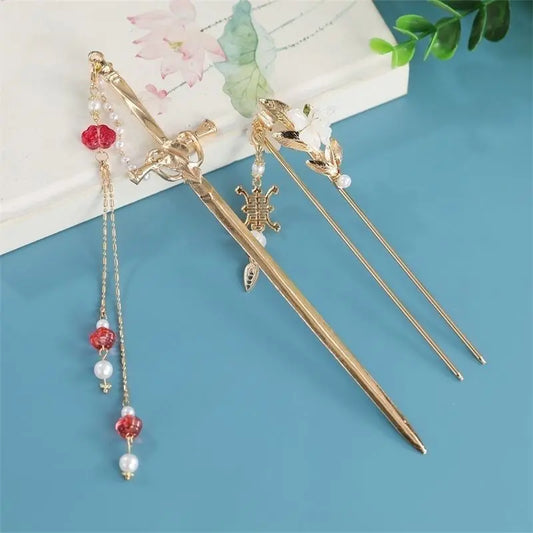
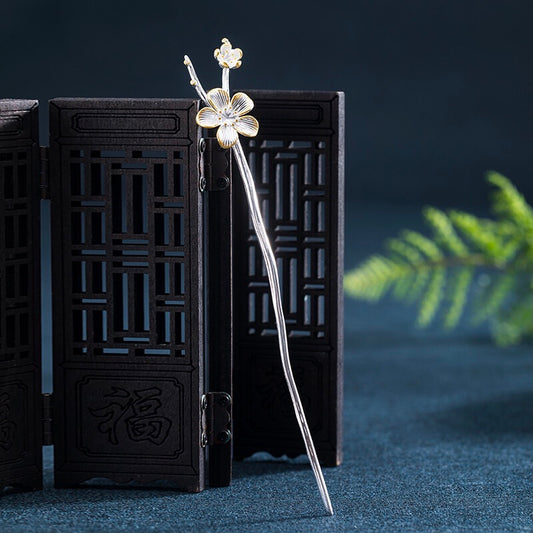
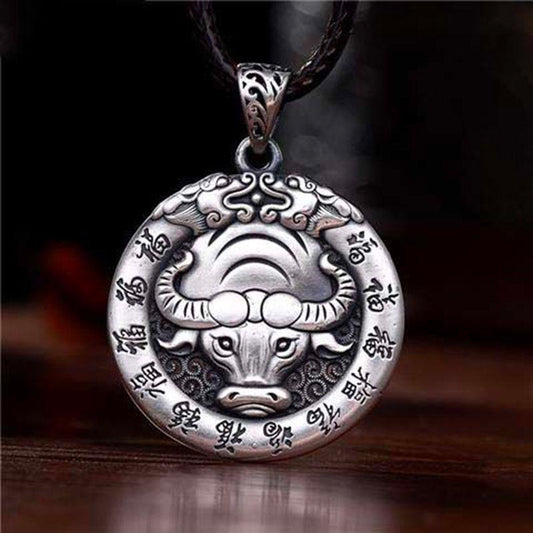
🏮 Understanding Chinese table manners is a gateway to deeper cultural appreciation. Just as dining customs reflect respect and harmony, traditional Chinese jewelry embodies the artistry and heritage of this ancient civilization.
📌 Frequently Asked Questions (FAQ)
• International Services Shanghai. "Guide to table etiquette in China." (2024).
• China Daily. "用餐礼仪 Chinese guide to table etiquette in China." (2024).
• China International Travel Service. "Traditional Chinese Table Manners."
• Travel China Guide. "Chinese Table Manners." (2025).
• China.org.cn. "Traditional Dining Etiquette."
• Cultural Atlas. "Chinese Culture - Etiquette." (2016).
• Visit Beijing. "Traditional Chinese Table Manners and Customs." (2014).
• 超星慕课. "Main Differences between Chinese and Western Eating Habits."
🔗 Explore more Chinese cultural heritage at Chinese Showcase.