A Guide to China's Linguistic Diversity
These groups are not dialects in the same way American and British English are — they are often mutually unintelligible, comparable to the differences between Romance languages like Spanish, French, and Italian. With the shared writing system (Chinese characters) serving as a unifying bridge. China is home to approximately 309 living languages, with the Sinitic languages being the most widely spoken.
1. The Chinese Language Family: An Overview

The Chinese language is not a single language but a family of related languages, known as Sinitic languages, that belong to the larger Sino-Tibetan language family. These languages are spoken by the Han Chinese majority and many minority groups in China and across the world. The total number of Chinese language speakers exceeds 1.3 billion, making it one of the most widely spoken language families in the world.
The relationship between these languages is often described using the term "dialect" (方言, fāngyán), which has a different connotation in Chinese than in English. In China, "dialect" refers to any regional variety of Chinese, regardless of mutual intelligibility. This usage reflects cultural and political considerations rather than strict linguistic classification.
2. Complete Comparison Table: Major Chinese Language Groups
| Language Group | Also Known As | Primary Regions | Number of Speakers | Distinctive Features |
|---|---|---|---|---|
| Mandarin | 北方话 (Běifānghuà) | Northern and southwestern China | ~1.1 billion | 4 tones (plus neutral tone); official language of China; based on Beijing dialect |
| Wu | 吴语 (Wúyǔ) | Shanghai, Zhejiang, southern Jiangsu, Anhui | ~80 million | Retains voiced initials; complex tone systems (5–8 tones) |
| Yue (Cantonese) | 粤语 (Yuèyǔ) | Guangdong, Guangxi, Hong Kong, Macau | ~80 million | 6–9 tones; preserves many Middle Chinese features; one of the most conservative Sinitic languages |
| Min | 闽语 (Mǐnyǔ) | Fujian, Taiwan, Hainan, overseas communities | ~75 million | Has the greatest internal diversity; preserves ancient Chinese features; Hokkien is the most widely known |
| Xiang | 湘语 (Xiāngyǔ) | Hunan, parts of Guangxi | ~40 million | Some varieties retain voiced initials; also known as Hunanese |
| Gan | 赣语 (Gànyǔ) | Jiangxi, parts of Hunan, Hubei, Anhui | ~30 million | Similar to Mandarin and Hakka; distinctive nasal codas |
| Hakka | 客家话 (Kèjiāhuà) | Southern China, Taiwan, Southeast Asia | ~30 million | Preserves many Middle Chinese features; known for its tone system and diaspora communities |
3. The "Dialect" vs. "Language" Debate
Whether Chinese regional varieties are considered "dialects" or "languages" is a matter of ongoing debate. In linguistics, the main criterion for distinguishing languages from dialects is mutual intelligibility. By this standard, most Chinese varieties are separate languages because they are not mutually intelligible when spoken. For example, a Mandarin speaker and a Cantonese speaker cannot understand each other without prior exposure.
The shared writing system, which uses Chinese characters and conveys meaning regardless of pronunciation, creates a sense of linguistic unity. In Chinese culture, this shared literary tradition and political unity have led to the classification of these varieties as "dialects" (方言, fāngyán), even though linguistically they are separate languages.
4. Beyond the Major Groups: Jin, Huizhou, and Pinghua
Some linguists propose additional groups beyond the seven major ones. These include:
- Jin (晋语, Jìnyǔ): Spoken in Shanxi and parts of neighboring provinces. Some consider it a separate group due to its distinctive tonal and phonological features, while others classify it as a sub-group of Mandarin.
- Huizhou (徽语, Huīzhōu): Spoken in southern Anhui and adjacent areas of Zhejiang and Jiangxi. It has features of both Wu and Gan but is often treated as a separate group.
- Pinghua (平话, Pínghuà): Spoken in Guangxi and parts of Hunan. It was traditionally classified under Yue but is now recognized by some as a distinct group.
5. The Most Spoken Chinese Languages
Mandarin is the most widely spoken Chinese language, with over 1.1 billion speakers. It is the official language of China and Taiwan, and one of the four official languages of Singapore. Cantonese has approximately 80 million speakers, primarily in Guangdong, Hong Kong, Macau, and overseas communities. Wu and Min each have around 80 million speakers.
6. The Role of Mandarin as the National Language
Since the early 20th century, the Chinese government has promoted Putonghua (Standard Mandarin) as the national language. Based on the Beijing dialect, it is used in education, media, government, and as a lingua franca across China. The spread of Mandarin has been accelerated by urbanization, migration, and the education system. In recent years, the government has set a target of having 85% of the population speak Mandarin by 2025.
7. The Shared Writing System
All Chinese languages share the same writing system, which uses Chinese characters (汉字, hànzì). This script is logographic, meaning each character represents a morpheme or word, rather than a sound. A Mandarin speaker and a Cantonese speaker can read the same written text, even though they would pronounce it entirely differently. This shared writing system has been a powerful unifying force in Chinese civilization for over two millennia.
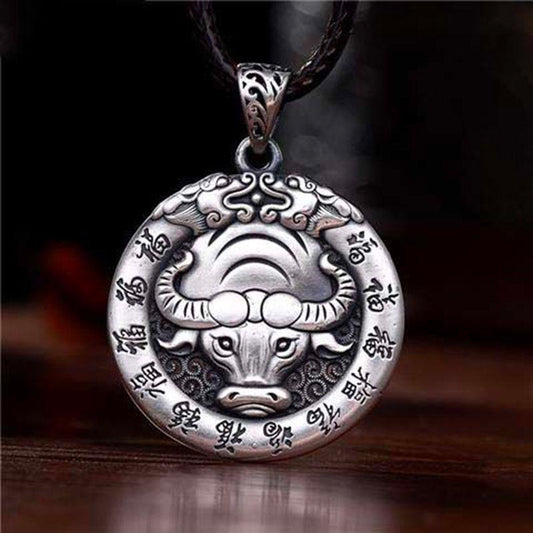
🏮 The diversity of Chinese languages reflects the richness and depth of the country's history and culture. Just as each language is unique, traditional Chinese jewelry tells the story of the nation's artistic heritage through its intricate designs and craftsmanship.
📌 Frequently Asked Questions (FAQ)
• Britannica. "Chinese Languages." (2025).
• University of Connecticut. "The Chinese Language and Language Planning in China."
• Babbel. "What Languages Are Spoken In China?" (2025).
• BJU International. "Chinese language diversity in China and its influence on Chinese language education."
• University of Sydney. "The diversity of Chinese language."
🔗 Explore more Chinese cultural heritage at Chinese Showcase.